




Gaetano Padula’s degree thesis (October 2026) examines how production, product ranges and shopping behaviour are reshaping the Italian berry market. Household purchase volumes rose by 42% year on year in 2025, but blueberries, raspberries, blackberries and currants are following different paths.
In 2025, Italian households bought 42% more berries than in 2024 and 69% more than in 2023, according to CSO Italy–YouGov Shopper data analysed by Gaetano Padula in his thesis Category Management in the Berry Sector. Market, Consumer and Category Strategy Analysis. Volume growth tells only part of the story. For produce managers, the question is which berries shoppers are buying regularly and which still depend on a special occasion.
Shoppers buy blueberries more often and in larger quantities
“The data show that blueberries are driving the entire category,” writes Padula. According to the thesis, both purchase frequency and the average quantity bought per occasion rose between 2020 and 2025. In the author’s view, this combination sets blueberries apart from the other subcategories and points to a shift towards routine purchasing.
The picture is different for raspberries and blackberries. The thesis reports that in 2025 per capita consumption and purchase occasions fell as retail prices rose. Redcurrants followed a different pattern again. With smaller price increases than other berries, they attracted more buyers and regained sales volumes. The category totals therefore bring together products that are finding their way into shopping baskets in different ways.
Italian production grows and imports help maintain supply
The ISTAT data cited in the thesis show that Italy went from around 10,000 tonnes of blueberries in 2024 to 11,500 in 2025. Between 2020 and 2025, production rose by 65.2% and the area under cultivation expanded by 17.2%. Cuneo, Verona and Trento were the three leading provinces by production in 2025.
Year-round availability also depends on overseas supply. For the basket of berries covered by the trade analysis, the FAOSTAT data cited by Padula show 25,099 tonnes imported and 4,916 exported in 2024, a trade deficit of just over 20,000 tonnes. The thesis describes how major retailers bridge the gap between winter imports and the first supplies from southern Italy, where the climate and protected cultivation allow an earlier harvest.
Perishability also affects pricing. In the thesis’s 2025 comparison, blueberries go from €7.57/kg at farm gate to €12.33/kg at retail, raspberries from €8.91 to €18.51/kg and blackberries from €8.08 to €18.84/kg. Padula cites storage costs, particularly the cold chain, among the factors affecting the final price. The comparison draws on averages from two different sources, ISMEA and YouGov Shopper, and compares prices at different stages of the supply chain.
Standard ranges still dominate the shelf
According to the figures cited in the thesis, major grocery retailers accounted for 96% of fresh berry sales in 2025. Yet the Italian Berry Dashboard’s 2024 surveys cited by Padula found that 89% of the assortment was standard. Differentiated products accounted for 11%, down from 13.4% in the previous three-year period.
The thesis distinguishes product subcategories (blueberries, raspberries, blackberries, currants and mixes) from segments and formats such as premium, organic, zero-residue, local and on-the-go. The same berry can therefore suit different occasions. A resealable cup is designed for snacking away from home, while a multi-portion pack can provide several snacks throughout the week. For Padula, the aim is “to turn a category bought on impulse, without planning, into a routine purchase.”
Private label also plays a role in this shift. The thesis cites Conad, where own-label products accounted for over 80% of berry sales growth in 2025, and Coop, which selects varieties for more consistent flavour, size and crunch. A consistent experience helps shoppers know what to expect when they buy the product again.
Stock turnover and promotions shape shelf allocation
Padula suggests that suppliers and retailers complement their commercial relationship by “sharing checkout data and shelf turnover figures.” These figures inform practical decisions such as how many packs to display, how often to replenish the fixture and which products warrant more space. Deepening the range in a perishable category means balancing two needs. Bestsellers need to remain available, while slower sellers can build up on the shelf.
Promotions also have different short- and long-term effects. Drawing on a Dutch case study, the thesis notes that holidays and sporting events can boost sales and create consumption occasions. When promotions become too frequent, however, “the discounted price risks becoming the price shoppers expect, instead of an occasional opportunity.”
Blueberries already offer an example of how a product’s role in the department can change. For raspberries, blackberries and currants, the thesis suggests starting from their respective consumption occasions and measuring whether choices about format, assortment or marketing bring shoppers back after their first purchase.
Italian Berry - All rights reserved
ADDENDUM
Degree thesis summary by the author
Introduction
This study offers an up-to-date overview of the economics and distribution of the berry sector. It examines the Italian berry market from production to distribution, drawing on insights from other markets. Production and trade volumes come from the main databases, while a review of the scientific literature identifies what distinguishes berry production and distribution. The analysis of consumer behaviour and purchase drivers draws on statistical studies and socioeconomic surveys of the food sector, particularly fresh produce.
The study reviews category management strategies reported by leading trade publications specialising in the berry market. Suppliers and retailers are jointly exploring how to adapt these strategies to growing interest in the category, developing a more detailed segmentation of the assortment around how shoppers buy and use the products.
A growing category
The study focuses on the berries most widely available in the fresh market: blueberries, raspberries, blackberries and redcurrants. The category has seen significant growth in consumption in recent years because it meets consumer needs. Fresh berries are convenient to eat and require only a quick rinse under running water, with no cutting or heating (“ready to rinse”). The category also aligns with two current trends. The first is “snackification”, or eating frequent snacks throughout the day to fit different schedules, at home or away. The second is “fibermaxxing”, or seeking out plant fibres with prebiotic properties that support metabolic wellbeing (Garipoli, 2026). Berries are known as “superfruits”, a subset of “superfoods”, or “foods considered particularly nutritious or otherwise beneficial to health and wellbeing” (Kirsch et al., 2022).
Figure 1 draws on YouGov Shopper data reported by CSO Italy and shows Italian purchase volumes for the main “superfruits” in tonnes over the three-year period. Households buy considerably more strawberries and kiwifruit than the other fruits, but the growth in berry purchases in 2025 is encouraging, both year on year (+42%) and compared with 2023 (+69%).
Figure 1 - Purchase volumes (t) of the main “superfruits”, 2023–2025.
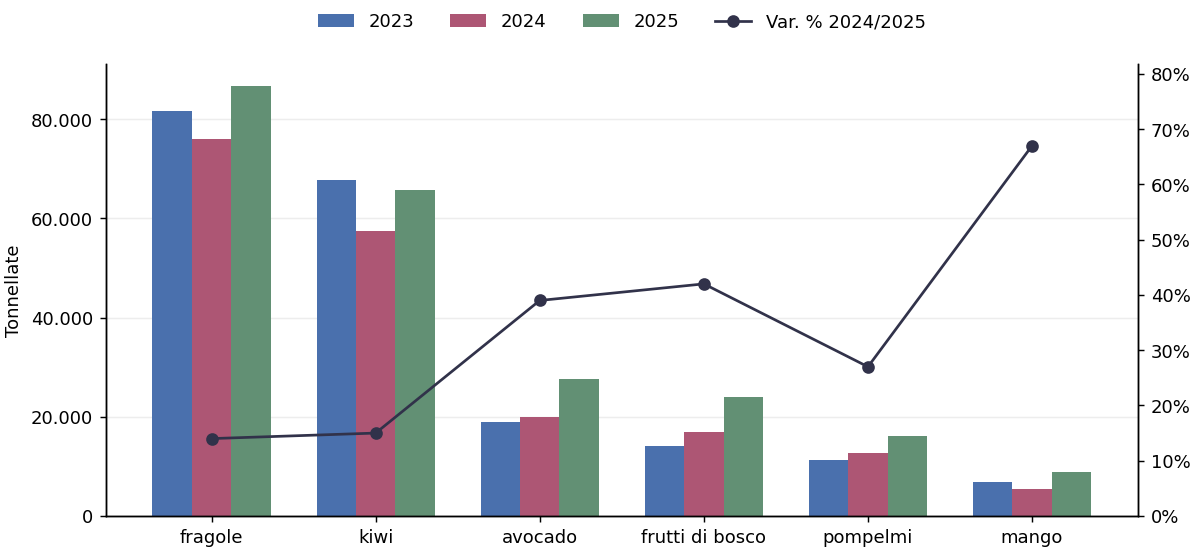
Source: Analysis of CSO Italy–YouGov Shopper data (2026).
Although “superfruit” and “superfood” are food marketing terms with no current scientific or legal basis, berries are known for their high levels of nutrients and phenolic compounds, including flavonoids, tannins and phenolic acids. They also contain essential vitamins and minerals such as vitamin C (ascorbic acid), vitamin K, manganese and potassium, which are important for bone health and muscle function, as well as carotenoids, fibre and essential fatty acids (Catalkaya et al., 2025).
Among their potential health benefits, berry polyphenols have antioxidant, antitumour, antidiabetic and anti-inflammatory properties (Mazzoni et al., 2025). Anthocyanins are flavonoids that give berries their red, blue and purple colours. They act as antioxidants by neutralising free radicals, interrupting the chain reaction of oxidative stress that damages proteins, lipids and DNA. Anti-inflammatory and antioxidant properties reduce the chronic inflammation associated with tumour development. Flavonols, such as the quercetin found in blueberries and blackberries, are another subgroup of flavonoids with antioxidant, antitumour, antimicrobial and cardioprotective properties. Tannins are other secondary metabolites responsible for astringency and have antimicrobial properties, preventing Escherichia coli from adhering to the lining of the urinary tract. The antioxidant properties of carotenoids and tocopherols protect eyesight and skin from sunlight.
A high insoluble fibre content helps people feel full for longer, promotes bowel regularity and contributes to blood sugar control. In the context of diabetes management, Gunal-Koroglu et al. (2025) state that “polyphenols improve glucose regulation, increase insulin sensitivity and reduce insulin resistance”.
As Figure 2 shows, berry quality encompasses nutritional attributes (macro- and micronutrients, vitamins, fibre, phenolic content and antioxidant capacity), sensory attributes (shape, colour, texture, sweetness, acidity and astringency) and agronomic traits (fruit size, yield per plant, harvest speed and resistance to pests and diseases) across cultivars of each species. Convenience completes the picture, reflecting how easy fresh berries are to use.
Figure 2 – Defining berry quality
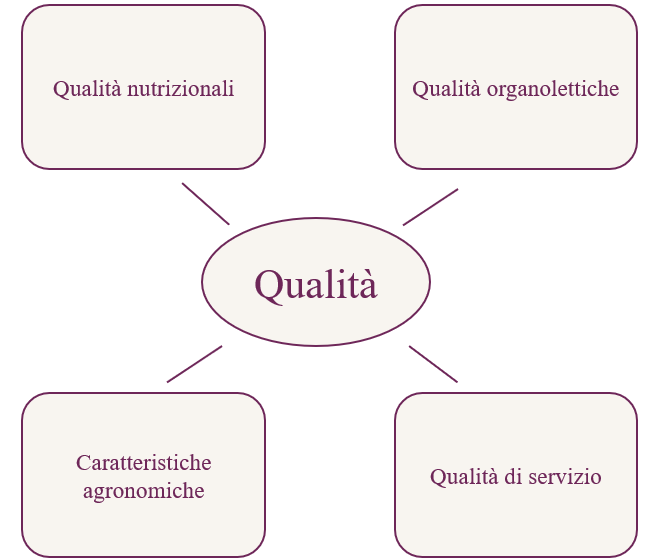
Berry quality depends on genetic, environmental and agronomic factors. Genetics is the most important. A fruit’s total soluble solids and titratable acidity, which reflect the sugars and acids needed for good flavour, depend on its genotype. Nutritional values are also genotype-dependent and vary by variety. Genetics interacts closely with soil and climate conditions, including growing medium pH, location, harvest season, light exposure and temperature, as well as with growing practices such as conventional or organic production, salinity, water management, fertigation, soilless, open-field or protected cultivation, and harvest timing. Di Vittori (2018) cites one study that found higher polyphenol content in organically grown blueberries. Another study suggested higher average fruit weight but lower overall production than with conventional methods.
Harvesting berries at full ripeness, when anthocyanins are at their highest concentration and aroma is fully developed, can shorten postharvest life. The fruit is softer and more susceptible to mechanical damage during handling. Blueberries are often picked before they are fully ripe to extend their marketable life. Early ripening makes earlier harvest possible, and some phenolic compounds, unlike anthocyanins, have been found at higher levels in unripe fruit than in ripe fruit. There is, however, considerable variation among cultivars of each species. Phenolic content increases as raspberries ripen, for example, while riper blackberries have lower phenolic content than less ripe fruit (Di Vittori, 2018).
The berry market
Consumer preferences play a strong role in shaping what berry suppliers offer. Breeding helps growers obtain new varieties that match consumer tastes and deliver consistent quality. The purchase drivers are all phenotypic traits influenced by the genetics of individual plants. They include large fruit size, a crisp texture, moderate acidity, pronounced sweetness, distinctive aroma compounds, small seeds and retention of bright colour (Di Vittori, 2018).
Figure 3 shows global berry production from 2000 to 2024, the latest year covered by the FAOSTAT database. The analysis covers production in tonnes for “blueberries”, “raspberries”, “currants” and “other berries and fruits of the genus Vaccinium, not elsewhere classified”. Blackberry production was excluded because the leading databases lack a dedicated category. Blueberry production grew steadily, overtaking all other categories and reaching 1,392,534 tonnes in 2024. Other berries, raspberries and currants followed. Currants showed no upward trend.
Figure 3 - Global berry production (t), 2000–2024.
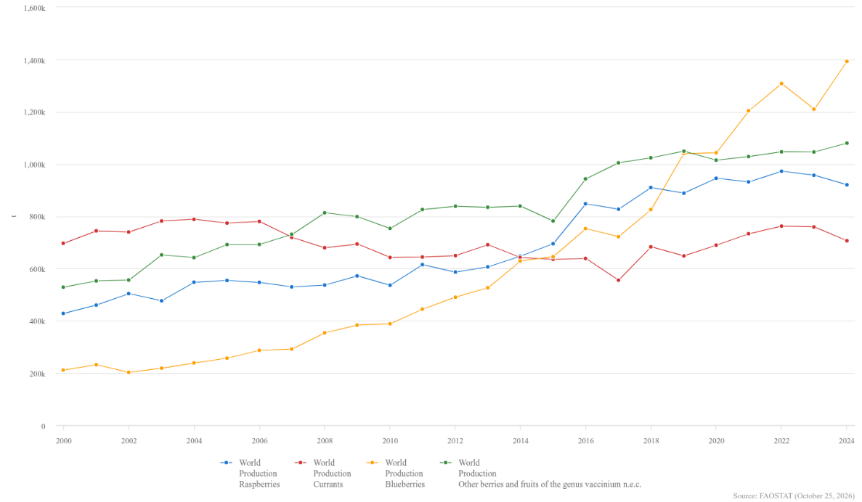
Source: FAOSTAT (2026).
In 2024, the world’s leading berry producers were Russia (733,000 tonnes), Mexico (527,000 tonnes), the United States (514,000 tonnes), Peru (354,000 tonnes) and Poland (307,000 tonnes). Although China is considered the world’s largest agricultural producer, its production data are unavailable in FAOSTAT because of a lack of transparency in the Chinese government’s collection methods and statistical methodology. FAOSTAT does include figures that underestimate Chinese berry production under “other berries and fruits of the genus Vaccinium, not elsewhere classified”.
In 2024, Italy ranked 27th worldwide for berry production, with 16,500 tonnes. Blueberries accounted for 10,000 tonnes, or around 61%, before rising to 11,500 tonnes in 2025 (ISTAT data). Between 2020 and 2025, blueberry production increased by 65.2%, while the cultivated area grew by 17.24%. Figure 4, based on ISTAT’s 2025 production data, shows that most Italian blueberries are grown in the north. Cuneo, Verona and Trento are the top three provinces.
Figure 4 – Italian blueberry production (quintals) in 2025.
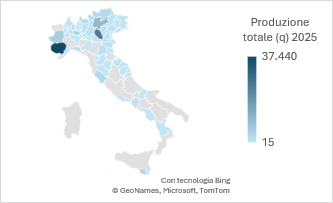
Source: ISTAT (2025).
According to FAOSTAT’s 2024 data, the world’s leading blueberry producers were the United States (402,000 tonnes), Peru (357,000 tonnes) and Canada (166,000 tonnes). The leaders in global raspberry production were Russia (214,000 tonnes), Mexico (175,000 tonnes), Serbia (94,000 tonnes) and the United States (82,000 tonnes).
Italy produced 3,018 tonnes of raspberries in 2025, up 34.8% from 2015. The leading provinces were the same as for blueberries: Verona, Trento and Cuneo (Figure 5).
Figure 5 - Italian raspberry production (quintals) in 2025.
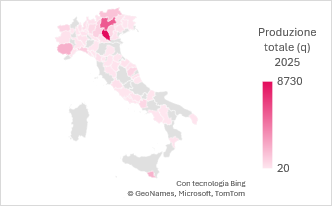
Source: ISTAT (2025).
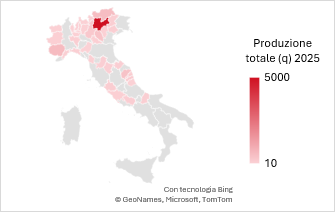
In 2024, Russia produced more than 70% of the world’s currants, at 501,000 tonnes. Poland followed with 100,000 tonnes (FAOSTAT data). The database’s “currants” category includes redcurrants as well as whitecurrants and blackcurrants, which are particularly suited to processing into juices and jams. Italian redcurrant production fell to 891 tonnes in 2025, down 13% from 2023. It was nevertheless 15% higher than in 2015, reflecting growing interest over the decade. The province of Trento produced 500 tonnes in 2025, well ahead of Cuneo (58) and Bolzano (52.5) (Figure 6).
Figure 6 - Italian redcurrant production (quintals) in 2025.
Source: ISTAT (2025).
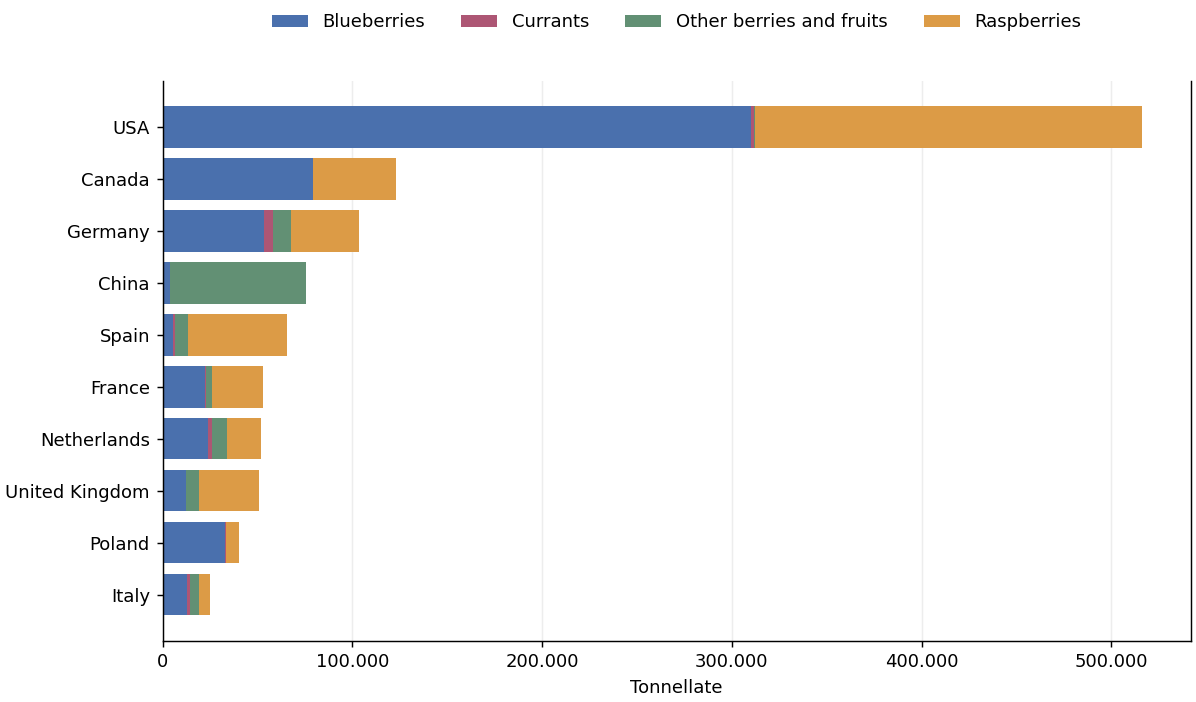
The United States is by far the largest importer (Figure 7), with 514,160 tonnes valued at more than US$4 billion, reflecting strong consumption, especially of blueberries and raspberries. Canada ranks second by volume, ahead of Germany. China, Spain, France, the Netherlands, Great Britain and Poland follow with much lower figures, under 100,000 tonnes and US$500 million in imports. Italy ranks tenth worldwide by both volume and value.
Figure 7 - Top 10 berry-importing countries by volume (t) in 2024.
Source: FAOSTAT (2024).
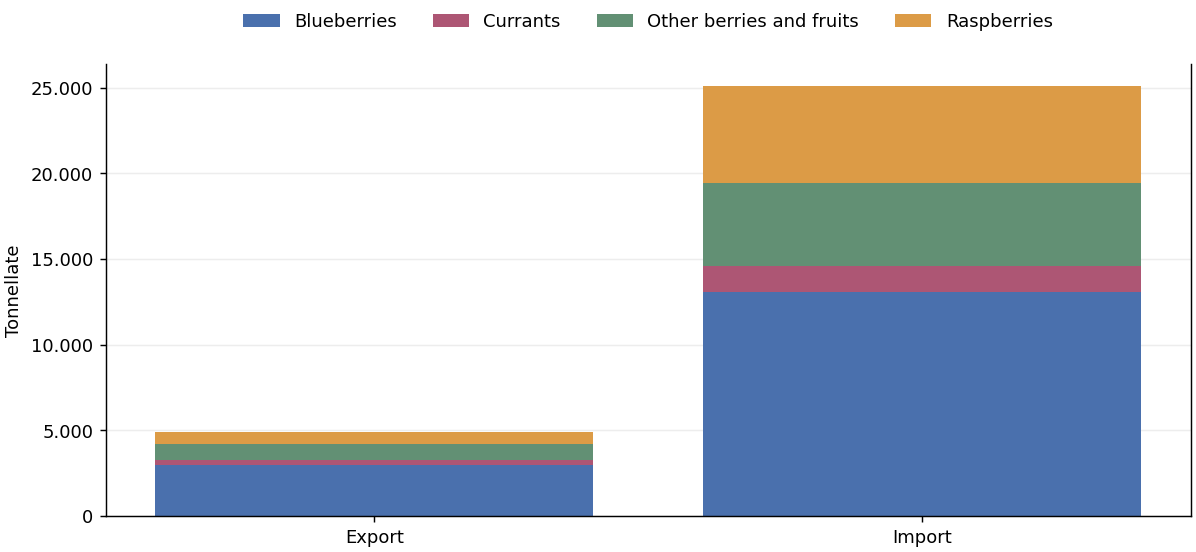
Italy is therefore a major net importer of berries, with a trade deficit of 20,183 tonnes (25,099 tonnes imported and 4,916 exported) and US$131,836,000 (US$170,791,000 in imports and US$38,955,000 in exports). As Figure 8 shows, blueberries are the most traded, followed by raspberries, “other berries” and currants.
Figure 8 - Italian imports and exports by berry type and volume (t) in 2024.
Source: FAOSTAT (2024).
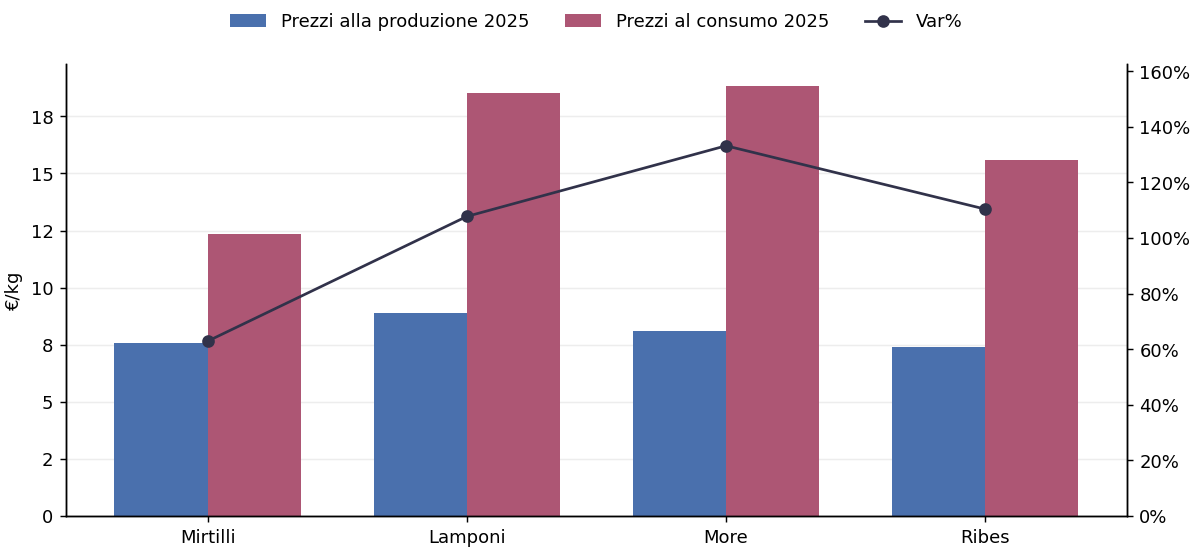
For each fruit covered, Figure 9 compares 2025 average farm-gate prices from ISMEA with average retail prices reported by Italian Berry for the same year, based on YouGov Shopper data.
Figure 9 - Farm-gate and retail prices (€/kg) for the four berry subcategories in 2025.
Source: Analysis of ISMEA and YouGov Shopper data (YouGov data via Italian Berry), 2026.
Blueberries and currants have lower farm-gate prices, at €7.57 and €7.42 per kilo. Raspberries and blackberries exceed €8/kg, at €8.91 and €8.08 respectively. The most striking difference is the price consumers pay at retail. Blueberries show an increase of 63% (€12.33/kg), raspberries 108% (€18.51/kg), currants 110% (€15.61/kg) and blackberries 133% (€18.84/kg). Marketing and retail operations contribute to these higher prices, but the main factor is the highly perishable nature of berries. Maintaining the cold chain and a modified atmosphere to prevent dehydration, weight loss and softening that can make the fruit unmarketable raises costs for retailers.
Retailers’ sourcing practices make this seasonal category available year-round. Imported berries fill the shelves in the winter months. From March, berries from southern Italy begin to reach the market, as protected soilless cultivation in greenhouses and a warmer climate than in northern Italy bring the harvest forward and extend it. Imported berries generally command higher prices per kilo than domestic fruit. When both are on sale, domestic prices tend to align with import prices (Fellin, 2026).
In late February 2026, as demand rose and supplies from Portugal and Morocco were delayed, the price of Italian raspberries reached €25–28/kg. In early March 2026, Italian blueberries were priced at around €20/kg, in line with Peruvian fruit, which comes in when domestic production is unavailable. Winter supplies of blackberries come from other European countries and from South America, with prices approaching €20/kg (BMTI, 2026).
Category management strategies
In 2025, major grocery retailers accounted for 96% of fresh berry sales (Italian Berry magazine, 2026). The key players in the berry market are therefore produce suppliers and grocery chains, both seeking to create value. How can they create value for a category in the produce department, where shoppers show the lowest cognitive engagement but take the longest to make purchasing decisions (Italiafruit News, 2014)? Category management is the most effective operational tool for creating value. It encompasses strategies to improve the shopping experience by organising products into categories and strengthening the relationship between producers and retailers (GS1 Italy, 2012). Alongside competition, suppliers and retailers should work together by sharing checkout data and shelf turnover figures to manage the category jointly.
The category management cycle involves defining which products belong to the category and how to segment them, establishing the category’s commercial role, setting assortment, pricing, merchandising and promotional tactics, and developing an implementation plan that monitors results and identifies adjustments for the next cycle. The category is managed as a Strategic Business Unit (SBU), a group of related products that meet similar needs and are aimed at a specific audience. The SBU operates independently, with its own profit and loss account and market objectives (GS1 Italy, 2012).
The berry category has five established subcategories: blueberries, raspberries, blackberries, currants and mixed berries. Mixes come as a duo (blueberries and raspberries) or a trio (blueberries, raspberries and blackberries). Category segmentation groups consumers with similar needs, allowing each group to be targeted with a distinct marketing mix. Seven berry segments have been identified in more developed markets such as the United Kingdom, a trendsetter in produce: standard, premium, organic, zero-residue, local, discount and “on-the-go”, a snack format for eating between meals or away from home (Quadretti, 2025).
The standard line offers basic specifications and appeals to consumers who do not look for particular product attributes. Premium berries are larger and offer better flavour than standard fruit, appealing to shoppers willing to pay more. Organic production, under EC Regulation No. 834/2007, avoids synthetic fertilisers and crop protection products. The segment targets consumers with higher expectations for environmental sustainability. Packs do not exceed 150 grams, so that the pack price remains comparable with other products on the shelf despite a significantly higher price per kilo.
Products in the “zero-residue” segment contain little or no chemical residue at the point of consumption. Sant’Orsola’s “Piccoli Frutti Residuo Zero” are certified by CSQA (Certificazione Sicurezza Qualità Agroalimentare) to contain residues of crop protection products used in cultivation at or below 0.01 mg/kg at harvest (Sant’Orsola, n.d.). The range appeals particularly to consumers concerned about food safety and personal health. Local berries are domestically grown and availability is strongly seasonal. In Italy, growing production in the south extends the production and marketing calendar compared with northern regions, from early March to late September. In 2020, Sant’Orsola agreed to supply its Italian blueberries, raspberries and blackberries to Pam’s “Qualità per te” private label (Italian Berry, 2020). The packs feature the Italian flag and a “100% Italian” claim. The discount segment serves the entry price point. Smaller fruit, less advanced varieties, imported supplies and smaller packs of up to 200 g can help lower the price (Italian Berry, 2020). In the on-the-go segment, French company Guillin introduced resealable single-portion To Go-cups containing under 150 grams of washed, ready-to-eat fruit, making it easier to snack away from home (Huijbers, 2018). Blueberries are particularly suitable because they are more durable and keep longer. Retail group Ahold also introduced 4 × 75 g mini-packs of blueberries. Shoppers buy 300 grams for €4.99 (€16.63/kg) and can open individual packs whenever and wherever they choose. They pay for convenience as well as fresh fruit. The pack carries just the retailer’s name and an A-rated Nutri-Score, drawing attention to the health aspect of the snack. The four-pack combines perceived affordability, convenience and value. It encourages shoppers to open a portion straight away and eat berries repeatedly, while allowing the retailer to sell a substantial quantity of blueberries (Italian Berry, 2026). Other major players have also launched new initiatives. In February 2020, following market research into Italian consumer preferences, Spreafico launched “I Piccoli”. A large heart topped with a green leaf on the label conveys the health and freshness of Italian-grown fruit. The full range includes 14 products across standard blueberries, raspberries, blackberries and currants, maxi packs, mixes, organic products and ready-to-eat cups (Italian Berry, 2020). For Mother’s Day 2026, Fratelli Orsero launched a limited edition of blueberries in heart-shaped packs. Supplies began on 4 May and continued while stocks lasted (Italian Berry, 2026). This is an example of an occasion-led offering, available for only a short period. I Frutti di Gil, part of Gruppo Orsero, runs a promotional campaign for each season. Its first limited edition, “Un’estate da copertina”, launched in May 2026. Branding agency KAERU and illustrator Alessandra Bruni created artwork for packs and promotional materials such as shopping bags. The illustrations bring the berries to life in 1970s beach scenes from the Romagna Riviera, evoking freshness and energy (Italian Berry, 2026). The autumn campaign, “Back to School”, reunited the same collaborators and brought berries into a playful 1970s-style world as children returned to school. The project will continue through the winter season (Italiafruit News, 2026).
Among international suppliers, Driscoll’s serves the Italian market with standard and organic formats, while in North America shoppers can buy premium lines featuring Sweetest Batch™ varieties. The clear packs highlight berry size and shine. The Rosè Berries range includes pink raspberries as well as strawberries. With notes of peach, flowers and pink lemonade, the company compares the product to rosé wine while positioning it for the whole family, including young children (Driscoll’s, n.d.).
SanLucar likewise distributes only standard formats in Italy. In other markets it offers a wider range, including German blueberries in Thermoseal packs designed to keep the fruit fresh longer. Alongside a ready-to-eat cup, it offers a resealable cup for snacking on crisp, aromatic blueberries. It also targets couples with Sweethearts, blueberries and raspberries in heart-shaped packs (SanLucar, n.d.).
Fresón de Palos demonstrates its leadership with 11 blueberry pack formats, from the classic 125 g punnet to a 1 kg wooden crate. Raspberries come in six formats ranging from 125 g to 250 g. Blackberries come in two formats, both weighing 125 g (Fresón de Palos, n.d.).
By tailoring the range to different uses, such as a snack for students and workers, a treat for children or a source of nutrients for athletes, companies can give shoppers a reason to buy. As purchase frequency increases, this can become a habit. The sector’s real aim is to turn a category bought on impulse into a routine purchase.
Figure 10 – Using segmentation to increase consumption
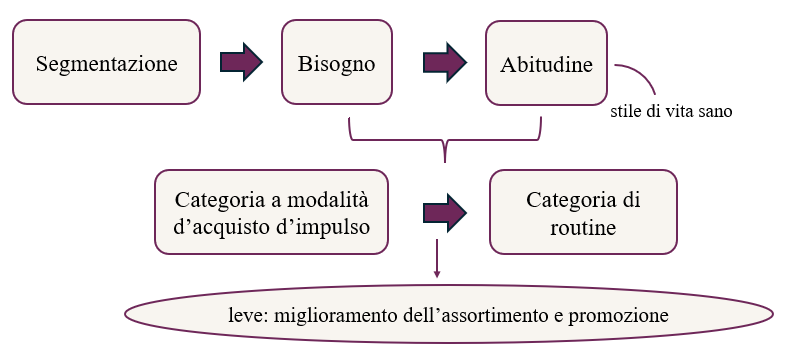
Sources: Nieddu (2026), Italian Berry (2026).
The role of each category depends on its specific objective. Berries are typically bought on impulse and are sold in stores where “traffic, turnover, promotional pressure and continuity of assortment matter” (Italian Berry magazine, 2026). Each role has a corresponding in-store strategy. A transaction-building strategy seeks to increase sales through greater assortment breadth and/or depth. An excitement strategy uses assortment and display to drive sales of products with emotional appeal, sparking curiosity before giving shoppers a reason to buy. The limited editions from Orsero and I Frutti di Gil illustrate this approach.
Routine and destination categories can build traffic because of their high purchase frequency and penetration. Increasing promotional activity is the most common way to use the category to attract shoppers. The main goal for berry suppliers and retailers, however, is to increase purchase frequency and turn an unplanned purchase into a routine one. A cash-generating strategy currently appears the most relevant, as it seeks to increase turnover in routine categories by improving the assortment and using promotions.
According to Italian Berry’s Berry Observatory, Aldi leads on value for money despite a limited assortment averaging 3.8 products per store. Esselunga combines above-average depth, at 8.3 products on average, with strong value for money. Lidl and Pam offer broad assortments but score below average for value for money (Quadretti, 2026).
Making the most of the category requires planning the assortment, pricing, layout, shelf display and promotions (Sciarelli and Vona, 2009). In most large grocery stores, a welcoming, colourful produce department is placed at the entrance to put shoppers at ease and encourage purchases of fruit and vegetables as well as less healthy foods and unplanned items (Team Comunicazione, 2026). Within this carefully designed space, berries are displayed in refrigerated wall units or in refrigerated islands placed in a high-traffic area at the centre of the produce department to improve visibility and access.
In-store advertising should catch shoppers’ attention and guide them through the aisles. Options include signs, display headers, price callouts and shelf talkers. Display planning determines where every product in the category goes. A planogram is a technical shelf layout that specifies the position, height and number of facings allocated to each product. A well-organised display highlights promotions, makes the range easier to navigate and helps shoppers understand the products, supporting impulse purchases and seasonal sales.
Good presentation also makes it easier to set up displays, reorder stock and replenish fixtures and gondolas. It affects turnover and reduces inventory costs. Allocating facings according to observed sales helps avoid stockouts and overstock of slower-selling items. Fast sellers need more shelf space and more facings (Sciarelli and Vona, 2009).
Italian Berry cites a Dutch study showing that brands promote more frequently around events such as sporting competitions and holidays, substantially increasing sales and creating new consumption occasions. During long stretches without promotions, however, the brands that discount most often tend to suffer most. Brands with broader assortments and consequently greater shelf visibility, along with private labels, tend to fare better. With prolonged promotions and overly aggressive pricing, the discount risks becoming the expected price instead of an occasional opportunity. Consumers may then delay purchases until the next promotion and see less reason to pay the regular price, which supports returns across the supply chain (Italian Berry, 2026).
As produce companies emphasise freshness and wellbeing in their marketing, established brands want shoppers to recognise and choose them. The message now needs to go further, as major apparel and electronics brands already show. Modern branding sells the product and builds identity, a consumption ritual and a sense of belonging, turning occasional purchases into habits, as blueberries are beginning to do. A pack for children therefore needs to communicate a different benefit from one aimed at athletes. Each use calls for its own message (Italian Berry, 2026). This gives companies scope to develop their communications.
Marketing communications are the fourth element of the marketing mix and help create value across the supply chain. Companies can use them to explain the relatively high price of berries and inform consumers about how the fruit is grown, harvested and stored given its perishability. Communications can also convey the sensory and nutritional qualities of berries and highlight the benefits discussed earlier. Recipes and emerging formats such as on-the-go cups can introduce new ways to eat berries. Finally, companies can promote the growing region by telling the story of local produce and build loyalty by explaining their sustainability commitments, as Sant’Orsola does with its Piccoli Frutti Residuo Zero range.
Communications in the berry supply chain matter in both B2C and B2B markets. They give proactive companies greater visibility. At trade shows, grocery buyers can meet new suppliers, reach agreements and discover newly presented varieties.
Berry Swing, Little European Heroes Against Climate Change, is Europe’s most significant recent promotion and communications project in the sector, with a budget of €1.7 million (Colombo, 2025). Launched in 2025, the three-year project was established by CSO Italy and co-funded by the European Union. Italian participants include Apofruit, Apo Scaligera, Mediterraneo Group, Gullino, Lagnasco Group and Mazzoni. The project is part of the European Commission’s Enjoy, it’s from Europe! campaign, which supports European agricultural organisations and helps them compete in international markets (Berry Swing). Its main objective is to increase consumption in Italy and Germany and raise sales by €20 million in 2028. The campaign combines web and social media activity with trade shows, events, public relations and experiential marketing. Farm visits are planned to show consumers how berries are produced and raise awareness among young people about fruit consumption and environmental sustainability. The project will also promote an urban forest in Milan with blueberries and raspberries in its understorey (Colombo, 2025). A team of ambassadors drawn from participating growers and nutritionists shares practices and values around sustainability and healthy eating (Berry Swing, n.d.).
In 2026 the project expanded into sport. Berry Swing sponsored the Italian Paralympic Committee and APT Livigno during the Winter Olympics and partnered with the Granfondo Fausto Coppi in Cuneo and the Megamarsch in Freiburg. The project recorded 130 million contacts between 2025 and early 2026 (myfruit, 2026).
Another project with the same aim as Berry Swing, also backed by the Enjoy, it’s from Europe! campaign, is Een handje zomer, Dutch for “a handful of summer”. Six major Dutch producer organisations are behind the initiative, which targets young adults whose consumption remains below its potential. It also uses multiple channels. Promotional materials feature prominently in stores, while TikTok ads and creators show young audiences how berries fit into everyday eating occasions (Italian Berry, 2026).
In Veneto, the Cariparo and Cariverona banking foundations, working with Filiera Futura, launched the local development project SMAQ (Strategie di Marketing per l’Agroalimentare di Qualità) Veneto. In 2023, €300,000 was allocated to promote berry production through traceability and e-commerce. The project aims to involve around 30 Veneto farms already operating in the berry market, as well as farms in other sectors with potential for innovation. For the full 24 months of the project, digital ambassadors supported the businesses in developing tools and solutions to connect farms with digital communications channels (Filiera Futura, n.d.).
Conclusions
This study describes a berry category in which production, trade and consumption volumes are steadily expanding. The figures show that blueberries drive the entire category, accounting for 61% of Italian berry production in 2025 (ISTAT data). From 2020 to 2025, both purchase frequency and average quantity bought per occasion also increased, making blueberries the only subcategory able to shift from impulse buying to routine purchasing.
Raspberries and blackberries followed a different path. In 2025, per capita consumption and the number of purchase occasions declined while retail prices rose. Redcurrants also face an unfavourable trend, but because prices have risen less than for other berries, they have been able to broaden their buyer base and recover sales volumes (Italian Berry magazine, 2026).
Category segmentation helps tailor the range to different consumers, but Italian Berry Dashboard surveys show that in 2024 89% of the berry assortment was standard. Only 11% was organic, zero-residue or otherwise differentiated, down from 13.4% in the previous three-year period (Quadretti, 2025).
Major grocery retailers are building customer loyalty for two reasons: more consistent sensory characteristics and pack formats, and lower prices than manufacturer brands. Conad’s sales grew faster than the market average (+10% in 2025), with private label accounting for over 80% of that growth. Coop uses variety selection to make flavour, size and crunch more consistent. This allows shoppers to recognise the same quality from one purchase to the next (Italian Berry, 2026). These findings suggest that price remains the most decisive factor at purchase compared with attributes such as presentation and pack shape and size.
Meanwhile, as suppliers look for more shelf space, they are strengthening their brands to build identity, consumption rituals and a sense of belonging. They are also investing in communications aimed at younger consumers, who are well placed to develop new buying habits, and pursuing varietal innovation.
References and online sources
- Berry Swing. (n.d.). Il Progetto. Retrieved 2 September 2026 from https://www.berryswing.eu/progetto/.
- Borsa Merci Telematica Italiana. (April 2026). Il valzer dei piccoli frutti tra Italia ed estero. Fresh Point Magazine, n. 2/2026, pp. 50–51.
- Catalkaya, G., Can Karaca, A., & Capanoglu, E. (2025). Introduction to berry fruits. Berry Fruits: Bioactives, health effects and processing, (pp. 1-17). Academic Press. https://doi.org/10.1016/B978-0-443-16011-0.00001-8.
- Colombo, D. (2025, 30 June). Piccoli frutti, un grande progetto a sostegno dei consumi. Fresh Point Magazine. https://www.freshpointmagazine.it/politiche-europee/piccoli-frutti-un-grande-progetto-a-sostegno-dei-consumi/.
- CSO Italy. (2025). Consumi anno 2025. L'ortofrutta acquistata dalle famiglie italiane. CSO Italy-Centro Servizi Ortofrutticoli. https://www.csoservizi.com.
- Di Vittori, L., Mazzoni, L., Battino, M., & Mezzetti, B. (2018). Pre-harvest factors influencing the quality of berries, Scientia Horticulturae, 233, 310-322. https://doi.org/10.1016/j.scienta.2018.01.058.
- Driscoll's. (n.d.). Official website. Retrieved 14 August 2026 from https://www.driscolls.com/.
- Driscoll's. (n.d.). Sweetness Is Our Specialty. Retrieved 26 August 2026 from https://www.driscolls.com/Berries/specialtyberries.
- Fellin, V. (2023, 7 August). Raccolta anche fuori stagione per i piccoli frutti. Fresh Point Magazine. https://www.freshpointmagazine.it/produzione-mercati/raccolta-anche-fuori-stagione-per-i-piccoli-frutti/.
- Filiera Futura. (2023, 1 December). Al via il Progetto SMAQ VENETO per l’innovazione digitale della filiera dei piccoli frutti. Retrieved 2 September 2026 from https://www.filierafutura.it/articolo_news/al-via-il-progetto-smaq-veneto-per-linnovazione-digitale-della-filiera-dei-piccoli-frutti/.
- Food and Agriculture Organization of the United Nations. (n.d.). Crops and livestock products [Data set]. FAOSTAT. Retrieved 18 May 2026 from https://www.fao.org/faostat/en/#data/QCL.
- Food and Agriculture Organization of the United Nations. (n.d.). Crops and livestock products [Data set]. FAOSTAT. Retrieved 23 May 2026 from https://www.fao.org/faostat/en/#data/TCL.
- Fresón de Palos (n.d.) Official website. Retrieved 26 August 2026 from https://www.fresondepalos.es/it/inicio/.
- Garipoli, S. (2026, April). Ortofrutta: l’experience guida la scelta a punto vendita. Fruitbook Magazine, (55), (p. 28).
- GS1 Italy-Ecr. (2012). Category management: Il modello operativo per il Sistema Italia.
- Gunal-Koroglu, D., Ozkan, G., Ozdal, T., & Kamiloglu, S. (2025). Potential health benefits of berry bioactives, their use as nutraceuticals, and regulatory issues. Berry Fruits: Bioactives, health effects and processing, (pp. 131-169). Academic Press. https://doi.org/10.1016/B978-0-443-16011-0.00004-3.
- Huijbers, H. (2018, 20 November). I piccoli frutti premium dovrebbero essere offerti in contenitori pratici e adeguati. Fresh Plaza. https://www.freshplaza.it/article/9040543/i-piccoli-frutti-premium-dovrebbero-essere-offerti-in-contenitori-pratici-e-adeguati/.
- Istituto di Servizi per il Mercato Agricolo Alimentare. (n.d.). Prezzi Origine - prodotto/varietà [Data set]. ISMEA. Retrieved 4 June 2026 from https://www.ismeamercati.it/flex/cm/pages/ServeBLOB.php/L/IT/IDPagina/5390.
- Istituto Nazionale di Statistica. (n.d.). Superfici e produzione - dati in complesso [Data set]. ISTAT. Retrieved 19 May 2026 from https://esploradati.istat.it/databrowser/#/it/dw/categories/IT1,Z1000AGR,1.0/AGR_CRP/DCSP_COLTIVAZIONI/IT1,101_1015_DF_DCSP_COLTIVAZIONI_1,1.0.
- Italiafruit News. (2014, 27 August). Acquisti d'impulso in Gdo, ortofrutta fanalino di coda. https://www.italiafruit.net/acquisti-dimpulso-in-gdo-ortofrutta-fanalino-di-coda.
- Italiafruit News. (2026, 6 September). I Frutti di Gil, i berries tornano a scuola con una limited edition. https://www.italiafruit.net/i-frutti-di-gil-i-berries-tornano-a-scuola-con-una-limited-edition.
- Italian Berry. (2020, 19 May). PAM e Sant'Orsola: accordo per piccoli frutti a marchio. https://italianberry.it/news/pam-e-sant8217orsola-accordo-per-piccoli-frutti-a-marchio-360.
- Italian Berry. (2020, 29 December). i Piccoli di Spreafico e la sfida del 100% italiano. https://italianberry.it/news/i-piccoli-di-spreafico-e-la-sfida-del-100-italiano-541.
- Italian Berry. (2020, 3 June). Mirtilli e segmenti di mercato: biologico, local e discount. https://italianberry.it/news/mirtilli-e-segmenti-di-mercato-biologico-local-e-discount-370.
- Italian Berry. (2026, 13 July). Branding e piccoli frutti: non bastano più gusto e salute. https://italianberry.it/news/branding-piccoli-frutti.
- Italian Berry. (2026, 19 March). “Een handje zomer”: la campagna olandese che promuove i berries tra i giovani adulti. https://italianberry.it/news/een-handje-zomer-la-campagna-olandese-che-promuove-i-berries-tra-i-giovani-adulti.
- Italian Berry. (2026, 20 May). Piccoli frutti in Conad: MDD, assortimento e qualità guidano la nuova fase del retail. https://italianberry.it/news/piccoli-frutti-conad-mdd-assortimento-e-qualita-guidano-la-nuova-fase-del-retail.
- Italian Berry. (2026, 26 August). Promozioni più efficaci durante i grandi eventi, ma il prezzo può indebolire la marca. https://italianberry.it/news/promozioni-grandi-eventi-efficacia-vendite-marche.
- Italian Berry. (2026, 26 June). Mirtilli 4x75g Ahold: il formato multi-snack che parla al consumatore moderno. https://italianberry.it/news/mirtilli-4x75g-ahold-formato-snack-consumatore.
- Italian Berry. (2026, 4 May). Coop Italia: piccoli frutti da acquisto d’impulso a categoria stabile, la crescita passa da assortimento, qualità e varietà. https://italianberry.it/news/coop-italia-piccoli-frutti-da-acquisto-dimpulso-categoria-stabile-la-crescita-passa-da-assortimento-qualita-e-varieta.
- Italian Berry. (2026, 4 May). I Frutti di Gil lancia la limited edition estiva 2026 ispirata alla Riviera romagnola anni ’70. https://italianberry.it/news/i-frutti-di-gil-limited-edition-estiva-2026-riviera-romagnola-allissand.
- Italian Berry. (2026, 5 May). F.lli Orsero celebra la Festa della Mamma con i mirtilli limited edition a cuore. https://italianberry.it/news/flli-orsero-mirtilli-limited-edition-festa-della-mamma.
- Kirsch, F., Lohmann, M., Böl, G.F. (2022). The Public’s Understanding of Superfoods. Sustainability, 14, 3916. https://doi.org/10.3390/su14073916.
- Mazzoni, L., Mecozzi, F., Raffaelli, D., Giovanetti, G., Pergolotti, V., Qaderi, R., & Mezzetti, B. (2025). Botanical classification, cultivation, and nutritional compounds of berries. Berry Fruits: Bioactives, health effects and processing, (pp. 19-66). Academic Press. https://doi.org/10.1016/B978-0-443-16011-0.00002-X.
- Myfruit. (2026, 31 March). Berry Swing, raggiunti 130 milioni di contatti in 12 mesi. https://www.myfruit.it/news/berry-swing-raggiunti-130-milioni-di-contatti-in-12-mesi.
- NCX Drahorad. (2026, April). Piccoli frutti: avanzano supermercati e discount. (p. 10). Italian Berry Magazine.
- Quadretti, R. (2025, 26 May). Piccoli frutti: la Gdo è matura per la segmentazione. myfruit. https://www.myfruit.it/news/piccoli-frutti-la-gdo-e-matura-per-la-segmentazione.
- Quadretti, R. (2026, 17 July). Berries, Aldi ed Esselunga in testa per qualità/prezzo. myfruit. https://www.myfruit.it/news/berries-aldi-ed-esselunga-in-testa-per-qualita-prezzo.
- SanLucar. (n.d.) Official website. Retrieved 26 August 2026 from https://sanlucar.com/en/.
- Sant'Orsola. (n.d.). Residuo Zero. Retrieved 24 August 2026 from https://www.santorsola.com/residuo-zero/.
- Sciarelli, S., Vona, R. (2009). Management della Distribuzione. Elementi di Economia e Gestione delle Imprese Commerciali. McGraw-Hill. Milano.
- Team Comunicazione. (2026, 10 August). I “Trucchi” del Marketing nei Supermercati: Come Funzionano. https://www.paginesispa.it/blog/marketing/i-trucchi-del-marketing-nei-supermercati-come-funzionano/.