







Berries are one of the greatest success stories in the fresh produce department in recent years: healthy, convenient, colorful, suitable for children and increasingly present in family shopping baskets. But this very success raises a new question for the supply chain: could the growing search for sweetness and desirability become, over time, a reputational risk?
The issue was relaunched in recent days by a LinkedIn post by Rob Kidd, an independent adviser to food businesses and food-system leaders, who connected two articles published almost simultaneously in the United States: one by The Atlantic on fruit being selected to become increasingly sweet, and one by The Washington Post on the growing weight of berries in the budgets of families with children (we had already covered this latter article on Italian Berry).
Taken individually, the two articles describe different phenomena. Together, however, they offer a very interesting reading for the berry sector: berries are no longer just a healthy and trendy product, but a category with high desirability, high consumption frequency and high economic value.
In other words, berries are now a mature category, exposed not only to competition, price pressure and global availability, but also to new forms of cultural and reputational scrutiny.
Has fruit become sweeter?
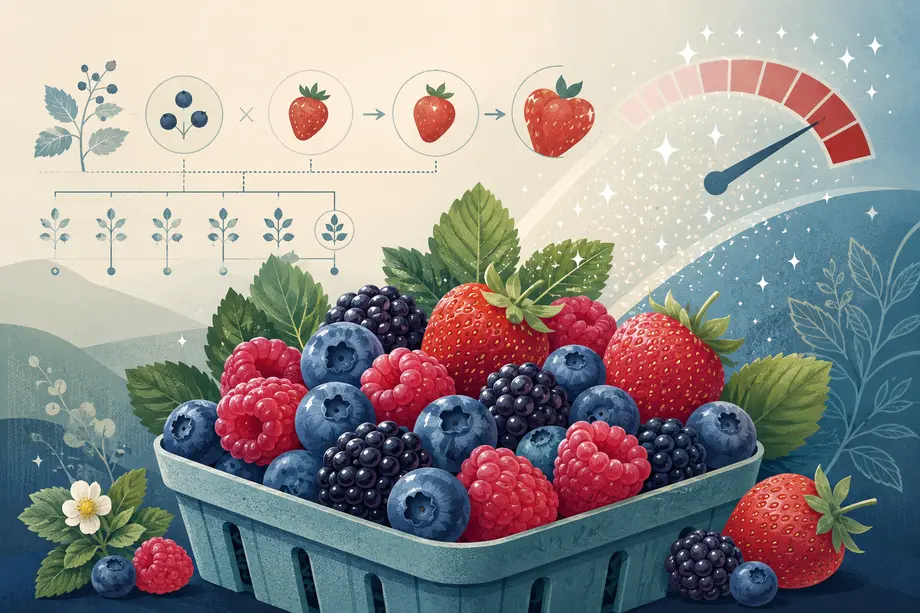
The article in The Atlantic, titled Fruit Is Too Sweet, starts from examples that are very familiar to American consumers: the Sumo Citrus mandarin, Cotton Candy grapes, extra-sweet pineapples and premium berry lines selected for a more intense flavor profile.
The central point is that a growing share of modern fruit is being offered to the market with an increasingly explicit promise: more sweetness, more gratification, more immediate pleasure.
This is not, of course, a random phenomenon. Modern breeding works on many parameters: productivity, climate adaptation, shelf life, size, texture, color, resistance to handling and organoleptic quality. But from the consumer’s point of view, especially in retail, sweetness remains one of the easiest levers to perceive and remember.
In the marketing of fresh produce, sweetness has three clear competitive advantages: it is easy to communicate, immediately understandable and encourages repeat purchases. A sweet fruit reduces the risk of disappointment, especially in a category such as berries, where consumers often pay a higher price than for more common fruit and expect a consistent experience.
The berry case: from healthy fruit to desirable product
For years, berries have benefited from a very strong positioning: colorful, natural fruit associated with antioxidants, vitamins, freshness and wellbeing. This positioning has helped transform them from a seasonal niche product into a stable category in the fresh produce department.
But today the strength of berries is not only nutritional. It is also functional and behavioral. Berries are small, ready to eat, easy to add to lunch boxes, yogurt, breakfast and afternoon snacks. They do not need peeling, they are not as messy as other fruits, they are easy to portion and they have a very attractive visual appearance.
For families, especially those with children, all this represents a huge advantage. But from a marketing point of view it also means something else: berries have become one of the categories closest to the concept of a healthy snack.
They are no longer just fruit, but a repeated, convenient and gratifying consumption solution. And it is precisely this transformation that makes the American debate particularly interesting for the European market as well.
Price enters the story
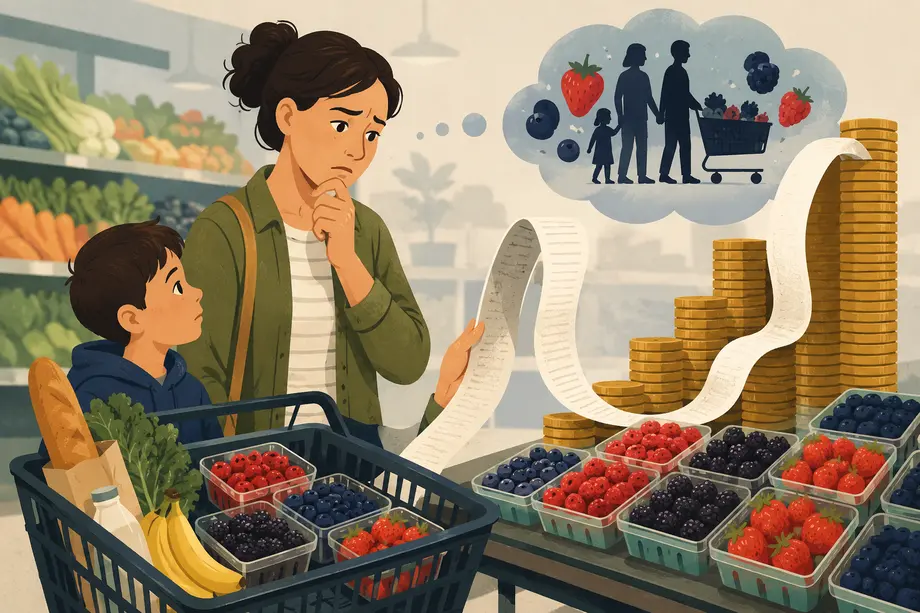
The second article cited by Rob Kidd, published by The Washington Post, approaches the issue from another perspective: that of American parents who say they are “going broke” buying berries for their children.
The tone of the article is partly ironic, but the underlying figure is very serious: according to The Washington Post, US imports of fresh berries rose from $134 million in 2000 to $4.8 billion in 2025.
This figure captures a profound transformation. Berries are no longer an occasional purchase, but a recurring item in household food spending. And when a healthy product, much loved by children and perceived by parents as almost “essential”, reaches high prices, the issue is no longer only commercial: it also becomes social and reputational.
The price of berries can be justified by many factors: harvesting costs, labor, perishability, refrigerated logistics, quality selection, waste, packaging, off-season imports and varietal investments. But the end consumer often does not see this complexity. They see a small container that empties in a few minutes and costs much more than other fruit.
The risk of the health halo
This is where a very important marketing concept comes into play: the health halo. A product perceived as healthy tends to benefit from a positive aura that reduces the consumer’s tendency to question other aspects: price, consumption frequency, economic sustainability, real nutritional balance and marketing intensity.
For years, berries have enjoyed a very strong health halo. They have been communicated as superfoods, fruit rich in antioxidants, a virtuous alternative to industrial snacks. Much of this remains true: a child eating blueberries, raspberries or strawberries instead of ultra-processed snacks is certainly making a better choice.
But the point raised by the American debate is more subtle. When a category is selected, communicated and sold in a way that maximizes desirability, the boundary between a healthy food and a premium product with a high frequency of repurchase becomes more interesting to observe.
Sweetness does not necessarily mean less health
It is important to avoid a simplistic reading. Saying that fruit has become sweeter does not automatically mean saying that it has become “bad” or harmful. Fresh fruit contains water, fiber, micronutrients and bioactive compounds that clearly distinguish it from confectionery products or ultra-processed snacks.
For the berry sector, however, the issue cannot be dismissed with a defensive response. It is not enough to say that berries are still better than candy. That is true, but it does not exhaust the problem.
The strategic point is to understand whether the continuous emphasis on sweetness may, in the long term, narrow the perception of quality to a single parameter: fruit is good if it is sweet.
This reduction would also be dangerous from a commercial point of view. Berries are not interesting only because they are sweet. They are interesting for the balance between sweetness and acidity, aroma, texture, freshness, color, origin, seasonality and the variety of the sensory experience.

Children’s palates as a competitive arena
One of the most delicate aspects of Rob Kidd’s post concerns children. According to this interpretation, the risk is not that children eat berries, but that they become accustomed to an increasingly high level of sweetness, becoming less willing to accept simpler, less sweet, more acidic or less “performing” fruit.
This is an issue the sector should take seriously, without alarmism. Taste formation is a gradual process. If the market mainly offers very sweet, perfect, uniform and ready-to-eat fruit, some consumers may lose familiarity with the natural variability of fruit: acidity, seasonal differences, different textures and less immediate flavors.
For berries this is particularly relevant. The category is widely consumed by children, has a strong presence on family social media and is often associated with an almost automatic consumption pattern. From a marketing point of view it is a strength; from a reputational point of view it can become a sensitive issue.
What the supply chain should do
The first response should not be defensive, but evolutionary. The berry sector has the opportunity to shift communication from an overly simple promise — “sweeter, better, healthier” — to a more mature narrative of quality.
For breeders, this means continuing to work on organoleptic quality, but without reducing it to Brix alone. The evolved consumer can be educated to recognize sugar-acid balance, aromatic complexity, texture, freshness and shelf life as components of value.
For growers, it means explaining the real cost of the product more clearly: manual harvesting, selection, cold chain management, perishability, agricultural labor and logistical complexity. If consumers perceive only the price per gram, the product risks seeming expensive. If they perceive the system behind the punnet, the price can be understood as value.
For retail, it means avoiding the banalization of the category. Berries can be used to generate traffic, promotions and impulse purchases, but they are also a high-trust category. Excessive pressure on price, aesthetic standards and constant availability may strengthen consumption in the short term, but weaken the narrative in the long term.
For brands, finally, it means building a positioning that is less dependent on sweetness alone. The future of premium berries will not necessarily be won by those who promise the sweetest fruit, but by those able to offer a more complete experience: taste, origin, sustainability, reliability, pleasure and food culture.
A new phase for berry marketing
The debate opened by The Atlantic, The Washington Post and Rob Kidd should not be read as an attack on berries. On the contrary, it is a sign that the category has become culturally relevant. Only products that are truly central to everyday consumption are observed, criticized and reinterpreted.
For the sector, this is both good news and a warning. Berries have won over consumers because they have combined health, pleasure and convenience. But this very combination now requires more conscious communication.
Berry marketing can no longer be limited to saying that berries are good for you and taste good. It must explain why they cost what they do, what quality means, how taste is built, what role varieties play, why seasonality still matters and why sweetness is only one part of the experience.
The real challenge will therefore be to build a category capable of remaining desirable without becoming banal, premium without seeming exclusive, healthy without hiding behind overly easy slogans.
An important part of the reputational future of berries will be played out in this balance.