







At Tuttofood (Milan, 11-16 May, 2026), one of the most interesting trajectories in the frozen berry segment is gaining ground: the transformation of berries from a service commodity into a high value-added finished product.
In this context, CHILLBERRY and Franuì stand out as two brands interpreting the segment of frozen chocolate-covered fruit with different but complementary approaches, targeting buyers, distributors and operators in advanced retail and HoReCa.
A format with high commercial potential
The positioning of these products is clear: to take the raspberry and, more broadly, berries out of the ingredient logic and place them in the area of premium snacks and ready-to-eat desserts.
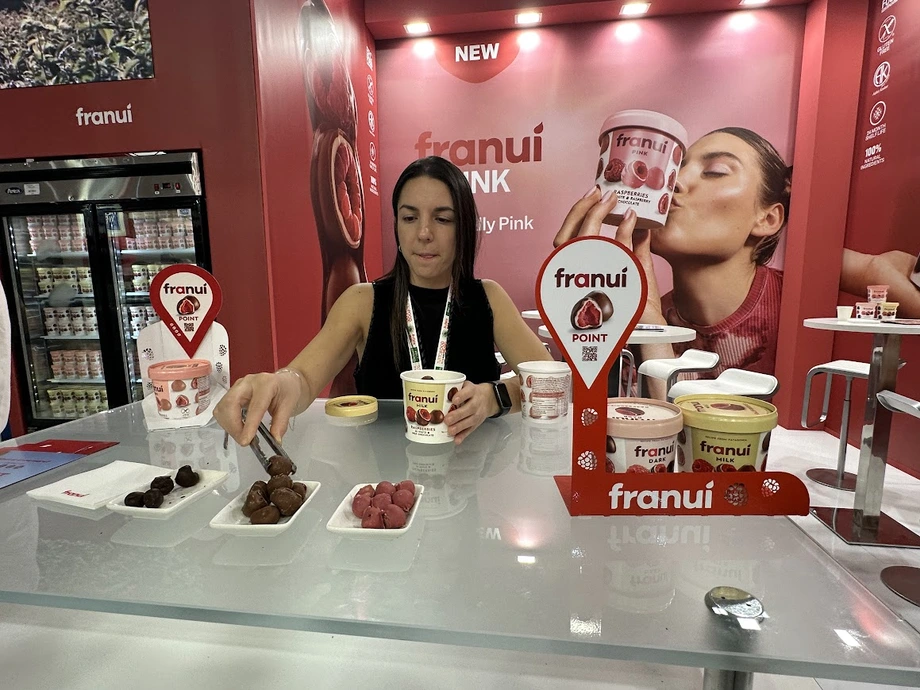
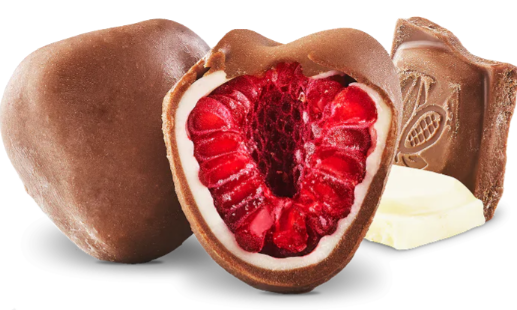
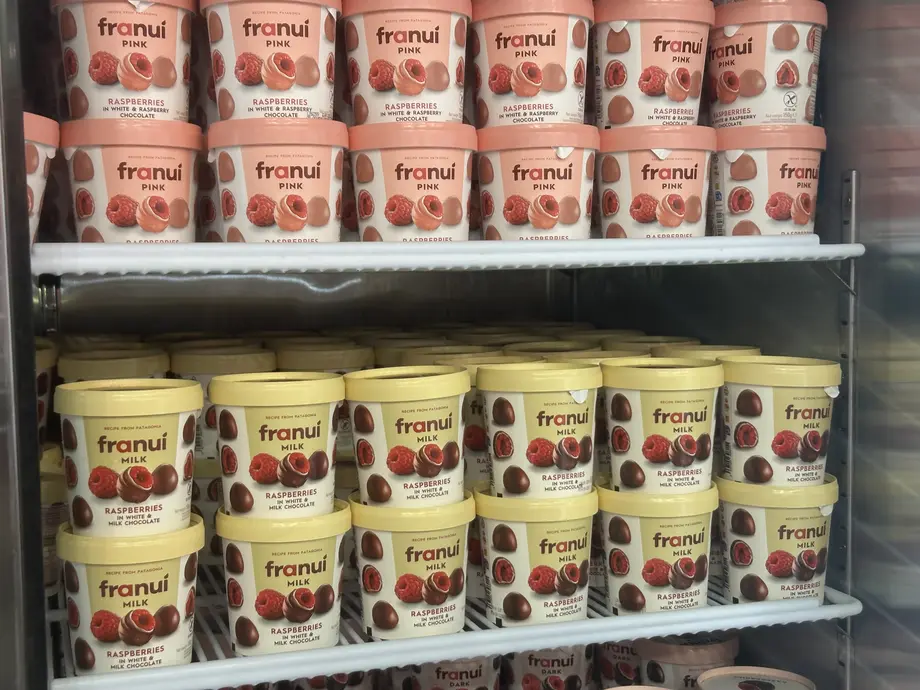
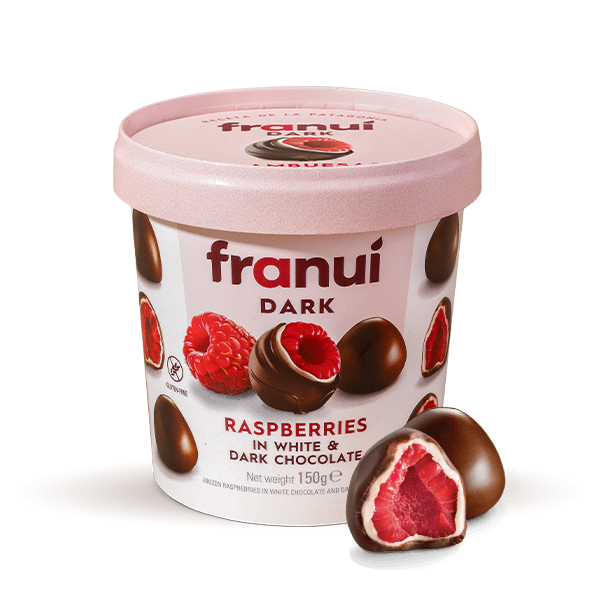
Franuì offers frozen raspberries with a double chocolate coating, in a format that combines sensory impact, product stability and ease of consumption. CHILLBERRY works along similar lines, with frozen fruit coated in chocolate that taps into growing demand for indulgent products perceived as more natural than conventional alternatives. The product is distributed iS available in major retail chains in Poland, the UK, Germany and France.
From a trade perspective, the value lies not only in the product itself, but in its ability to create shelf differentiation, support a premium positioning and increase rotation in categories where innovation is often limited.
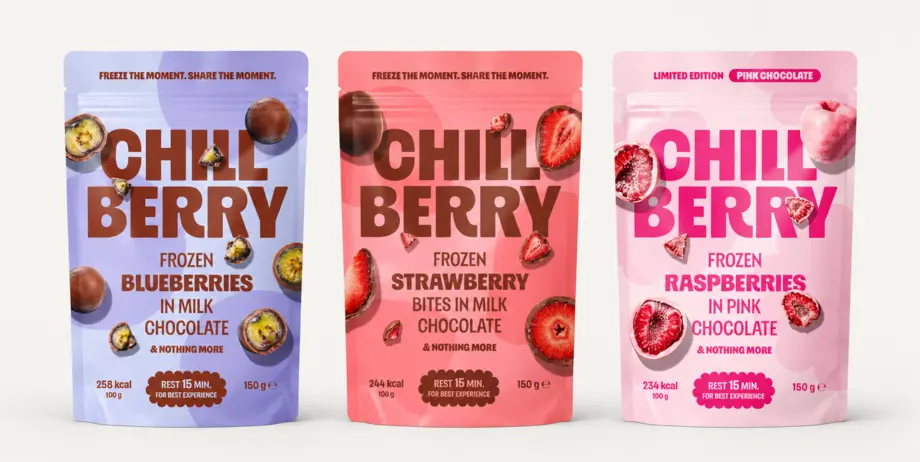
Within the CHILLBERRY portfolio, several berry-based references stand out, with a positioning focused on premium frozen snacking: Raspberry in pink chocolate in the 150 g doypack format, Raspberry in white chocolate in the 100 g and 150 g doypack formats, Raspberry in milk chocolate in the 150 g doypack format and Raspberry in white and milk chocolate in the 150 g doypack format.
The range also includes Strawberry in milk chocolate in the 100 g and 150 g doypack formats, Strawberry in white chocolate in the 150 g doypack format, Strawberry in white and milk chocolate in the 150 g doypack format, Blueberry in milk chocolate in the 150 g doypack format and the Mango Berry Blast smoothie in the 300 g pillowbag format.
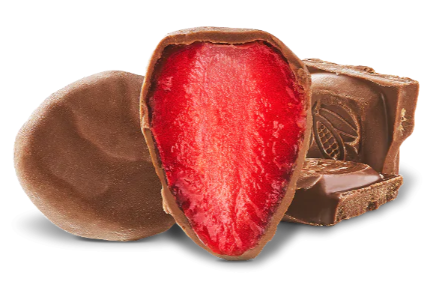
From an ingredient perspective, for example strawberry with a double chocolate coating is composed of 45% frozen strawberries and the remaining 55% chocolate coating. Other products in the range contain up to 60% frozen fruit.
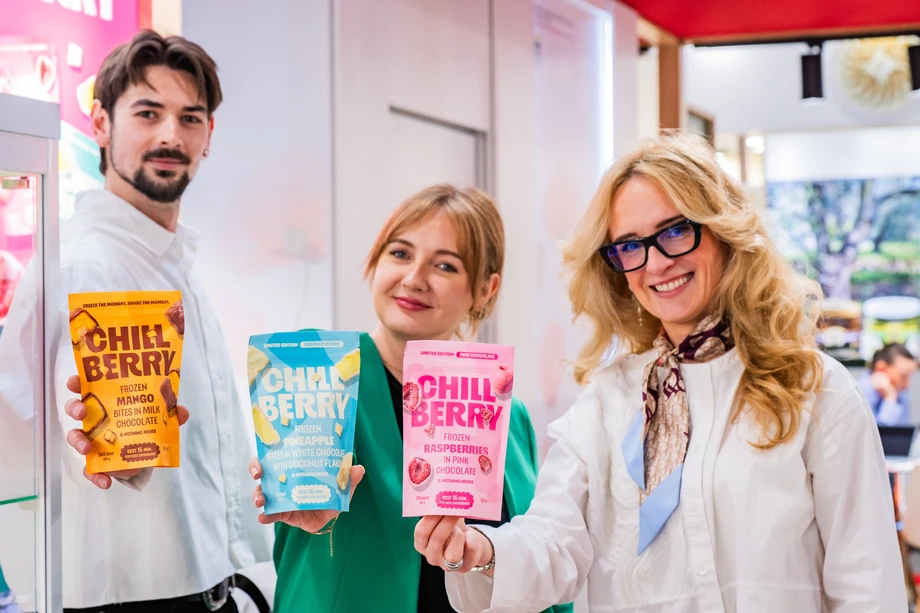 Anna, Milena and Maciej - marketing and commercial team of CHILLBERRY - at Tuttofood 2026
These references intercept several structural trends that are particularly relevant for retail and specialized channels.
- Premiumization of frozen food: frozen is no longer only a functional category, but an area where higher-margin, more experience-driven products are being developed.
- Category contamination: the product sits at the crossroads between dessert, snack, ice cream and impulse consumption, expanding consumption occasions and the potential market base.
- Portioning and convenience: the single-serve or easily divisible format responds to the need for portion control, also in the context of more evolved home consumption.
- Clean and indulgent positioning: the combination of fruit and chocolate makes it possible to maintain a high-quality perception while remaining within the treat segment.
For the trade, this hybridization of value is particularly interesting because it allows operators to occupy a still relatively uncrowded space, with potential in both grocery and specialized channels.
CHILLBERRY: simplicity and premiumization of snacking
Maciej Koziel, Brand and Marketing Manager of CHILLBERRY in Poland, sees the product as a brand-building asset as well as a commercial reference. In other words, the focus is not only on selling the individual SKU, but on building a distinctive proposition that is easy to communicate and aligned with the expectations of today’s consumer.
CHILLBERRY stands out for an approach strongly centered on naturalness and product simplicity. As Maciej Koziel, Brand and Marketing Manager of the Polish company, points out, the brand is building a true new market category.
Positioned halfway between a fruit-based snack, a freeze-dried product and an alternative to ice cream, CHILLBERRY responds to consumers’ desire to move away from ultra-processed foods in favor of simpler snacks. The flagship product, considered the true “hero product” in terms of both visual appeal and taste, is the raspberry covered in white chocolate.
The commitment to simplicity is confirmed by the recipe, which includes only two ingredients: fruit, accounting for up to 60% of the total, and chocolate.
The success of this strategy fits into the broader trend of “snacking premiumization”: Koziel highlights how people are increasingly willing to pay a premium for a snack perceived as healthier, or “better for you”, than a traditional chocolate bar.
The product, currently sold in bags ranging from 100 to 220 grams, has been designed as a versatile and shareable snack, ideal for home occasions such as watching a movie or spending an evening playing board games. This dual nature makes it suitable both for stock-up purchases in supermarkets and for impulse purchases in convenience stores.
Franuì: targeting children and adults, including cinemas
Franuì, on the other hand, carries a historical legacy rooted in a family business founded in Patagonia 60 years ago, now in its third generation.
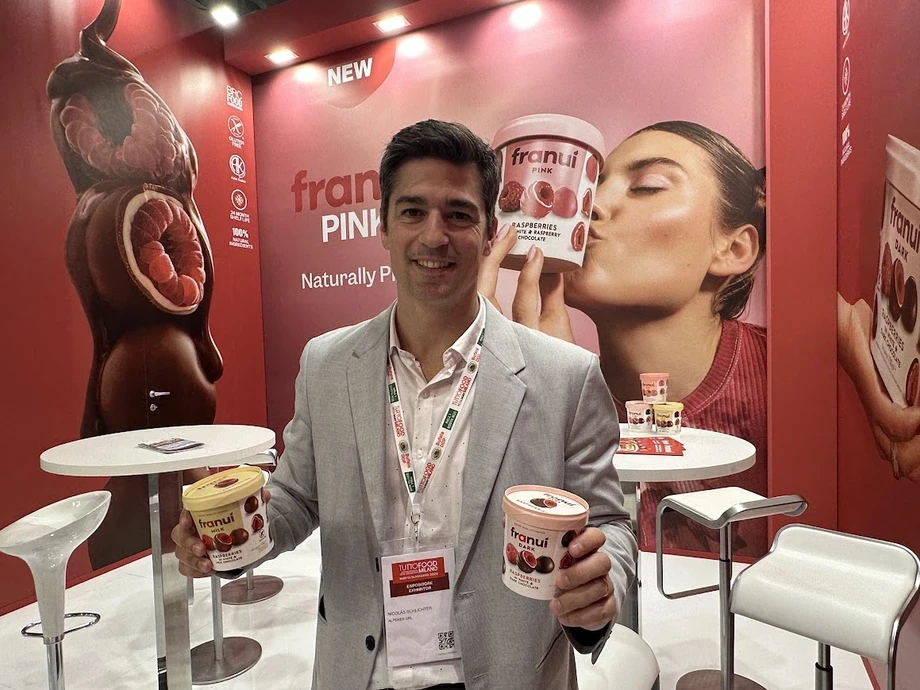
Nicholas Schlichter, Commercial Director of Franuì, explains that the company moved from chocolate processing to artisanal ice cream production, before creating a completely new category that combines ice cream, dessert, snack and chocolate in a single bite.
Thanks to the opening of a new plant in Valencia five years ago, the Argentine company has scaled up its production for export: today its products reach 60 countries across Latin America, Europe and the Middle East, with the clear goal of becoming a global brand.
At product level, each Franuì reference is composed almost half of fruit, covered with two indulgent layers of chocolate. Although the product appeals to a broad audience, from children to adults, Schlichter identifies young women as the core target consumer group.
In terms of consumption and storage conditions, the product should be defrosted at room temperature for 60 minutes before consumption. The ideal serving temperature is 5°C / 41°F. Once opened, it should be kept refrigerated at the same temperature and consumed within 72 hours. The product must not be refrozen. If the recommended storage conditions are respected, the shelf life is 18 months from the date of production.
Its hybrid nature as an indulgent snack makes it perfect for both at-home and out-of-home consumption, ensuring cross-channel presence across multiple sales channels. In addition to traditional retail and delivery apps, Franuì is achieving excellent results in cinemas, restaurants and cafés, confirming the strong flexibility of the format.
Implications for buyers and distributors
For buyers, these products offer a concrete answer to the need to introduce high-margin innovations into the assortment. Their commercial strength lies in their ability to generate trial, support the average price and qualify the frozen department with a more aspirational proposition.
For distributors, the issue is twofold: on the one hand, building a portfolio capable of responding to demand for innovation; on the other, managing a category that requires proper product storytelling, both in terms of consumption and positioning.
Success will depend on the ability to work on visibility, display formats and communication of the category’s added value.
h2>A signal for the berry sector
The interest in raspberries and other chocolate-covered berries points to a broader evolution of the sector: fruit is no longer proposed only as a fresh or frozen ingredient, but as the basis for hybrid products capable of combining naturalness, indulgence and convenience.
This is a strategic shift for the entire berry supply chain, because it opens up new spaces for commercial value creation and reduces dependence on the commodity market alone.
In this sense, CHILLBERRY and Franuì are not just two product innovations, but two category indicators: they show how the freezer can become an area of premium innovation, suited to reaching consumers looking for new experiences and buyers seeking distinctive references.