







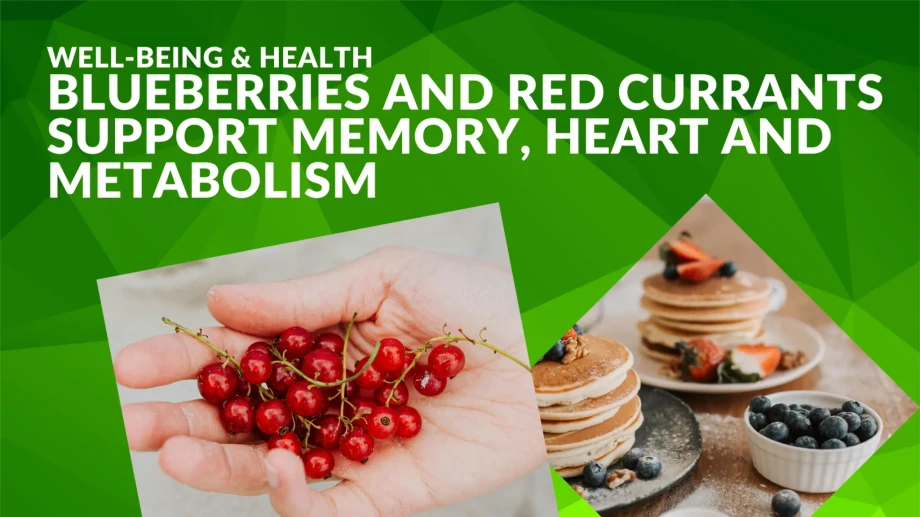
International scientific research is increasingly confirming with greater precision how regular consumption of these foods can play a key role in counteracting oxidative stress and inflammation, two factors underlying many modern diseases.
Blueberries and cognitive functions
Among the various protagonists, blueberries stand out for their beneficial effects on the nervous system. Recent analyses conducted on clinical studies have shown that the consumption of this small fruit may support cognitive functions in healthy individuals.
The evidence suggests that the nutrients present in blueberries help prevent cognitive decline, improving performance across several domains of memory and attention.
This positions blueberries not only as a functional food, but also as a pillar for long-term mental wellbeing, supported by rigorous research methodologies that confirm their effectiveness across different population groups.
Anti-inflammatory properties and metabolic health
Low-grade inflammation is often a precursor to obesity and liver dysfunction. Studies conducted on experimental models have shown that the supplementation of certain berries, such as cloudberry, can attenuate the development of metabolic inflammation by reducing markers of liver damage and protecting adipose tissues.
At the same time, blackcurrant has shown promising results in the management of type 2 diabetes, helping improve insulin resistance and protecting the heart from complications associated with high blood glucose levels.
These findings highlight how berries act on multiple fronts to preserve metabolic balance.
Cardiovascular health also benefits significantly from the inclusion of berries in the daily diet.
Particular attention has been given to aronia (chokeberry), which has proven capable of supporting the normalization of blood pressure through improved endothelial function, meaning the ability of blood vessels to dilate properly.
Although results may vary depending on the specific fruit, as in the case of raspberries and cherries, the overall effect on reducing cholesterol levels and blood pressure in individuals with metabolic syndrome is widely documented.
The combined action of these fruits helps strengthen the body’s antioxidant defenses, reducing risk factors associated with heart disease.
Conclusion
In summary, the scientific literature confirms that berries, with blueberries at the forefront, are far more than simple dietary complements.
Their ability to modulate complex biological processes, from protecting neuronal DNA to improving lipid profiles, makes them essential components of a prevention-oriented nutritional strategy.
Integrating these fruits means adopting a modern and conscious vision of nutrition, where food quality becomes the main tool for building long-term wellbeing, responding to the needs of increasingly informed consumers who care about the functional value of what they eat.
Source: Martini, D.; Marino, M.; Del Bo’, C. Berries and Human Health: Mechanisms and Evidence. Nutrients 2023, 15, 2527. https://doi.org/10.3390/nu15112527
Image source: Canva
🫐 Wellbeing & Health with Berries 🍓This article is part of the editorial series Wellbeing & Health with Berries, which brings scientific research closer to everyday life, promoting berries as allies for wellbeing. The series offers clear, up-to-date, evidence-based content, designed to inform consumers and support all operators in the berry supply chain. |