





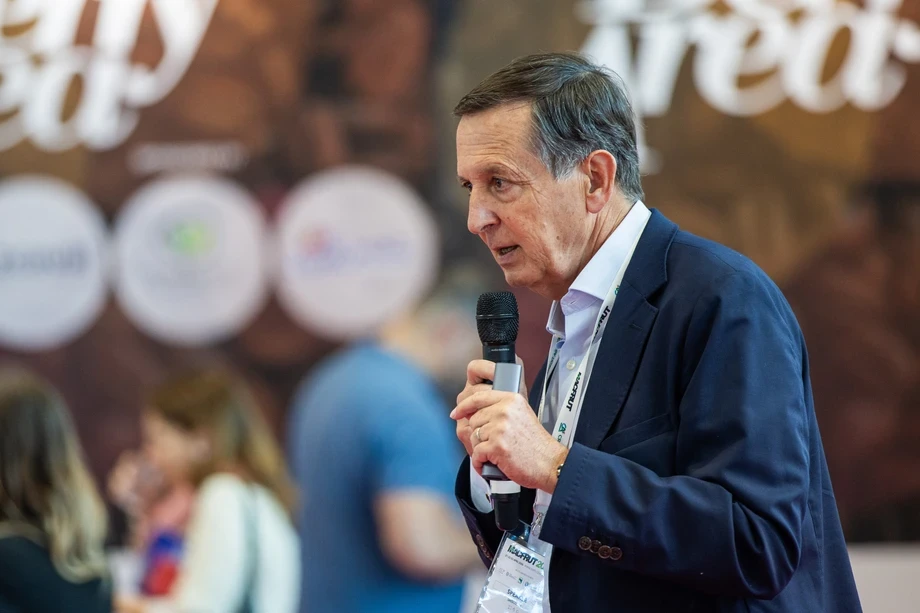
For Driscoll’s, the growth of berries is built on three pillars: genetics, brand, and the ability to create value throughout the entire supply chain. In this exclusive interview with Italian Berry, Mario Steta (VP, Governmental Affairs EMEA at Driscoll's), explains the model through which the group operates globally: from the central role of the consumer to the relationship with independent growers, from technical support to collaboration with retailers.
“Delight”: more than a promise of quality
The first word Mario Steta places at the center of the conversation is “delight”. It is not just a slogan, but one of the key concepts in Driscoll’s mission.
“As a company, we are very strong in always keeping our mission at the center. One key word is delight. It is a fundamental intent for us,” Steta explains.
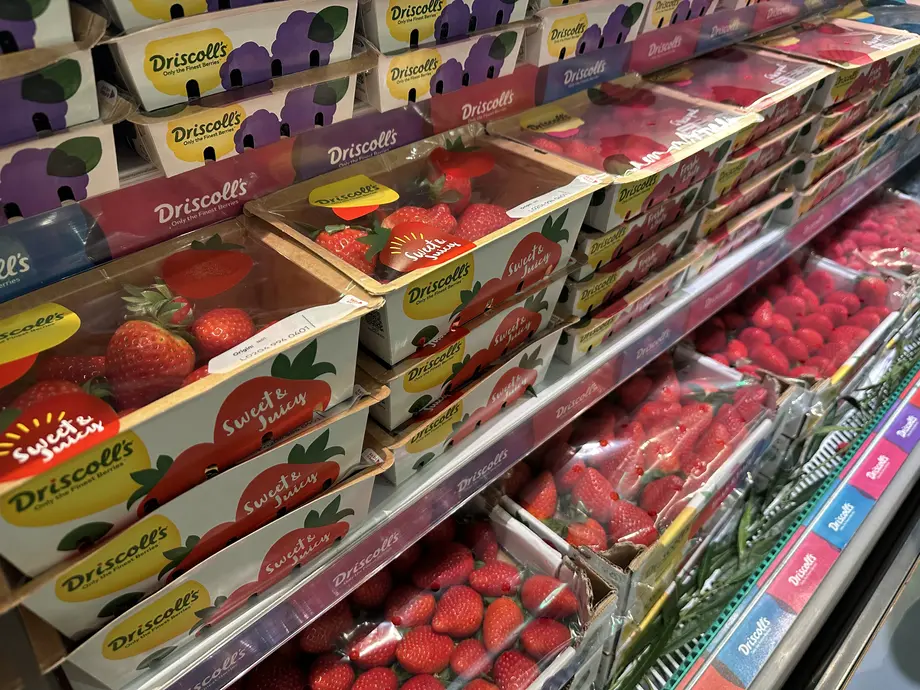
But what does “delight” really mean in the world of berries? According to Steta, it is not only about quality, nor only about flavor. It is something broader: the overall consumer experience.
“Delight does not only fulfill the logic of quality or taste. It concerns the entire consumer experience. To achieve this intent, we have to do many things that allow us to elevate what we offer, with the goal of being a premium brand and enhancing the premium elements of our proposition.”
Genetics and brand: the two engines of differentiation
In the Driscoll’s model, value creation rests on two central elements: genetics and brand.
“Driscoll’s has two fundamental elements in the logic of what it does: on one side, differentiation of the offer, based on genetics; on the other, differentiation in the market, based on the brand. The challenge is to extract value from both.”
Between these two poles, Steta explains, a system of efficiencies is built that must make the offer relevant, consistent, and effective. The point is not only to produce better, but to connect production, market, and consumption within a coherent logic.
“You need to be able to offer and build relationships on both sides: on one hand, ensuring that the offer is aligned and profitable; on the other, making sure that those working in the market recognize the value and collaborate to generate a logic of increased value.”
Steta emphasizes an important point: cost remains a factor, but it is not the center of the strategy.
“Cost is important, we do not deny that. But our focus is really on value creation.”
The relationship with growers: “If they do not invest, we do not have a business”
A distinctive element of the Driscoll’s model is its relationship with growers. The company is not based on a fully vertically integrated system, but on a global network of independent growers.
“For us, having strong growers is essential, because we work with a model of independent growers. We are not vertically integrated. This means that, if growers do not make the investment, we do not have a business.”
The most important investments, Steta points out, come precisely from the production base. For this reason, the objective is to build relationships that allow growers to be profitable, reinvest, and remain within the system.
“We do everything we can to ensure that growers are strong, so they can reinvest and continue working with us.”
Globally, Driscoll’s works with a very broad network of growers. Steta mentions an indicative scale of around 900 growers worldwide, spread across thousands of hectares.
Geographic diversification is an integral part of the model: not depending on a single production region makes it possible to improve supply continuity and the ability to respond to the market.
“Value also comes from diversification, because you do not depend on a single region. Naturally, this creates difficulties: you need to have the right genetics for the right region, the right technology, and the ability to produce with growers according to different conditions.”
Continuity, consistency, and profitability
For Steta, the real difficulty lies in finding a balance between different needs: growers with different agronomic conditions, different yields, different production capacities, and markets with increasingly high expectations.
“If you do it in the right way, you need to be able to be relevant and consistent for customers and consumers. Finding this balance is fundamental.”
The relationship with growers is described as a dynamic process, not a static one. Conditions change: production, climate, market, costs, logistics, and customer requirements all demand continuous adaptation.
“We work very closely with growers to adapt to production and market challenges. In the end, we are very intentional in trying to keep growers sustainable and profitable.”
This also implies a commercial responsibility. If Driscoll’s asks growers to meet high standards, it must also be able to create greater value for the product in the market.
“We tend to be strong on some of the things we ask from growers. For this reason, we have to recognize that we have the obligation to sell better than others. This does not mean selling better every single week, but achieving a better average over time.”
The relationship with the market, therefore, is not measured only in the short term. The logic is that of a long-term relationship.
“We build long-term relationships. Over the course of the year, the average must end up higher than the rest of the market. Some weeks we may be lower, and that is normal. But the objective is to build value over time.”
The role of technical support: optimizing genetic potential
Another pillar of the Driscoll’s model is technical support for growers. Genetics alone are not enough.
“The objective is to optimize the genetic potential of the varieties in each area. You can have a very good variety, but if you do not have the technical ability to grow it correctly, genetics are not of much use.”
For this reason, Steta explains, Driscoll’s invests heavily in building technical expertise and in the presence of specialized teams in different countries.
“We are truly obsessive about building technical support and technical capabilities. You need to understand the potential of the genetics, the issues that affect them from a production standpoint, the environment, the soil, seasonality, and different production capabilities.”
The objective is to translate varietal potential into concrete results: quality, yields, economic sustainability, and compliance with the required standards.
“With technical support, we build the angle that makes the model profitable for the grower and for Driscoll’s, optimizing results and, above all, quality expectations.”
Understanding the consumer: listening to the retailer is not enough
When asked how Driscoll’s works to better understand customers and meet their expectations, Steta identifies three levels.
The first is the direct relationship with retailers. “We work very closely with retailers to understand their needs and expectations. We try to understand the different needs of different retailers and see how we can adapt our offer.”
The second level is the final consumer. According to Steta, it is not enough to rely on what the retailer communicates: it is necessary to directly understand consumer behaviors, preferences, and expectations.
“We are very strong in understanding the consumer. Not only what retailers tell us, but what the consumer really expects.”
Expectations, however, vary greatly from market to market. The Chinese consumer, for example, may have different criteria from European or US consumers, both in terms of perceived quality and size, appearance, or product characteristics.
“We do a lot of direct work to understand consumer behaviors and their expectations. It is essential for building the logic of our offer.”
The third element is the ability to modify the offer according to these expectations, combining consumer needs with those of the retailer.
The strength of the brand and the promise to be kept
For Steta, the brand is a central asset, but only if it keeps the promise made to the consumer.
“We know, and we have seen it for decades, the value of the brand when you truly deliver the promise that the brand represents. You cannot have a brand if you do not deliver what you say the brand represents. Otherwise, you have a problem.”
This is where the almost obsessive attention to consistency between product, quality, experience, and market comes from.
“We are very focused on the brand and on what it offers. But we also know that there are markets where the brand faces difficulties.”
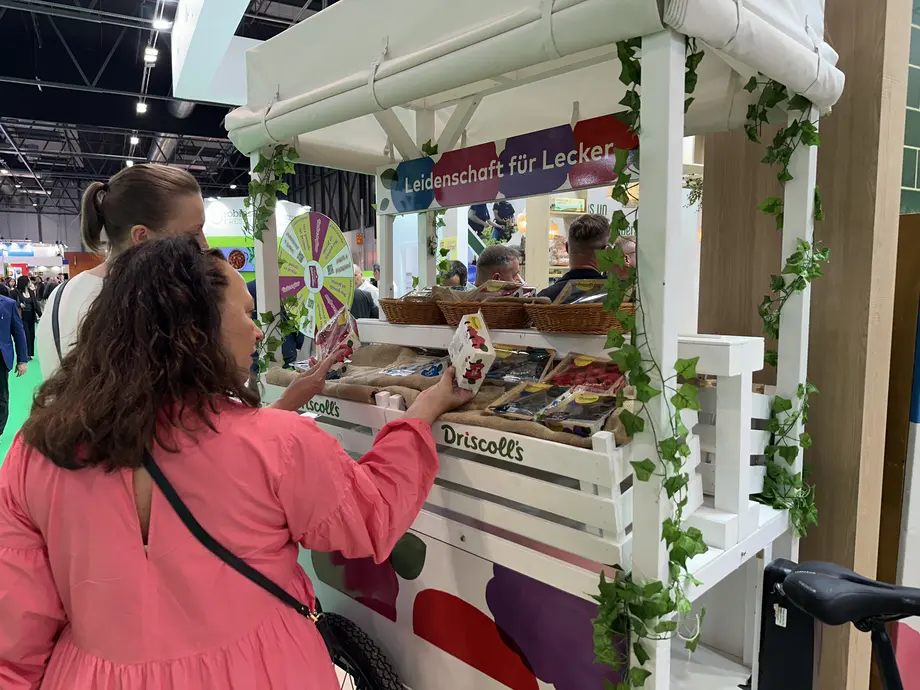
Europe, and the United Kingdom in particular, are cited as examples of complex markets, where the relationship with retailers requires adaptation and collaboration.
“We know there is an opportunity, and we work with retailers to understand how to respond to their needs. But we are convinced that the Driscoll’s brand generates value for everyone. Our task is to make sure this works.”
A global strategy, adapted to markets
Driscoll’s international presence requires a continuous balance between global consistency and local adaptation. The brand promise must remain clear, but its application changes according to markets, retailers, consumers, and production conditions.
“The way we develop the brand’s international presence is also something we work on constantly,” Steta concludes.
The message that emerges is clear: for Driscoll’s, the future of berries is not determined only by product availability or price competition. It is determined by the ability to build a system in which genetics, production, technical support, brand, retailers, and consumers are aligned around a shared objective: creating more value and delivering a superior experience.