










Summary of the presentation "The future of raspberries and blackberries: new genetic frontiers" given by Jorge Duarte (Hortitool Consulting) as part of the Berry Area 2026 event programme at Macfrut.
The European berry market is at a strategic crossroads, caught between the drive to expand consumption and the structural rigidities of a highly concentrated supply chain.
The Rubus segment, which includes raspberries and blackberries, is now worth 1.3 billion euros and faces major challenges linked to intellectual property, access to germplasm and consumer-perceived quality.
In raspberries, the main issue is excessive genetic closure and the growing weight of club models. In blackberries, by contrast, the challenge is to rebuild trust after years in which transportability and yield were often prioritized over taste.
Listen to Jorge Duarte's full presentation on Spotify
The analysis of current varietal and economic dynamics reveals an ongoing transition: from major genetic monopolies towards a more hybrid ecosystem, in which nurseries and growers are claiming an active role in the development of new cultivars to protect margins, local adaptation and consumer satisfaction.
Key takeaways
1. Market value and volumes are expanding.
The European raspberry and blackberry market reached a value of 1.3 billion euros in 2024, with around 125,000 tonnes consumed, and is projected to grow to 130,000 tonnes by 2035, although current supply shortages are holding back this development.
2. Raspberries are constrained by a proprietary bottleneck.
Raspberry cultivation is increasingly constrained by the concentration of intellectual property, limited access to germplasm and heavy reliance on club varieties, which impose significant royalty payments on growers.
3. Blackberries need to rebuild consumer trust.
Decades of selection focused on yield and transportability have often produced blackberries that are sour and seed-heavy. The relaunch depends on prioritizing flavour, which can now generate a 12% premium price and an 18% increase in repeat purchases.
4. Breeding is concentrated in fewer hands.
The sector is undergoing strong consolidation, as shown by the acquisition of companies such as Planaza and ABB by EW Group. This concentration risks narrowing genetic diversity through the continuous recycling of the same elite lines.
5. Morocco plays a strategic role.
Morocco has established itself as the leading winter supplier to the European Union, with more than 64,000 tonnes exported, using the same proprietary genetics as European growers while benefiting from more favourable climatic and operational conditions.
6. Nurseries and growers are seeking new paths to innovation.
To counter multinational monopolies, nurseries and growers are internalizing genetic development, including through the Breeder's Exemption provided for by EU Regulation 2100/94, which allows protected varieties to be used to obtain new independent cultivars.
What emerges from the presentation
The evolution of the European Rubus supply chain reveals an increasingly clear divide between the requirements of distribution logistics and actual consumer satisfaction.
This compromise, built for years around the need to guarantee resistance, shelf-life and transportability, now risks holding back the growth of a market already worth 125,000 tonnes.
The historical analysis of the sector shows how the success triggered by open-access breeding programmes in the 1980s and 1990s has gradually been replaced by an era of strong varietal privatization.
In raspberries in particular, cultivar control is now dominated by club models, long-term patents and selective access to genetic material.
Browse and download the full presentation
The risk of a genetic bottleneck
When a few elite lines are repeatedly reused, the supply chain risks reducing its genetic diversity precisely at the moment when adaptability, resilience and greater agronomic flexibility are needed.
The concentration of intellectual property can protect breeders' investment, but it can also increase costs for growers and limit the capacity for local innovation.
Raspberries: between club varieties, royalties and limited access to germplasm
Raspberries are currently the segment where proprietary pressure appears most pronounced.
The shift from public or open-access programmes to private models and club varieties has profoundly changed the economic balance of cultivation.
For growers, access to the best genetics often entails contractual constraints, royalties and commercial limitations. This can ensure greater quality control and market coordination, but it reduces the autonomy of farms.
The consolidation of the breeding sector, with operations such as the acquisition of Planaza and ABB by EW Group, further reinforces this dynamic, concentrating control over strategic genetic lines in the hands of a few players.
Blackberries: from a crisis of trust to the frontier of flavour
The blackberry segment has experienced a deeper quality crisis, linked to decades of selection focused mainly on yield, resistance and transportability.
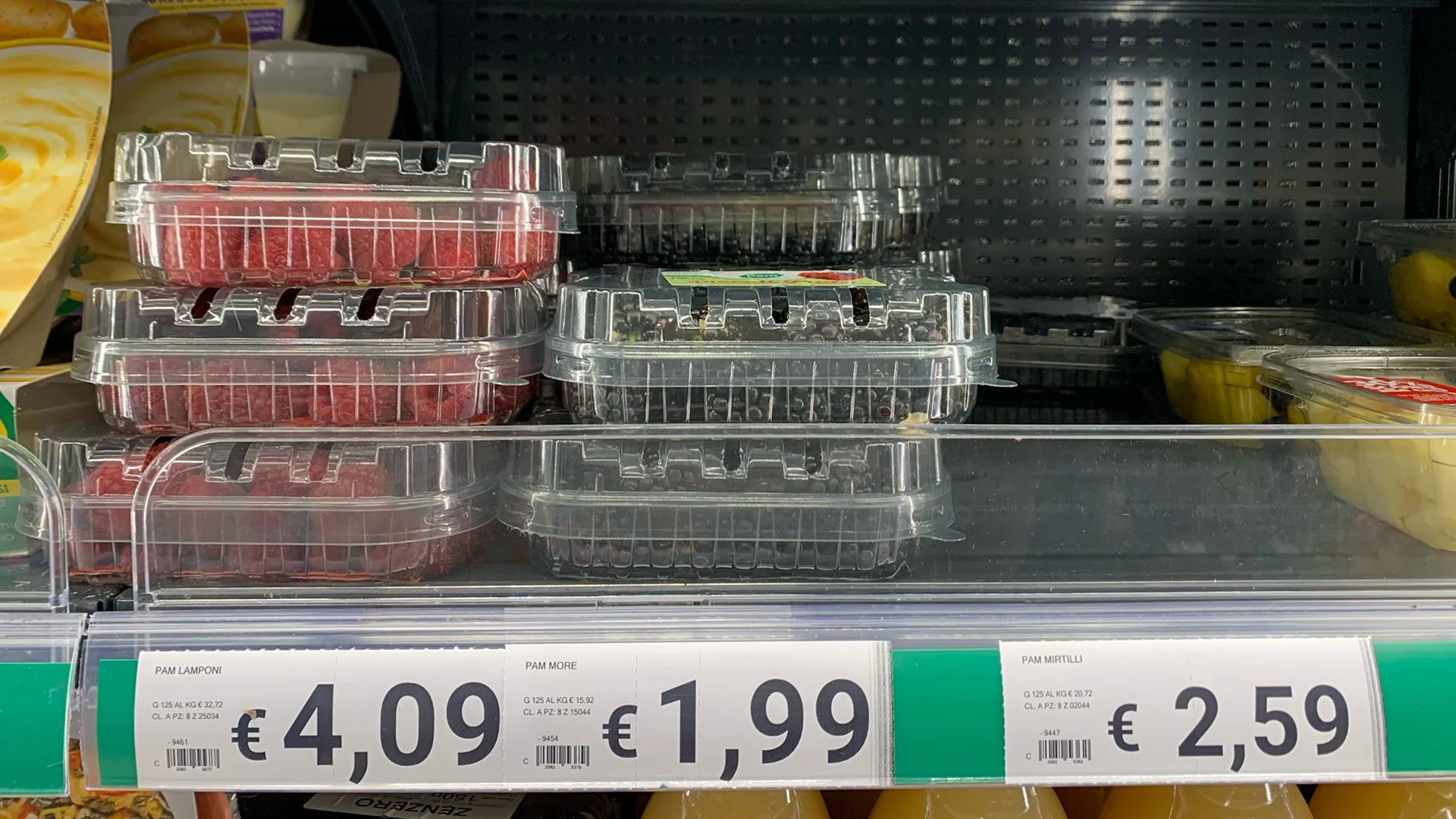
The need to move fruit over thousands of kilometres, as happens with off-season supplies from production areas such as Morocco and Mexico, has favoured firm and resistant varieties that are often penalized in terms of eating quality.
The result has been a product that is sometimes sour, seed-heavy and poorly aligned with consumer expectations. In many cases, early harvesting for logistical reasons has prevented full sugar development and increased the risk of quality loss along the distribution chain.
Today, the paradigm is changing: the new competitive frontier is flavour. Taste quality, seed texture, the balance between acidity and sweetness, and eating pleasure are becoming central criteria, no longer elements to be sacrificed in the name of shelf-life alone.
| Critical factor | Effect on the supply chain | Strategic response |
|---|---|---|
| Genetic concentration | Limited access to cultivars and higher licensing costs. | Development of independent programmes and strategic use of the Breeder's Exemption. |
| Club models | Greater quality control, but lower autonomy for growers. | Carefully assess the balance between royalties, expected price and commercial risk. |
| Unsatisfactory blackberries | Loss of consumer trust and reduced repeat purchases. | Refocus breeding on flavour, more acceptable seed texture and sensory quality. |
| Competition from Morocco | Pressure on European growers during the winter window. | Differentiate through quality, origin, freshness and local adaptation. |
| Supply shortage | The market cannot fully express its growth potential. | Expand the production base with genetics better suited to local microclimates. |
Morocco as a strategic platform for the European winter
Morocco's role has become central to the balance of the European raspberry and blackberry market.
With more than 64,000 tonnes exported, the country has established itself as the leading winter supplier to the European Union.
The strength of the Moroccan model lies in the combination of proprietary genetics, favourable climatic conditions, operational availability and the ability to serve the European market in a high-value window.
This structure creates significant competitive pressure on European growers, who often use the same genetics but operate with higher costs and less favourable climatic conditions.
Towards a hybrid innovation ecosystem
To overcome the rigidities of large breeders and regain margins of autonomy, a hybrid innovation ecosystem is taking shape.
Nurseries, structured growers and independent consortia are beginning to develop in-house genetics, with the aim of creating varieties better suited to their microclimates, production models and specific commercial needs.
In this context, the Breeder's Exemption provided for by EU Regulation 2100/94 takes on a strategic role. The regulation allows protected varieties to be used as starting material for new crosses, enabling the legal development of distinct and independent cultivars.
The potential result is the creation of new royalty-free varieties, or at least varieties less constrained by major monopolies, more tailored to local needs and more flexible in commercial management.
The new competition is played on flavour
In Rubus, logistics remain fundamental, but they can no longer be the only selection criterion.
Future growth will depend on the ability to combine shelf-life, agronomic adaptability and a taste quality capable of generating trust, repeat purchases and willingness to pay.
Aligning genetics, microclimates and the cold chain
The future architecture of the sector will require greater alignment between genetic development, production areas and post-harvest management.
An excellent cultivar from a genetic point of view can lose value if it is not suited to the microclimate where it is grown or if it is handled with an inadequate cold chain.
By contrast, genetics selected for specific local contexts, combined with impeccable logistics, can improve commercial performance at shelf level and strengthen consumer trust.
In the case of blackberries, this transition is particularly delicate: the biology of the fruit, its high respiration rate and its sensitivity to temperature fluctuations require far more rigorous technical management than the market has often perceived in the past.
In summary
The European raspberry and blackberry market still has significant potential, but growth cannot be based solely on increasing volumes.
In raspberries, the central issue is access to genetics and the economic sustainability of club models. In blackberries, the priority is to rebuild consumer trust through varieties that are genuinely better tasting, less sour and more consistent in the eating experience.
The European Rubus supply chain is therefore entering a phase of redefinition: less passive dependence on major genetic monopolies, more local innovation, greater focus on flavour and technical management capable of protecting value from field to shelf.