







Italian blueberries are growing in consumption, but remain fragile in terms of competitiveness. This is the contradiction now affecting one of the most dynamic categories in the Italian fresh produce sector. On the one hand, demand is surging: over the past year, household purchases of blueberries in Italy increased by 41% in volume and 35% in value, confirming a market that is still expanding rapidly. On the other hand, the national production system is facing mounting internal and external pressure, making a serious strategic reflection no longer postponable.
The point is not whether Italian blueberries have a future. The point is to understand what kind of future that will be: one of survival, relying on inertia and the resilience of individual farms, or one of renewal, built on productivity, quality, innovation and supply chain organization.
A growing market is no longer enough
The consumption boom does not automatically guarantee stability for growers. In an increasingly integrated global market, prices are no longer shaped only in Italian fields, but within a much broader and more aggressive competitive system. Geography alone is no longer a sufficient competitive advantage.
While Italy continues to think in terms of local positioning, new players are moving with very different speed and scale. Romania, for example, is using European funds to develop plantations of over 100 hectares, with a commercial window that overlaps directly with the Italian summer season. Georgia, meanwhile, has turned earliness into a strategic lever to reach the market ahead of the rest of Europe. And then there is Serbia, a case that deserves attention not only for its volumes, but for what it suggests to Italy: how risky can it be to concentrate an entire production system on a single variety and on an overly compressed sales window?
The question for the Italian sector is as simple as it is uncomfortable: are we building a resilient supply chain, or are we repeating weaknesses that other countries have already experienced?
The real weakness is technical, not climatic
If international competition is becoming tougher, Italy must also face its own structural limits. One of the most significant figures concerns productivity: Italy’s average blueberry yield stands at 7.8 tons per hectare, compared with 13.8 tons in Southern Europe and 9.0 tons in Central and Northern Europe.
This is not just a statistical gap. It is a difference that weighs on the economic sustainability of plantations and on the ability to compete. And above all, according to the most advanced analyses, climate is not what explains this gap. The issue is technical: varietal choices, agronomic management, production models, farm organization, harvest efficiency and post-harvest quality.
In other words, competitive advantage no longer depends only on where blueberries are grown, but on how they are grown, what is grown, and the vision behind the entire production project.
Labor: the constraint affecting the entire supply chain
Among the most urgent challenges is the issue of labor, which is becoming increasingly expensive, harder to find and crucial for farm profitability. The problem does not concern harvesting alone, but the overall organizational sustainability of the sector.
This is where one of the most sensitive questions for the future of Italian blueberries emerges: how can rising costs and labor shortages be addressed in a context where many international competitors are accelerating toward machine harvesting? This comparison cannot be avoided. If the rest of the world is investing in efficiency and automation, Italy cannot expect to remain competitive by relying only on the perceived quality of its product.
The challenge will be to reconcile efficiency and value, cost containment and high standards, shelf life and market positioning.
Fragmented or organized: the decisive challenge
But perhaps the deeper issue concerns the very structure of the sector. In many competing countries, growers operate within more cohesive systems, supported by strong and recognizable national associations capable of creating critical mass, shaping strategic debate and strengthening the positioning of the sector as a whole. This is happening in Georgia, France, Portugal and Ukraine. Not always through the same models, but with one common logic: competing as a system.
Italy, by contrast, continues to appear fragmented. And at a time when the market rewards continuity, reliability, shelf life, varietal identity and service capability, this fragmentation risks becoming a serious handicap.
The real crossroads is here: do we want to stay in the game by chasing price, or do we want to build a stronger positioning based on real quality, supply chain organization and greater strategic vision?
Macfrut 2026: discussing the future of Italian blueberries
Rimini Expo Centre, April 21-23, 2026
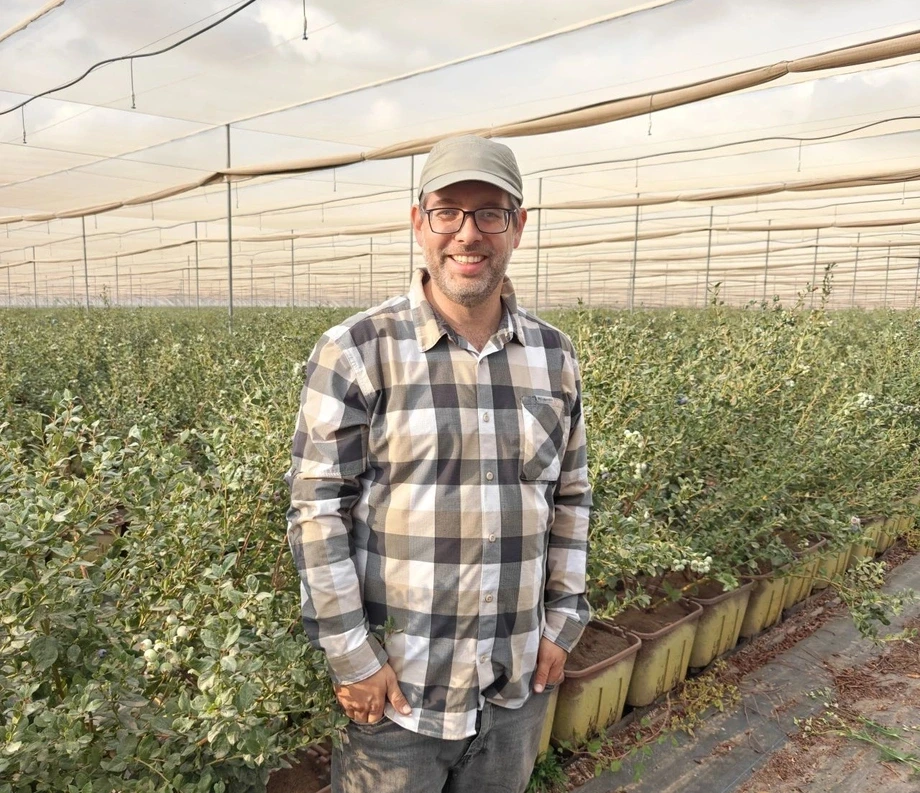
Sessions with Marco R. Butera (BetterBerries)
Blueberries in the global market: implications for the Italian production system (Tuesday, April 21, 2026 · 11:00-11:30)
Soil or soilless? Designing a modern production system for blueberries (Tuesday, April 21, 2026 · 12:00-12:30)
There is no more time to delay
Italian blueberries are facing a decisive turning point. Demand is growing, but the market is moving even faster. Competitors are becoming more structured, investing, moving earlier and joining forces. For Italy to remain a key player, it will need to overcome several constraints that have so far limited the full development of the sector: yields that are too low, varietal dependence, rising costs, increasingly critical labor shortages and a limited ability to act as a system.
The future will depend not only on new planted areas or new varieties, but on the ability to build a supply chain that is more efficient, more cohesive and more market-oriented. That is why the discussion at Macfrut 2026 is shaping up to be one of the most important moments for anyone who wants to understand not only where the sector is heading, but also who will truly be able to remain in it.
The challenge is not to compete less. It is to compete better.