









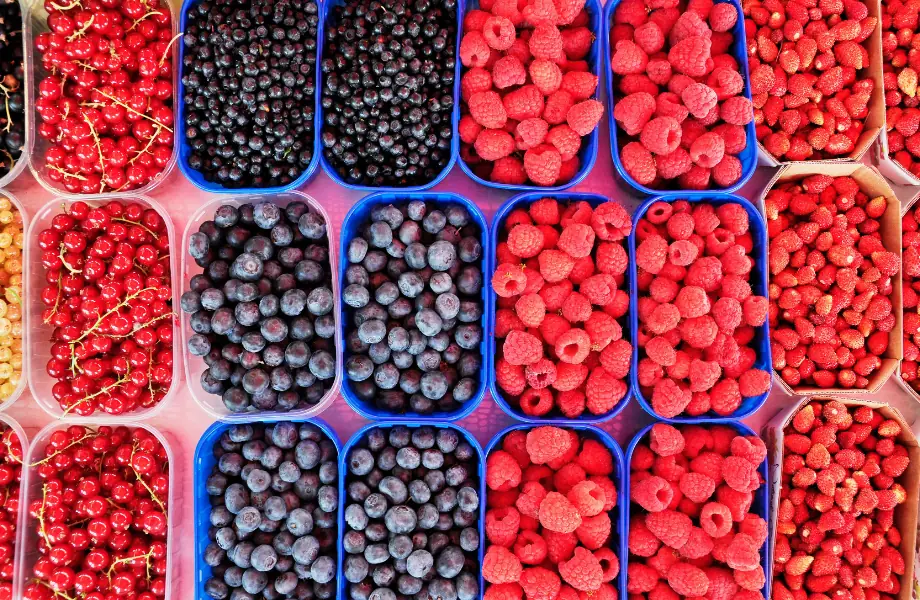
Today we are used to finding strawberries, raspberries and blueberries on supermarket shelves in every season, an availability we often take for granted. However, behind this apparent abundance, the berry sector is facing unprecedented global challenges, driven by increasingly erratic climate conditions that expose crops to new pests, diseases and drought. European scientific research is currently at the forefront to ensure that these small fruits not only continue to reach our tables, but do so with increasingly high quality and nutritional standards.
New frontiers in berry breeding
To respond to the threats of climate change, the European project BreedingValue, coordinated by the Università Politecnica delle Marche, is working to increase the genetic biodiversity of cultivated varieties. The goal is to identify in germplasm — the genetic material contained in seeds and plants — the best traits for disease resistance and water resilience.
Through the study of wild species and historic varieties, researchers aim to pass on key characteristics to seed companies: not only the ability to adapt to difficult climates, but also the preservation of the sensory qualities consumers seek, such as sweetness, aroma and the ideal texture. This approach makes it possible to preserve the identity of berries while making them, at the same time, more robust and sustainable.
Processing technologies: healthy and “tailor-made” snacks
In addition to the cultivation phase, innovation also closely involves post-harvest processing. The FRIETS project is developing new dehydration techniques to extend the shelf life of berries and create healthy snacks without added sugars, salts or chemical preservatives.
The technologies used include: microwave vacuum drying and freeze-drying: gentle methods that reduce the risk of degrading the fruit’s proteins and valuable bioactive compounds.
Osmotic dehydration: a process that removes water by immersing the fruit in a glycerol solution, a natural sweetener, protecting the product’s nutritional integrity.
These advances make it possible to create personalized products for specific population groups, such as athletes, children or people with type 2 diabetes, offering, for example, snacks with reduced sugar content and enriched with protein. The goal is to maximize the presence of natural antioxidants and antimicrobial compounds already found in berries, enhancing their therapeutic benefits.
Sustainability and packaging: beyond plastic
Research does not stop at the content, but also looks at the container. To reduce environmental impact, edible coatings made from seaweed are being tested. These protective membranes not only help preservation and may even enhance the flavor of berries, but also represent an environmentally sustainable and potentially advantageous alternative to traditional plastic packaging.
Conclusions: a pillar of modern nutrition
Berries are true concentrates of vitamins, minerals and essential nutrients, capable of playing a crucial role in reducing the risk of cardiovascular disease, diabetes and other degenerative conditions. Thanks to the integration of genetic improvement and advanced processing technologies, these fruits are confirmed not only as a pleasure for the palate, but also as strategic components of functional nutrition.
In an era in which well-being increasingly depends on conscious choices, the ability to preserve and enhance the natural beneficial properties of these small treasures of the earth becomes the key to building a modern food model, oriented toward lasting health and in harmony with the challenges of our planet.
Image source: Unsplash
🫐 Well-being & Health with Berries 🍓This article is part of the editorial series Wellness & Health with Berries, which brings scientific research closer to everyday life, promoting berries as allies for well-being. The series offers clear, up-to-date, and evidence-based content designed to inform consumers and support all operators in the berry supply chain. |