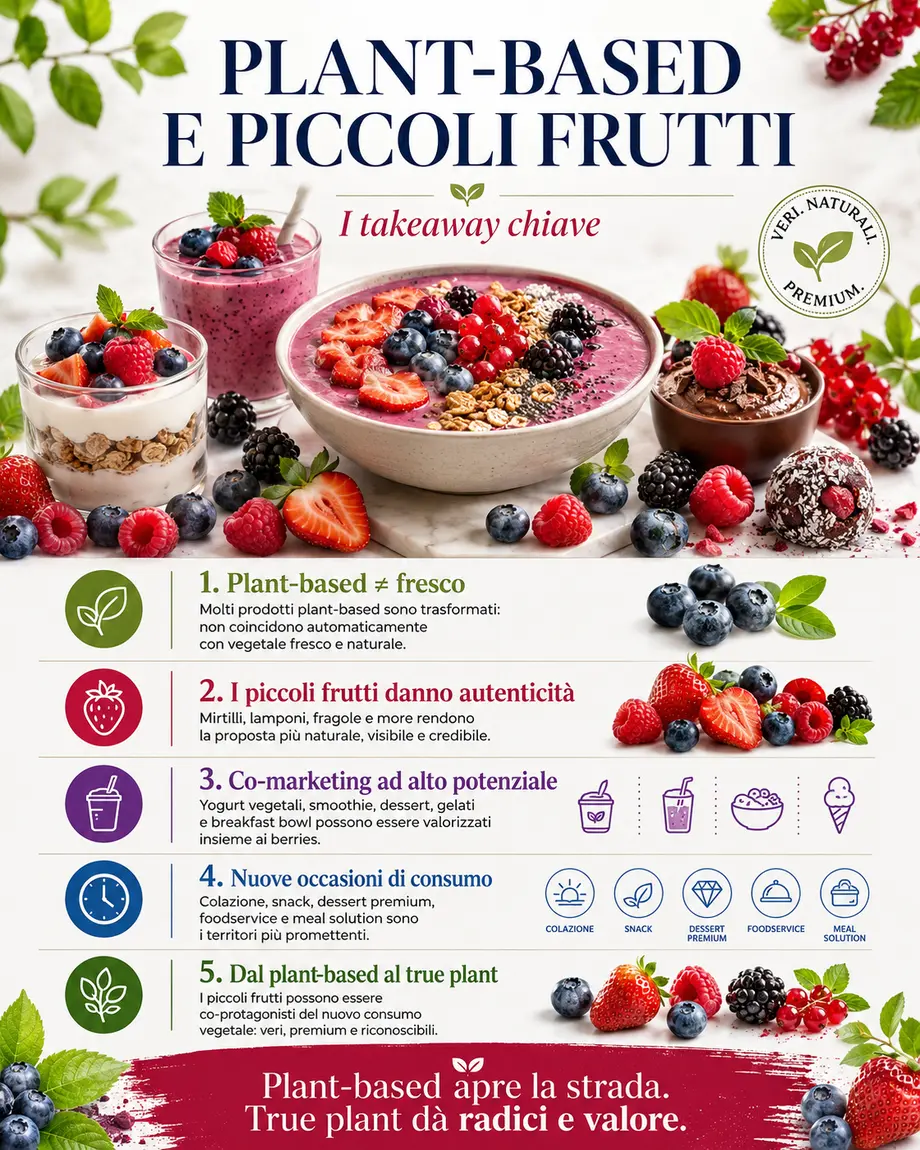







Plant-based originated as a food concept founded on the primacy of plant ingredients, but in its commercial evolution it has often become synonymous with processed products that imitate meat, milk and dairy derivatives. For the berry sector, this opens up a strategic opportunity: to bring the real, recognizable, agricultural and highly sensory plant back to the center, moving from plant-based to true plant.
The term plant-based is now one of the most widely used keywords in the food industry. It refers to products, diets and consumption models based predominantly or exclusively on ingredients of plant origin. In its broadest sense, it includes vegetables, fruit, cereals, legumes, seeds, nuts, tubers and vegetable oils.
In commercial language, however, the term has above all become the container for a new generation of alternatives to meat and animal-derived products: plant-based burgers, plant-based sausages, milk alternatives, plant-based yogurts, desserts, snacks and ready meals.
This evolution has generated an interesting contradiction. On the one hand, plant-based has given visibility to the plant world, making it contemporary, innovative and aspirational. On the other, many plant-based products have ended up hiding the agricultural origin of their ingredients behind complex formulations, reconstructed textures and promises of meat imitation.
This is where the fruit and vegetable sector — and berries in particular — can play a new game. Not by chasing plant-based on the ground of imitation, but by supporting it with a more authentic proposition: true plant, meaning the real, recognizable, agricultural, varietal, territorial and sensory plant.
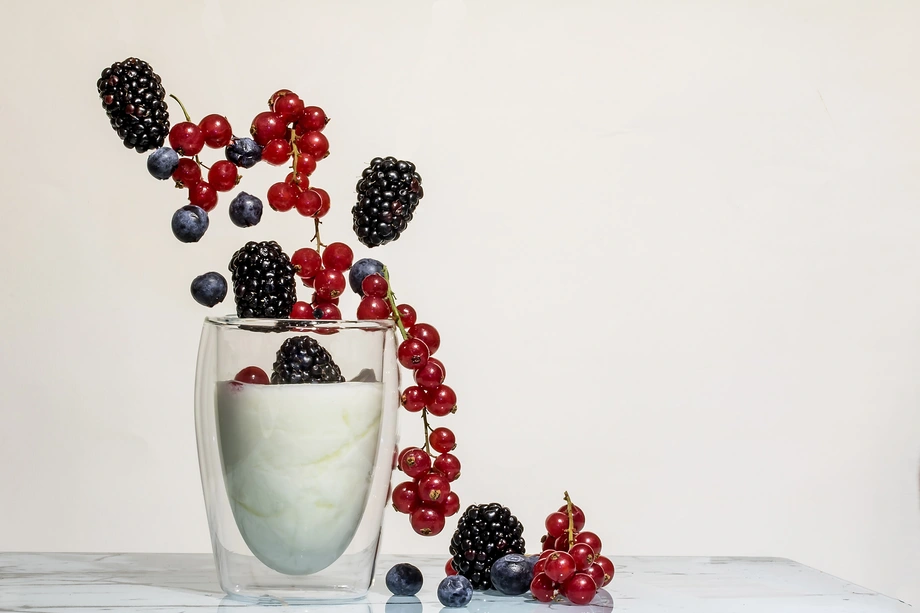
From plant-based to true plant: a strategic distinction
Plant-based has had the merit of opening up a new food conversation. It has brought to the center issues such as sustainability, reduction of animal protein consumption, food innovation, perceived health and new habits among flexitarian consumers.
However, commercial plant-based products have often been built around a precise promise: replicating the meat experience. A plant-based burger must resemble a meat burger, a plant-based sausage a traditional sausage, plant-based milk cow’s milk. This logic has created innovative products, but also a cultural dependency: the plant is valued to the extent that it manages to imitate the animal.
True plant instead proposes a different perspective. It does not start from substitution, but from the valorization of plant identity. A blueberry does not have to imitate anything. A raspberry does not need to look like something else. A blackberry, a strawberry, a red currant or a baby kiwi already has a strong sensory profile: color, acidity, sweetness, aroma, freshness, naturalness, seasonality and origin.
This is why berries are perhaps one of the most suitable categories for developing a new alliance between plant-based and true plant. They are plants, but not generic. They are natural, but also premium. They are fresh, but can enter advanced processed products. They are health-oriented, but also indulgent. They are agricultural, but have a modern image.
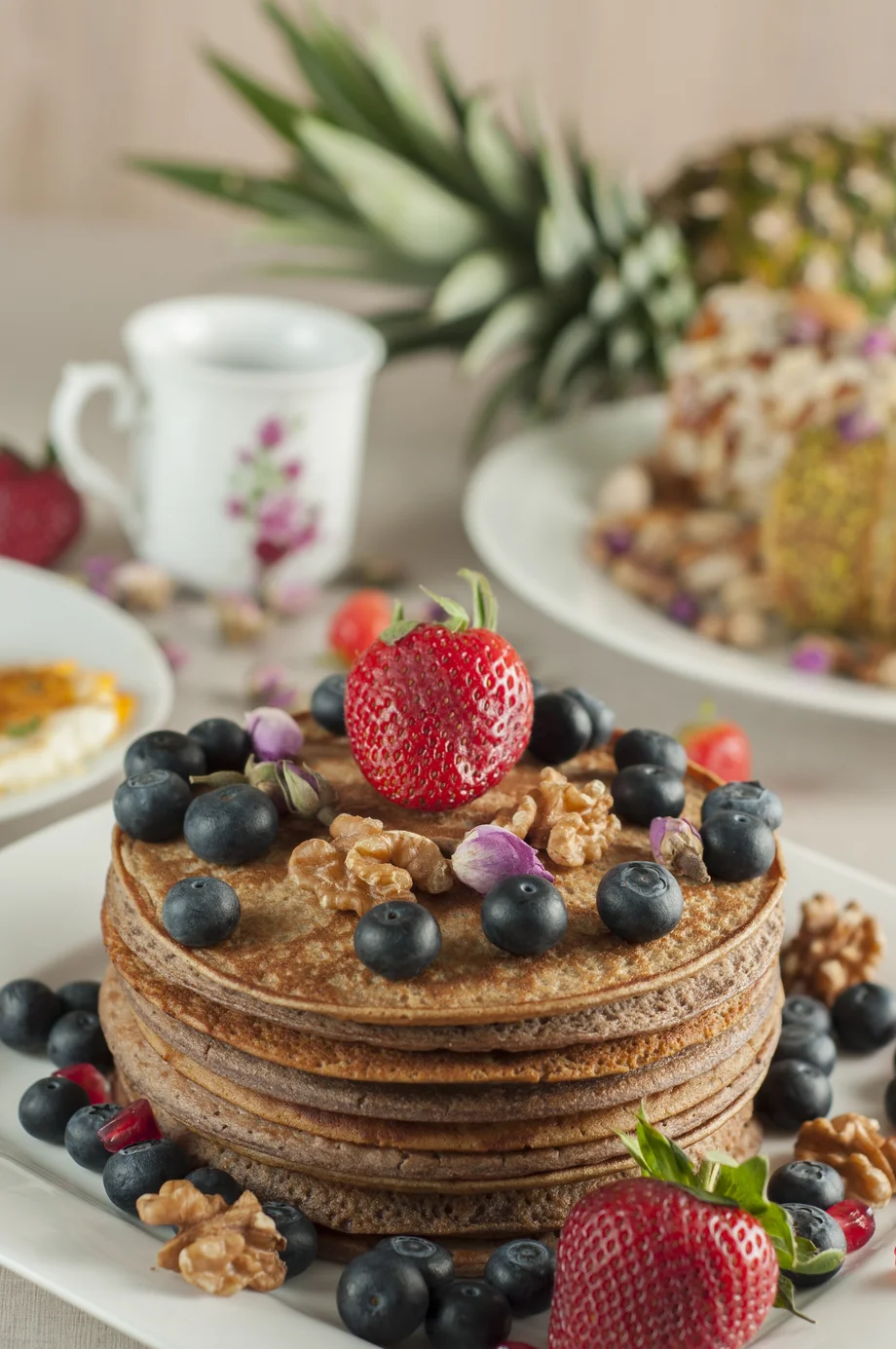
Berries as a bridge between naturalness and innovation
In the plant-based world, one of the most evident problems is the perception of excessive processing. Many consumers are attracted by the idea of reducing meat and animal-derived products, but remain cautious toward products with long ingredient lists, additives, flavorings, isolated proteins and artificial textures.
Berries can help solve this problem because they bring an immediately legible element into plant-based products: real fruit. A plant-based burger may appear technological; a plant-based dessert may seem formulated; a plant-based yogurt may appear as a substitute. But when recognizable blueberries, raspberries, strawberries or blackberries are at the center of the proposition, perception changes.
The plant-based product becomes more natural, fresher and more credible. The plant component is no longer only declared on the label, but visible, colorful and sensory.
This is especially true for several consumption areas:
- plant-based yogurts and desserts with blueberries, raspberries, strawberries or blackberries;
- smoothies and plant-based drinks based on oat, almond or soy and enriched with berries;
- breakfast bowls with plant-based yogurt, granola and fresh berries;
- refrigerated snacks with fresh fruit and plant-based creams;
- plant-based ice creams and frozen snacks with whole or diced berries;
- bars and functional products where berries add color, taste and perceived nutritional content;
- sweet or savory ready meals in which berries become a distinctive ingredient.
In all these cases, berries are not simple flavors. They are value drivers.
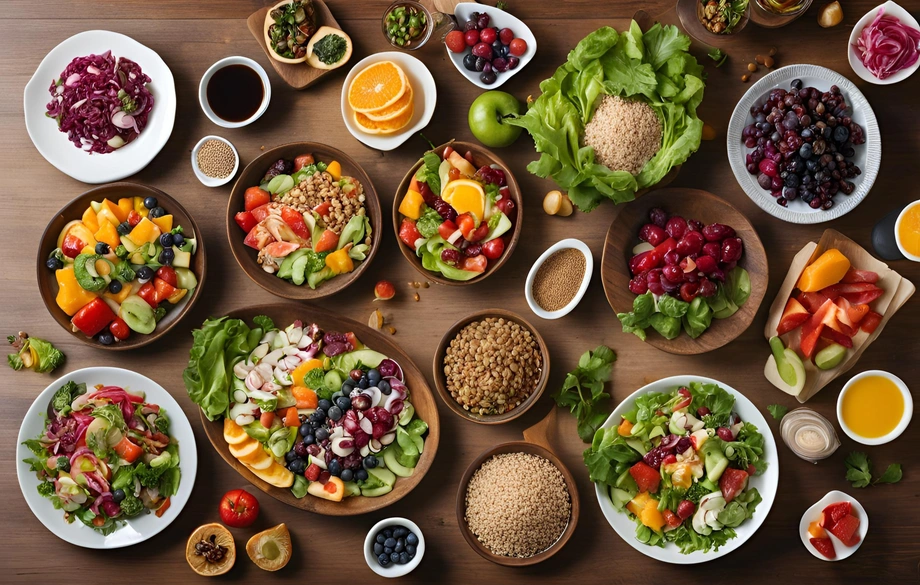
Co-marketing: selling plant-based and berries together
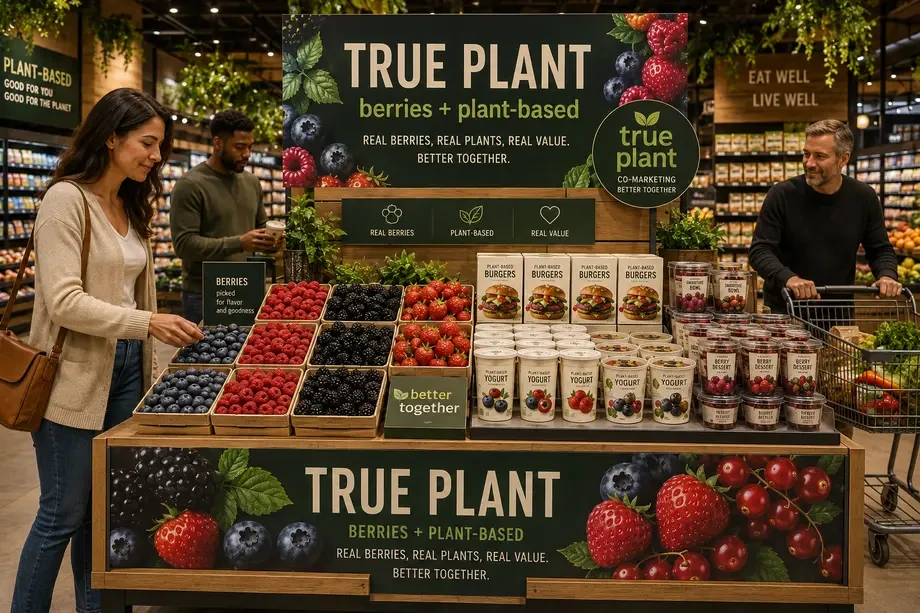
The synergy between plant-based and berries can also be developed commercially. Not only through product innovation, but through co-marketing operations, joint displays, recipes, promotions and consumption kits.
In retail, plant-based products are often placed in refrigerated cabinets, in the alternative protein section, among health products or ready meals. Berries, on the other hand, remain in the fruit and vegetable department, often sold in isolation, by variety and format. The physical distance between categories reduces opportunities for joint purchasing.
A more advanced approach could create bridges between the two worlds. For example:
- plant-based yogurt + fresh blueberries for breakfast;
- oat drink + raspberries for smoothies and snacks;
- plant-based dessert + red fruit coulis for evening consumption;
- plant-based ice cream + fresh strawberries for a premium summer proposition;
- plant-based granola + berry mix for breakfast bowls;
- plant-based spreadable cheese + blueberry or raspberry compote for aperitifs and savory snacks;
- plant-based burger + berry sauce for gourmet recipes and foodservice.
These combinations make it possible to transform the single product into a consumption solution. Consumers do not simply buy a pack of blueberries or a plant-based yogurt: they buy an idea for breakfast, a snack, a dessert, an aperitif or a complete plant-based meal.
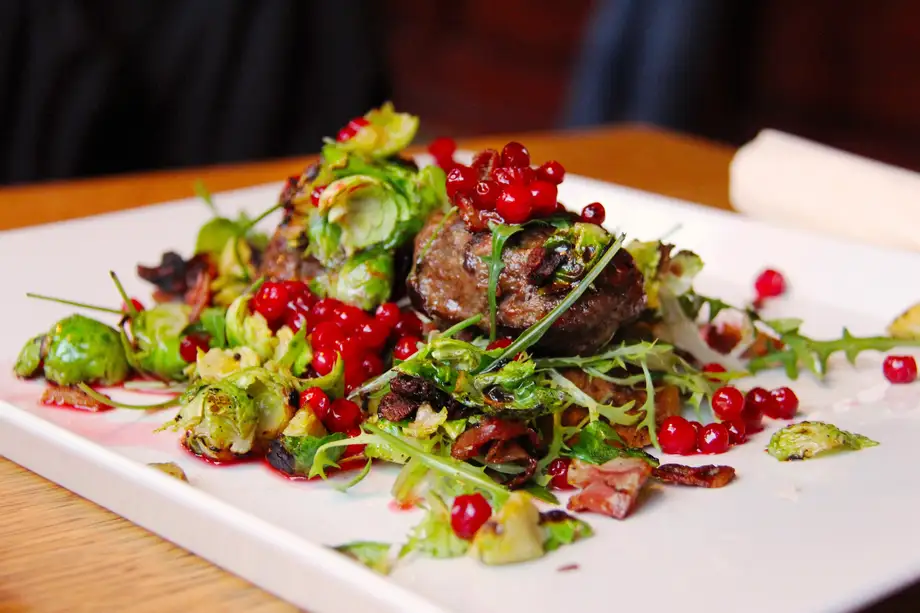
Where berries can create the most value
Not all plant-based segments offer the same opportunities. For berries, the most promising areas are those where their sensory contribution is immediate and visible.
1. Plant-based breakfast
Breakfast is probably the most natural territory. Plant-based yogurts, oat drinks, puddings, porridge, granola and smoothie bowls are already consistent with berry consumption. Blueberries, raspberries and strawberries can become the fresh component that transforms a packaged plant-based product into a more complete experience.
Here, co-marketing can work through simple mechanisms: nearby displays, cross-coupons, recipes on pack, QR codes, promotional bundles or “breakfast kits” with plant-based yogurt, granola and fresh berries.
2. Desserts and refrigerated snacks
Plant-based desserts are a fast-evolving area. Plant-based puddings, mousses, ice creams, creams, dairy-free cheesecakes and refrigerated snacks are looking for ingredients capable of giving identity. Berries provide color, acidity, aromatic contrast and a premium image.
In this case, the value is not only nutritional, but above all sensory. A plant-based chocolate dessert with raspberry, an oat mousse with blueberries, a plant-based ice cream with blackberries or a plant-based cheesecake with strawberries can build a higher positioning than a simple “dairy-free” proposition.
3. Foodservice and fast casual restaurants
Foodservice can also become an interesting channel. Restaurant chains, healthy formats, bakeries, advanced cafés and plant-based concepts are looking for distinctive ingredients to differentiate menus and recipes.
Berries can enter smoothies, bowls, desserts, salads, sauces, dressings, toppings and savory dishes. In the English-speaking world, the pairing between berries and savory ingredients is already more developed; in Italy, there is still space to be built, especially for blackberries, blueberries and raspberries.
4. Plant-based gourmet
A less obvious but very interesting area is that of premium plant-based dishes. Plant-based meat, especially in burgers and grill products, needs elements that increase its gastronomic perception. Berries can perform this function through sauces, chutneys, reductions and toppings.
A plant-based burger with blueberry compote, caramelized onion and fresh salad leaves can be positioned very differently from a simple standard plant-based burger. The berry becomes a sign of cuisine, not just a sweet ingredient.
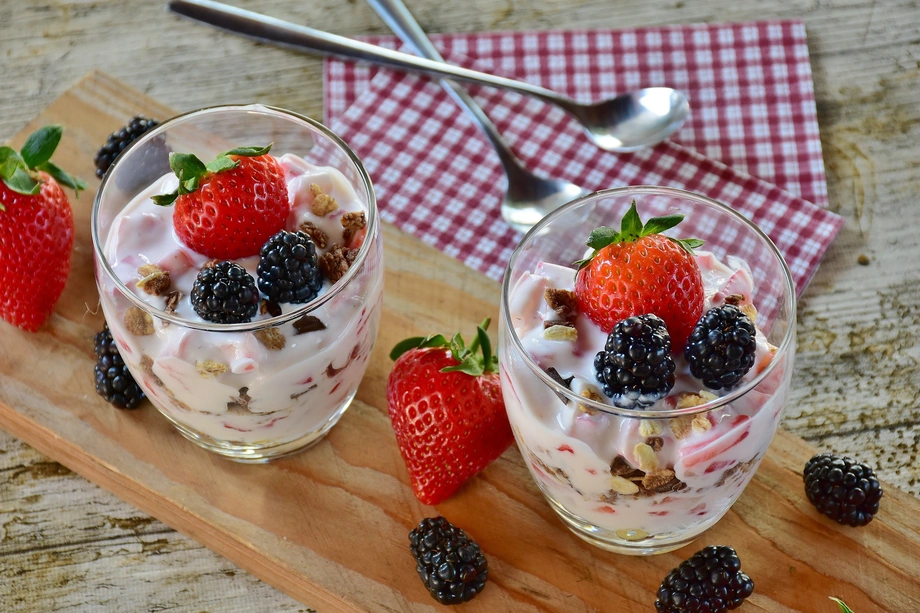
From commodity to identity ingredient
The main challenge for berries is to move beyond a purely commercial logic based on price, format, origin and availability. These elements remain fundamental, but they are not enough to build value in an increasingly competitive market.
The encounter with plant-based allows berries to take on a different role: no longer just a fresh product to be consumed as such, but an identity ingredient for new consumption occasions.
The blueberry can become a functional ingredient for plant-based breakfast. The raspberry can become a premium element for desserts and snacks. The strawberry can strengthen the link with naturalness, freshness and pleasure. The blackberry can offer chromatic and sensory intensity. The red currant can enter gourmet and foodservice logics. The baby kiwi can preside over innovation, snacking and nutrition.
In this way, berries are not sold only as fruit and vegetable references, but as components of a broader food ecosystem.
The advantage for plant-based brands
For plant-based companies, working with the berry world can offer three main advantages.
The first is natural credibility. The presence of real fruit makes the product more understandable and less perceived as artificial.
The second is sensory differentiation. In many plant-based categories, products tend to look alike. Berries make it possible to work on acidity, freshness, color, aroma and seasonality.
The third is premiumization. A plant-based product with recognizable berries can be more easily positioned in a higher range, especially if it communicates origin, variety, fruit quality and gastronomic pairing.
The advantage for berry growers
For growers, brands and operators in the berry supply chain, plant-based represents an opportunity to expand channels and consumption moments.
Fresh consumption remains central, but it can be complemented by new destinations: premium food industry, ready-to-eat, advanced fresh-cut products, refrigerated snacks, foodservice, plant-based desserts, functional breakfasts and meal solutions.
This is particularly relevant for a category such as berries, characterized by high value per kilo, strong visual impact, high perishability and the need for differentiation. Every new consumption occasion can help stabilize demand and create more articulated outlets along the supply chain.

The role of large-scale retail: from category to consumption pathway
Large-scale retail can play a decisive role in making this alliance concrete. Today, consumers often find plant-based products in one area and berries in another, without an explicit connection. But modern retail increasingly works by consumption occasions: breakfast, quick lunch, snack, aperitif, dinner, fitness, wellness and convenience.
In this logic, berries and plant-based products can be presented together through:
- thematic promotional islands dedicated to plant-based breakfast;
- in-store recipes with QR codes and pairing suggestions;
- discounted bundles between plant-based yogurt and fresh berries;
- seasonal promotions on plant-based ice creams and strawberries;
- healthy snack corners with fresh fruit, plant-based bars and smoothies;
- loyalty initiatives linked to complete plant-based baskets.
The result for retailers is an increase in average basket value and a more readable proposition. For consumers, the advantage is practical: they do not have to build their plant-based meal or snack from scratch, because they find a solution already suggested.
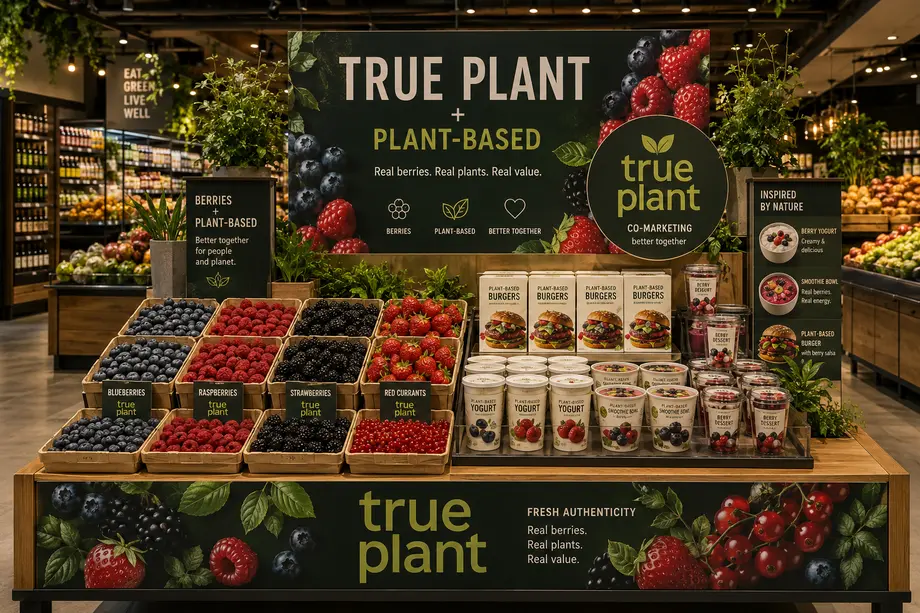
A new alliance: plant-based meets true plant
The most important point is to prevent berries from becoming mere accessories to plant-based. They must not be treated as generic toppings, flavors or decorations. They must be presented as co-protagonists.
Plant-based brings innovation, contemporary language and the ability to intercept flexitarian consumers. Berries bring freshness, naturalness, color, agricultural origin and sensory value. The union of the two worlds can create a stronger proposition than either category alone.
In communication terms, the message could be summarized as follows:
The plant-based future cannot be built only by imitating meat. It must return to valuing real plants.
Or:
Plant-based has opened the way. True plant can give it roots.
For the berry sector, this is a major opportunity. Berries have all the characteristics to become ambassadors of true plant: they are authentic but not ordinary; natural but premium; agricultural but contemporary; fresh yet perfectly compatible with food innovation.
The next phase of plant-based may not only be about plant-based meat that is indistinguishable from animal meat. It may be about plant-based products capable of celebrating the plant for what it is: taste, color, biodiversity, origin, perceived health and pleasure.
In this new phase, berries must not remain on the sidelines. They can become one of the strongest languages of contemporary plant-based eating.