








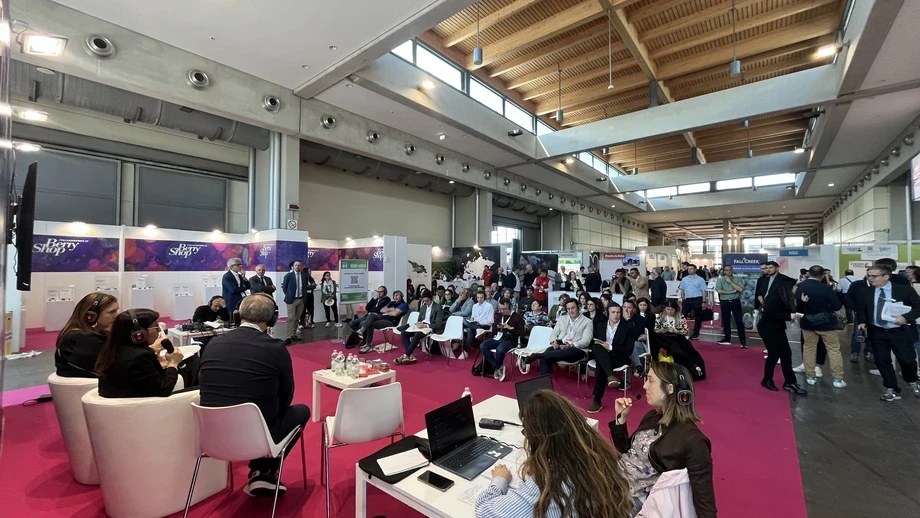
One of the most well-attended sessions in the rich Berry Area programme was the round table “Strawberries 2026: an update on market, varieties and quality — operators’ views”, organized by CREA, with the participation of Mirco Zanelli (Apofruit Italia), Federico Stanzani (CIV - Consorzio Italiano Vivaisti), Pietro Ciardiello (Mediterraneo Group), Salvatore Pecchia (Comitato Fragola Basilicata IGP), Francisco del Rosal Garcia (Cuna de Platero), and Enrique Muñoz (Freson de Palos). Carmela Suriano (Nova Siri Genetics) was unable to attend. The session was moderated by Cristina Giannetti (CREA).
Five key takeaways
- The integration of artificial intelligence and predictive systems into genetic breeding aims to revolutionize research timelines: North American pilot projects, involving Italian partners, are targeting a reduction in the development time of new strawberry cultivars, from the current 7-10 years to just 3 years.
- Climate anomalies in the Mediterranean basin, with heavy rainfall in Italy and severe weather-related blackouts in Spain, require an agronomic reassessment focused on cultivars with high rusticity and resilience, capable of tolerating thermal stress while avoiding drastic overlaps in commercial supply.
- The recognition of the “Fragola della Basilicata” PGI consolidates a critical mass of 750 hectares and more than 150,000 quintals expected: the strategic decision to allow co-branding makes it possible to enhance both the territorial guarantee provided by the geographical indication and the visibility of private retail brands on the shelf.
- The drastic reduction in the chemical molecules available for plant protection is pushing Italian strawberry production towards advanced soil regeneration techniques: unlike Iberian competitors, which are moving towards soilless cultivation, Italy is investing in solarization and microbiome introduction to combat critical pests such as red spider mite directly in the soil.
- The fragmentation of consumer attention, with shoppers exposed to around 20,000 product references in supermarkets, requires investment in emotional marketing: aggregating cooperative models, such as the Spanish production area of Huelva, show that high-level partnerships with entertainment brands can be decisive in getting strawberries into the family shopping basket.
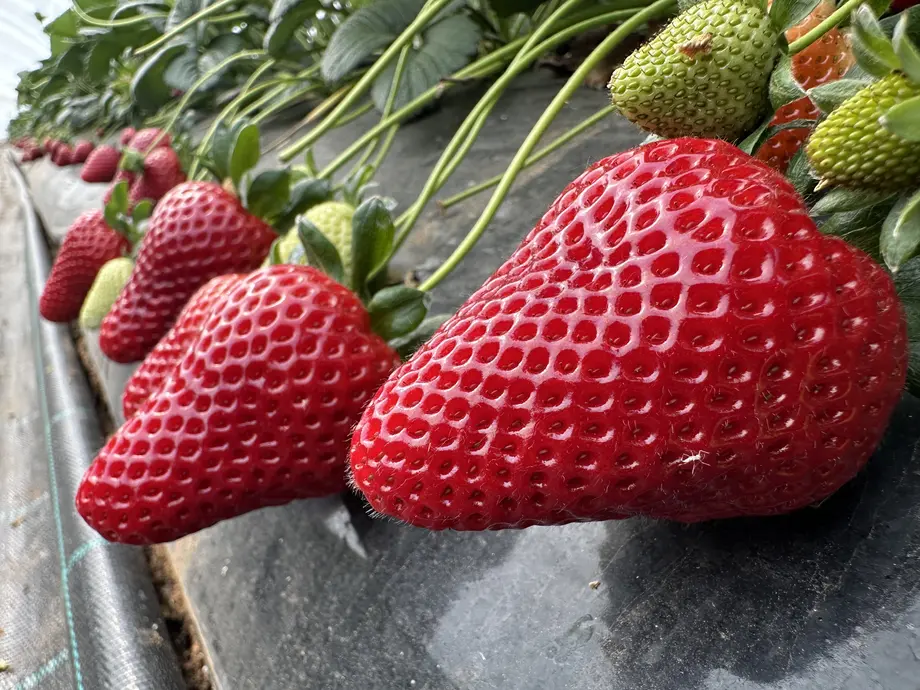
The Mediterranean as a laboratory for change
Euro-Mediterranean strawberry production is going through a phase of deep structural transition, caught between increasingly extreme climate events and the generalized rise in operating costs. Despite a complex season that severely tested yields and logistical stability both in Southern Italy and in the major Spanish production hub of Huelva, the sector is showing strong responsiveness driven by biotechnological innovation and new aggregation models.
Genetic research, once dependent on Californian standards, is now seeing national research centres take on a leading role in developing cultivars adapted to local microclimates. At the same time, the evolution of commercial branding strategies is outlining the new key directions for defending the profitability of a product increasingly perceived as premium.
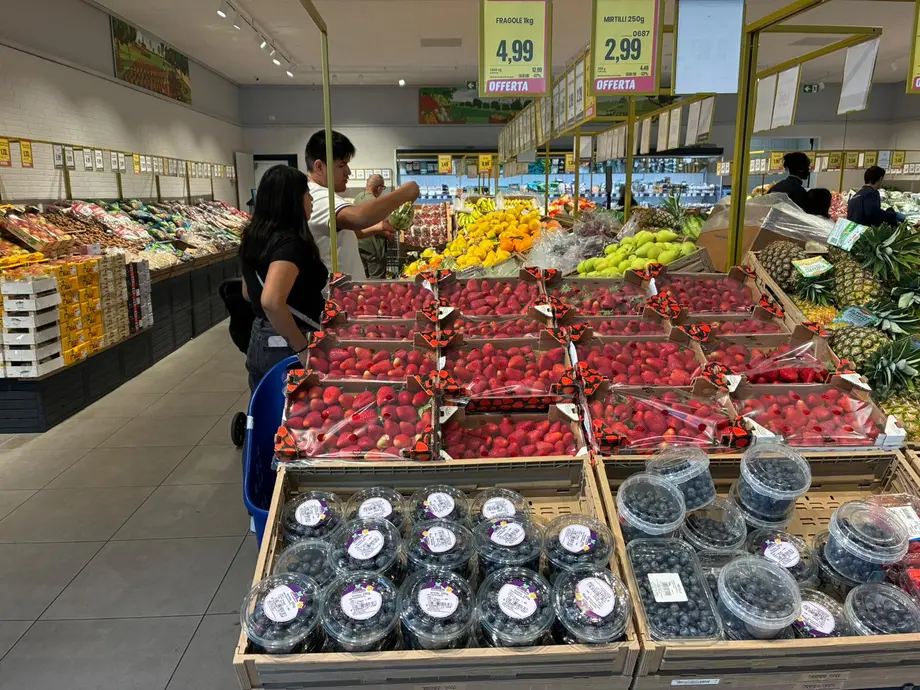
The delicate balance between field and market
The current scenario in the strawberry supply chain highlights a clear interdependence between growing agronomic complexity in the field and the dynamism of commercial strategies. The ongoing season has confirmed the definitive end of the concept of a “standard season”: extreme weather events have severely affected both the southern Italian production areas and Spanish acreage, causing prolonged vegetative slowdowns followed by sudden peaks in supply that temporarily saturated markets around the Easter holidays.
To manage such volatility, varietal innovation is taking on a structural role, rather than a merely complementary one. The research paradigm is evolving towards integrated collaboration between public institutions and private companies, with one third of agreements focused on joint development to decode and anticipate the specific demands of large-scale retail.
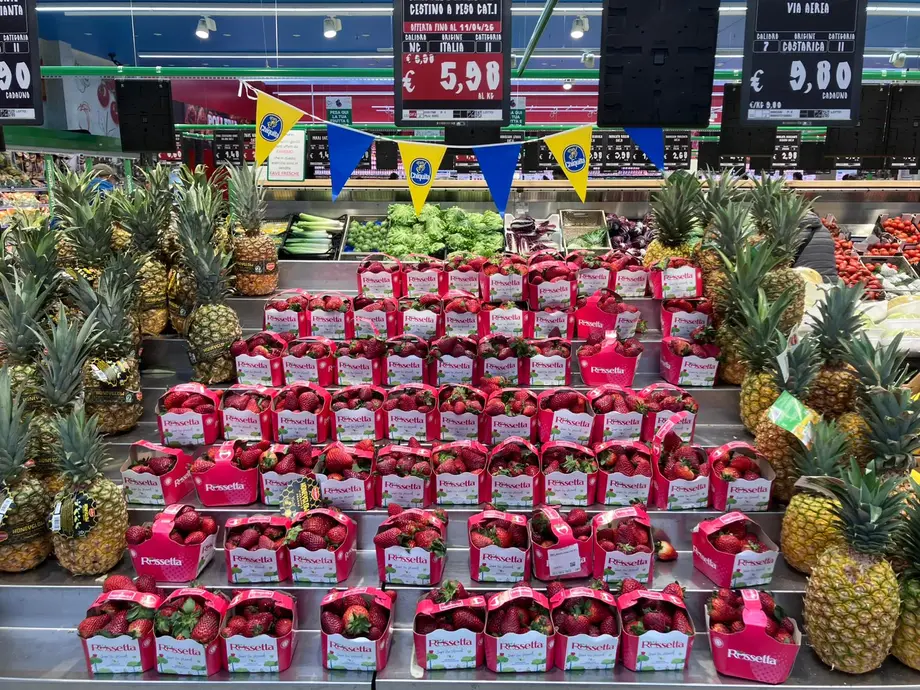
Not only earliness
On the genetic front, selection parameters have shifted from mere earliness to maximum plant rusticity. The Italian supply chain is gradually moving away from its historical dependence on Californian material, implementing national selections capable of covering extended harvest calendars from January to June and ensuring consistently high-quality, high-performing fruit.
This is accompanied by the promising frontier of AI-assisted breeding, whose industrial objective is to shorten the selection cycles of new cultivars, providing the market with rapid varietal responses to climate change.
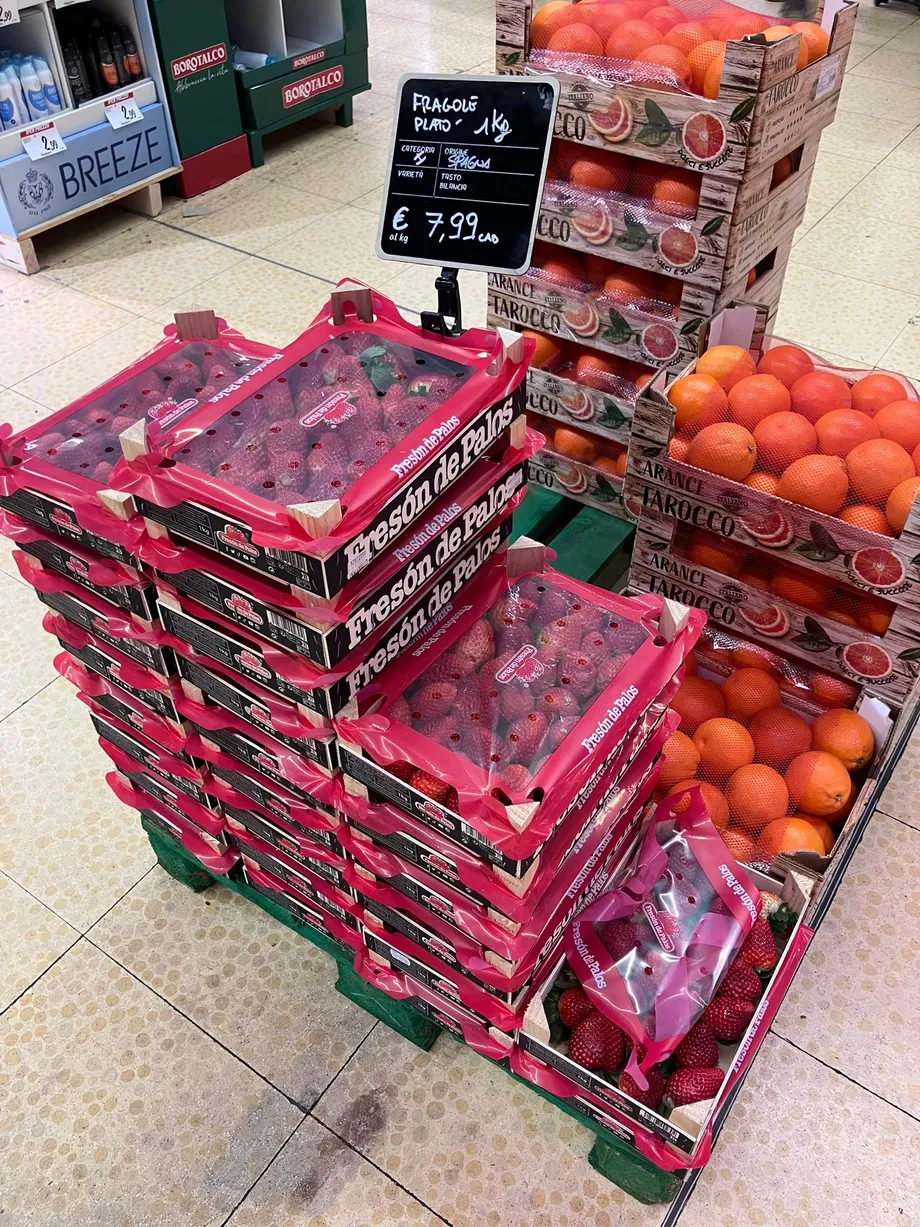
At the same time, plant health management requires the adoption of a new technical approach. With the progressive withdrawal of synthetic molecules effective against endemic threats, agronomic attention is turning towards soil vitality.
Soilless cultivation in Spain. What about Italy?
While the major Iberian players, supported by farm sizes three times larger than the national average, are accelerating their transition towards soilless systems, the Italian strategy is focused on soil regeneration through solarization and targeted applications of beneficial microorganisms, while maintaining the qualitative link between the crop and the soil.

PGI: the Italian route to value
In terms of commercial positioning, value consolidation through product identity is clearly emerging. While the Spanish cooperative giants capitalize on massive volumes and cross-sector mass-market marketing to stand out on the shelf, Italy maximizes returns through protected designation brands.
The launch of the Fragola della Basilicata PGI project has demonstrated the feasibility of bringing together producers who have historically been competitors in order to generate commercially significant volumes, using co-branding to enhance both the prestige of the territory and the strength of individual private labels.