





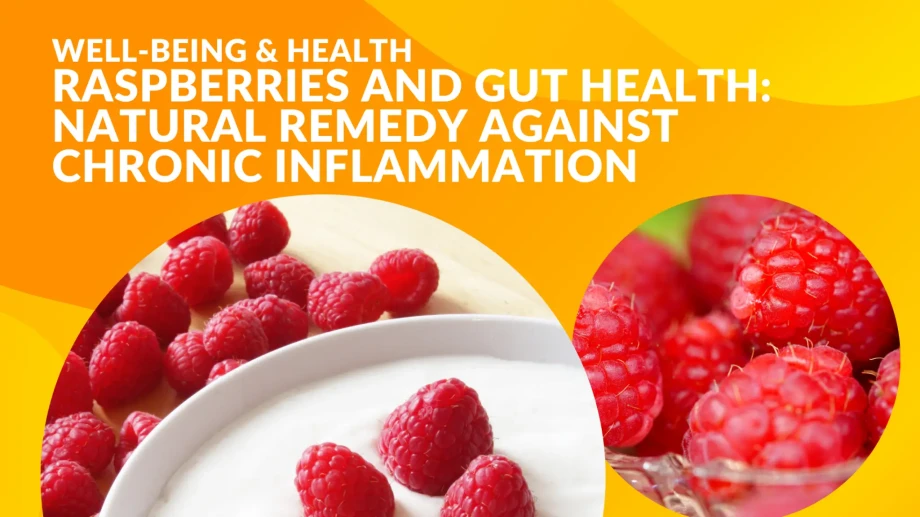
In recent years, the consumption of berries has evolved from a simple seasonal habit into a true wellness strategy. Among the most popular and extensively studied varieties, red raspberries stand out for their extraordinary richness in natural compounds capable of positively interacting with the human body.
A comprehensive scientific study has recently shown that these small fruits are not only enjoyable to eat, but also act as powerful allies against chronic intestinal inflammation, an increasingly widespread issue in modern society. The study highlighted that dietary supplementation with raspberries can protect the integrity of the digestive system, preventing damage that could otherwise lead to more severe pathologies.
The science behind the taste
Persistent inflammation is the number one enemy of the gut, as it damages tissues and compromises vital functions. In the referenced study, researchers observed that a diet enriched with a small percentage of raspberries (equal to 5% of the total diet) was able to significantly reduce the symptoms of colitis.
The results showed that consuming these berries helps to:
- Limit weight loss: During inflammatory phases, the body struggles to retain nutrients; raspberries help maintain body stability.
- Preserve organ structure: Inflammation tends to shorten and damage the colon. Dietary supplementation was shown to protect both the shape and function of intestinal tissues.
- Reduce disease activity: Thanks to their natural components, these fruits lower the severity index of intestinal disorders, promoting faster recovery.
Switching off inflammation
But how do raspberries actually work? Inside our cells there is a sort of "master switch" for inflammation (known as NF-κB). When this switch remains constantly on, the body produces excessive inflammatory substances.
Raspberries can intervene in this mechanism by "turning down the dial" on inflammation and reducing the production of harmful proteins (such as interleukin-1β and TNF-α) that cause pain and swelling. In this way, berries do not merely mask symptoms, but act at the root of the problem, calming the excessive immune response in the gut.
Repairing and sealing
The gut is our first line of defense against the outside world. It functions as a selective filter, allowing energy (nutrients) to pass through while blocking threats (bacteria and toxins). When this filter "leaks", systemic health issues can arise.
The study found that raspberries act as true intestinal barrier repair agents:
- They strengthen cell-to-cell junctions: They increase the presence of "sealing proteins" (such as zonulin-1 and claudin-3), which keep the intestinal walls tightly closed and compact.
- They produce a protective layer: They stimulate the production of mucin (MUC-2), a natural substance that coats the intestine and protects it from chemical and bacterial aggression.
- They activate cellular energy: Raspberry compounds activate an enzyme (AMPK) that helps cells manage energy more efficiently and repair themselves faster.
An antioxidant shield
In addition to their reparative action, berries provide protection against oxidative stress, which is the premature aging of cells caused by free radicals. Raspberries have been shown to reduce harmful oxidative substances while simultaneously increasing levels of catalase, a powerful enzyme the body uses to clear toxic residues from cells.
Conclusion
The scientific evidence collected confirms that berries, with raspberries taking center stage, represent a fundamental pillar of nutrition aimed at long-term wellbeing. Their ability to act simultaneously as anti-inflammatory agents, tissue repairers, and antioxidant shields makes them indispensable in a modern diet.
In an era of constant exposure to environmental and dietary stressors, choosing to regularly include these small fruits is not just a pleasure for the palate, but a strategic investment in maintaining our internal ecosystem in perfect balance and health.
Source: Bibi S, Kang Y, Du M, Zhu MJ. Dietary red raspberries attenuate dextran sulfate sodium-induced acute colitis. J Nutr Biochem. 2018 Jan;51:40-46. doi: 10.1016/j.jnutbio.2017.08.017. Epub 2017 Sep 14. PMID: 29091813.
Image source: Canva
🫐 Well-being & Health with Berries 🍓This article is part of the editorial series Wellness & Health with Berries, which brings scientific research closer to everyday life, promoting berries as allies for well-being. The series offers clear, up-to-date, and evidence-based content designed to inform consumers and support all operators in the berry supply chain. |