











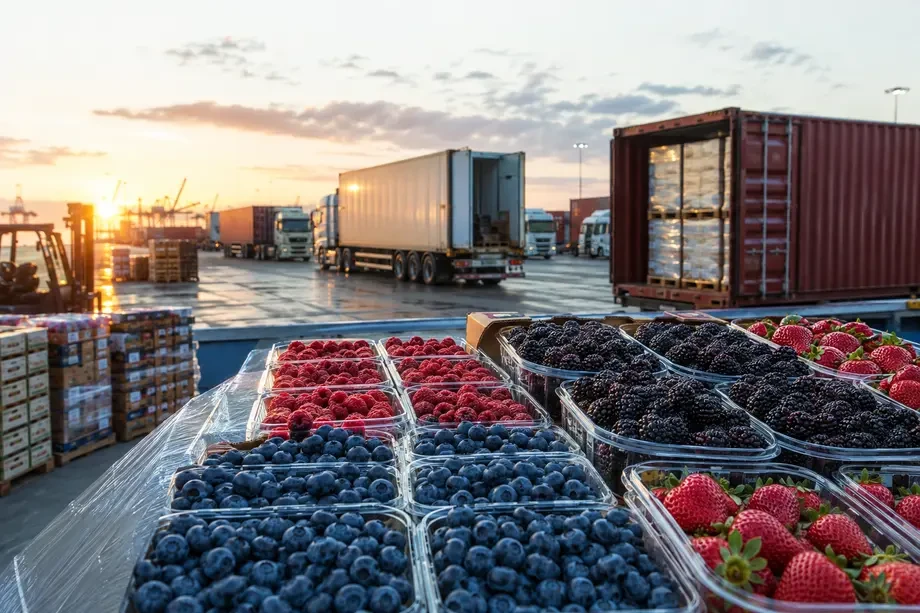
Tariffs, exchange rates and production costs are complicating business decisions, but imports, health trends and year-round availability will continue to support consumption.
Global demand for berries is expected to continue growing despite an economic and trade environment characterized by increasing uncertainty. This is according to David Magaña, Senior Analyst at Rabobank, who spoke at the 16th edition of the Aneberries International Congress, held in late July in Guadalajara, Mexico.
According to the analyst, external factors such as tariffs, trade wars and uncertainty surrounding the future of the USMCA between the United States, Mexico and Canada are making long-term planning increasingly difficult for producers and exporters.
Investment decisions now depend on numerous variables, including interest rates, inflation, exchange-rate trends and consumer confidence. Growth in demand, therefore, does not eliminate the risks faced by companies, which must operate under less predictable financial and trading conditions.
Exchange rates undermine Mexico’s competitiveness
One of the factors having the greatest impact on the competitiveness of Mexican exports is the depreciation of the US dollar against other currencies.
For exporters, this trend produces an effect comparable to an indirect tariff: it reduces revenues when converted into local currency while simultaneously increasing the burden of production costs.
This pressure is compounded by rising prices for fertilizers, energy and other production inputs, which Rabobank expects to remain a challenge for as long as international instability persists.
The United States is increasingly dependent on imports
Despite this complex environment, the United States continues to require growing volumes of imported fruit to meet demand in the fresh berries market.
For blueberries, raspberries and blackberries, a significant share of consumption is supplied through imports, which are essential to ensure continuous availability on store shelves.

“US consumers no longer accept seasonality. Today, they expect to find fresh fruit 12 months a year, and this maintains a strong dependence on imports,” Magaña explained.
Year-round availability has therefore become a structural feature of the market, supporting international trade flows even amid geopolitical and commercial tensions.
Blueberries continue to grow, with more room for Europe
Blueberries remain the category with the greatest potential for consumption growth worldwide. According to the forecasts presented by Rabobank, Europe is expected to become increasingly important as an export destination toward the end of the decade.
At the same time, Asia is becoming an increasingly significant market. China, in particular, is rapidly expanding both domestic blueberry production and consumption, contributing to changes in the global balance of the category.
For exporting countries, growth in Europe and Asia could offer new diversification opportunities, at least partly reducing their dependence on the North American market.
Health trends and GLP-1 drugs are changing purchasing habits
In the United States, demand for fresh fruit is also benefiting from growing interest in health and wellness. Government programs promoting more balanced diets and the increasing use of GLP-1 drugs for weight management are steering purchases toward foods with strong nutritional profiles and higher fiber content.

Berries could benefit from this shift thanks to their healthy image, although the US market is becoming increasingly polarized.
Higher-income households are purchasing premium products, while a significant share of consumers is primarily seeking affordability. As a result, the commercial space available for mid-range products is narrowing, as these risk standing out neither for their perceived quality nor for their price.
Solid strawberry demand, but pressure on raspberry and blackberry margins
Mexican strawberries continue to enjoy strong demand in the United States, despite facing uncertainty related to anti-dumping investigations.
Raspberries and blackberries, meanwhile, are recording growth in marketed volumes, but international prices have remained virtually unchanged. This combination is putting pressure on growers’ profitability as they contend with rising costs and less favorable exchange-rate conditions.
Consequently, increasing consumption does not automatically translate into improved financial performance along the supply chain.
Competitiveness becomes the priority
According to Magaña, the industry’s main challenge will no longer be simply stimulating demand, but meeting it while maintaining competitiveness.
This will require greater production efficiency, innovation, cost control and consistent quality. In an increasingly global market, consumers expect a uniform experience regardless of the season, origin or time of purchase.
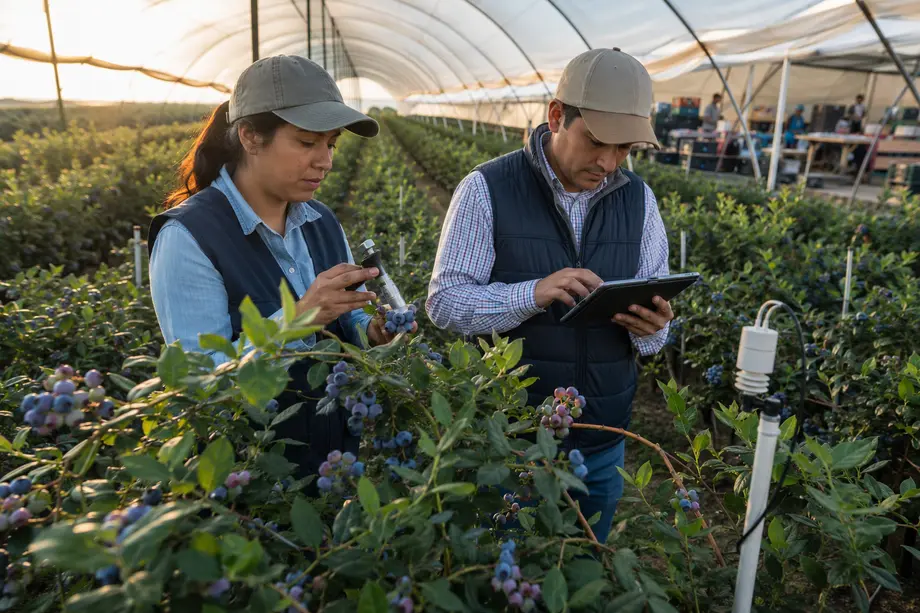
“The opportunity still exists, especially for Mexico. What will make the difference is the ability to provide a consistent consumer experience, with high-quality fruit every day of the year,” concluded the Rabobank analyst.
The message for companies in the industry is clear: structural growth in demand remains a positive factor, but value can only be captured by supply chains capable of combining continuity of supply, efficiency and consistent quality.
Source: FreshFruitPortal
Italian Berry - All rights reserved