









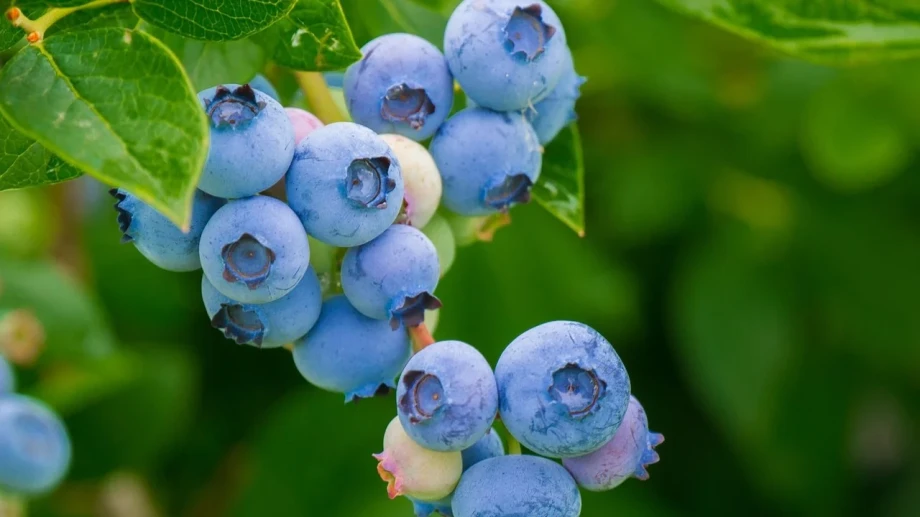
Michigan State University and the Michigan blueberry industry are working together to support one of the leading blueberry-producing states in the United States.
Compared to the more than 300 agricultural commodities grown in Michigan, blueberries represent a relatively young sector.
Commercial cultivation in the state dates back to the 1920s, when Professor Stanley Johnson, a horticulture faculty member at Michigan State University (MSU), established experimental plots in both the Lower and Upper Peninsulas.
Johnson observed that blueberries adapted particularly well, especially to the sandy soils near Lake Michigan.
The work carried out over the following decades helped position MSU as a national leader in blueberry production.
Breeding and economic impact
The university’s breeding program experienced its greatest expansion thanks to the contribution of Professor Emeritus Jim Hancock of the Department of Horticulture, who developed six new varieties.
Among these, Liberty and Draper remain today two of the most widely planted northern highbush blueberry cultivars worldwide. According to a 2025 report by the U.S. Highbush Blueberry Council, Michigan’s blueberry industry currently generates more than $529 million (approximately €486.7 million) annually in economic activity.
Nancy Nyquist, executive director of the Michigan Blueberry Commission, credits MSU with playing a decisive role in the state’s production growth.
Applied research and grower support
“The Michigan Blueberry Commission was established in 2017 with the primary goal of supporting industry-driven research,” she explained.
“We remain committed to that mission. Research is essential to enable our growers to stay at the forefront of production strategies, breeding and varietal development, disease management, and all other aspects that make blueberries a vital component of Michigan’s agricultural economy. The Commission alone could not sustain the volume of research required, and MSU stands alongside us at every stage.”
Nyquist also noted that, thanks to Commission funding, new varietal trials were launched last year at the Southwest Michigan Research and Extension Center in Benton Harbor. The objective is to assess the traits most advantageous for growers, while also considering consumer preferences in terms of flavor and overall fruit quality.
Strategic partnerships and Project GREEEN
Beyond breeding, MSU AgBioResearch scientists and Extension specialists have collaborated with blueberry growers for decades to address both emerging and ongoing challenges. The small fruit team regularly engages with the Michigan Blueberry Commission to define priorities, promote research on the most urgent issues, and resolve production constraints.
“I may be biased, of course, but I believe MSU’s small fruit team is the best in the country, if not the world, in terms of services provided to communities and growers,” Nyquist stated. “From pollination to disease resistance, from pest management to new cultivars, the research conducted at MSU is internationally recognized. Our growers have direct access to researchers, technicians, and laboratory leaders. It is a comprehensive system that also includes MSU Plant & Pest Diagnostics for analytical services. The university’s presence in the sector is truly extraordinary.”
A key role in scientific advancements related to blueberries has been played by Project GREEEN, a partnership between MSU, the Michigan Plant Coalition, and the Michigan Department of Agriculture and Rural Development. Now in its 27th year, the initiative supports research and outreach to address the most pressing challenges in plant agriculture.
Phytosanitary challenges and sustainability
“Project GREEEN is essential for commodities such as blueberries, because it is often where problem-solving begins,” Nyquist said. “It has consistently helped bridge research funding gaps. It is one of MSU’s flagship programs and widely supported across the state. When I meet new faculty members or specialists, it is one of the first programs I mention. The reality is that specialty crops do not carry the same national weight as other commodities. That is why Project GREEEN funding is vital to continue delivering fresh and safe products to consumers’ tables. A program like this, which does not exist elsewhere in the United States, further strengthens the partnership between the university and the industry.”
Among the main challenges faced over the past 15 years by blueberry growers is Drosophila suzukii (SWD), an invasive insect native to Asia that attacks soft-skinned fruits such as berries, cherries, and grapes. First detected in Michigan in 2010, its management has been supported by Project GREEEN funding, which enabled MSU researchers to rapidly test containment strategies.
“One of the primary ways MSU has supported us in recent years has been through recommendations to manage SWD,” Nyquist explained. “It was a new issue, and researchers mobilized immediately. The work carried out over the past 15 years has been remarkable. Treatments have involved additional costs, and growers were not sufficiently prepared. MSU helped us identify the most effective solutions. Beyond chemical controls, researchers such as Professor Rufus Isaacs are exploring biological control, which could represent a breakthrough. The road ahead remains long, but without MSU we would not be able to face it.”
Project GREEEN also supports other initiatives related to irrigation water use, optimal harvest timing, and fruit flavor quality. Among the most valued tools is the Enviroweather network, which installs weather monitoring systems across the state to support real-time decision-making in crop protection, plant development, and natural resource management.
Each station, powered by solar panels, records temperature, rainfall, relative humidity, dew point, soil temperature, wind direction, and other parameters. According to Nyquist, these activities are essential to ensure the sustainability of blueberry operations, which would otherwise face competitive disadvantages.
“It is about having access to a reliable resource and a strong partnership,” she concluded. “If a problem arises, MSU listens and responds. We are a small but determined industry, and this close collaboration is our secret ingredient. In agriculture, our mission is to feed the world. Consumers demand fresh, wholesome, and safe food. Supporting agricultural research is a matter of national security: the ability to feed ourselves independently is fundamental. With increasing pressure from imports, losing research funding in Michigan or at the national level would be devastating.”
Source: www.canr.msu.edu