






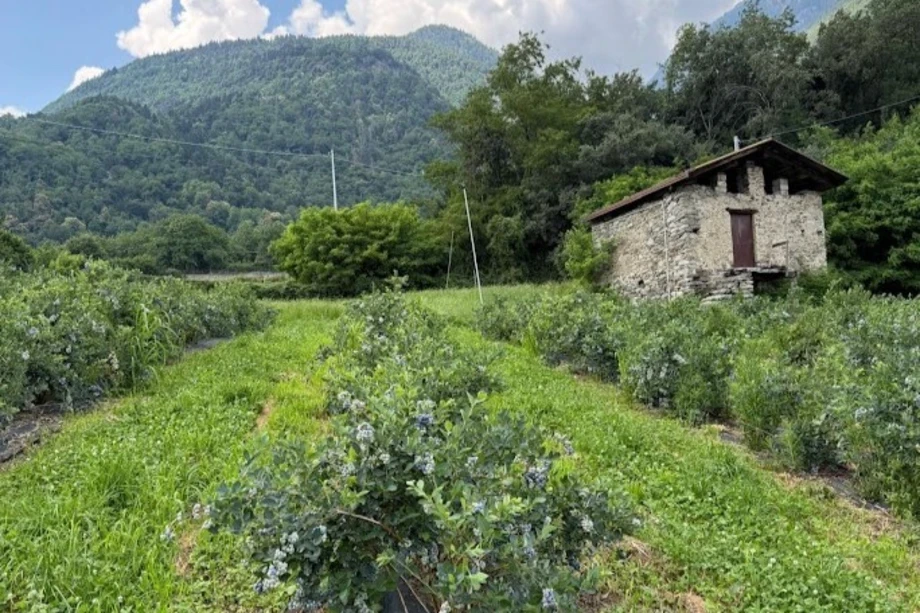
Over the past twenty years, Valtellina has witnessed a quiet but extraordinary agricultural transformation. Alongside its historic tradition of viticulture and fruit growing, a new excellence has emerged: the highbush blueberry. To gain a deeper understanding of the agronomic, logistical and economic aspects of this supply chain, we interviewed Luca Folini, head of the fruit-growing sector at the Fondazione Fojanini di Studi Superiori, the organization that guided this transformation, and Emma Fendoni, administrative manager of the Cooperativa Vitivinicola Montagna.
Origins and history: from experimentation to success
How and when did the idea of growing highbush blueberries in Valtellina begin?
Luca Folini: We essentially started in the early 2000s. At that time, the former directors of Fondazione Fojanini, namely Fabio Rava and Graziano Murada, became interested in this crop thanks to a collaboration with the University of Milan and, in particular, with Professor Tommaso Eccher, a historic figure in Italian arboriculture. Professor Eccher immediately realized that Valtellina’s soils, characterized by strong natural acidity, could be the perfect habitat for highbush blueberries.
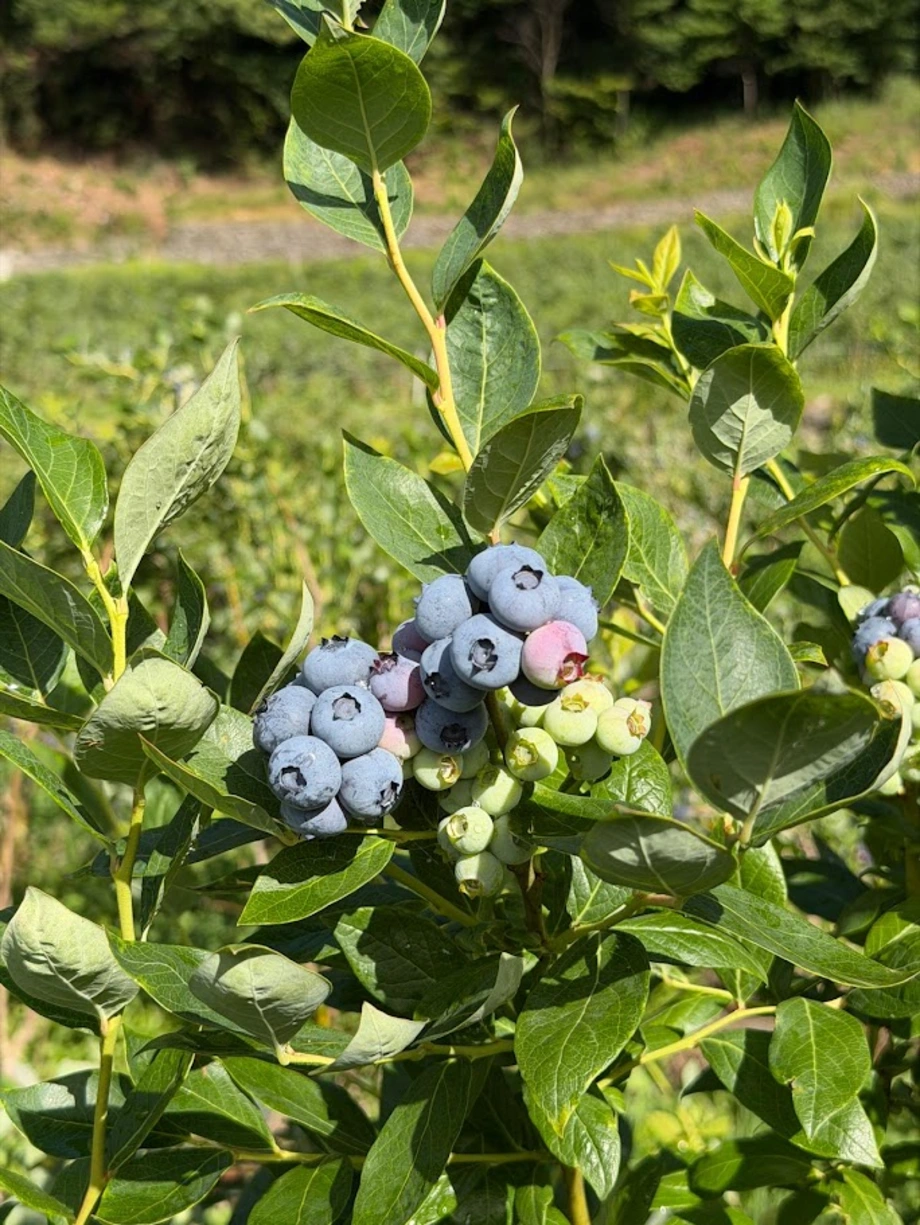
To give an idea of our evolution: in 2000 we had just 100 experimental plants. Today we have reached around 200,000 plants in production. This initial development was also made possible thanks to the Mountain Communities, which believed in the project and financed the first plantings, with the aim of recovering marginal or disadvantaged areas of the territory.
Did Valtellina already have a historical familiarity with this berry?
Luca Folini: Yes, the valley has always had a very strong tradition linked to the wild blueberry. In the past, in several mountain municipalities, spontaneous harvesting at high altitude was a very widespread activity, even though today this resource has almost completely disappeared. This historical memory undoubtedly helped the acceptance and market penetration of the cultivated blueberry, since local consumers already knew and appreciated the product.
It must also be said, in all honesty, that at the beginning we went to Trentino to study how they worked. Thanks to the support of the Fondazione Edmund Mach in San Michele all'Adige and the Sant'Orsola cooperative — where we met technician Andrea Perger, with whom we have now been collaborating for almost thirty years — we defined the first planting layouts and selected the first varieties.
We understand that the supply of the initial nursery material had an almost “epic” origin. Can you tell us about that stage?
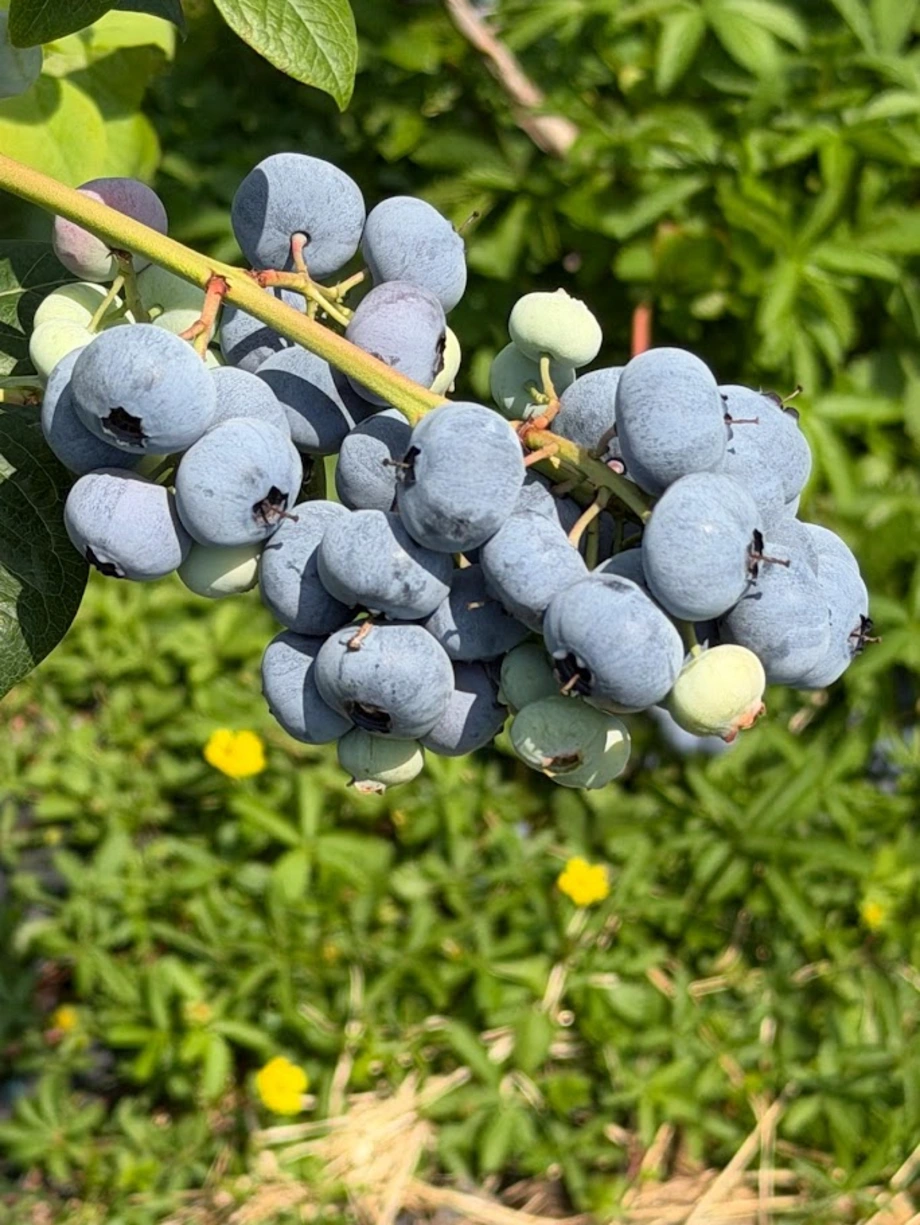
Luca Folini: That is exactly what happened. The first major plant order was placed directly with Fall Creek, a leading nursery based in Oregon, in the United States. The plants crossed the ocean by ship inside a container, arrived in the Netherlands, and from there continued by road to Italian customs.
At customs, the shipment was held for as many as 15 days for phytosanitary checks. I still remember Professor Eccher, deeply concerned about the fate of the young plants, going to customs several times a day to check whether they were still alive. Fortunately, quarantine was not required, the plants were cleared through customs in excellent health, and from there we were finally able to start the first structured plantings.
Valtellina’s “terroir” and cultivation techniques
What are the soil and climate factors that make Valtellina so well suited to this species?
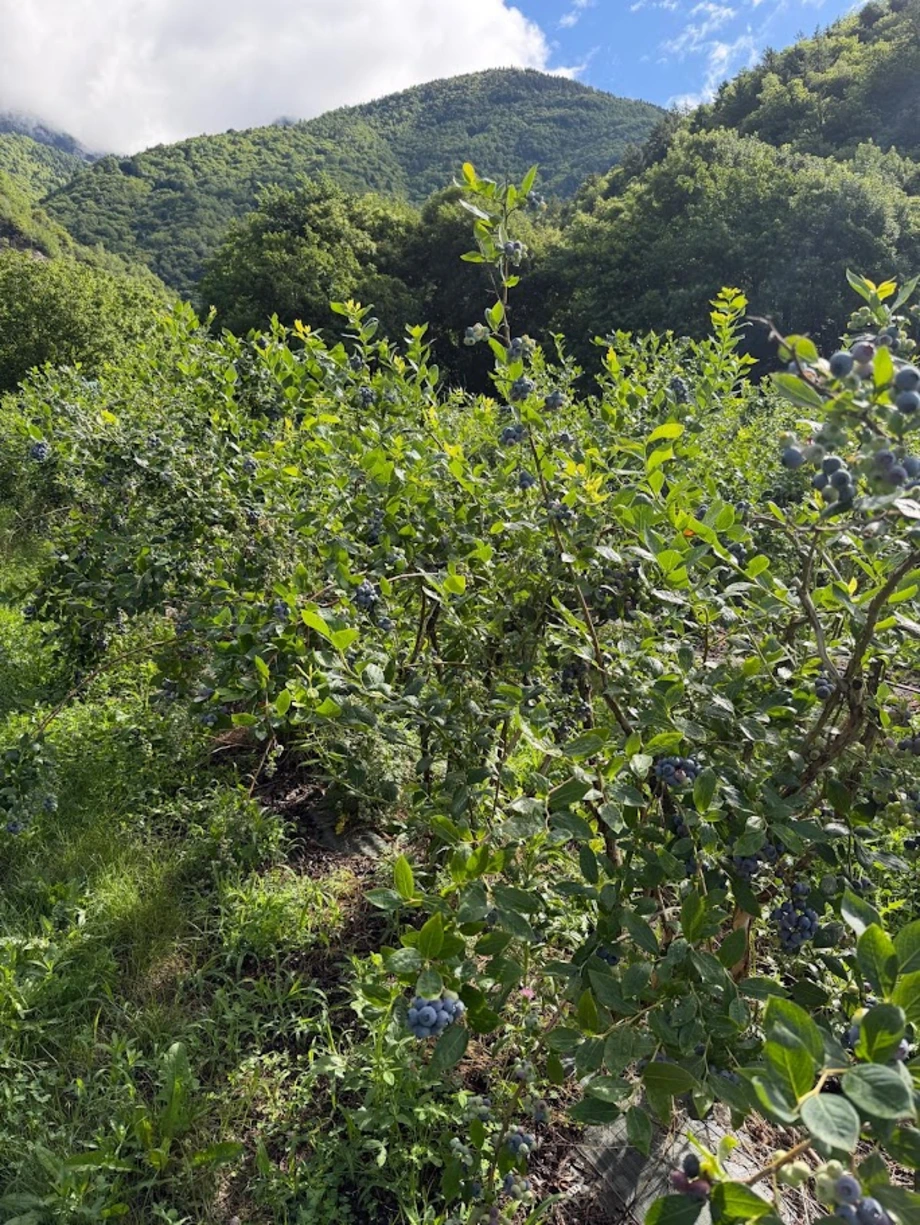
Luca Folini: Our absolute competitive advantage is the soil. Highbush blueberry requires acidic soils; in Valtellina we have extremely low pH levels, and active limestone or carbonates in the soil are not an issue for us. Under these conditions, the plant grows extraordinarily well. We have historic plantings over twenty years old with plants exceeding 3 meters in height. In fact, the first tests carried out with Rabbiteye varieties showed vigorous growth up to 6 meters in height, to the point that ladders were needed for harvesting, making them effectively unmanageable and forcing us to recalibrate our management choices.
How are the plantings managed from an agronomic point of view?
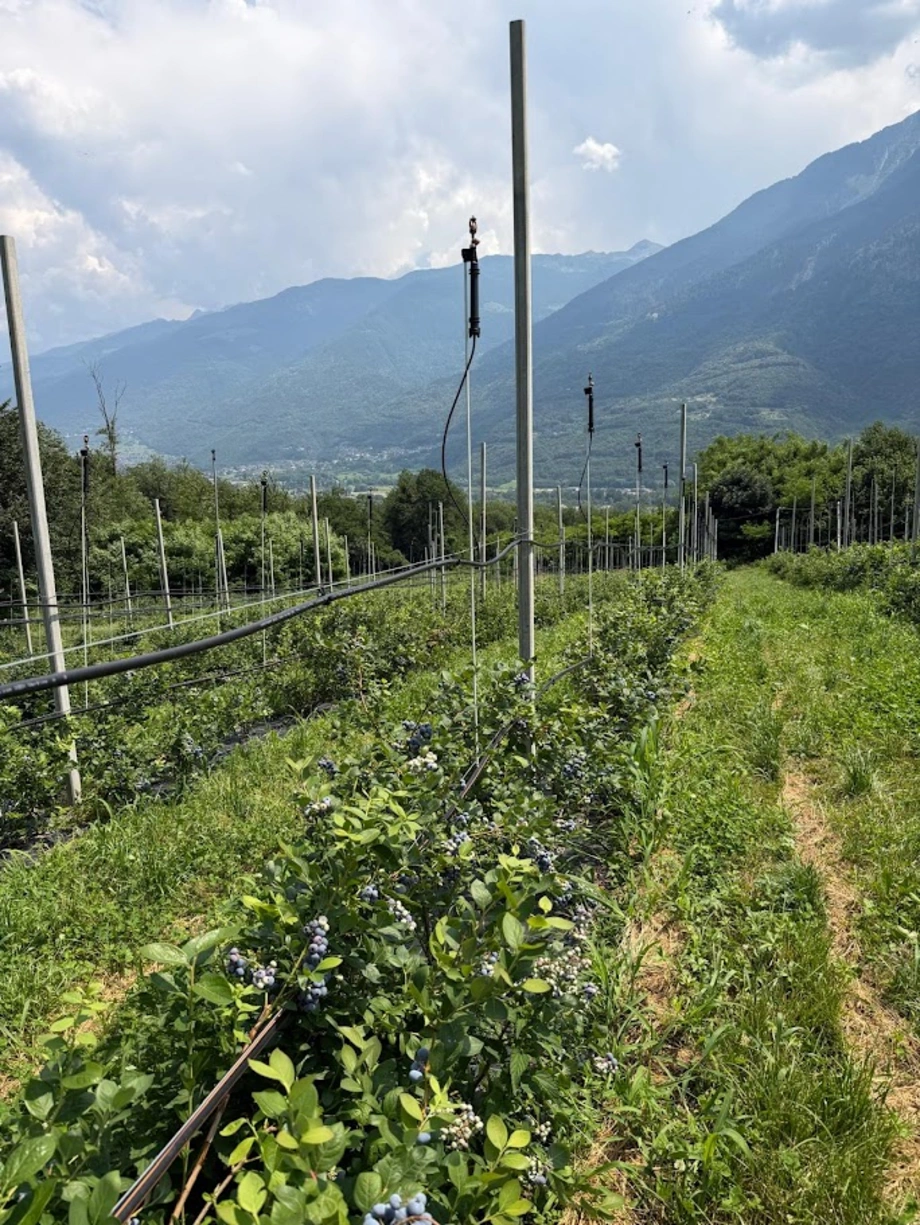
Luca Folini: In Valtellina, 80% to 90% of production takes place in open soil. Once the right acidic soil has been identified and the possibility of irrigation is guaranteed, the plant almost grows by itself. Irrigation remains an essential factor to ensure consistent yields.
Logistics management and the role of the cooperative
Did the fragmentation of growers into micro-farms risk compromising relations with major genetic suppliers such as Fall Creek? How did you solve this bottleneck?
Luca Folini: This was a crucial step for the survival of the supply chain. Andrea Pergher of Fall Creek, during one of his visits to the valley, was very clear: he explained that a global nursery could not manage logistics and contracts for 100 micro-farms ordering minimum lots of 50, 100 or 200 plants each. The choice was drastic: either a centralized organizational solution was found, or Valtellina would be excluded from their supplies.
As Fondazione Fojanini, we acted as a neutral facilitator, since by statute we do not sell plants. The decisive insight was to involve the Cooperativa Vitivinicola Montagna, which entered into a direct agreement with Fall Creek. The plants ordered are shipped directly from the nursery centers in the Netherlands or Spain to the cooperative’s headquarters, which manages customs clearance, reception and distribution of the young plants to individual growers according to their requests. This allowed us to guarantee our growers nursery material of the highest quality.
Dr. Fendoni, Cooperativa Vitivinicola Montagna has a long history in the area. What is your original mission, and how have you structured services to support small growers in this new berries venture?
Emma Fendoni: Our cooperative was founded 50 years ago precisely as a wine-growing organization, with the fundamental goal of bringing together the farms in our territory. Over the years, starting from our strong specialization in viticulture, we have progressively moved into other sectors as well, such as fruit growing and, indeed, berries. Historically, we have provided members with all the technical means and products required for agricultural activities, while also carrying out direct operational services, particularly in viticulture, such as vineyard work, treatments and harvesting activities.
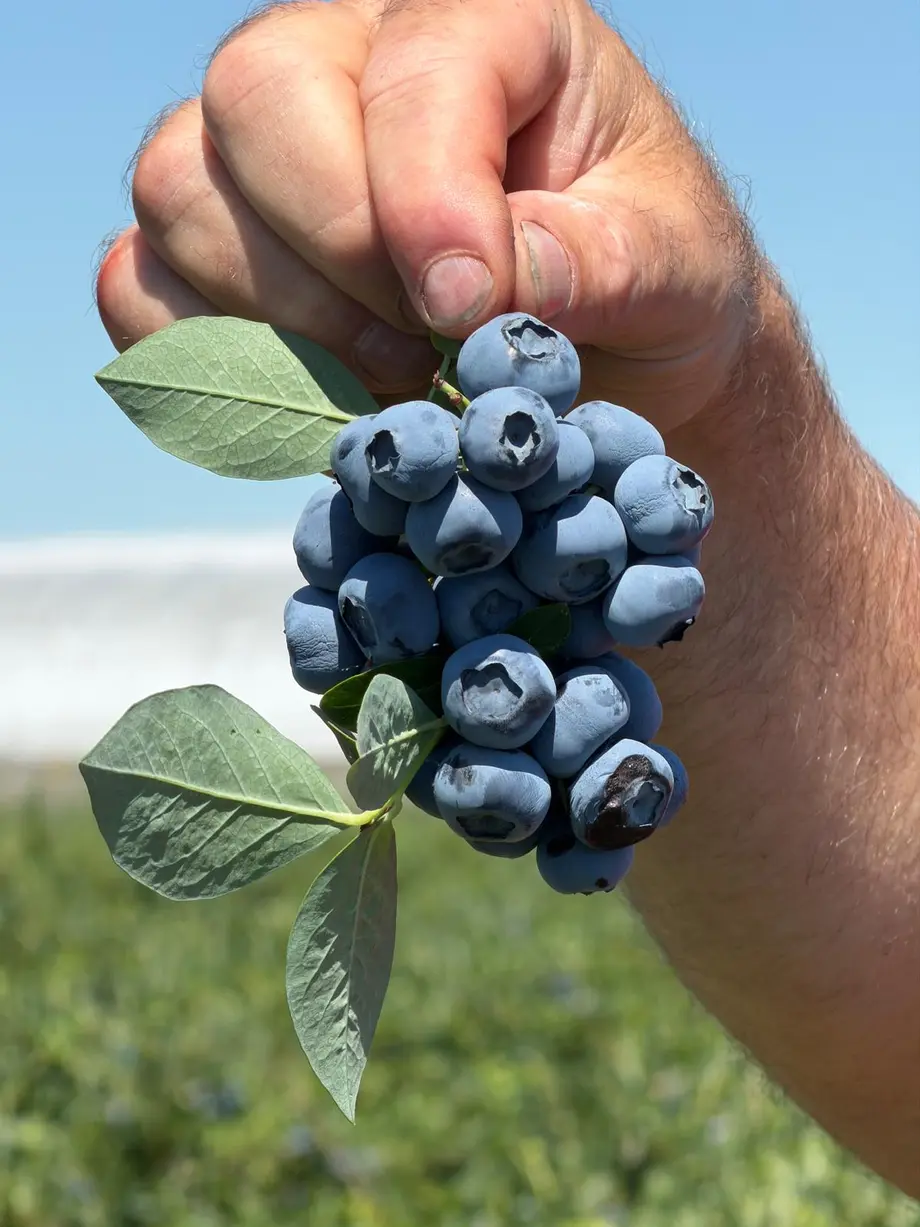
As regards berries, we launched a project for the delivery of blueberries, cherries and raspberries with several member farms of the cooperative. This initiative was created with a very specific economic and logistical purpose: to reduce marketing costs for individual micro-farms. By centralizing refrigerated transport, logistics and the entire invoicing process within a single structure, we are able to relieve growers of heavy burdens. It is a project that is delivering excellent results in Valtellina.
Economic structure and social impact of the supply chain
Returning to the structure of the sector, Dr. Folini, what kind of economic and social impact has this network of growers generated?
Luca Folini: The supply chain has taken on a strong social value. A very dense network of micro-farms and family-run businesses has developed. At the beginning, the large fruit growers focused on apple production, who manage significant areas of 10–15 hectares, were very reluctant to invest in blueberries, preferring to remain specialized in their own sector.
This skepticism, however, did not slow the growth of small local businesses. The response from the territory was exceptional: no crop in Valtellina has recorded similar growth rates in recent years. An extraordinary figure that confirms the economic sustainability of this choice is that 90% of the farms established over the past twenty years have never closed or abandoned cultivation. Today, the new growers entering the sector are much better prepared, have advanced technical skills and know exactly what investments and challenges they are facing.
What are the current figures for the sector in Valtellina?
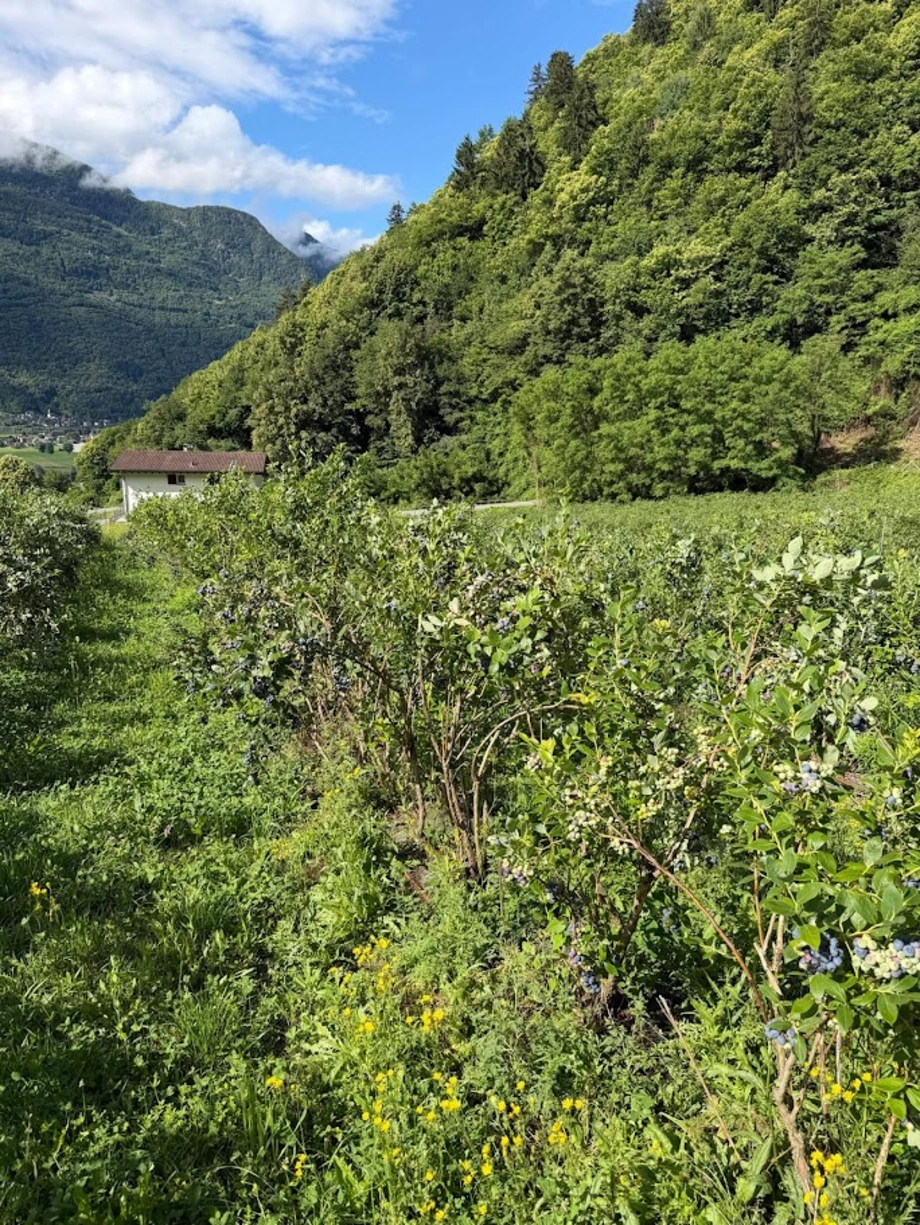
Luca Folini: Today, cultivation extends along the entire valley, covering a geographical axis of around 80 kilometers, from the Delebio area before Morbegno up to Alta Valtellina. There are more than one hundred active farms. In terms of surface area, we are talking about around 150–180 hectares in total, almost entirely planted with material of American origin from Fall Creek. Average yield is around 100 quintals per hectare. The sector continues to expand: every year between 3,500 and 4,500 new plants are planted locally.
Market channels, challenges and future prospects
Dr. Fendoni, how is the Valtellina blueberry performing commercially, and how do consumers respond?
Emma Fendoni: Blueberry sales in Valtellina are mainly carried out through the private channel and small-scale retail trade. We are fortunate to operate in an area with a strong tourist vocation. A product of high quality and freshness, such as the one marketed by our cooperative, has very strong appeal for consumers and tourists visiting Valtellina even for just a few days, ensuring excellent commercial positioning.
Folini, what are the other strategic channels, and how is blueberry seasonality perceived?
Luca Folini: The market responds extremely well, and we have no unsold product issues. One of our historic and strategic channels is Switzerland. Geographic proximity is a major advantage: Swiss consumers are great blueberry enthusiasts and absorb a significant share of our production.
At regional level, we record very strong demand in the tourist areas within the valley, such as Livigno and Bormio, but also outside the province, particularly in the Brianza area, where we have very effective direct sales channels. In addition, local consumers have developed a strong awareness of product seasonality: they know that the availability of fresh blueberries is concentrated in a 2–3 month window during the summer and wait for that specific period of the year to buy them.
What are the main agronomic and operational challenges that Fondazione Fojanini is working on for the future of the supply chain?
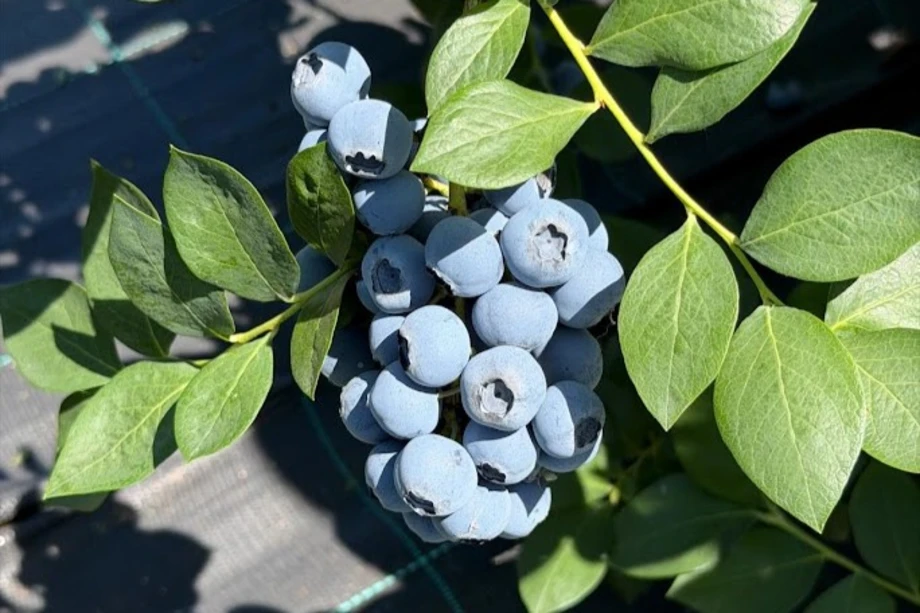
Luca Folini: Our main agronomic challenge is linked to the ripening calendar. Valtellina is protected to the north by the Rhaetian Alps, which shelter us from cold winds and frost, and is positively influenced by Lake Como and the Breva wind. This creates a warm, almost Mediterranean microclimate, which tends to concentrate and advance product ripening. Our real problem is not early product, but the lack of late-season product in August and September. We are working to introduce later varieties, although today we are partly able to compensate for this deficit thanks to the introduction of new varieties with better storability and improvements in cold storage techniques.
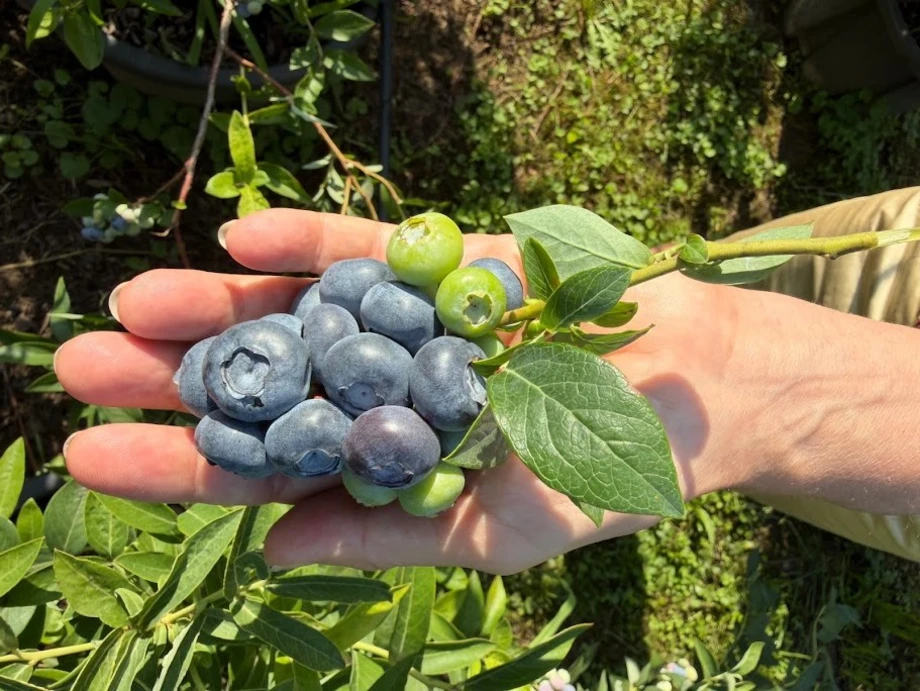
On the operational side, the biggest obstacle is the cost of harvesting, which represents the main expense in the crop budget. With micro-surfaces, mechanized harvesting is impossible; everything must be harvested strictly by hand. For this reason, the agronomic choice must focus on varieties that guarantee not only high productivity and commercial yield, but also ease and speed of manual picking in order to contain labor costs. One concrete goal we would like to achieve soon is the purchase of a collective sorting machine at valley level, to automate the sorting and packaging phase and significantly reduce post-harvest costs for small growers.
As regards marketing, is there a brand that enhances this production?
Luca Folini: Yes, together with some members of the Cooperativa di Montagna, a small local brand called Valle Blu has been registered. There is also the intention to structure a true area brand dedicated to the “Valtellina Blueberry” in the future.
Until now, we have never made significant investments in marketing or advertising because spontaneous demand is so high that all the product is easily sold at remunerative prices. However, we know that global competition is growing rapidly and that in the coming years we will need to be ready. The United States teaches us that promotion should be pushed as soon as the product is ready; Valtellina still has a wide field of communication opportunities to explore in order to enhance the distinctiveness of its “blue gold”.