








KEY TAKEAWAYS
1. The spread of GLP-1 drugs is changing eating habits.
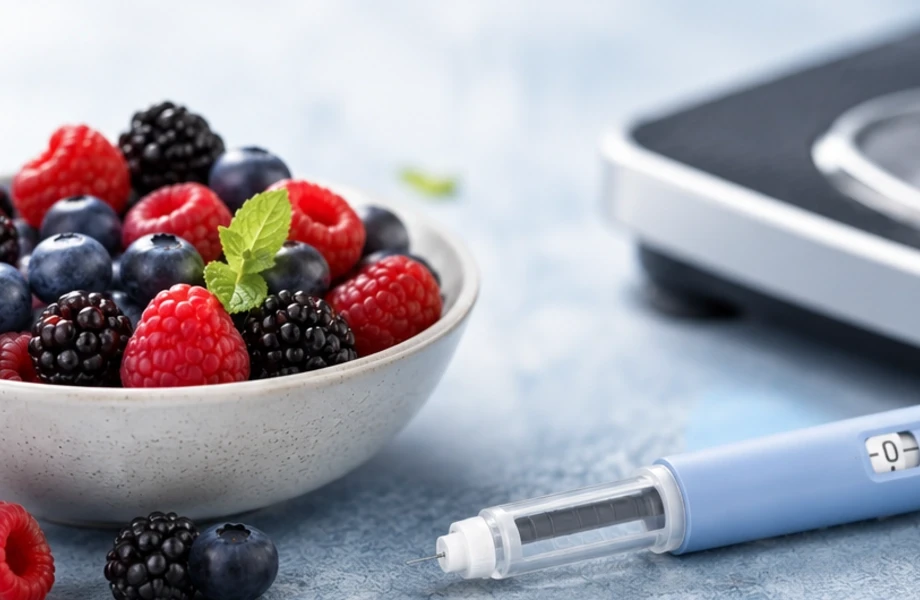
The growing use of GLP-1 drugs is changing the eating habits of millions of consumers, with increasingly visible effects on fast-moving consumer goods categories.
2. Berries could be among the main beneficiaries.
Berries could be among the main beneficiaries of this transformation, thanks to their high nutrient density, low calorie content and convenience.
3. The adoption of these drugs is changing the composition of shopping baskets.
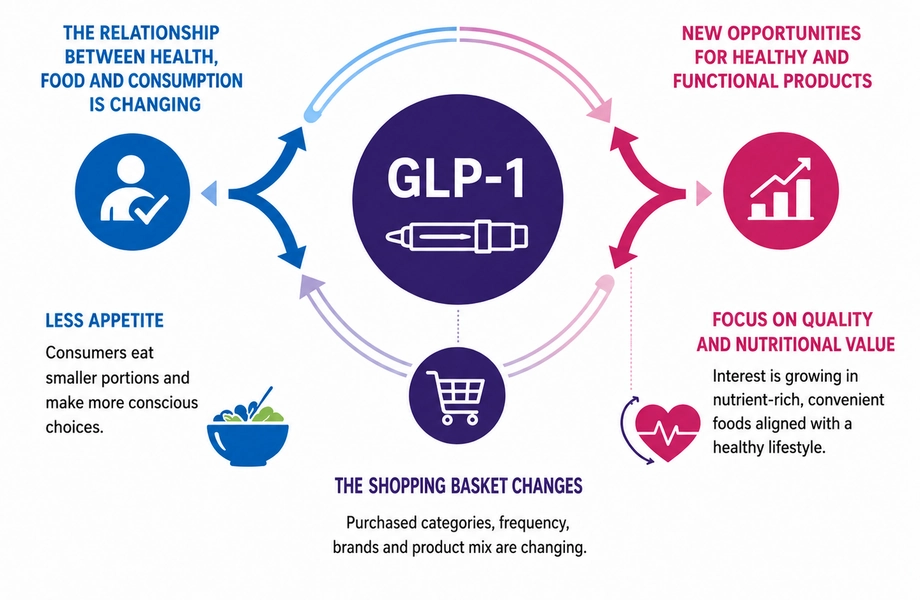
New international research by YouGov shows how the adoption of drugs for weight loss is changing the composition of shopping baskets, creating new opportunities for products perceived as healthy and functional.
4. The berry supply chain has an opportunity to reposition the product.
The berry supply chain has an opportunity to reposition the product not only as a healthy snack, but also as an ideal food for people following weight-management programmes.
The global expansion of anti-obesity drugs based on GLP-1 receptor agonists represents one of the most significant changes in recent years in the relationship between health, diet and consumption. Molecules such as semaglutide and tirzepatide are rapidly evolving from a healthcare phenomenon into a factor capable of profoundly changing consumer behaviour.
For the berry sector, this development could become one of the most interesting market opportunities of the next decade.
It is not only weight that changes: shopping baskets change too
According to the new survey "Who Cares? Who Does? Health Report – GLP-1 Special Edition", conducted by YouGov, the impact of GLP-1 drugs extends far beyond weight loss.
The analysis, based on continuous data from consumer panels in several countries, examines how purchasing patterns change before, during and after the start of treatment, distinguishing between three major population groups:
- users of GLP-1 drugs;
- people who are considering using them;
- consumers who do not intend to use them.
The aim is not merely to describe the evolution of eating habits, but to quantify which fast-moving consumer goods categories risk losing market share and which, by contrast, could benefit from growing demand.
Less quantity, more quality
One of the best-documented effects of GLP-1 drugs is a reduction in appetite.
People undergoing these treatments tend to consume smaller portions, while paying closer attention to the nutritional quality of the foods they choose. Products capable of delivering high nutritional value in small quantities therefore become increasingly important.
It is precisely in this context that berries offer particularly favourable characteristics.
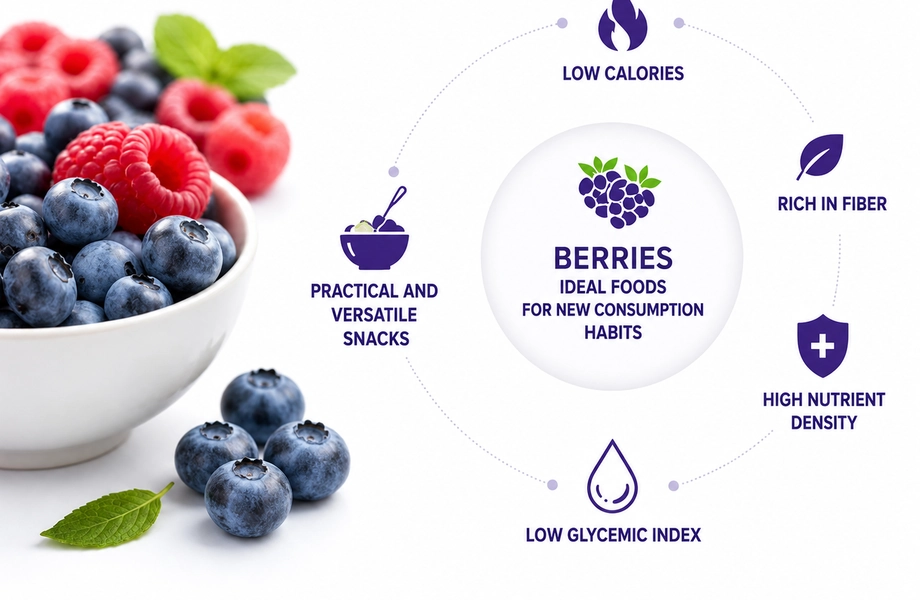
Blueberries, raspberries, blackberries and currants combine:
- a high concentration of vitamins and antioxidants;
- very low calorie content;
- a high fibre content;
- a low glycaemic index;
- convenient consumption with no preparation required.
These characteristics are perfectly aligned with the needs of consumers who eat less but seek foods that are nutritious, satisfying and perceived as "beneficial".
The ideal snack in the GLP-1 era
In recent years, the berry sector has already benefited from the growth of healthy snacking.
The increasing adoption of anti-obesity drugs could further strengthen this trend.
Consumers undergoing treatment tend to replace high-calorie snacks with lighter alternatives rich in fibre and nutrients. Berries naturally meet this need without requiring reformulation or product innovation.
In other words, they could become one of the "natural" foods most compatible with the new eating patterns encouraged by GLP-1 drugs.
A new marketing opportunity
For producers and retailers, this is not merely a nutritional change.
The YouGov survey shows that GLP-1 drugs are changing demand across numerous FMCG categories, influencing shopping-basket composition, brand preferences and purchasing frequency.
For the berry sector, this could lead to new communication strategies focused on:
- natural satiety provided by fibre;
- nutrient density;
- the convenience of berries as a snack;
- support for a healthy lifestyle;
- integration into breakfasts and high-protein snacks.
Naturally, it will be essential to avoid any direct reference to therapeutic benefits or inappropriate associations with medicines. However, positioning berries as an ideal food within a balanced diet could become even more relevant.
A trend that is here to stay
According to numerous analysts, the use of GLP-1 drugs will continue to increase over the coming years, involving an increasingly large share of the adult population.
For the food industry, this means adapting to consumers who purchase fewer calories but seek greater quality, functionality and nutritional value.
Berries appear to be starting from a privileged position: they already possess many of the attributes required by this new type of consumer, without requiring major transformations to the product.
For the supply chain, this could open a phase in which growth depends not only on increasing health-conscious consumption, but also on the evolution of obesity medicine. A change originating in the pharmaceutical sector could therefore have tangible effects on berry production, marketing and distribution strategies.