






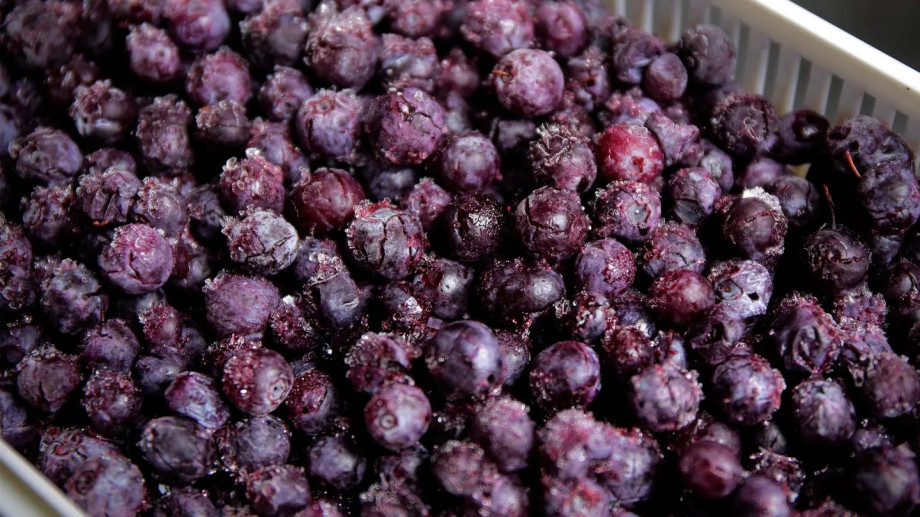
A new recall is shaking the North American berry supply chain. More than 55,000 pounds of frozen blueberries – equivalent to approximately 24,947.6 kg – have been recalled in the United States due to possible contamination with Listeria monocytogenes.
The announcement was made by the U.S. Food and Drug Administration (FDA), which updated the alert level associated with the measure earlier this week.
The recall and distribution channels
The recall was initiated by Oregon Potato Company and concerns frozen blueberries marketed in 30-pound (approximately 13.61 kg) packages and in large 1,400-pound (approximately 635.03 kg) containers.
According to the FDA, the potentially contaminated products were not sold directly to consumers but were distributed for industrial or professional use in the states of Michigan, Oregon, Washington, Wisconsin, and in Canada.
For the complete list of affected lots and operational details, the FDA refers stakeholders to its official website.
What listeria is and why it is a concern even in frozen products?
Listeriosis is a foodborne infection caused by the bacterium Listeria monocytogenes, a microorganism commonly found in the environment, particularly in soil, water, and various animal-derived products.
Infection is most frequently associated with the consumption of unpasteurized dairy products and improperly processed deli meats.
As noted by the U.S. Centers for Disease Control and Prevention (CDC), the bacterium can spread easily through equipment, surfaces, and hands in food processing environments.
A critical issue for the supply chain is listeria’s ability to survive at low temperatures: the bacterium can persist under refrigeration and even freezing conditions. This characteristic makes the management of frozen products particularly sensitive, including berries destined for industrial use.
Most vulnerable groups
In most cases, healthy individuals do not develop severe forms of infection. However, listeriosis disproportionately affects certain groups: adults over 65, newborns, and pregnant women.
In these cases, the consequences can be severe and, for fetuses, even fatal. The CDC estimates that approximately 1,250 people contract the infection each year in the United States and that 172 deaths are attributable to the disease.
More recalls or greater visibility?
The broader picture of food recalls remains complex. The overall number of recalls linked to listeria has not increased significantly. However, between 2024 and 2025, there has been a rise in the scale and media impact of the most significant cases.
In the summer of 2024, a major outbreak was traced back to a Boar’s Head facility in Virginia: millions of pounds of deli meats were recalled, resulting in 10 deaths and dozens of reported illnesses.
Also in 2024, Rizo-Lopez Foods implemented a large-scale recall of dairy products, while TreeHouse Foods was involved in a widespread recall concerning frozen waffles and pancakes.
Last year, a multistate outbreak linked to recalled ready-to-eat pasta meals also led to six fatalities.
Text and image source: www.forbes.com