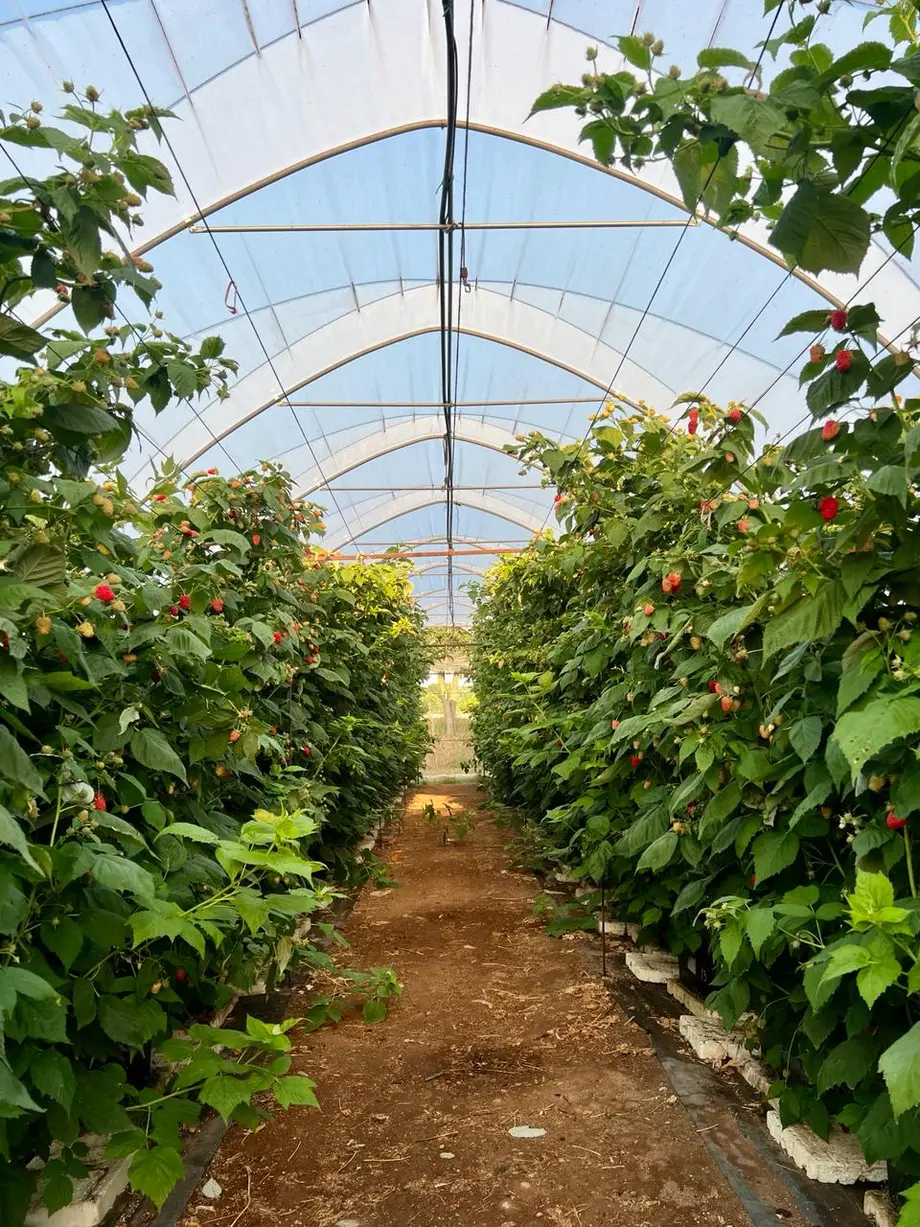










Easy Rose is the new raspberry from Lucchini Berries, which, according to the Italian breeder, stands out in the raspberry varietal landscape for one very concrete characteristic: agronomic plasticity.
The variety shows a strong ability to adapt to different production conditions, growing systems and management techniques, while maintaining productive stability and fruit quality. We explored its technical characteristics, the results of multi-year trials and the agronomic guidelines for growers.
We discuss this with Elisa Lucchini, technical manager at Lucchini Berries.
What does Easy Rose’s agronomic plasticity refer to? What concrete elements demonstrate it?
By agronomic plasticity, we mean Easy Rose’s ability to adapt successfully to different soil and climate conditions, growing systems and management techniques, while maintaining high productive and qualitative performance.
The trials conducted in recent years have shown that the variety responds positively to the main cultivation systems currently adopted in the most important raspberry-producing countries, such as mow down and green cut back.
Planting density can also be adjusted according to production targets and the cultivation technique: it is possible to work with 2 to 4 plants per metre, depending on fertilisation, pinching management and the desired vigour.
In addition, Easy Rose adapts effectively to both soil and pot cultivation, offering growers great flexibility.
What did the multi-year trials show?
Over four years of trials carried out in different production areas, we evaluated the variety’s productivity, fruit quality and adaptability.
One of the most interesting aspects is its consistent production. Easy Rose does not show major production peaks, but distributes the harvest regularly throughout the cycle. This is an advantage both for labour organisation, which can be planned more efficiently, and for marketing, as it ensures a constant availability of product.
Like all varieties in the Easy series, Easy Rose also stands out for its high ease of picking. The fruit detaches very easily from the receptacle, even when the raspberry is not yet fully ripe. This characteristic makes it possible to significantly increase picker productivity, with harvesting yields normally between 8 and 9 kg/hour, reaching up to 10 kg/hour with the most experienced pickers.
This is a concrete advantage for growers, who can reduce harvesting costs while maintaining high quality standards.
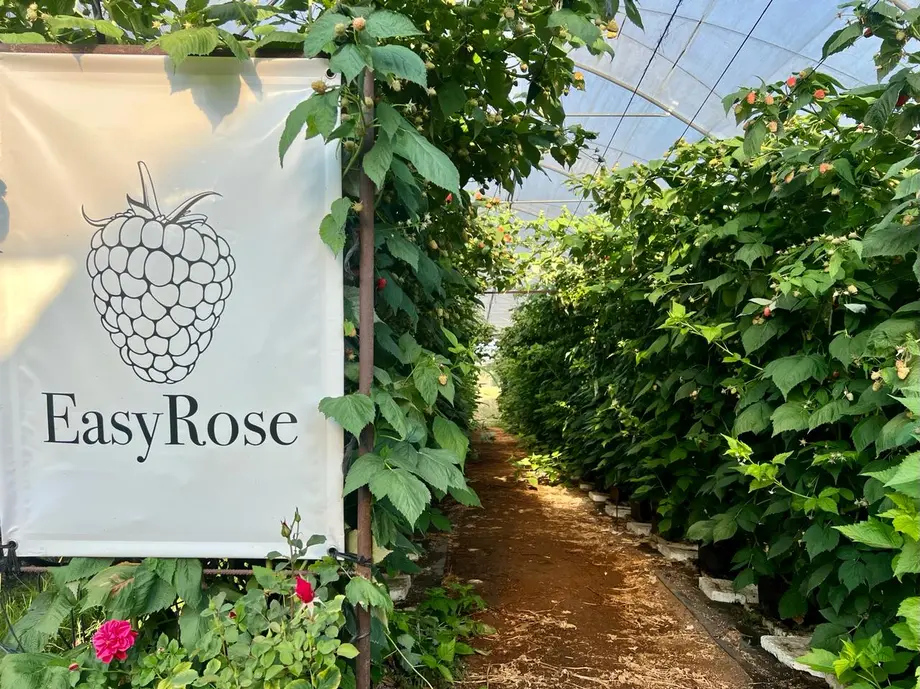
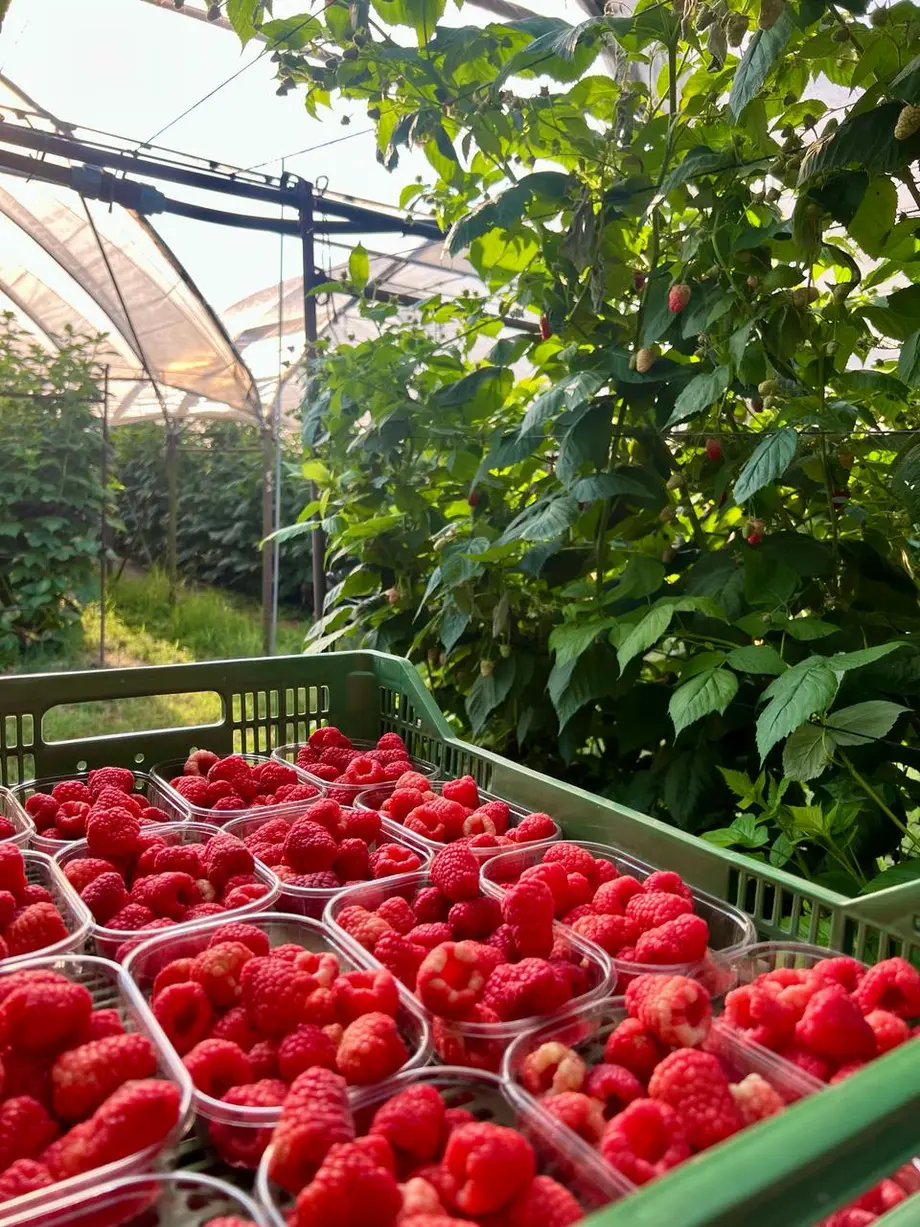
Fruit quality also remains very stable. The size remains uniform throughout the production season, without the marked drop in calibre that is often observed in other varieties. The average fruit weight is around 7 grams.
The trials also showed excellent quality retention even under difficult climatic conditions, such as the high temperatures recently recorded in the Verona area, with peaks of around 40 °C. The fruit remains dry, does not easily release juice, maintains excellent firmness and has a long shelf life.
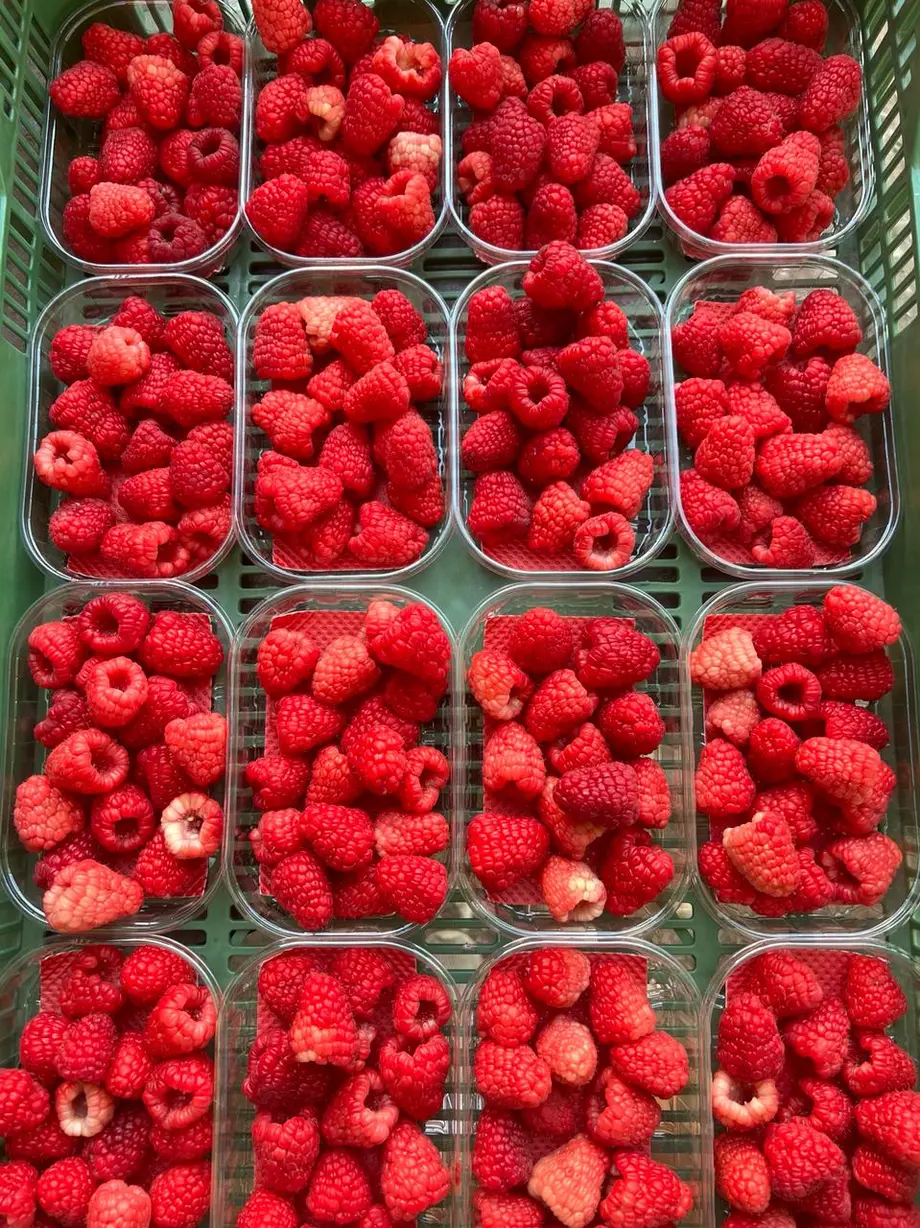
Another distinctive characteristic is its colour: even at advanced ripeness, the fruit maintains a bright pink tone, without turning the dark red typical of other varieties. This is a characteristic generally highly appreciated by both retailers and end consumers.
These results have been confirmed not only in Verona, but also in trials carried out in other European countries, including Poland, the United Kingdom, Spain and Portugal, as well as in Morocco.
How is Easy Rose performing in different countries?
In Europe and Morocco, the variety has confirmed the same characteristics observed in Italian plantings, showing high adaptability in different production contexts.
The results obtained in Spain, Portugal, the United Kingdom and Morocco confirm the variety’s consistent production, fruit quality and good adaptability.
Easy Rose was introduced in Mexico in 2026. The plants will enter production shortly, so production data are still being collected. However, expectations are positive based on the behaviour observed in other production areas.
How does Easy Rose respond to cultivation systems such as mow down and green cut back?
Easy Rose is very well suited to both techniques.
In the mow down system, the variety enters production very early. Since it is already naturally early, regrowth from the canes originating from the root system brings the harvest period forward even further compared with plants obtained through traditional transplanting. This is an important advantage for growers targeting the most profitable market windows.
The response to the green cut back system is also very positive. The variety does not require a high chilling requirement or the use of specific products to break dormancy. After vegetative cutting, it resumes growth quickly and returns to production in around 50-60 days, allowing extremely flexible crop-cycle management.
What planting densities do you recommend and what production targets can it achieve?
Planting density depends on the cultivation system and the agronomic management adopted.
During the vegetative phase, Easy Rose requires adequate nitrogen nutrition, both in nitric and ammoniacal form, in order to develop a balanced vegetative structure. If nutritional management is correct, 2-3 plants per metre are generally sufficient, although density can be increased depending on production targets.
The variety is very early: on average, 90-100 days pass from transplanting to the start of harvesting.
In two production cycles, primocane and floricane, yields can reach 2.5-3 kg per plant, equal to more than 1 kg per plant for each cycle, while maintaining high quality standards and continuous, regular harvesting throughout the season.
From a plant health perspective, Easy Rose does not show any particular sensitivity to the main diseases.