




Measuring sustainability is no longer just a theoretical or reputational exercise. For the blueberry sector, increasingly exposed to the demands of retailers, customers and international markets, it means having credible figures, benchmarks and parameters. This is the context behind the new Blueberry Life Cycle Assessment (LCA), the project launched by the USHBC BerrySmart Sustainability Task Force together with researchers from the University of California, Davis.
The initiative has a clear objective: to build a national baseline for the sustainability of blueberry production in the United States, starting from data collected directly from farms. In other words, not an abstract narrative, but a measurement based on the actual practices adopted in the field. The goal is twofold: on one side, to provide the industry with solid elements to support credible marketing claims; on the other, to identify more clearly the areas where research, innovation and environmental mitigation strategies should be focused.
A technical snapshot of production
The questionnaire is designed to collect detailed information on the block or production area considered most representative by each farm. Growers are asked to provide actual data, or reliable estimates for the following season, across a range of parameters covering the full production cycle.
The first group of data concerns structural information: cropped area, varieties, planting density and estimated annual yields. From there, the survey moves on to nutrient management, gathering data on the amounts and application methods of nitrogen, phosphorus, potassium, compost and other soil amendments, in order to assess nutrient use efficiency.
An important section focuses on energy use. The project asks growers to estimate annual diesel, gasoline and electricity consumption, distinguishing among the different on-farm uses: harvesting, mowing, spraying, pumping and other operations. At the same time, it also records the possible integration of renewable energy sources, such as solar panels used to power irrigation pumps.
No less relevant is the section on pruning management. Organizers want to understand whether woody biomass is chipped, composted, reused as mulch or handled through other solutions, also in order to estimate its possible contribution in terms of returning carbon to the soil.
Water, cover crops and pest control: sustainability in detail
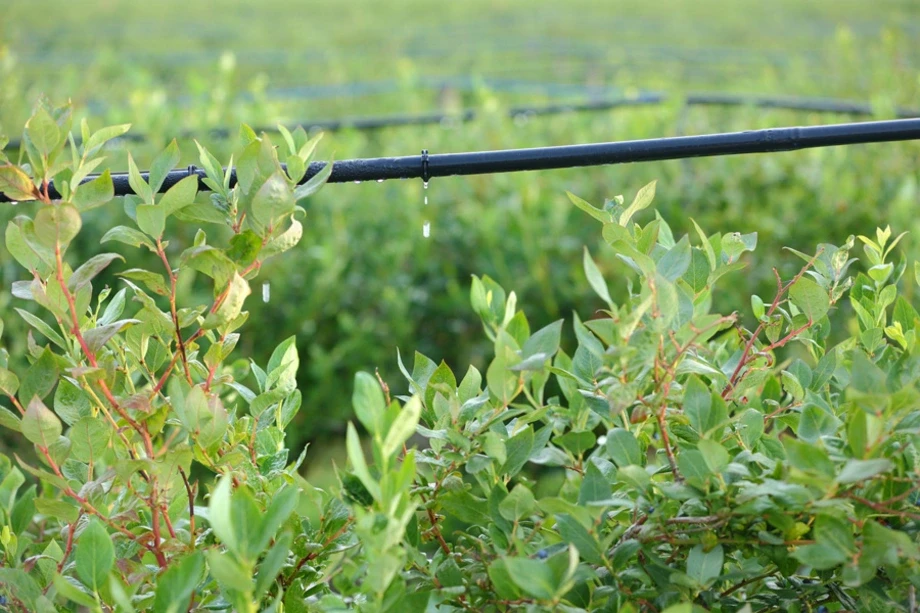
The issue of irrigation is addressed in considerable depth. The survey collects information on irrigation months, systems used, such as drip or overhead irrigation, water sources and pumping practices, also distinguishing between the availability of surface water and groundwater in drier or wetter years. The aim is to achieve a comparable assessment of water-use efficiency.
Another technical area concerns cover crops. The project examines the use of grasses, legumes or other cover crops and links their adoption to the farm’s stated objectives: erosion control, improved soil fertility and structure, carbon sequestration, support for biodiversity and the creation of habitat for pollinators.
The survey also goes into the details of integrated pest management (IPM), collecting data on target pests, spray equipment and the strategies adopted to reduce the impact of crop protection. These include hedgerows to support beneficial insects, trapping systems, weed control and the application of selective pesticides only when economic thresholds are exceeded.
Confidentiality and value for the industry
One of the aspects most strongly emphasized by the organizers is privacy. Participation is voluntary, and individual responses will remain confidential: they will only be accessible to researchers at the University of California, Davis and authorized staff. Final results will be released only in aggregated form, for example by state or county.
At the same time, organizers make clear that the project is not linked to compliance activity or regulatory purposes. Its stated aim is solely to create value for the blueberry industry, providing a technical foundation to describe the sector’s sustainability with greater precision and authority.
Why participation matters
Collecting primary data of this quality inevitably requires time and cooperation from farms. For this reason, the project promoters specify that where exact figures are not available, the best available estimates are also accepted, as long as they are reliable. Direct support is also available to help growers complete the questionnaire.
The point, however, is broader. The higher the participation, the more the final picture will be able to reflect the true diversity of production systems within the US blueberry sector. In other words, the quality of the outcome will depend on the industry’s ability to turn its agronomic, energy, water and environmental experience into a shared data foundation.
For the sector, this is a strategic step. At a time when sustainability is increasingly required as a commercial prerequisite, having an LCA assessment built on farm-level data can make a difference not only in communication terms, but also in terms of technical credibility. For blueberry growers, the project promoted by USHBC and UCD is therefore not just a survey, but a concrete attempt to translate into measurable metrics what many farms are already doing in the field.
In this sense, the Blueberry Life Cycle Assessment goes beyond measuring the environmental impact of blueberry production: it also seeks to define a common language through which the sector can present itself to the market, highlight the progress already made and identify more precisely where further improvement is needed.