








Peru’s blueberry industry has expanded rapidly over the past decade, turning the country into one of the world’s leading suppliers. However, as export volumes have grown massively, market dynamics have changed: profitability now depends increasingly on varietal differentiation rather than on production scale alone.
This structural shift was examined in detail in the report "2025 Agronometrics Peruvian Blueberry Varietal Price Spectrum Monitor (PRISM)", which introduces an innovative methodology to track the impact of individual cultivars on export prices.

The growing price bifurcation
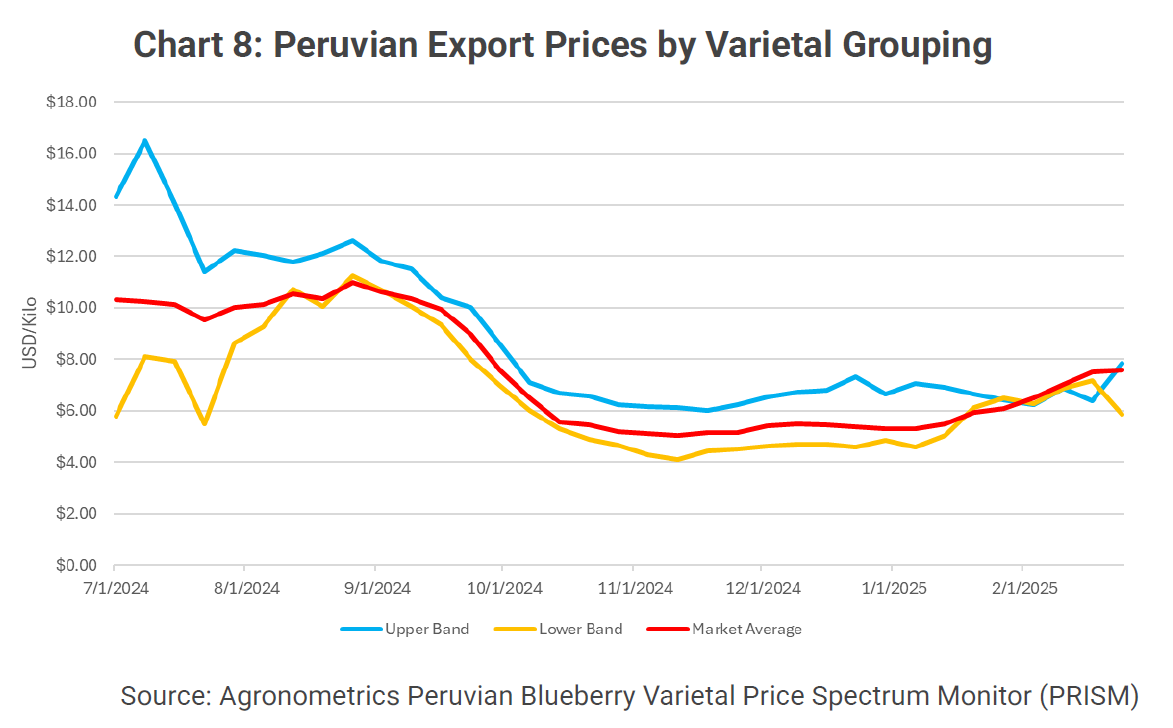
Data collected over the last six seasons show a clear market evolution and a widening gap in the returns generated by different cultivars. The PRISM analysis identified a sharp division of fruit into price categories, particularly separating a premium segment (“Upper Band”) from a lower-priced segment (“Lower Band”).
The most striking figure concerns the value differential: in the 2024/2025 season, Upper Band blueberries achieved an average premium of $2.28 per kilogram compared with Lower Band fruit. This spread represents the widest gap ever recorded; by comparison, in the 2019/2020 season the difference between the two groups was only twenty cents.
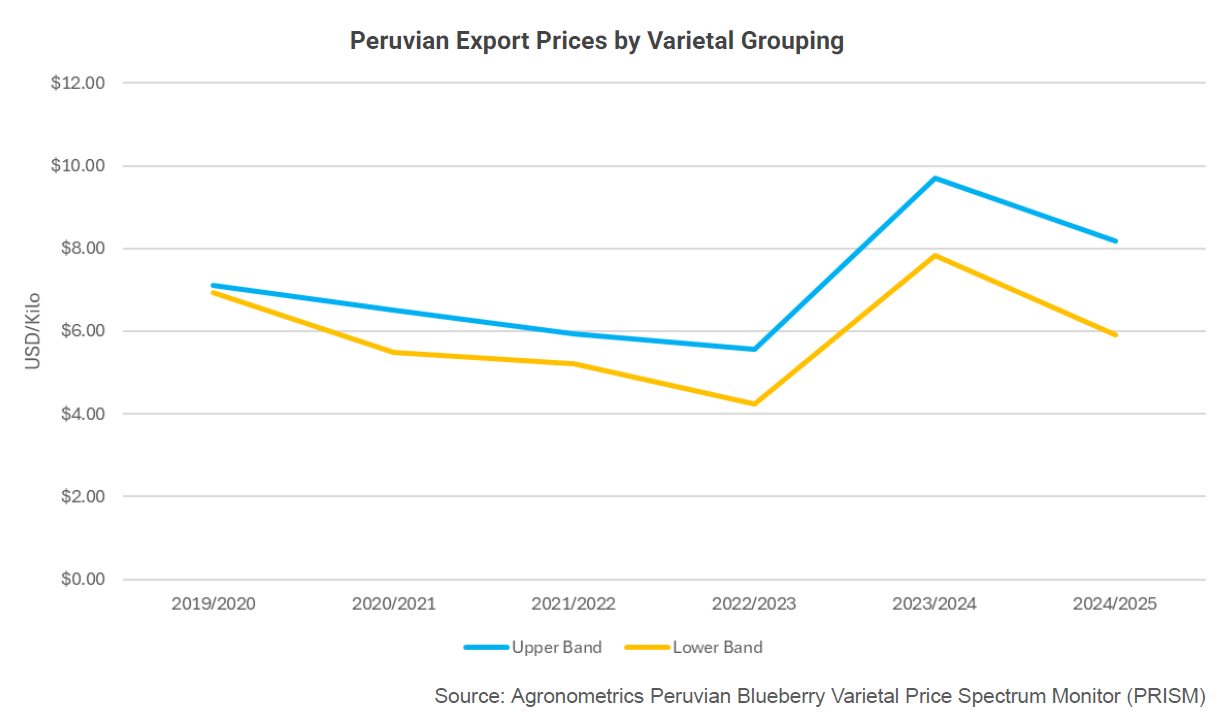
Also significant is the performance of these premium varieties during the seasonal peak of exports between September and October: despite the sharp drop in overall prices caused by abundant supply, top-tier blueberries firmly maintained their relative competitive advantage.
The rise of Sekoya Pop and pressure on Ventura
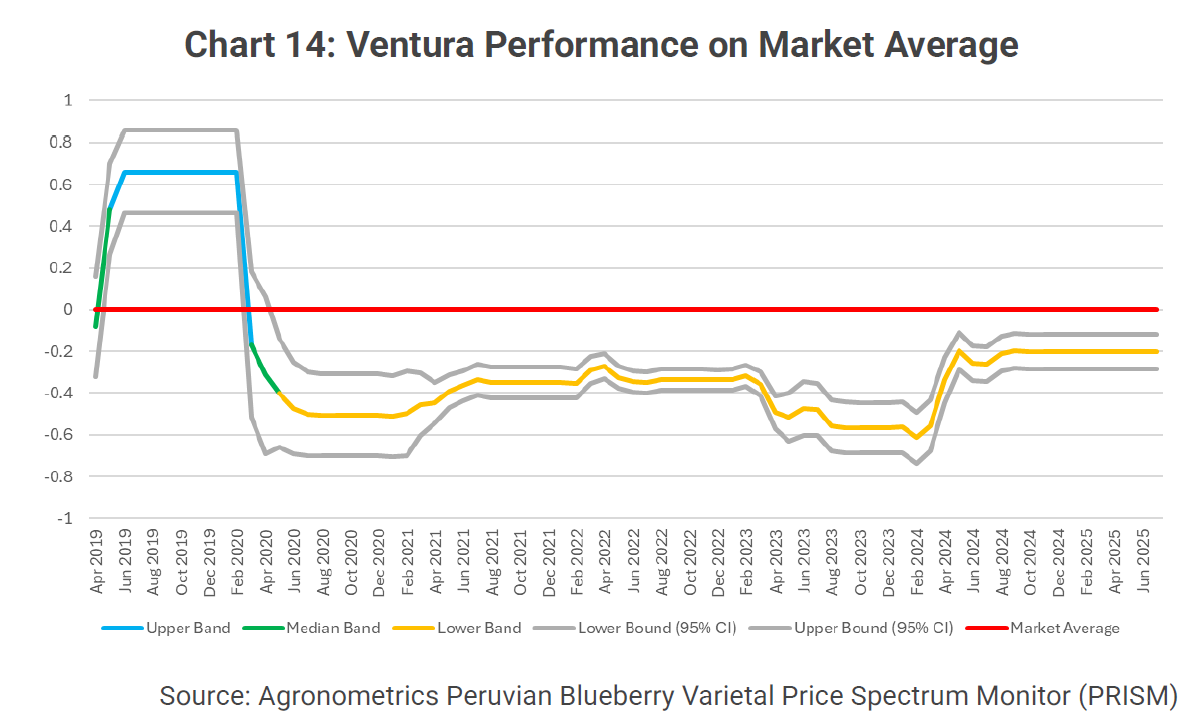
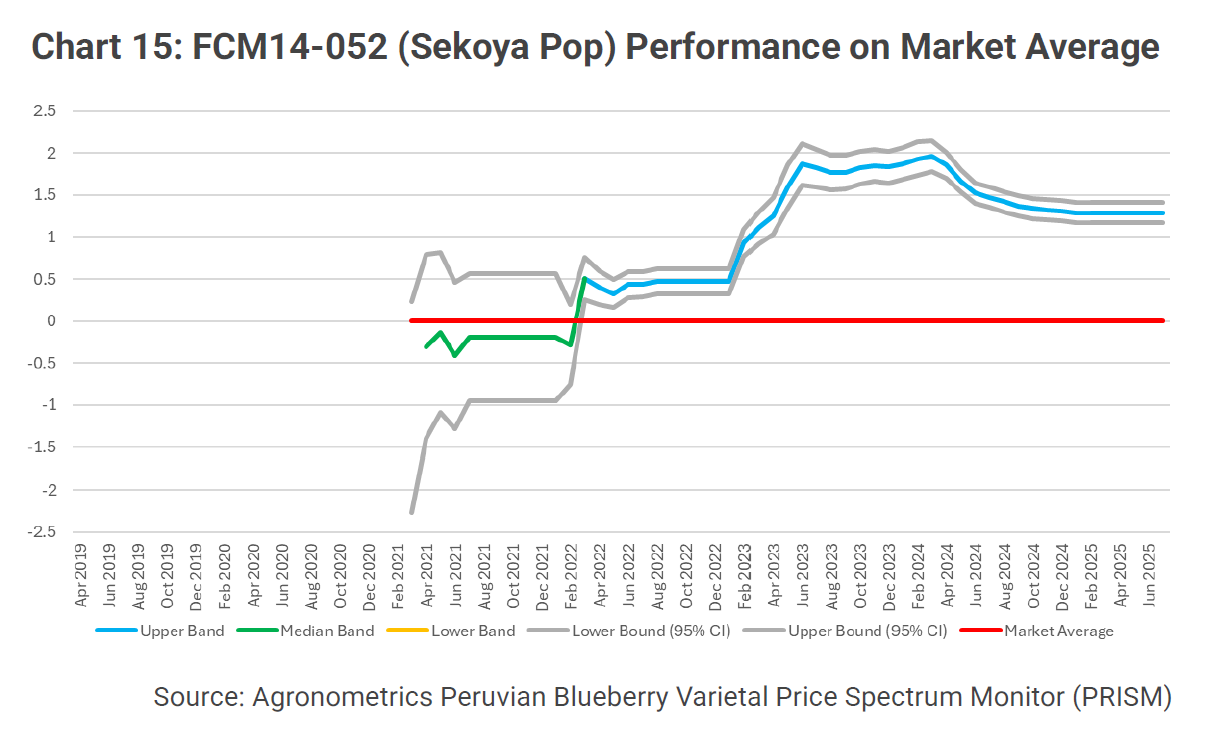
To classify performance objectively, the methodology subtracts the prices of individual lots from the daily average price of the Peruvian market, determining each variety’s positioning according to the statistical strength of its premium or discount.
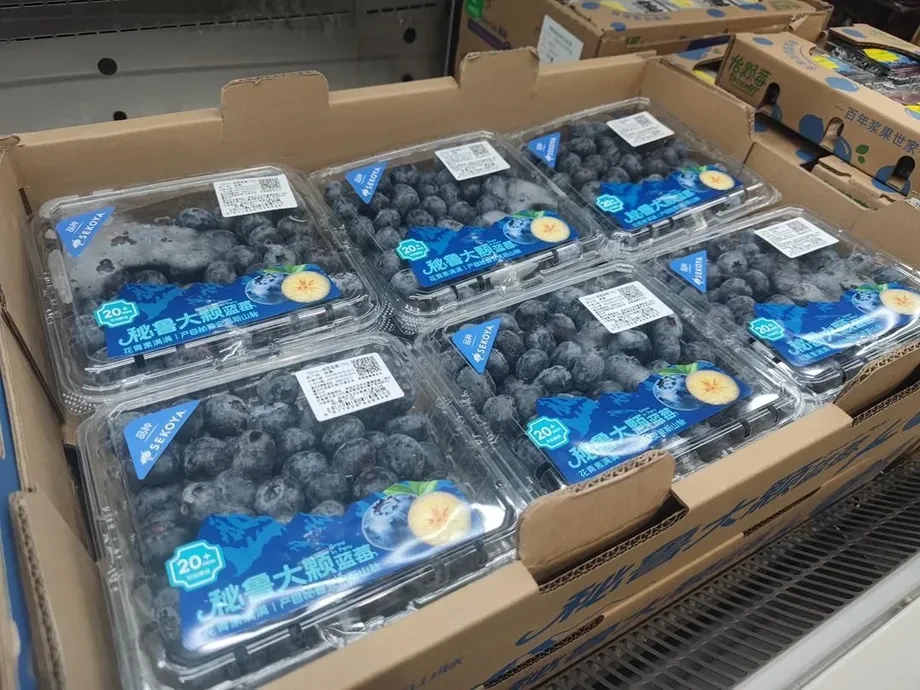
Within the Upper Band, the variety Sekoya Pop stands out clearly for both traded volumes and consistently strong performance relative to the market average, delivering exporters solid net returns.
On the other hand, Ventura is the leading example of the Lower Band category; the analysis indicates that the vast majority of its export lots are sold at prices consistently below the market average. The monitoring also shows that cultivar positioning is not fixed: Ventura, for example, posted weaker results in 2023 due to the climatic impact of El Niño, while Sekoya Pop reached maximum stability and peak value only after an initial commercial “adjustment period.”
An analysis based on real market data
To ensure the reliability of these metrics for professional operators, it is worth noting that the data come from official export records from SUNAT, Peru’s customs and tax authority.
Using artificial intelligence, varietal information is extracted directly from the text of customs declarations. In addition, transactions involving transfer pricing strategies (intra-group transfer prices that do not reflect actual commercial fluctuations) are excluded in advance, providing an authentic picture of the market’s willingness to pay.
Growing volumes and future prospects
While Lower Band varieties still account for the largest share of export volumes, Upper Band varieties are growing at a very rapid pace. Volumes tracked for the premium segment have surged from just over 600 tonnes in the 2019/2020 season to more than 22,000 tonnes in 2024/2025.
For berry industry professionals, the message is unmistakable: consumers are willing to pay more for a superior eating experience, and buyers pass that value on to producers capable of delivering excellent flavor, texture, and shelf life.
The global industry is entering a new phase in which companies that invest in genetic renewal and differentiation will be the only ones able to maximize profits and navigate an increasingly competitive market.