










Jorge Duarte | Hortitool Consulting
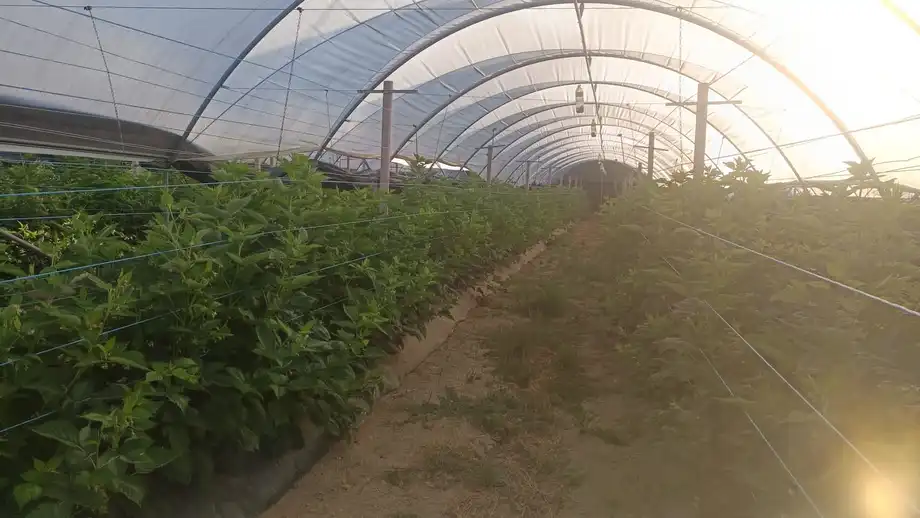
In summer, a plastic greenhouse stops being only a shelter. It becomes a climate machine. The grower's job is to identify the real bottleneck - heat, radiation, VPD, roots, salinity, crop load or ventilation - and remove it before the plant loses productive hours.
Summer in plastic: first find the limiting factor
When I enter a berry greenhouse in July or August, I do not start by asking what product should be applied. I start with a simpler question: what is limiting the plant today?
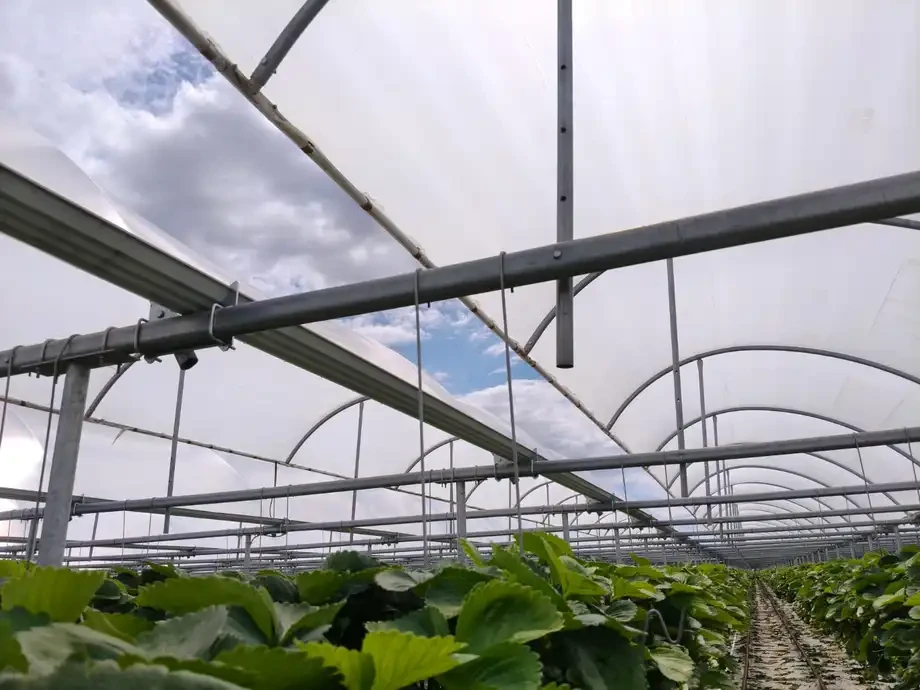
In spring, plastic is usually an ally. It protects flowers and fruit from rain, wind and hail. In summer, the same plastic can become the first limitation to growth because it traps energy, raises evaporative demand and can disturb pollination.
For raspberries and blackberries, high tunnels can extend harvest, improve fruit quality and reduce wet foliage, but extension guides also insist on regular irrigation and ventilation to moderate temperature. In blueberry, protected environments can advance ripening, but high tunnels may also raise maximum air temperature; one study reported maximum temperatures 7.2 °C higher under tunnel than under hail net.
Protection is useful only when the climate inside remains productive.
My practical rule is this: never push a stressed plant with more fertilizer before removing the stress. A plant with closed stomata, hot leaves, poor root oxygen or high root-zone EC will not respond like a plant in balance.
Radiation is useful until it becomes surplus energy
Summer growth is not limited only by air temperature. The crop reacts to leaf and fruit temperature. A sensor at head height may show 31 °C while top leaves and exposed berries are several degrees hotter.
Once radiation exceeds the crop's capacity to use it, surplus light becomes heat. The plant tries to cool itself by transpiration. If water uptake cannot follow, stomata close, photosynthesis falls and leaf temperature rises.
Shading should therefore be a precision tool, not a panic reaction. The target is not to make the tunnel dark. The target is to remove excess energy during the hours when the crop can no longer use it efficiently.
In Mediterranean conditions, white or reflective external shading applied before a heatwave is often more useful than adding a dark internal net after damage starts. The key questions are: how much shade, for how many hours, and at which phenological stage?
VPD: the invisible stress
Relative humidity alone is a weak guide. The plant does not feel humidity as a percentage; it feels the drying power of the air. That drying power is vapor pressure deficit, or VPD.
High VPD increases transpiration demand, reduces plant water potential, changes stomatal behavior and can reduce photosynthesis and nutrient uptake.
This explains many summer contradictions. A substrate can look wet while the canopy is already under stress. The root zone may contain water, but the atmosphere may be asking for water faster than the roots can supply it.
For berries, the objective is moderate and stable evaporative demand: enough transpiration to cool the plant and move minerals, but not so much that the plant goes into defense.
Ventilation is still the first cooling technology
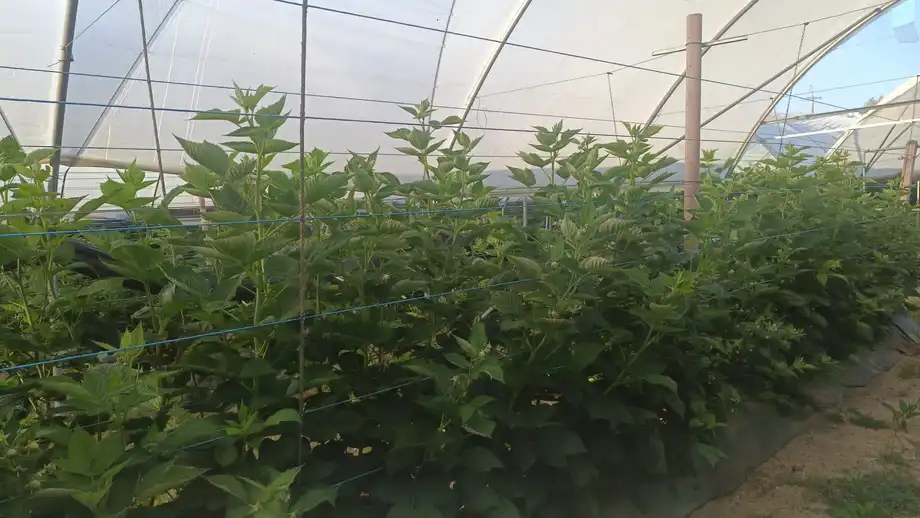
Before investing in complex cooling, I check whether the greenhouse can breathe. Many plastic tunnels overheat because the hot air layer above the crop is not removed fast enough.
Side openings are too small, gable ends are closed, insect nets are too dense or vegetation blocks air movement. General greenhouse guidance keeps the same basic message: ventilation and shading are the first tools against overheating.
Ventilation must start early. Opening the sides after the structure has already accumulated heat is late management. The morning objective is to prevent the tunnel from becoming a heat battery.
Fans can reduce stagnant zones, but they do not replace air exchange. A fan moving hot air inside a closed tunnel is not cooling the crop. Sensors should be placed in the crop zone, and preferably in more than one position, because the weakest zone often decides the commercial result.
Water cooling can help, but disease must not be invited
Evaporative cooling can be valuable in dry climates, but water used to cool the air is not the same as water used to irrigate the root zone.
Fine fogging or misting should reduce temperature and VPD without leaving flowers, leaves or fruit wet for long periods. Wet flowers reduce pollination quality. Wet fruit and dense humid canopies open the door to Botrytis.
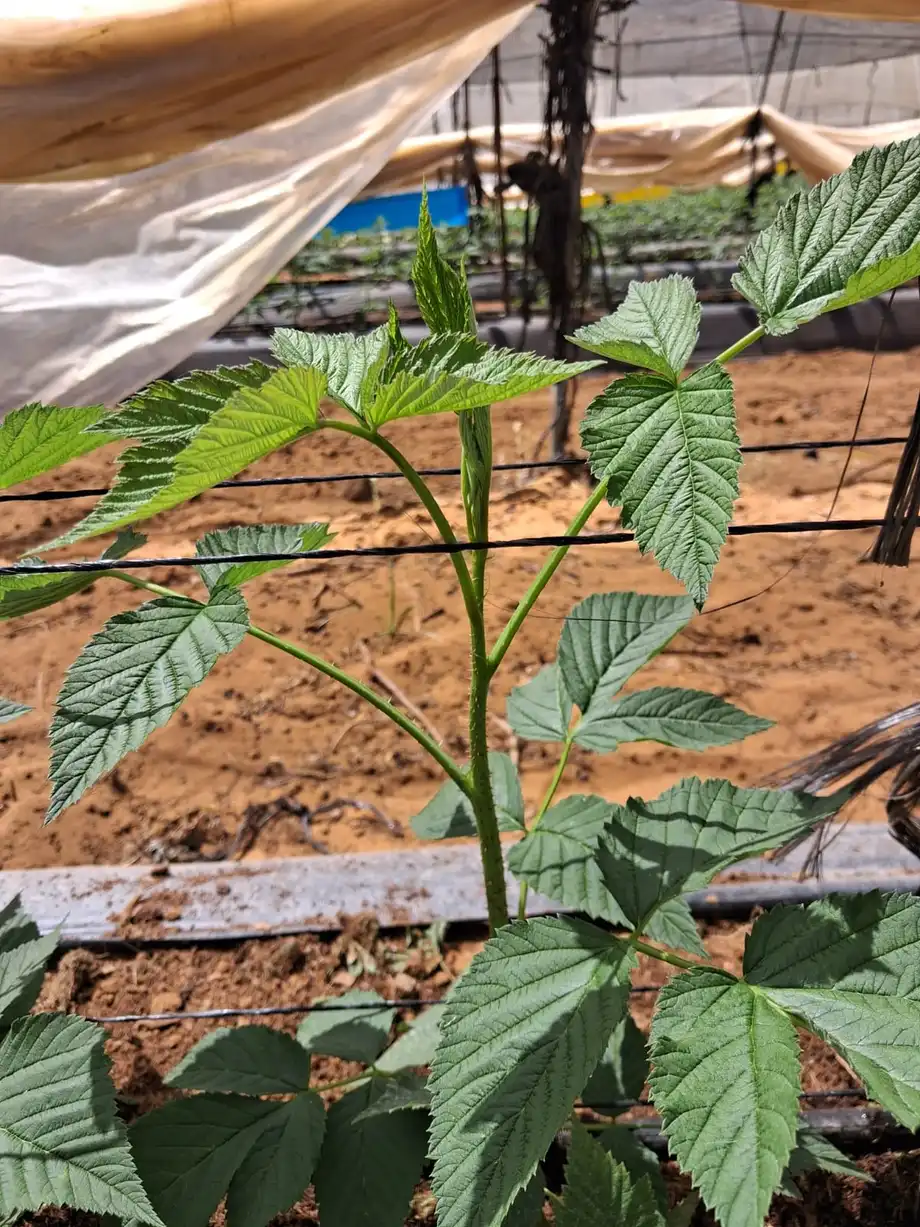
In caneberries, one of the main advantages of plastic tunnels is keeping the canopy dry. University of Minnesota guidance for high tunnel raspberries recommends drip irrigation and fertigation and warns against overhead watering because it removes the disease-management advantage of the tunnel.
The practical rule is clear: use water to cool the air, not to wash the crop.
The root zone is the hidden engine
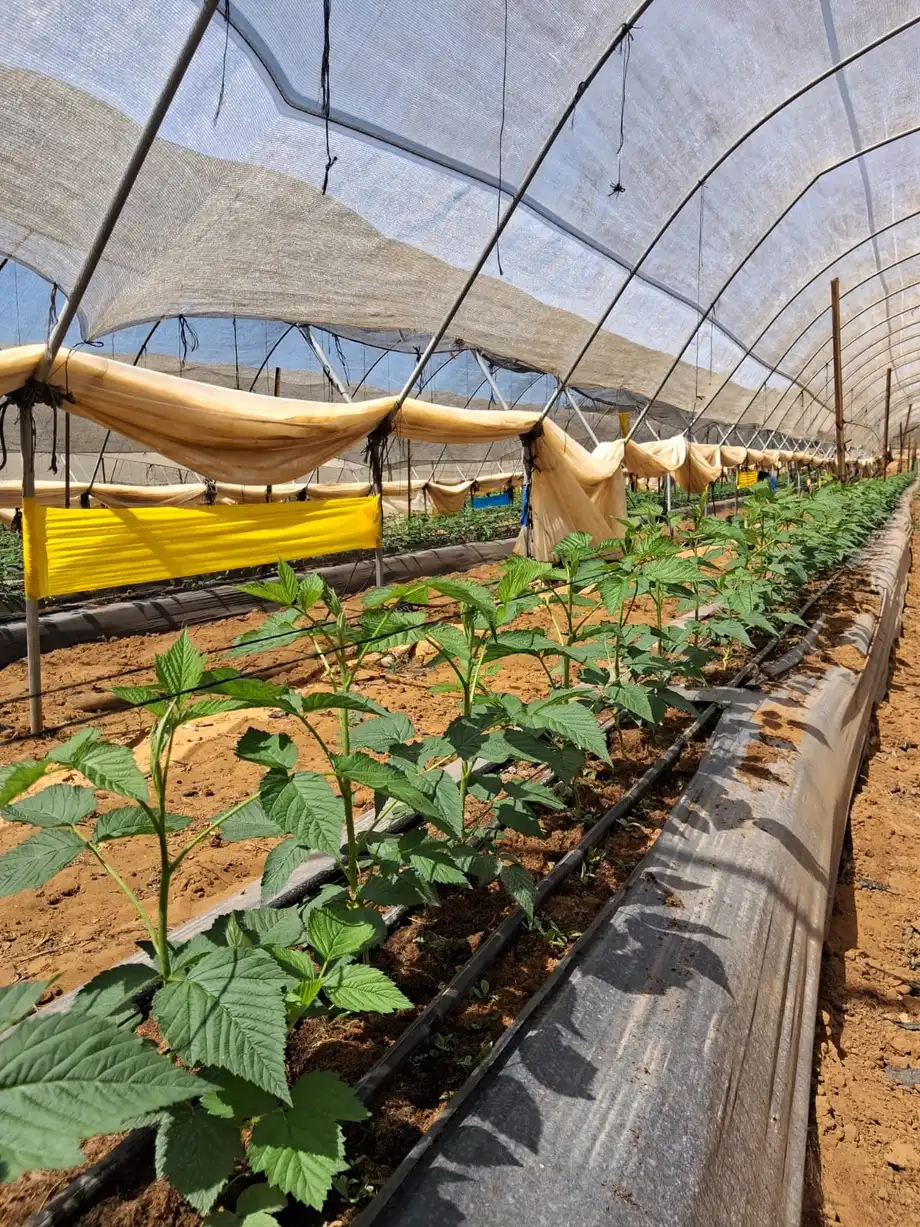
Most summer problems seen above the crop begin below the crop. Roots must supply water fast enough to match transpiration, but they also need oxygen.
A saturated and warm substrate is dangerous: the plant wilts, the grower irrigates more, and root oxygen becomes even more limiting. That is a classic summer trap.
In substrate systems, irrigation should be short, frequent and adjusted to radiation and drainage, not only to the clock. The first irrigation must arrive before the plant enters deficit. Drainage confirms whether salts are being flushed.
Under high evaporative demand, plants remove water faster than nutrients, so EC can rise in the root zone even when the feed EC has not changed.
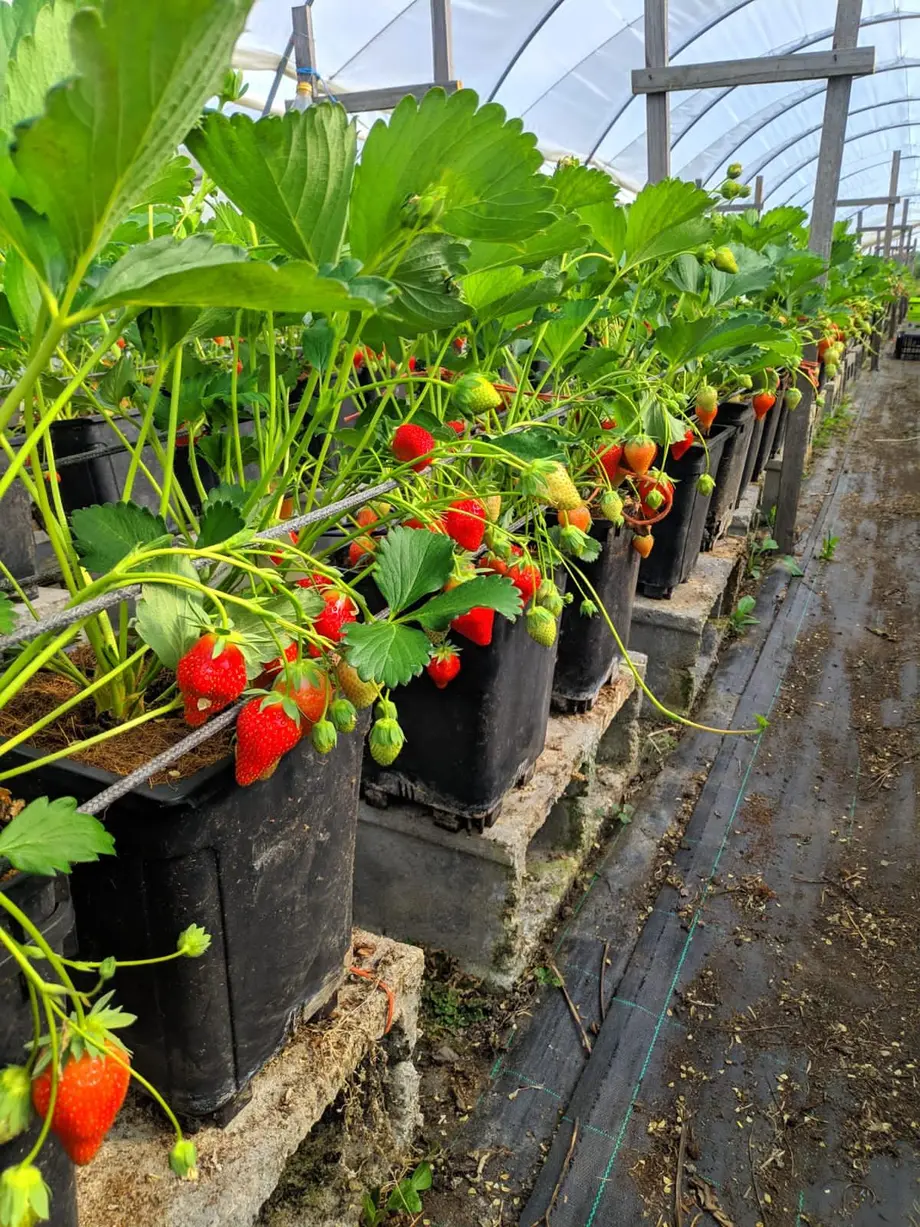
Blueberry deserves special attention. Black pots, exposed bags and shallow volumes heat rapidly. White containers, reflective covers, moderate substrate moisture, clean drainage and protection from direct solar heating can give more summer growth than another increase in nutrition.
A cool, aerated root system is not a detail; it is the engine room of the crop.
Nutrition: do not push what cannot assimilate
When growth slows in summer, fertilizer is often blamed first. Sometimes nutrition is part of the answer, but often it is not the first limitation.
If the plant is closing stomata every afternoon, the problem is not a lack of nitrate. If root-zone EC is high, a stronger recipe may make water uptake harder. If roots are oxygen-limited, calcium in the tank does not guarantee calcium in the fruit.
Nitrogen must be handled with restraint during heat. Excess nitrogen creates soft tissue, dense canopies, higher humidity, more mite risk and more disease pressure.
Potassium remains important for fruit filling, sugar movement and stomatal regulation, but it must be balanced with calcium and magnesium.
The hierarchy should remain simple: climate first, water second, roots third, nutrition fourth.
Crop load and canopy decide whether growth continues
A plant under summer stress cannot carry the same crop load as a plant in spring balance. Fruit load, cane density, leaf age and row architecture determine whether the plant has enough carbohydrate to grow, fill fruit and renew itself.
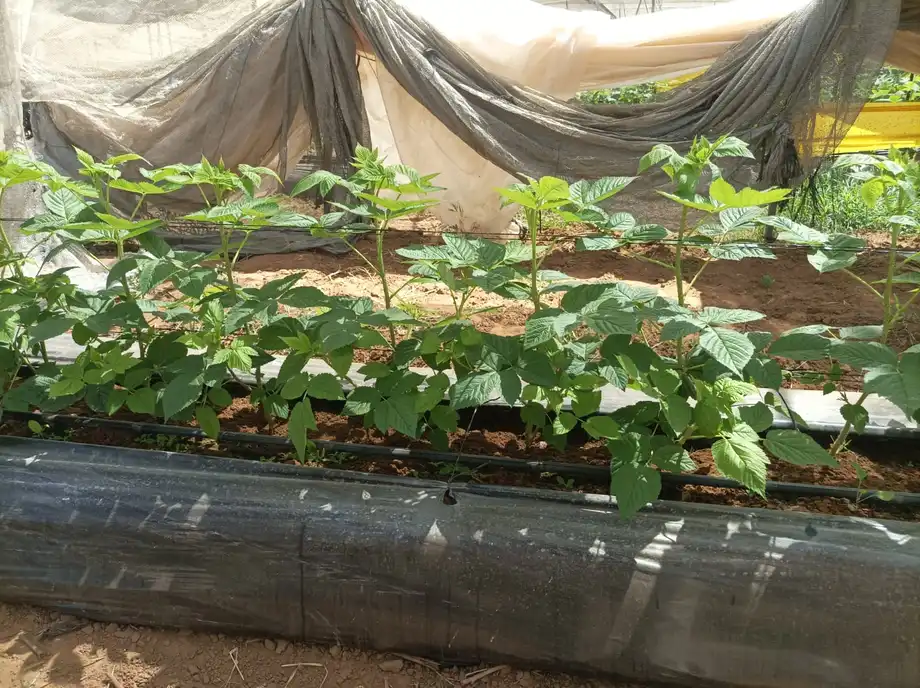
In raspberries, too many canes create a wall that traps humidity and heat. In strawberries, excessive old leaves increase transpiration and disease risk, but aggressive defoliation during a heatwave exposes crowns and fruit.
In container blueberries, excessive crop load after a weak root season can stop postharvest vegetative growth.
The target is a functional canopy. Each leaf should either produce carbohydrates, cool the plant or protect fruit. Leaves that only block air and trap humidity are part of the limitation.
Summer pruning should open the crop gradually; sudden exposure after heavy pruning can create sunburn and fruit temperature problems.
Flowering reveals hidden heat stress
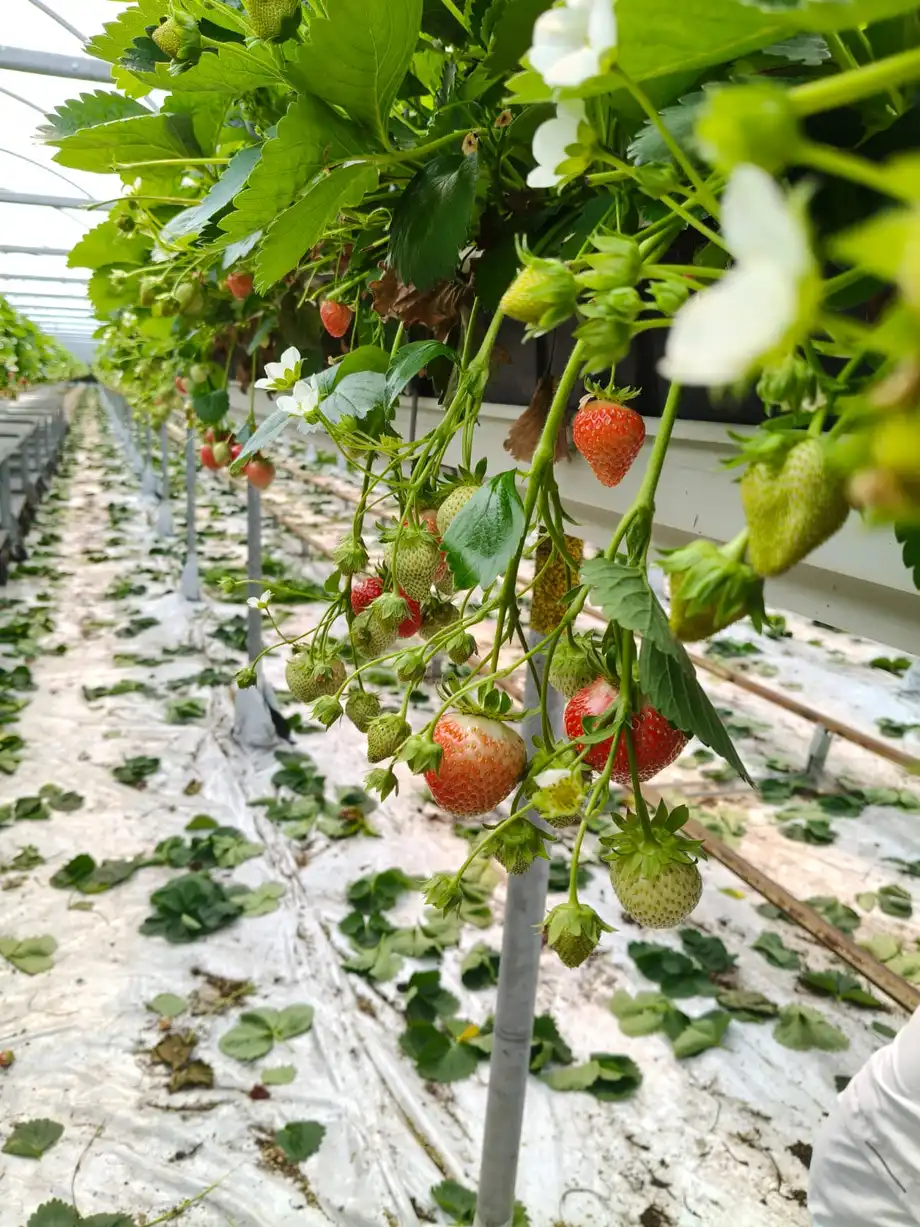
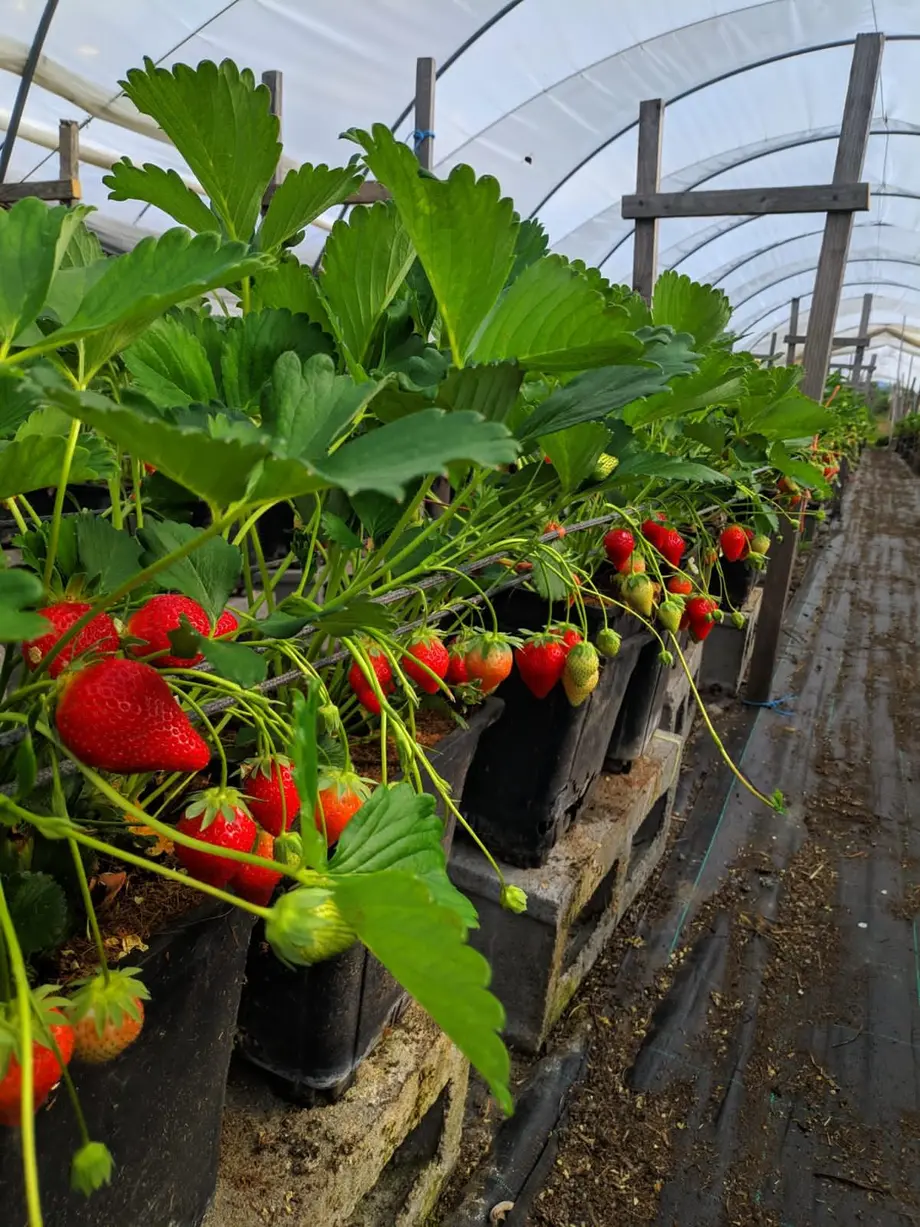
Flowers are often more sensitive than leaves. Strawberry heat-stress reviews show effects on photosynthesis, water balance, hormone regulation, flower bud differentiation, pollen viability, fruit set and fruit quality.
Work with everbearing strawberry cultivars also shows that high temperature can affect fruit development and sugar concentration.
The commercial symptom may appear later as misshapen fruit, poor berry size or weak clusters, but the cause often started during flowering.
Pollinators must also be considered part of the system. A tunnel that is tolerable for vegetative growth may still be too hot for good pollination. During flowering peaks, preventive climate management is more effective than trying to explain deformities after harvest starts.
A practical summer protocol
The grower does not need a laboratory, but summer management needs a daily dashboard: maximum air temperature at canopy height, relative humidity, calculated VPD, substrate moisture, drainage percentage, drain EC, drain pH, irrigation start time and number of pulses.
Where possible, add leaf or fruit surface temperature. The most useful sensor is not the most expensive one; it is the one that changes decisions.
Before a heatwave
- Apply or reinforce shading.
- Clean vents.
- Check pumps and filters.
- Flush accumulated salts.
- Verify drainage.
- Remove extreme crop load.
- Protect exposed pots or bags.
During the heatwave
- Ventilate early.
- Avoid aggressive pruning.
- Irrigate with shorter and more frequent pulses.
- Use evaporative cooling only if it does not wet flowers or fruit.
- Harvest in the coolest hours.
After the heatwave
- Inspect roots.
- Check drain EC.
- Look for mite increase.
- Monitor Botrytis risk.
- Evaluate the next flower flush.
- Correct the canopy gradually.
The sequence is important. A grower who waits until leaves flag is already managing damage. A grower who acts on VPD, leaf temperature, drain EC and plant behavior is managing prevention.
Traditional observation plus precise data
Good growers have always read plants: the angle of the leaf, the firmness of the fruit, the color of new growth, the smell of the substrate, the behavior of bees and the speed of morning recovery.
That knowledge remains essential. Sensors do not replace it; they give numbers to what the experienced eye already suspects.
The future of protected berry production is to make the greenhouse more selective: less excess radiation, less rain on fruit, less wind damage, more stable transpiration, better root conditions and more predictable harvest.
A plastic greenhouse should not become a heat trap. Managed well, it gives the plant controlled freedom: enough protection to avoid damage, enough ventilation to breathe, enough water to cool itself, and enough light to keep producing carbohydrates.
Summer optimization is therefore not about forcing growth. It is about removing the bottleneck that stops growth.
One degree less at leaf level, one hour more of open stomata, one irrigation pulse at the correct time and one better-ventilated canopy can decide whether the crop merely survives the summer or continues to build yield.
References
- Fernandez, G., McWhirt, A., & Bradish, C. (2023, February 2). Tunnel production. In Southeast Regional Caneberry Production Guide. NC State Extension Publications. https://content.ces.ncsu.edu/southeast-regional-caneberry-production-guide/tunnel-production
- Klodd, A. (2022). Growing high tunnel raspberries. University of Minnesota Extension. https://extension.umn.edu/raspberry-farming/growing-high-tunnel-raspberries
- Nishiyama, M., & Kanayama, Y. (2025). Effects of high temperature on the fruit development and sugar concentration in everbearing strawberry cultivars. Advances in Horticultural Science, 39(4), 261-268. https://doi.org/10.36253/ahsc-18310
- Royal Horticultural Society. (n.d.). Greenhouse: ventilation and shading. Retrieved June 13, 2026, from https://www.rhs.org.uk/garden-features/ventilation-and-shading-greenhouses
- Smrke, T., Veberic, R., Hudina, M., Zitko, V., Ferlan, M., & Jakopic, J. (2021). Fruit quality and yield of three highbush blueberry (Vaccinium corymbosum L.) cultivars grown in two planting systems under different protected environments. Horticulturae, 7(12), Article 591. https://doi.org/10.3390/horticulturae7120591
- Ullah, I., Toor, M. D., Yerlikaya, B. A., Mohamed, H. I., Yerlikaya, S., Basit, A., & Rehman, A. U. (2024). High-temperature stress in strawberry: Understanding physiological, biochemical and molecular responses. Planta, 260, Article 118. https://doi.org/10.1007/s00425-024-04544-6
- Yu, X., Zhang, Y., Zhao, X., & Li, J. (2023). Systemic effects of the vapor pressure deficit on the physiology and productivity of protected vegetables. Vegetable Research, 3, Article 20. https://doi.org/10.48130/VR-2023-0020