







The comparison between industrial brands and private labels continues to be one of the central themes in the evolution of European retail. According to BG20 data for 12 European countries — Austria, Belgium, Czech Republic, Germany, Hungary, Italy, the Netherlands, Poland, Portugal, Romania, Slovakia and the United Kingdom — the price gap between manufacturer-branded products and retailer-branded products has remained broadly stable over the last decade.
Between 2014 and 2024, across the average of the categories analysed, National Brands — meaning industrial brands or manufacturer brands — are around 80% more expensive than private labels. The difference is particularly high in personal care, while it is more limited in food, where industrial brands are on average only 50% more expensive than retailer-branded products.
A stable gap, but with different dynamics over time
The most interesting figure is not only the size of the price differential, but its stability over time. Between 2014 and 2021, the gap between industrial brands and private labels increased. Subsequently, between 2021 and 2023, private labels recorded relatively stronger price increases, helping to narrow the distance. In the 2023–2024 period, however, industrial brands grew faster again, bringing the gap back to higher levels.
This trend confirms that private label is no longer just a first-price proposition, but a strategic area through which retailers manage the price-quality ratio, consumer loyalty and category margins.
In food, the gap is lower
The food sector shows a different dynamic compared with other categories. While, overall, industrial brands cost around 80% more, in food the differential falls to 50%. This means that, in food products, the price distance between industrial brands and retailer brands is less extreme than in other sectors, such as personal care and pet food, where industrial brands can cost more than twice as much as private labels.
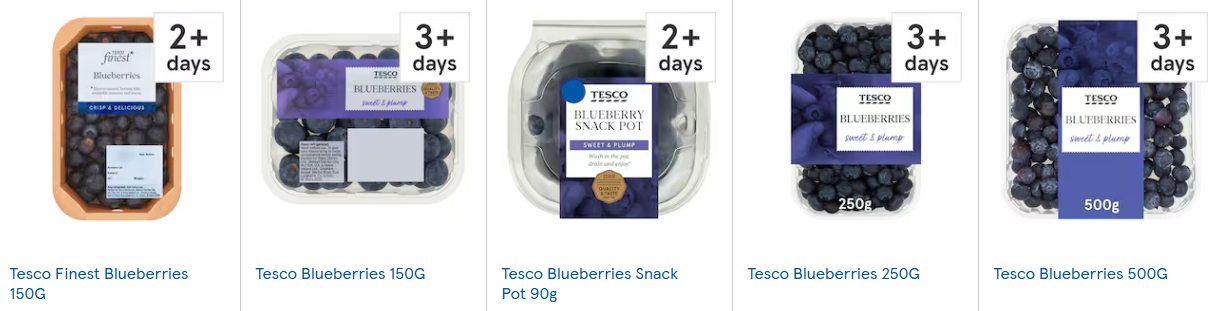
For fresh produce, and berries in particular, this reading is especially relevant. Unlike many packaged categories, perceived value does not depend only on the brand, but also on origin, freshness, variety, size, shelf-life, sustainability, packaging and quality consistency. In this context, private label can become a very powerful tool for building consumer trust, especially when the product is perishable and the shopping experience is strongly linked to actual quality.
The leading brand does not always cost more than the average industrial brand
Another interesting figure concerns the number one brand in the category. On average, the leading brand costs around 70% more than the private label in the same category. This means that the leader is slightly cheaper than the overall average branded offer, which has a differential of 80%.
The data suggests that not all industrial brands are able to justify the same price premium. The leading brand may benefit from awareness, trust and rotation, but the entire branded area must continuously prove its value compared with the private label alternative. In fresh produce, this dynamic is even more evident: the brand can help build recognisability, but it cannot compensate for long for inconsistent quality.
Private label: one third of value, almost half of volumes
The price gap between industrial brands and private labels has a direct impact on market shares. Across the average of the categories analysed, private labels account for around one third of value, but are now approaching 50% of volumes. Value share has increased by 6 percentage points over ten years, while volume share has grown by 7 points, reaching 45%.
This gap between value share and volume share reflects the lower price positioning of private labels. Consumers are buying a growing quantity of retailer-branded products, but the value generated remains proportionally lower than that of industrial brands, which maintain a higher average price.
What this means for berries
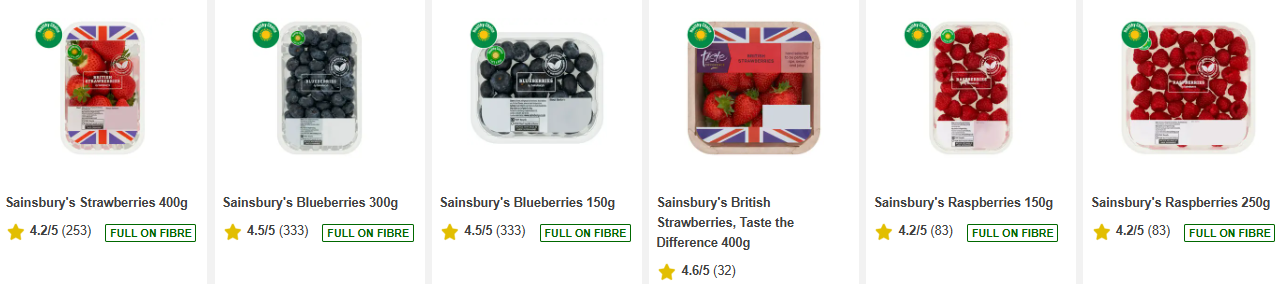
For berries, the growth of private labels raises a strategic question. Blueberries, raspberries, blackberries, currants and strawberries are high unit-value categories, but also have high price sensitivity. In many European markets, consumers have learned to recognise the product through the retailer’s name before the grower or agricultural brand.
This strengthens the role of modern retail, which can use private label to standardise the offer, communicate quality guarantees and build consumer loyalty. At the same time, it reduces the space for producer brands if they are not able to offer clear and perceptible differentiation.
Differentiation can come through several factors: recognisable varieties, superior flavour, certified origin, documented sustainability, distinctive packaging, company storytelling, supply continuity and the ability to serve premium segments. Without these elements, the risk is that berries too will be perceived as a commodity, with price as the main purchasing criterion.
The challenge: building value beyond price
The European data show that private label continues to gain ground, especially in volume. For berry growers and brands, this scenario is not necessarily a threat, but it requires a clearer strategy.
On the one hand, working with retailers through private label programmes can offer volumes, continuity and direct access to consumers. On the other hand, those who want to build or maintain their own brand must demonstrate concrete added value, not just claim it.
In the berry market, the future of branded products will not depend simply on the presence of a logo on the pack, but on the ability to turn that brand into a credible promise: consistent quality, recognisable flavour, service to retailers and trust for the final consumer.
Italian Berry - A