












Jorge Duarte | Hortitool Consulting
Let me be direct: what Portugal has built in blueberries over the past ten years is nothing short of remarkable. From a standing start, we carved out a credible position in one of the most competitive fresh fruit categories in the world. ENPM 2026 was not a celebration — and it should not have been. It was a reckoning. And I mean that as the highest form of respect for what this sector has become.
We earned the right to this conversation
There is a particular kind of pride that comes not from being celebrated, but from being challenged. Portugal's blueberry sector is being challenged because it matters. Because 2,600 hectares of production, built largely within a single decade, have made us a relevant force in the European supply chain. That does not happen by accident. It happens because farmers took risks, technicians adapted, and an entire value chain committed to something that, not long ago, felt ambitious to the point of audacity.
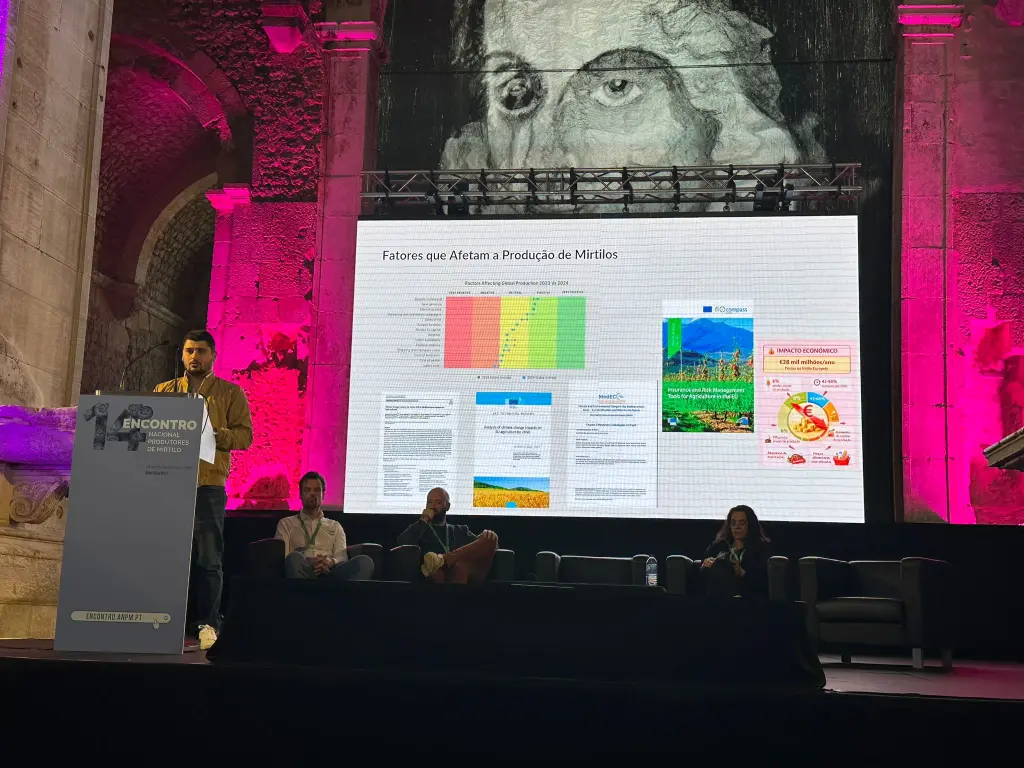
At the 14th National Blueberry Producers Meeting in Santarém, the numbers were impossible to ignore. Around 282,000 hectares of blueberries planted worldwide. Two billion kilograms produced globally. A market that has doubled in planted area in just ten years. Ten countries controlling 85% of the world's blueberry land. And Portugal — this small Atlantic nation at the edge of the continent — sitting inside that conversation as a recognized, established producer.
That deserves to be said plainly: we belong here. We built something real.
“The easy times are behind us — and that is precisely the measure of our success."
— Gustavo Yezten, IBO
The shift that ENPM 2026 made visible
For years, the defining question of Portuguese blueberry production was simple: how much more can we plant? The land was available, the demand was growing, the margins were forgiving. Expansion was the strategy, and it worked.
But ENPM 2026 made something visible that has been building quietly beneath the surface: we have entered a different phase. The question is no longer how to expand. The question is how to perform — season after season, packhouse after packhouse, variety after variety — with the kind of consistency and precision that global retail now demands as a baseline, not a differentiator.
This is not a setback. It is a graduation.
What happens in Peru — its cost structure, its supply windows, its investment in new varieties — ripples across every blueberry market in the world, including ours. We do not get to ignore that. What we get to do, if we choose it, is respond with the one thing that no competitor can import overnight: agronomic intelligence, grounded in our soils, our climate, and our accumulated experience.
Quality is not rescued at the packhouse
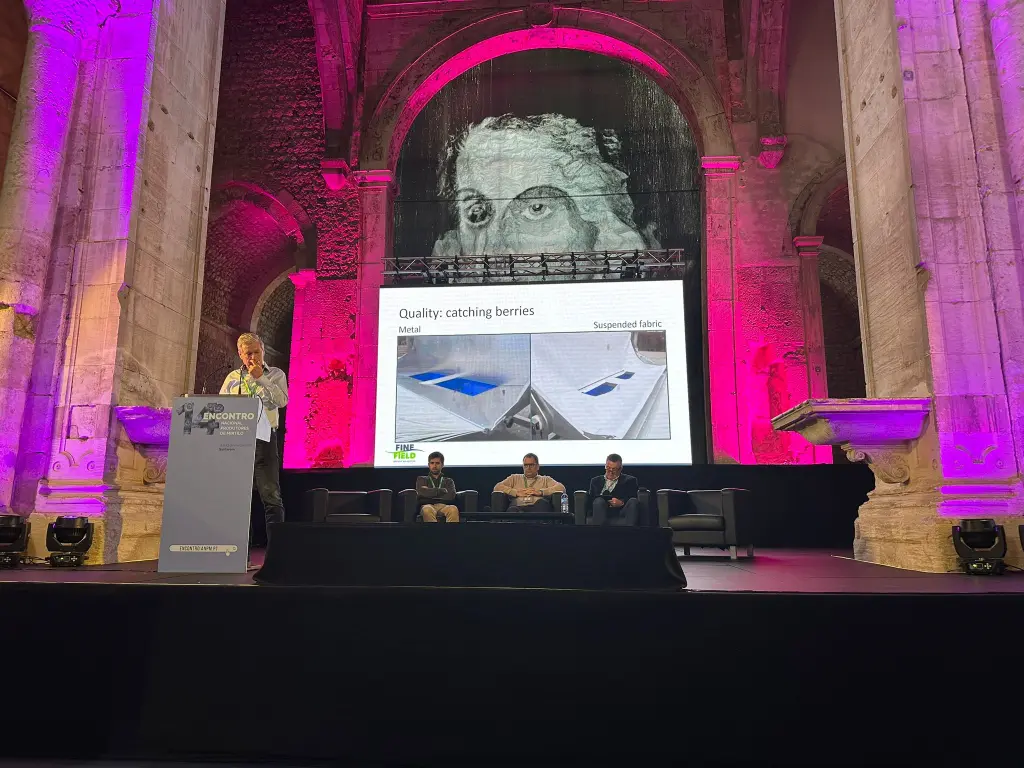
One of the most important ideas to emerge from ENPM 2026 was deceptively simple: quality cannot be repaired after harvest — it must be built in the field. I have said versions of this to clients for years, but hearing it framed at a national level, with the weight of the whole sector behind it, felt different. It felt like a collective acknowledgement that we are ready to be honest with ourselves.
For too long, the industry treated post-harvest handling as a correction mechanism. Refrigeration, modified atmosphere, careful logistics — these are essential tools, but they are not a strategy. They preserve quality. They do not create it. Quality begins at the moment of variety selection. It continues through irrigation scheduling, substrate management, canopy architecture, and harvest organization. By the time the fruit leaves the plant, the outcome is largely decided.
“Quality is no longer defined at harvest. It is defined at consumption — and the journey between those two moments begins in the field."
— Paula del Valle
This requires a cultural shift in how we think about agronomic work. Not as problem-solving after the fact, but as precision construction from the first day of the season. It demands that we move from reactive management to proactive systems thinking — and it rewards the producers who invest in that capability.
Technology serves agronomy — not the other way around
There is a temptation, when facing competitive pressure, to reach for technology as a shortcut. New biostimulants, sensor networks, AI-driven decision tools — the market is full of products promising transformation. Some of them are genuinely valuable. Many are not. And even the best technology becomes counterproductive when it substitutes for understanding rather than deepening it.
The framing I heard at ENPM 2026 was exactly right: biostimulants should not replace agronomy. They support plant physiology within a well-managed system. Technology supports decisions — it does not replace them. The producer who buys a root biostimulant without understanding their soil oxygen dynamics, or who invests in digital monitoring without the capacity to interpret and act on the data, is not advancing. They are spending.
Portugal's competitive strength in this next phase will come from agronomists and producers who understand their systems deeply enough to use technology selectively and effectively. That means investing in knowledge — in training, in technical advising, in honest diagnosis of what is actually limiting performance on each specific farm.
Good fruit is not enough — you have to know how to sell it
One of the clearest messages I took from these sessions is that market intelligence is no longer optional. In a commodity environment, having good fruit is the entry ticket — not the winning hand. Portuguese blueberries have genuine quality. But quality only becomes value when it is supported by strategy, margin management, and a reputation that buyers trust and return to. Too many producers are still thinking about production when they should also be thinking about positioning.
The market does not reward effort. It rewards consistency, reliability, and the ability to deliver what was promised, when it was promised, at the specification that was agreed. That requires a level of commercial sophistication that the sector is still building — and ENPM 2026 was honest enough to name it.
The farm of the future is already being tested
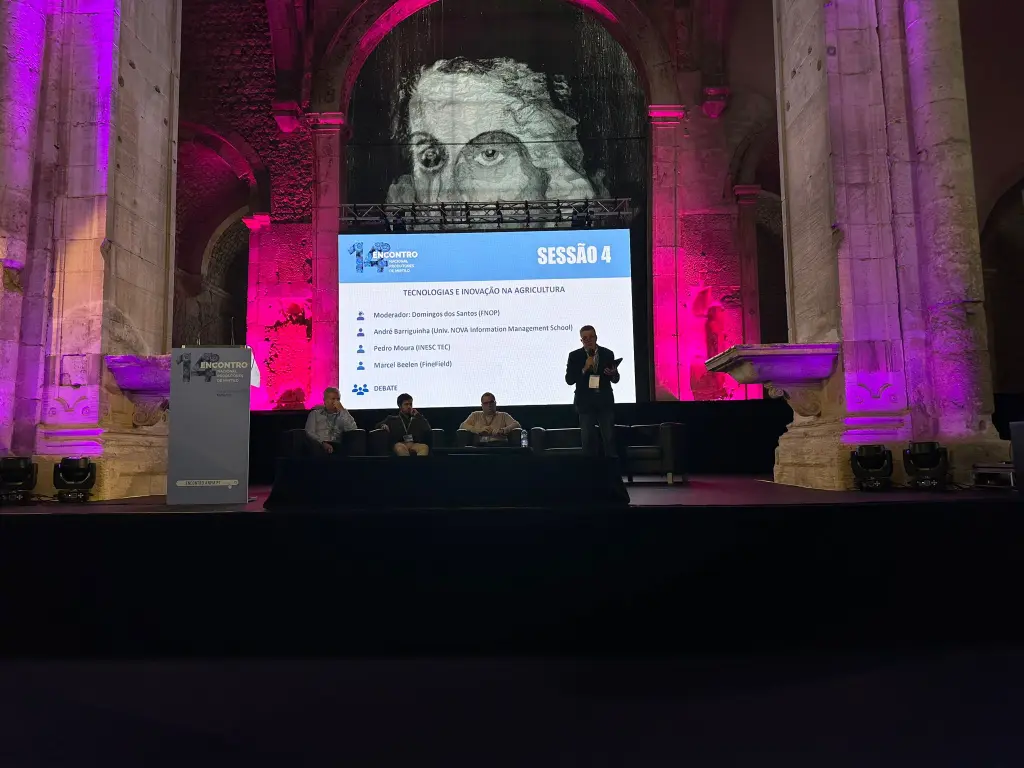
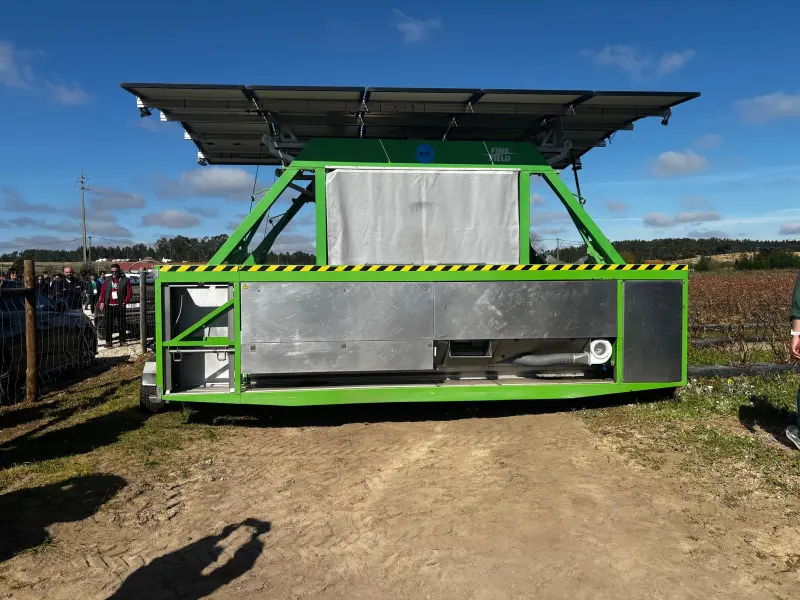
The sessions on research, artificial intelligence, and robotics sent a message that cannot be dismissed as distant or speculative: the transformation of agricultural systems is already underway, and the gap between early adopters and late movers is widening faster than most producers realize. Sensors, computer vision, predictive models, smart pest monitoring, and robotic harvesting platforms are no longer prototypes shown at trade fairs. They are operational tools being refined in real production environments.
The next few years will sharpen the distinction between two kinds of producers: those who react when change is unavoidable, and those who prepare while change is still optional. The second group will define the competitive baseline. The first group will spend the following decade trying to catch up.
This does not mean every farm needs to automate tomorrow. It means every farm needs a clear-eyed view of where its bottlenecks are, what data it is not capturing, and which decisions are still being made by instinct that could be made by evidence. That is where technology delivers its most immediate and measurable return.
A signal from Georgia — and what it means
There was one moment at ENPM 2026 that I want to highlight specifically, because I think it says something important about where Portuguese blueberry production stands in the world.
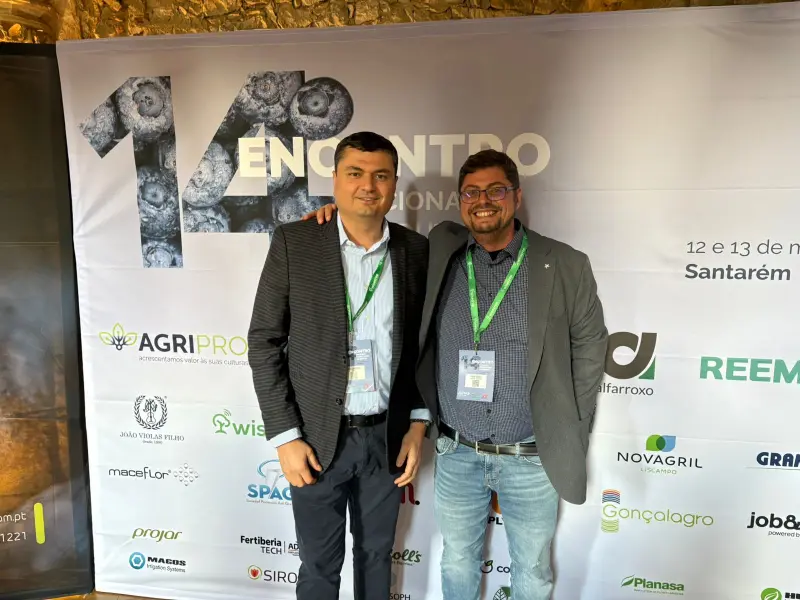
Shota Tsukoshvili, representing the Georgian Blueberry Growers Association, attended the meeting at the invitation of Hortitool Consulting — the result of a partnership built over several years of collaboration between the two sectors. His presence was not coincidental. It was the product of sustained investment in international relationships, and it reflected a growing international curiosity about what Portuguese producers are building and how they are doing it.
Georgia is a country with significant blueberry ambitions of its own — fertile ground, a developing sector, and producers actively seeking reference models to benchmark against. The fact that they are looking at Portugal is, in itself, a statement about the credibility we have earned. We are no longer only learning from others. We are becoming a reference.
That carries responsibility. And it should carry pride.
What we owe the next decade
I left ENPM 2026 with a stronger conviction than when I arrived: the blueberry sector does not just need to produce well — it needs to think better. Better about markets. Better about farm management. Better about the technology it adopts and the knowledge it builds. Better about its place in a global industry that has become more demanding, more connected, and far less forgiving of complacency.
I am proud of what Portugal has built. I am proud of the farmers who planted their first rows of blueberries when the market here was still theoretical. I am proud of the industry organizations that created platforms like ENPM — spaces for the sector to look at itself honestly. And I am proud to work in a country where an event like this can fill a room with people who are genuinely trying to get better.
But pride without demand is just nostalgia. What we owe the next decade is harder than what we gave the last one. It requires us to transform growth into structure. To convert knowledge into execution. To move from being producers of blueberries to being a precision industry that happens to grow blueberries.
Success will not go to those who produce more. It will go to those who produce better — more consistently, more professionally, with a deeper understanding of the systems that determine quality before anyone sees the fruit.