









Climate change and evolving market requirements are making varietal choice an increasingly decisive success factor in fruit growing. Since 2022, the Berries, Stone Fruit and Nuts working group at the Laimburg Research Centre has been studying the potential of different sweet cherry and blueberry varieties, with the aim of providing practical guidance to local farms.
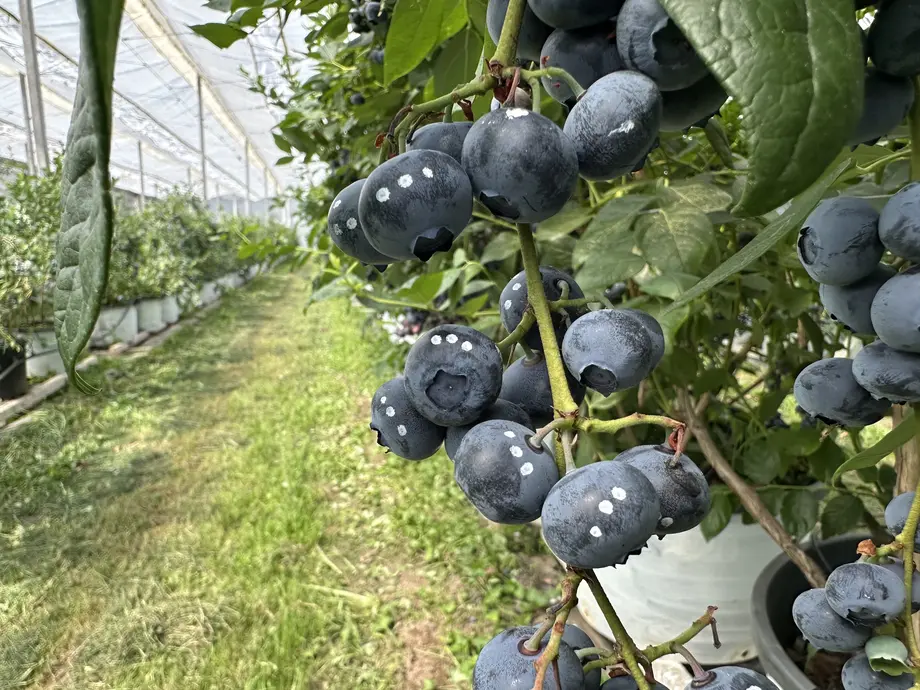
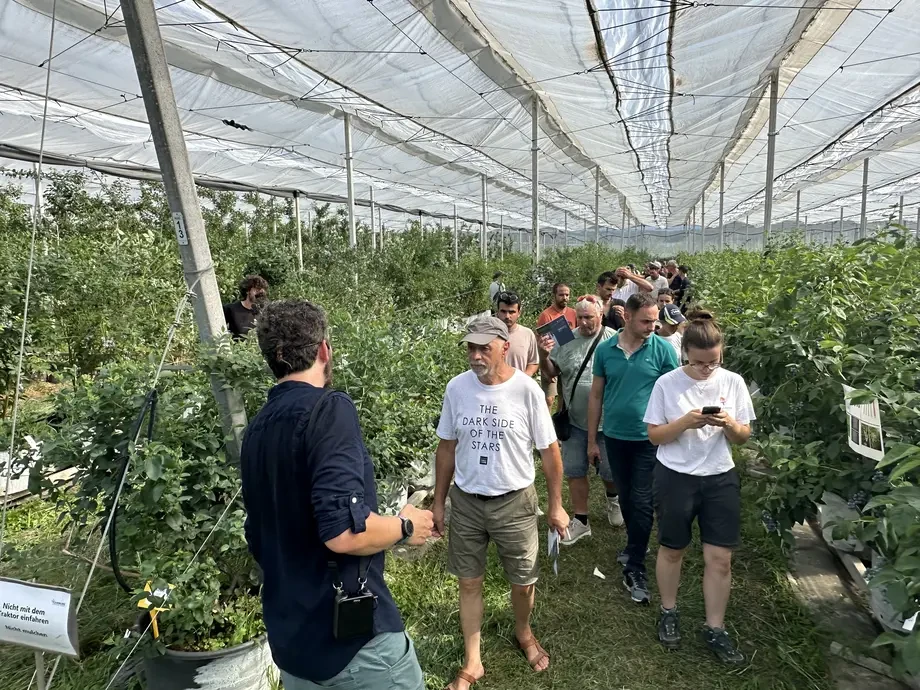
On the occasion of the guided visit to the experimental fields, held on 23 June 2026, the research team presented the latest results from the varietal trials. During the event, visitors were able to observe directly in the field 53 blueberry varieties, originating from several international breeding programmes.
Among the varieties tested are Duke, Spartan, Huron, Katahdin, Titanium, Draper, Valor, Top Shelf, Peachy Blue, Blue Ribbon, Berkeley, Bluecrop, Osorno, Megas Blue, Legacy, Calypso, Elisabeth, Darrow, Brigitta Blue, Liberty, Lunablue, Elliot, Cargo, Aurora, Last Call.
“Initial results show that the newer varieties outperform traditional ones in many respects, standing out for their higher yields, fruit quality and ease of harvesting,” explains Victor Mari-Almirall of the Small Fruits, Stone Fruits and Nuts Working Group at the Laimburg Research Centre. “Furthermore, they show greater resistance to the dry spells and hot summers of recent years.”
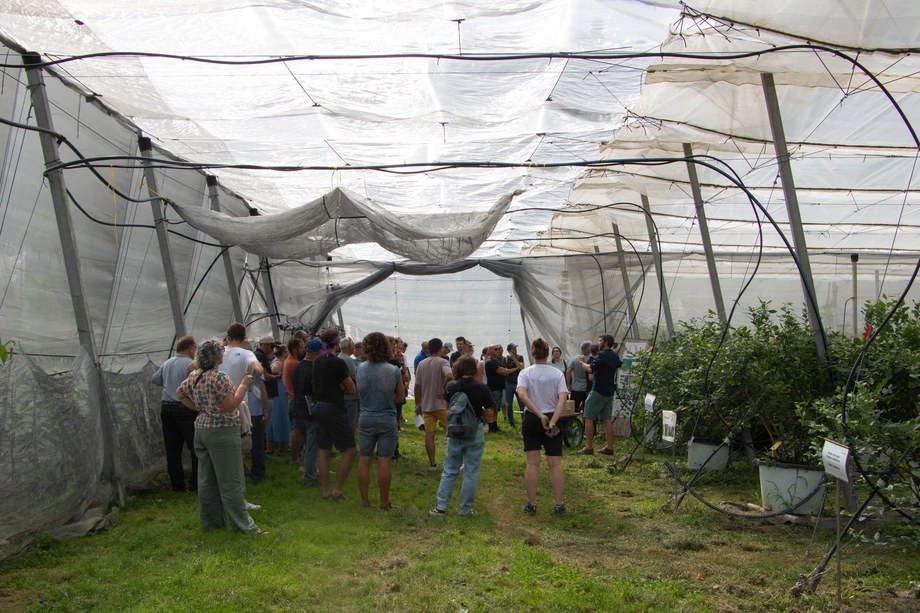
Applied research for local farms
The Laimburg Research Centre carries out strongly applied research, guided by input from more than 100 local stakeholders, with over 30 recent projects dedicated to sweet cherry and blueberry.
One of the main strategic challenges concerns the integration of these crops into valley-floor areas, alongside apple production. The objective is to identify varieties that can fit into farm calendars without competing with the main cultivation operations in apple orchards.
By selecting varieties that ripen during a pause in apple orchard operations, for example after thinning, farms can extend the seasonal labour employment period, optimising internal resources and ensuring greater work continuity for labourers.
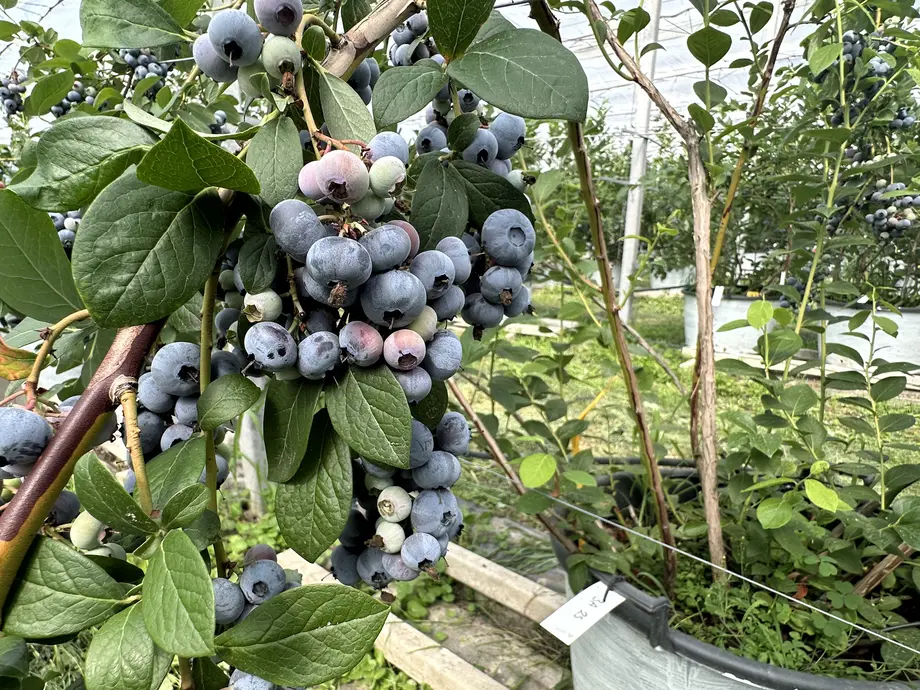
Blueberry: an experimental field with over 50 varieties
The blueberry research conducted at Laimburg is designed especially for the small family farms that are typical of the area. The experimental field, planted in 2022 and reaching its first real commercial harvest year in 2024, hosts around 50 varieties.
In addition to the traditional Vaccinium corymbosum, other genetics are also being evaluated, such as Vaccinium virgatum — also known as Rabbiteye — with the aim of identifying solutions capable of improving fruit quality, agronomic adaptability and production resilience.
Farm integration and labour management
One of the most interesting aspects of the trial is the possibility of growing blueberries in valley-floor areas, alongside apple orchards. Some blueberry varieties ripen in a time window when apple orchards require fewer interventions, particularly towards the end of thinning operations.
This timing allows farms to extend the employment period of seasonal workers, a resource that is increasingly difficult to find. For small farms, moreover, varietal choice can also be calibrated according to tourist flows or family organisation, with the aim of maximising the profitability of direct sales.
Climate resilience, dormancy and late frosts
A blueberry plantation must remain productive for 15-20 years. For this reason, climate resilience is one of the central elements in varietal evaluation.
The researchers highlighted in particular the issue of warm autumns. Even when night-time temperatures are low, daytime temperatures of 15-20°C keep the plant photosynthetically active, delaying the onset of dormancy. In some cases, this phenomenon can lead to autumn flowering, with abnormal consumption of the plant’s nutritional reserves and possible negative effects on the quality and quantity of the following year’s crop.
Another decisive parameter is the flowering window. Even a difference of just one week between one variety and another can have a significant impact on the ability to avoid or tolerate late frosts.
Fertigation is part of this management strategy: to encourage dormancy, nutrient supply is reduced in August, reaching September with the application of clean water only.
Fruit size and harvesting costs
In blueberries, labour accounts for around 50% of production costs. For this reason, fruit size is an economic parameter as well as a quality parameter.
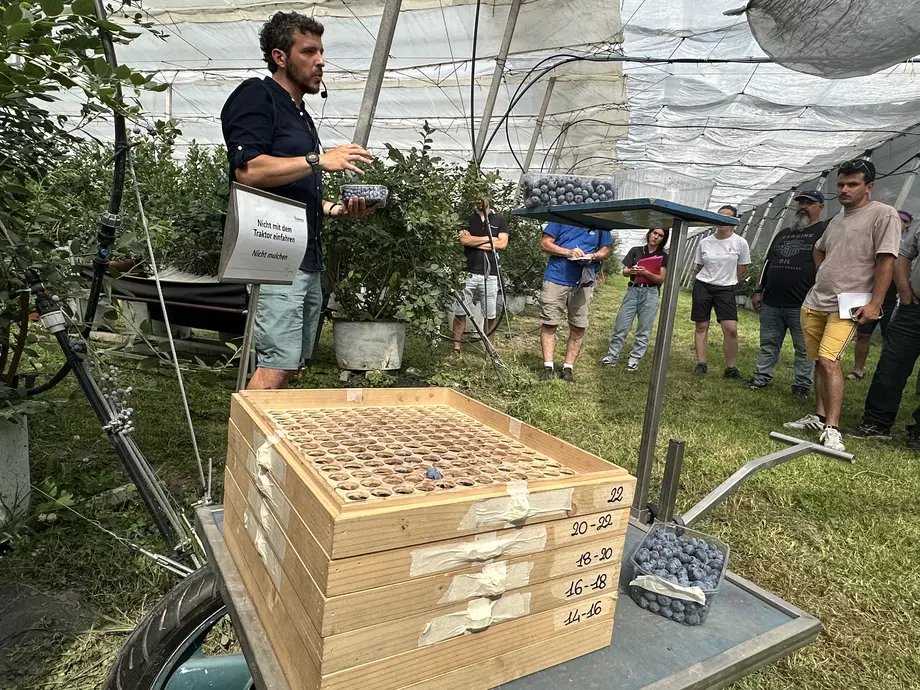
Since pickers are often paid by weight, the presence of large fruit increases harvesting efficiency: picking 3-gram berries can halve the time needed compared with 1.5-gram berries. The minimum reference size to ensure good harvesting efficiency is indicated at 18 millimetres in diameter.
A specific tool is used in the field to quickly sort and evaluate the size distribution of freshly harvested berries, providing researchers with useful data for comparing the different varieties.
Mechanical harvesting as a response to climate emergencies
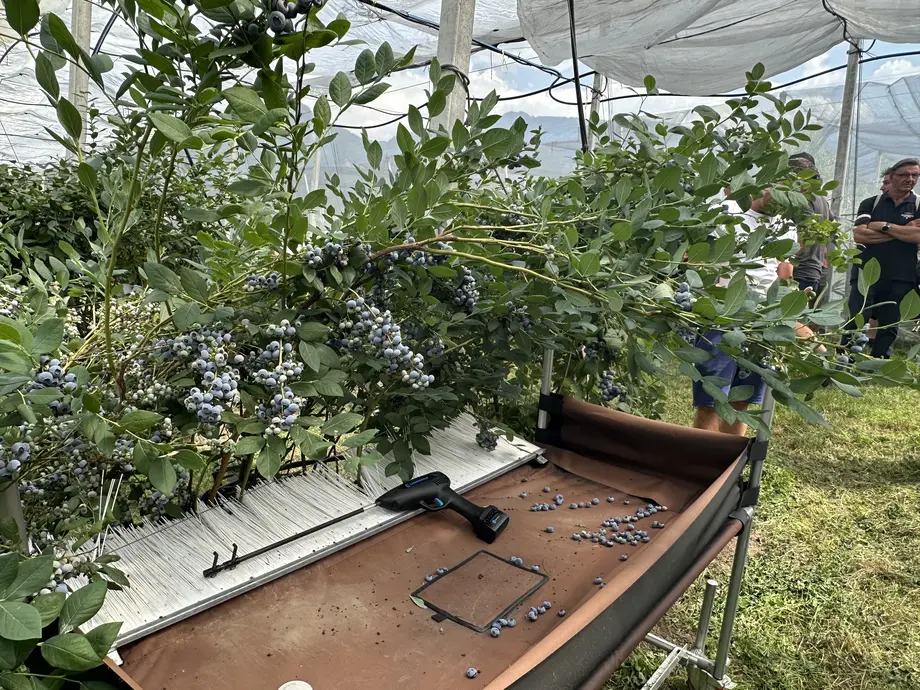
Trials are also underway on mechanical harvesting for varieties characterised by particularly easy fruit detachment, such as Liberty.
The objective is not necessarily to replace manual harvesting, but to assess whether the machine can become a useful tool for rapidly emptying plants in emergency situations, for example before the arrival of extreme heat waves with temperatures reaching 35°C. In such cases, harvesting speed can make the difference between saving or losing the crop.
Nutraceutical quality and anthocyanin content
Alongside traditional analyses of sugars, acidity and firmness — the latter also measured using a Durofel instrument — the Laimburg Research Centre collaborates with other research centres to measure anthocyanin content.
The objective is to select varieties with high antioxidant activity, turning the nutraceutical profile of blueberries into an element of differentiation. In a market increasingly attentive to the perceived health value of berries, this aspect can also become an important marketing tool.
Shelf-life: a new evaluation methodology
Post-storage keeping quality is another key parameter. In standard commercial punnets of 250 or 500 grams, a single rotten fruit can quickly contaminate the others, making it difficult to understand whether the problem derives from the variety’s real sensitivity or from the effectiveness of field treatments, for example with calcium chloride.
To overcome this limitation, the research team introduced the isolation of individual fruits in special trays. This methodology allows shelf-life to be assessed more precisely, eliminating the “noise” generated by chain fungal contamination.
The fruit is therefore classified into distinct categories: still suitable, rotten, or lacking crunchiness. The result is a more accurate reading of the real shelf-life of the different varieties and a more solid technical basis for guiding production choices.