









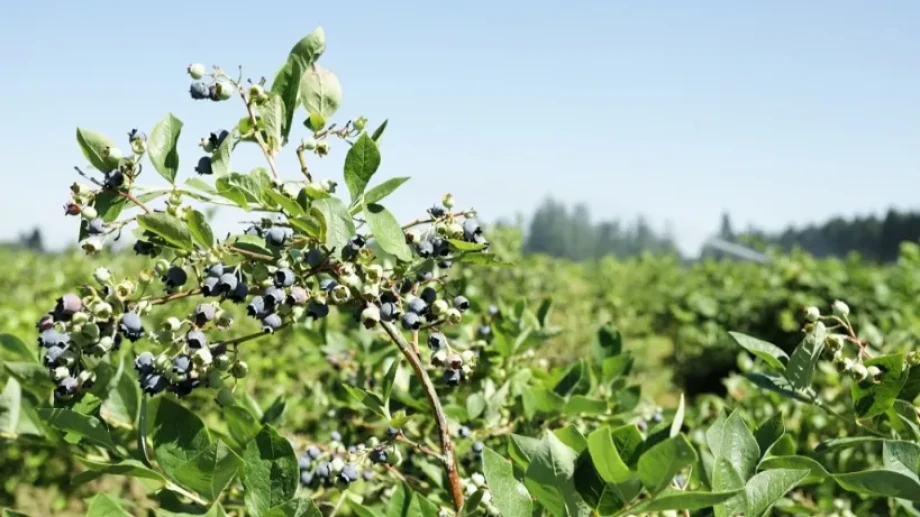
Fresh blueberry exports from Chile for the 2025–26 season are closing with a cumulative volume of 92.900 tons, a figure that is 2.7% higher than the previous period.
According to Andrés Armstrong, Executive Director of the Blueberry Committee of Fruits of Chile, this figure exceeds the industry’s initial projections at the beginning of the season. The executive highlighted that this growth is explained by a 14% increase in new varieties. In contrast, traditional varieties recorded a slight decline of 1%, continuing the downward trend from the previous season.
Transformation process underway
This reflects the transformation process underway in Chile’s blueberry industry, where the incorporation of new genetics is showing progress in export volumes while simultaneously limiting the supply of traditional varieties in the fresh market.
The fact that this was an earlier season for Chile, along with production issues in other countries, created a market window toward the end of the season that allowed for higher-than-expected shipments of traditional varieties, which in a normal season would have gone to the process market.
For this reason, the end of the Chilean season included fruit whose arrival condition was not the best and does not reflect what the Chilean industry is promoting.
Consumption continues to grow, largely due to the improved eating experience provided by new genetics, and the industry continues to move forward with the goal of offering a more renewed supply to the market. At the end of the season, new varieties accounted for 24% of total shipments (up from 21% in the previous season).
Markets overview and trends
In terms of markets, Europe positioned itself as the main market with 46.768 tons, accounting for 50% of total shipments with 20% growth compared to the previous season.
The Netherlands and the United Kingdom were the main markets in Europe, with increases of 25% and 5%, respectively. The United States ranked second with a 37% share, despite experiencing a 13% decrease in volume due to tariff and trade conditions. Meanwhile, the Canadian market showed a solid increase of 32%.
Armstrong also referred to Asia, where shipments decreased by 7% compared to the previous season, mainly driven by a decline in exports to China.
However, Taiwan and South Korea recorded increases of 84% and 11%, respectively. In Latin America, shipments showed a positive variation of 11.7% compared to the previous season, with Argentina (59%) and Brazil (19%) accounting for 88% of total exports to the region.
This demonstrates that our strategy of resuming promotional activities in Argentina and Brazil is paying off, not only due to the consumption potential of these markets, but also because of their proximity and complementarity,” he noted.
At the production level, the south-central zone led the way, with the Maule region contributing 37% of shipments, followed by Ñuble with 26%.
Also good news in organic and frozen categories
Andrés Armstrong also highlighted a 15% increase in shipments of fresh organic blueberries, reaching over 18.000 tons and representing 20% of total fresh blueberry exports worldwide.
However, the most notable jump was seen in frozen blueberries, which closed 2025 with 72.464 tons, representing a 46% increase in volume compared to the previous year.
This increase in frozen shows that the sector is turning to the frozen industry for fruit and varieties that no longer fit within the fresh market, and that Chilean companies are doing a great job in developing and diversifying markets in this segment,” he said.
Image source: Fresh Fruit Portal