




The berry sector has recorded an unprecedented growth trend over the past decade, with blueberries playing the leading role. In this context, the Laimburg Research Centre acts as a strategic bridge between scientific excellence and agronomic application. For farms, often family-run and integrated into tourism circuits, varietal selection is not only an agronomic variable, but a decisive logistical and commercial choice.
The success of a planting, whose productive horizon is estimated at 15-20 years, depends on the ability to balance consistent yields, superior organoleptic quality, and climatic resilience capable of mitigating today’s meteorological unpredictability. The Centre’s approach is based on a rigorous experimental protocol designed to provide objective data to guide fruit growers toward sustainable investment decisions.
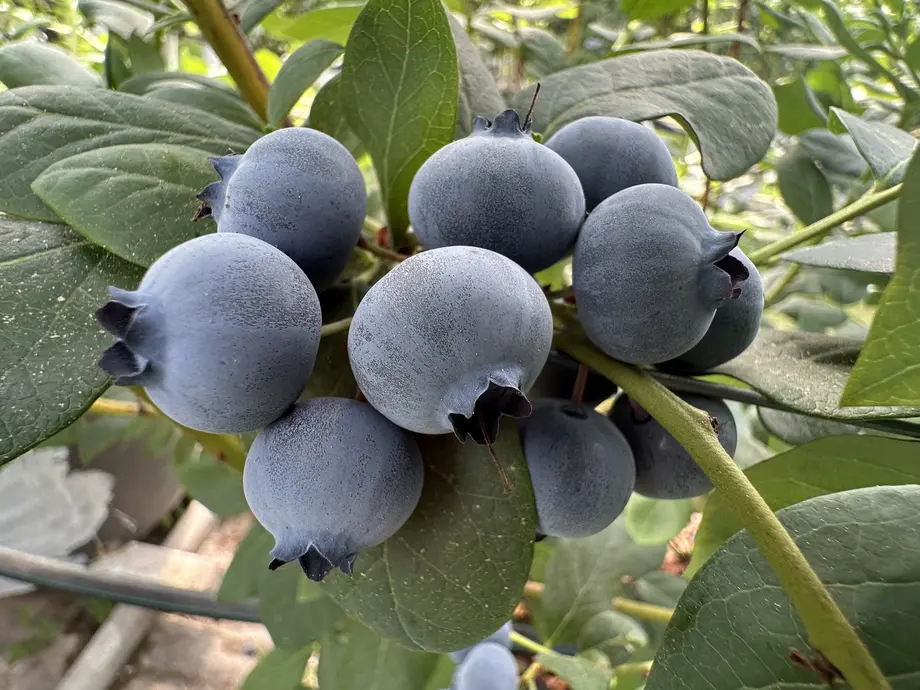
Physiological protection methodologies and pathogen control
Modern blueberry cultivation management requires the adoption of physical barriers intended not only as active defense tools, but also as instruments for microclimatic optimization.
- Anti-Insect Barriers: The use of fine-mesh nets is essential for the control of Drosophila suzukii. In addition to direct protection, the systematic use of these barriers has made it possible to drastically reduce the number of annual phytosanitary treatments, ensuring a product with minimal residues and protecting the health of operators and consumers.
- Rain Covers and Rot Management: Traditionally, covers are opened at the veraison stage. However, evidence collected at Laimburg during years with particularly rainy springs has shown that opening them in pre-flowering is crucial. This early intervention protects the plant during the critical flowering phase, drastically reducing the incidence of Botrytis cinerea and other fungal rots that find ideal inoculation conditions in spring rainfall.
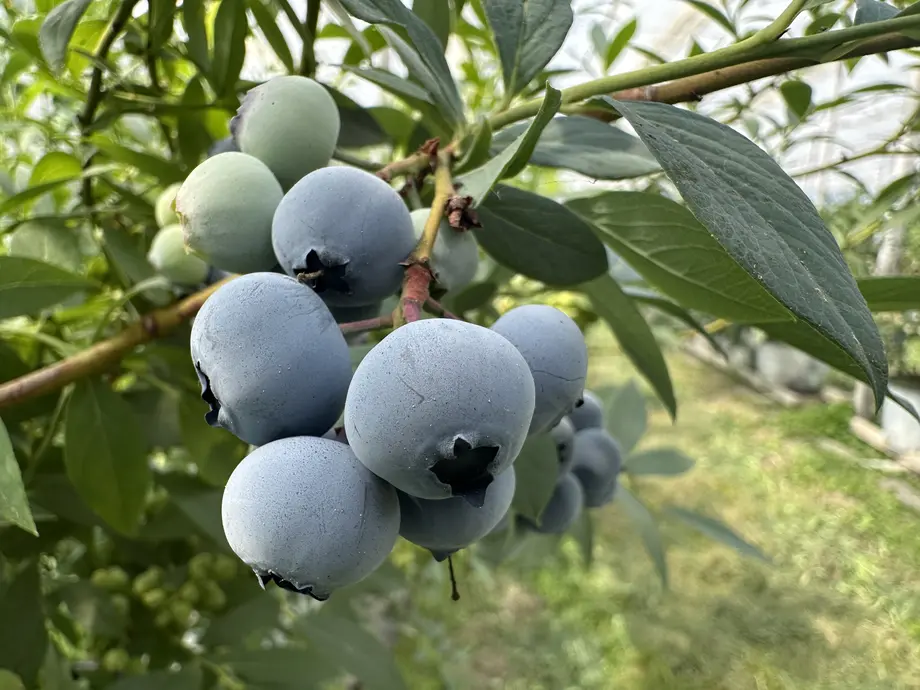
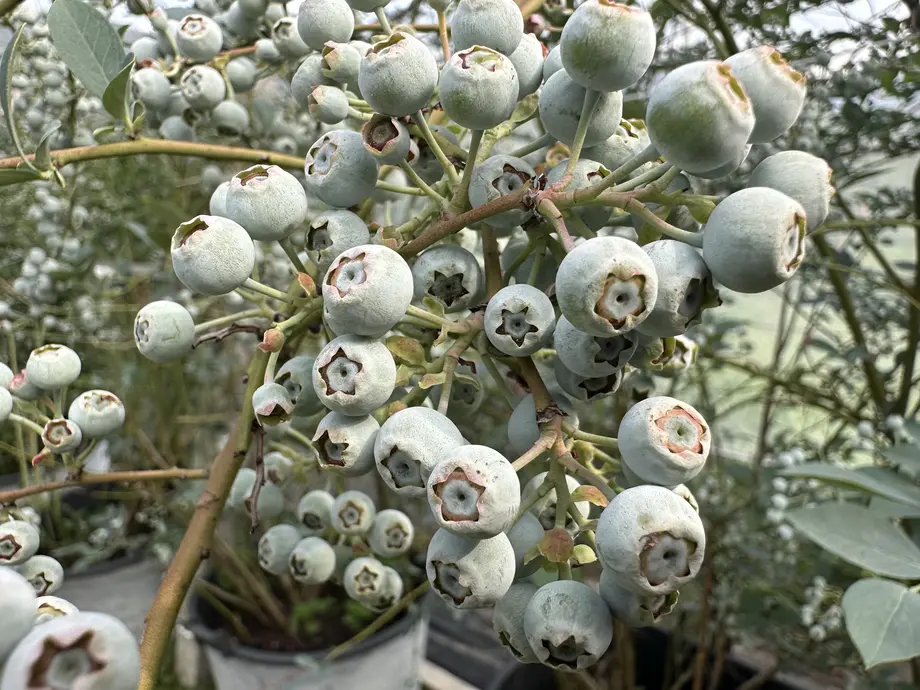 Rabbiteye in the trial field at the Laimburg Research Centre
Quality parameters and nutraceutical monitoring
Quality assessment at Laimburg goes beyond mere appearance, integrating physiological, logistical, and nutritional parameters.
Harvest efficiency and economic parameters
Considering that labor accounts for approximately 50% of production costs, selection is oriented toward varieties that maximize hourly yield.
- Strategic Calibration: A diameter of 18 mm is identified as the critical threshold: fruit below this size exponentially increases harvest time, reducing profitability. To monitor this figure, a randomized in-field sorting system is used to map size distribution for each variety.
- Benchmark Performance: Varieties such as Valor represent the “gold standard,” with documented manual harvest yields of between 10 and 12 kg/hour, a winning parameter for the economic sustainability of the farm.
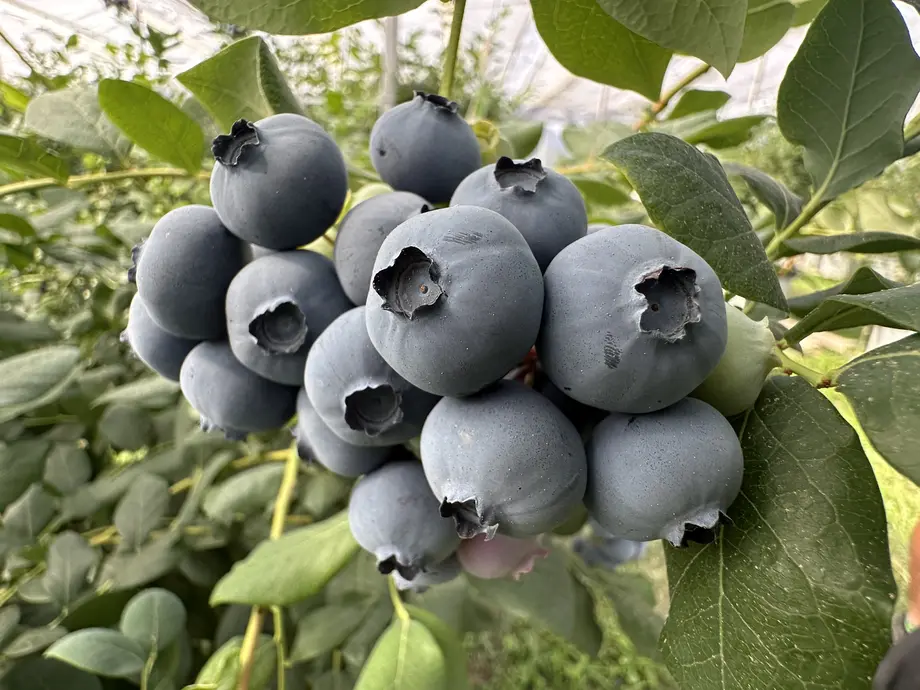
Nutraceutical monitoring and technical standards
In collaboration with partner research institutes, Laimburg monitors anthocyanin content and antioxidant capacity, parameters that offer “responsible” commercial differentiation. Standard measurements include:
- Brix Degree: For determining sugar content.
- Acidity: A key parameter for flavor balance.
- Durofel: An index of firmness and crunchiness, with top-quality values exceeding 50.
Innovative shelf-life and post-harvest tests
Storability is the technical requirement for access to geographically distant markets. Conventional punnet tests often suffer from high statistical “noise” caused by contact contamination.
To isolate the variables, the “Single Tray” methodology is adopted: isolating each individual fruit makes it possible to distinguish between internal inoculum contracted in the field during ripening and post-harvest surface transmission. This protocol is essential for assessing the real effectiveness of pre-harvest treatments, such as calcium chloride. The final classification distinguishes three states: edible fruit, visibly decaying fruit with mold presence, and soft fruit, which, although apparently healthy, has lost the firmness required for commercialization.
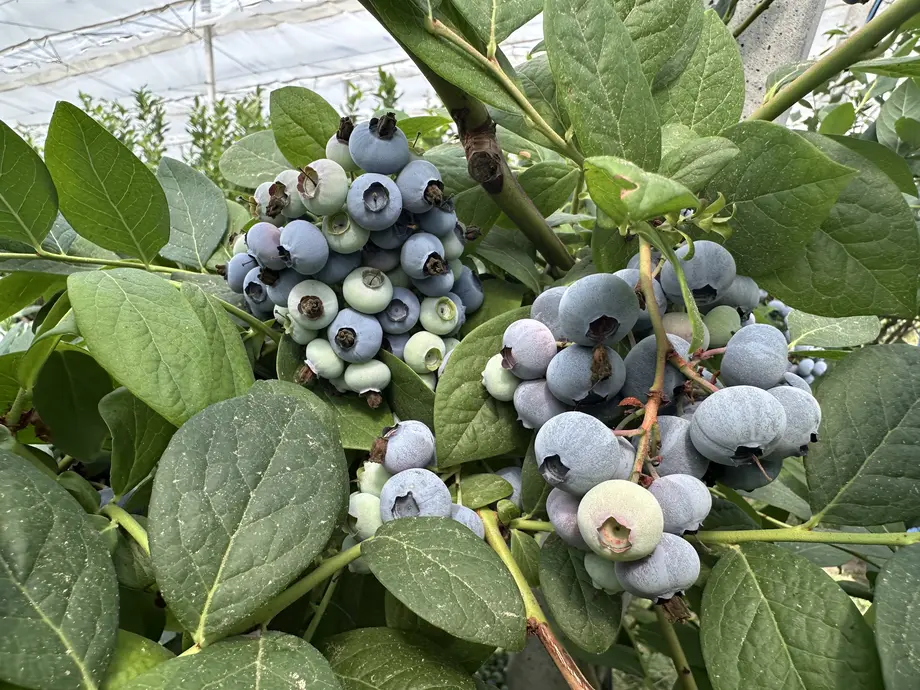 Agronomic management: dormancy physiology and mechanization
The climatic dynamics of the Laimburg area, characterized by warm autumns of 15-20°C at midday, require proactive agronomic management.
- Dormancy and Nutritional Reserves: Maintaining late photosynthetic activity prevents the proper translocation of nutrients to reserve tissues. This phenomenon can cause autumn flowering, draining the reserves needed for spring budbreak and compromising the following year’s production.
- Calendar-Based Fertigation: To force the plant into dormancy, the strategy involves reducing nitrogen input from July, switching to fertigation with water only, zero nitrogen, in September.
- Liberty Trials and Mechanization: To deal with sudden heat peaks (>35°C) or labor shortages, assisted mechanical harvesting tests are underway on the Liberty variety, selected for its “easy detachment.”
Varietal technical sheets: scientific analysis and field observations
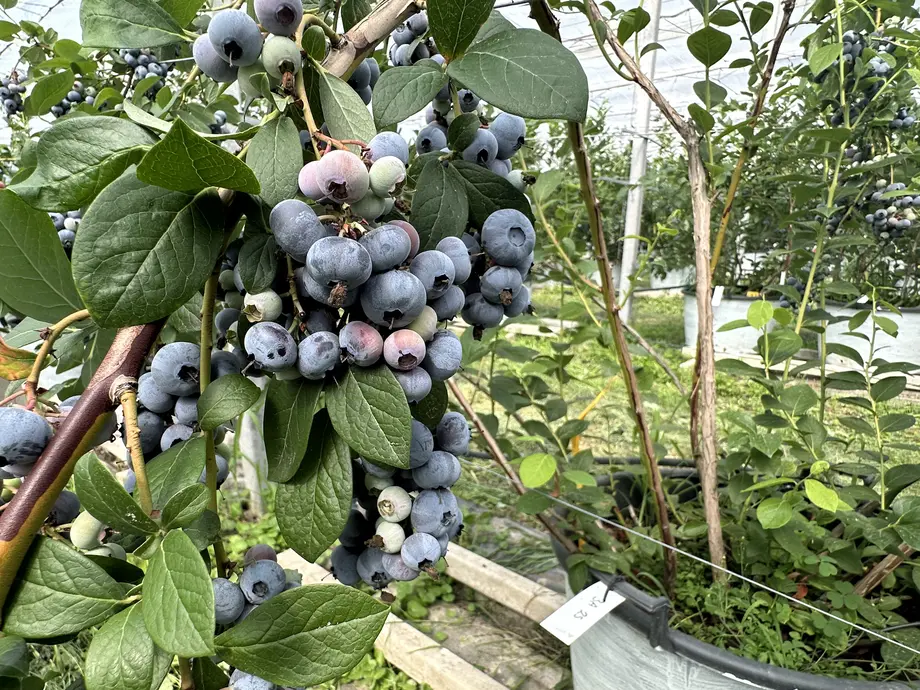
There are 53 varieties under observation in the experimental field; a selection is reported below.
Highbush Blueberry (Vaccinium corymbosum)
- Alix Blue: A “low chill” variety suitable for areas with low chilling requirements. It has shown excellent resistance to high temperatures while maintaining crunchiness. However, its early vegetative restart makes it sensitive to late frosts that can damage flower buds.
- Blue Ribbon: A recently introduced variety with an average Durofel value of 58. It has a growth habit that tends toward horizontal expansion and requires careful pruning management: on young canes it tends to overproduce, risking premature aging due to excessive fruit load in relation to leaf surface.
- Calypso: Characterized by an exceptional sugar-acid balance and flat-shaped fruit. It is a resilient variety: during trials, sudden rainfall after dry periods caused slight environmental scars, small cracks that the plant was able to heal on its own. It suffers from autumn flowering if not properly managed.
- Cargo: A mid-late variety with very high productivity and superior shelf-life. Harvesting is staggered, with up to five picks. Technical note: the typical density of its clusters was limited in some years by attacks of Cecidomia, gall midge, which compromised flower induction. The canes are structurally weak and require supports to prevent breakage under load.
- Gupton: A “mid chill” variety. Its environmental response is interesting: in Laimburg’s Alpine area it maintains high crunchiness, unlike the performance recorded in southern areas, where the fruit tends to soften rapidly.
- Last Call: An ultra-late variety with an aromatic profile surprisingly similar to “Duke.” It is very vigorous and requires careful fertigation management; in some areas, a certain sensitivity to cracking has been reported.
- Legacy: Described as “cosmopolitan” due to its high adaptability, it has a genetic component from warm climates that makes it resistant to heat stress. Its habit is distinctly bushy and disorderly, requiring strong renewal pruning to prevent the fruit from remaining too internal, which would favor humid microclimates ideal for Drosophila.
- Peachy Blue: It stands out for its very pronounced peach aroma and high presence of bloom, which acts as a natural waterproofing barrier, improving shelf-life. The clusters are open and not very compact, promoting aeration and reducing fungal inoculum.
- Top Shelf: A vigorous variety with large fruit. Rapid fruit growth causes above-average water demand and leads to the appearance of streaks on the skin, as the bloom cannot uniformly cover the surface, which expands too quickly, limiting storability. It also presents the issue of persistent petals, which favors the onset of Cladosporium and is unpleasant to the palate.
- Valor: A benchmark variety for efficiency, with concentrated ripening that optimizes harvesting at 10-12 kg/h. It is ideal for high-density intensive plantings of 3,800-4,000 plants/ha thanks to its contained vigor and limited basal shoots.
Niche varieties and other species
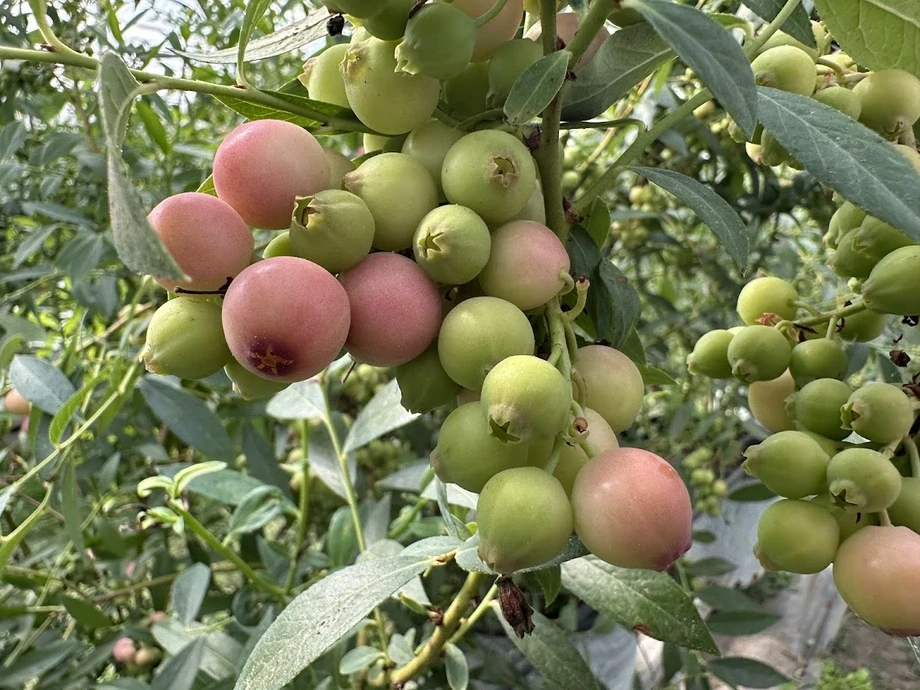
- Pink Blueberry: A light pink-skinned variety, it has a purely decorative value or is suitable for direct sales due to its almost nonexistent shelf-life and the difficulty of visually identifying the exact moment of ripening.
- Rabbiteye (Vaccinium virgatum): An extremely rustic species. Unlike V. corymbosum, which is devoid of root hairs and therefore extremely sensitive to substrate porosity and waterlogging, Rabbiteye has a robust and flexible root system. Although its organoleptic quality is lower, with perceptible seeds and a less complex aroma, it represents a valid option for “low cost” production in non-ideal soils or soils subject to temporary flooding.
Conclusions and future prospects
Blueberry varietal selection must now respond imperatively to the criterion of resilience. Profitability is no longer only a function of yield per plant, but of labor efficiency and the plant’s ability to overcome complex abiotic stresses.
The experience of the Laimburg Research Centre indicates that the future of blueberry cultivation lies in an approach that combines targeted varietal choices, high technology in quality monitoring, and agronomic management capable of “guiding” the plant toward correct physiological dormancy. The Centre continues its monitoring activity to provide growers with constantly updated data, essential for sustainable and cutting-edge fruit growing.