












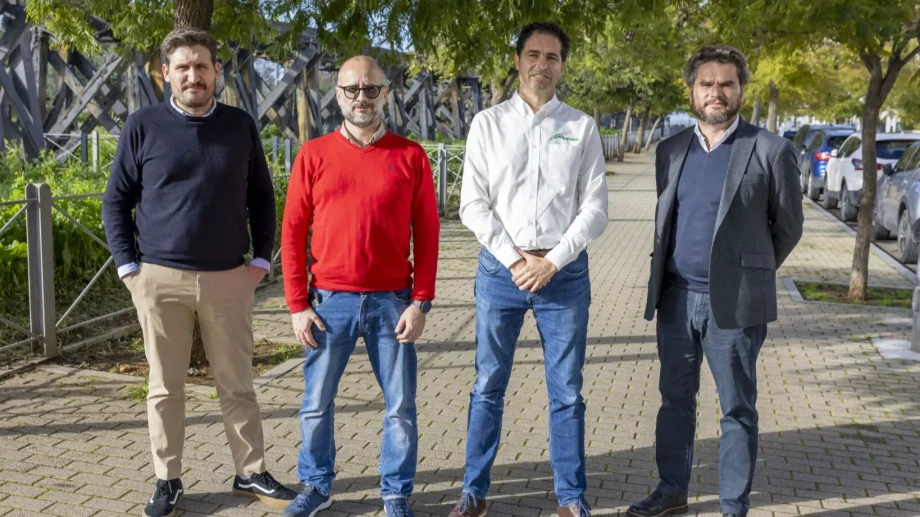
The main strawberry breeders in Huelva warn about the risk of excessive varietal diversification and productivity, advocating for rigorous, sustainable genetic improvement focused on productivity in a context of increasing international competition. Participants include Mario Esteban Pascual, Celso Mateos Echávarri, Pedro Domínguez and Manolo Cano.
From the monovarietal model to varietal explosion
In the recent history of the strawberry sector in Huelva, production relied for many years on U.S. breeding programs, with a single dominant variety such as Camarosa. The entry of new programs disrupted this model, imposing diversification to reduce production peaks and adapt to climate variability.
Today, with varieties coming from five different breeding programs, there are over 45 cultivated varieties in the current campaign. Climate change has reduced chilling hours in Spain, while the pandemic pushed companies to develop their own genetic programs and selections directly in the field.
Development of local programs
This situation has accelerated the development of local breeding programs, offering varieties better adapted to this production area. Producers and cooperatives, thanks to European funding dedicated to R&D, are developing their own programs with exclusive varieties.
According to breeders, the current issue is an excess of available varieties, which risks confusing farmers and the market. The topic was discussed during an “A Debate” meeting with the main breeders of Huelva at Freshuelva.
All participants agree that the development of a new variety must be based on 8–10 years of research and testing, avoiding short cycles that lead to the launch of insufficiently validated material, often under market pressure.
Varietal development requires long cycles and significant economic investments, while the market evolves rapidly. The current proliferation of varieties accelerates field replacement and may compromise the sustainability of breeding programs.
Effects of hyper-diversification
Farmers have become accustomed to a continuous flow of new releases and constantly demand them, increasing the pace of varietal introduction. This situation makes productive and qualitative specialization more difficult and reduces the uniformity required by the market.
Hyper-diversification shortens the commercial life of varieties and may increase costs, especially when programs prioritize taste over yield. Breeders support the use of biotechnological tools to build solid programs.
Historically, strawberry breeding has focused on productivity and long shelf life, key elements for export. Today, the focus is expanding toward organoleptic quality and product differentiation.
Objectives include earliness, rusticity, medium-to-large size, organoleptic quality and consistent production. However, combining all these traits is complex, as they are often in conflict with each other.
Productivity and sustainability
Productivity remains central in a context of increasingly shorter and earlier campaigns, with about 40% early varieties. However, some believe this aspect is being overshadowed by other criteria.
The reduction of substances available for disinfection, limited by the European Commission, has complicated agronomic management and increased the need for resistance to soil-borne diseases in new varieties.
Varietal diversification is also a response to farmers’ needs, who require different distributed production peaks to avoid excessive concentration and stabilize prices throughout the campaign. Competition among breeding programs is considered positive, but competition from countries such as Egypt and Tunisia creates challenges due to lower costs and fewer production restrictions.
Current situation
Difficult seasons represent an important testing ground to evaluate varietal rusticity in the field. The farmer’s role remains crucial, as a well-selected variety can fail with poor management.
In recent years, the supply chain has become more professional, improving quality and reducing distribution issues, while the strategic role of nurseries is growing in the propagation of new varieties.
The future of breeding will be influenced by technologies such as CRISPR, artificial intelligence, molecular markers and advanced phenotyping, which may reduce development time while maintaining high scientific rigor.
Main programs continue to introduce new selections, including PSG061 and PSG049, day-neutral varieties and new proposals developed by Planasa and Eurosemillas for the coming years. In a context of strong competitive pressure and rapid technological progress, the sector must find a balance between diversification and productivity, maintaining scientific rigor to ensure the future of European strawberries.
Statements




Productivity must return to the center as it represents the main profitability factor for farmers, while the excess of varieties on shelves can confuse consumers and penalize consumption.
Too many varieties reduce specialization and production efficiency, while a genetic program must work across different contexts and validation must occur under real conditions. The main varieties are concentrated in the early segment, but there is no perfect variety and genetics requires experience and consolidated know-how.
Insufficiently tested varieties are being introduced, while the campaign is increasingly compressed and strawberries remain one of the most stable crops in terms of profitability.
Source text and images: revistamercados.com