





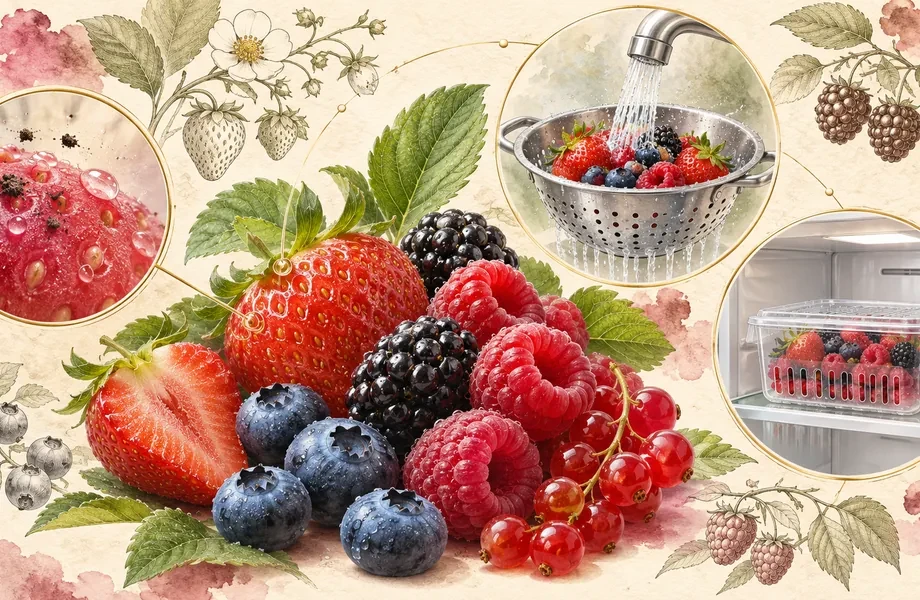
Strawberries, blueberries, raspberries, blackberries and currants are delicate: it takes very little to bruise them or speed up their deterioration. You do not need special products to wash them properly. Simply follow health authority guidance, use clean running water and handle the fruit carefully.
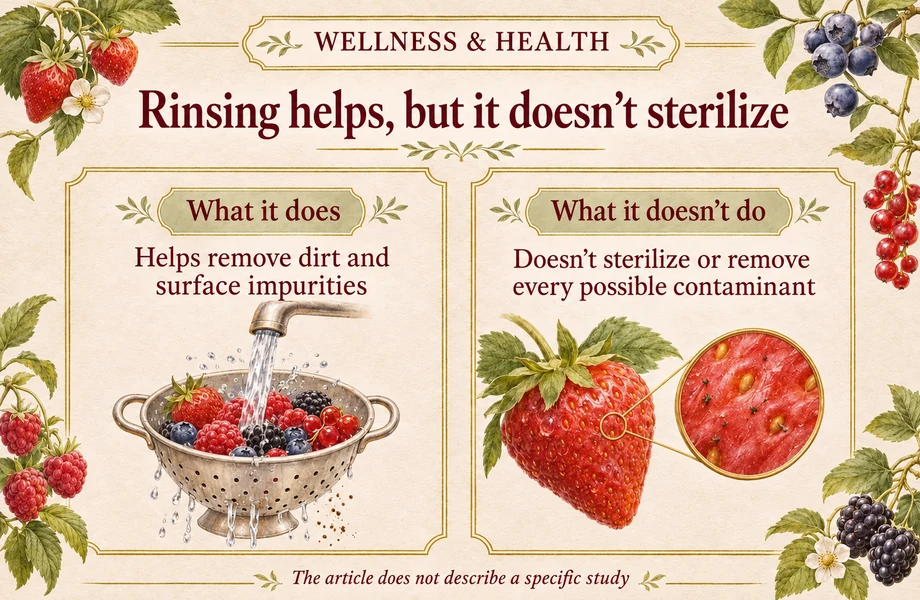
Washing helps remove soil and surface impurities, but it does not sterilize the fruit or remove every possible contaminant. How and when the berries are stored and washed, and how clean your hands and utensils are, also matter.
From fridge to table
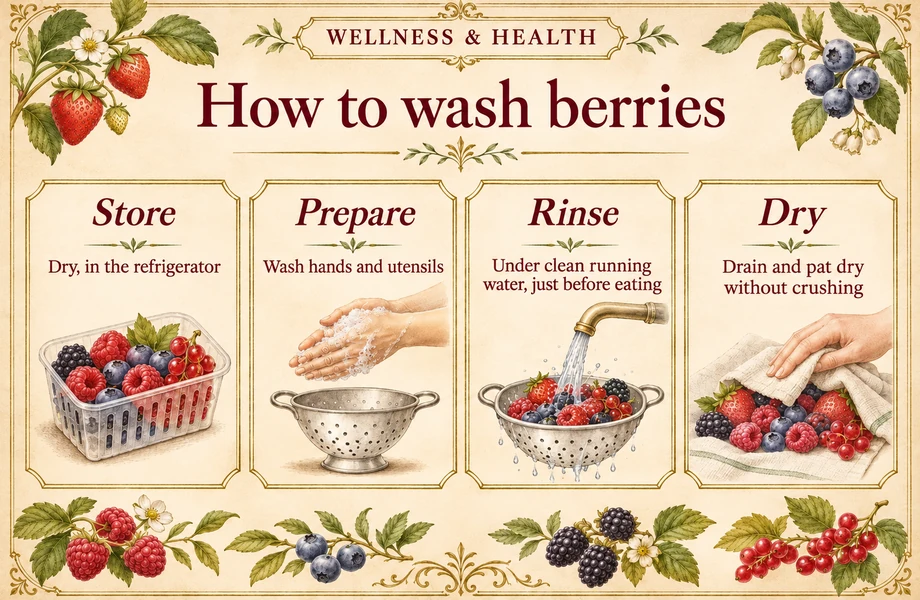
Four simple steps for handling fresh berries.
Keep them dry in the refrigerator, following the instructions on the packaging.
Before handling them, wash your hands and use a clean colander and work surface.
Just before eating, rinse them gently under clean running water.
Let them drain and pat them dry without crushing them, using clean paper towel or a clean cloth.
When to wash berries
The practical rule is to wash berries shortly before eating them or using them in a recipe. If you rinse them as soon as you get home and put them away while still damp, residual moisture may speed up deterioration, especially in soft fruit such as raspberries and blackberries. It is better to store them dry and wash them just before eating.
Before you start, wash your hands with soap and water and check the packaging. Discard bruised or spoiled berries, and make sure the container and work surface are clean. The Italian Ministry of Health recommends washing fruit and vegetables before consumption. The Italian National Institute of Health advises rinsing raw foods thoroughly under running water and cleaning hands, knives and surfaces after handling them.
How to rinse berries without damaging them
Place the berries in a clean colander and rinse them under a gentle stream of cold, potable water. Move them gently with your fingers, without scrubbing vigorously or leaving them to soak in a bowl for a long time. Prolonged contact with water can soften the flesh and affect the texture.
For very small berries or those growing in clusters, such as currants, you can use a fine-mesh colander. Strawberries and berries with a calyx can be rinsed whole and dried before removing the stem. This reduces the amount of water entering the flesh through the cut area. It is a practical way to preserve quality, not a measure that guarantees microbiological safety.
After rinsing, let the berries drain and pat them dry with clean kitchen paper or a clean cloth, taking care not to crush them. Eat them straight away or use them in the recipe you have planned.
Do you need vinegar, baking soda or detergents?
For everyday washing at home, clean running water is sufficient. The U.S. Food and Drug Administration advises against using soaps, detergents or commercial produce washes. The Italian Ministry of Health also notes that potable water is enough to wash fruit and vegetables. There is no need to add vinegar, baking soda or disinfectants: they are not needed for routine washing and do not make produce sterile.
Rinsing is not a way to “disinfect” fruit, nor does it guarantee the complete removal of microorganisms or residues. It is also important to follow the storage instructions on the packaging and keep work surfaces clean.
How to store berries after purchase
At home, refrigerate the berries and follow the instructions on the packaging. Keep them dry in a clean, well-ventilated container. Avoid compressing them or leaving them at room temperature for extended periods. The Italian Ministry of Health advises following the stated storage temperatures and not leaving perishable foods out of the refrigerator for too long.
If you spot a mouldy or badly spoiled berry, remove it and check the others carefully. Mould can spread more easily in a package of closely packed, delicate fruit. If the package shows widespread spoilage, has an unusual smell or contains badly damaged fruit, it is prudent not to eat it. Washing cannot salvage spoiled food.
What about frozen berries?
For frozen products, follow the manufacturer’s instructions and do not wash them if the packaging says they are ready to eat. If they need to be thawed, follow the label instructions and keep them in the refrigerator while thawing when directed. The Italian Ministry of Health reminds consumers that thawed products should not be refrozen.
In short, the routine for fresh berries is simple: clean hands, potable running water, a gentle rinse just before eating, and refrigeration according to the label. These everyday steps help maintain quality and hygiene, without attributing sterilizing effects to washing that it cannot guarantee.
🫐 Well-being & Health with Berries 🍓This article is part of the editorial series Wellness & Health with Berries, which brings scientific research closer to everyday life, promoting berries as allies for well-being. The series offers clear, up-to-date, and evidence-based content designed to inform consumers and support all operators in the berry supply chain. |
Sources:
- Italian Ministry of Health, “Foodborne diseases – precautions”, information document.
- Italian National Institute of Health, “Listeria”, Epicentro.
- U.S. Food and Drug Administration, “Selecting and Serving Produce Safely”, FDA.
- Italian Ministry of Health, “Food safety at home”, Italian Ministry of Health.
- Italian Ministry of Health, “Keeping food cold”, FAQs.
Italian Berry - All rights reserved