





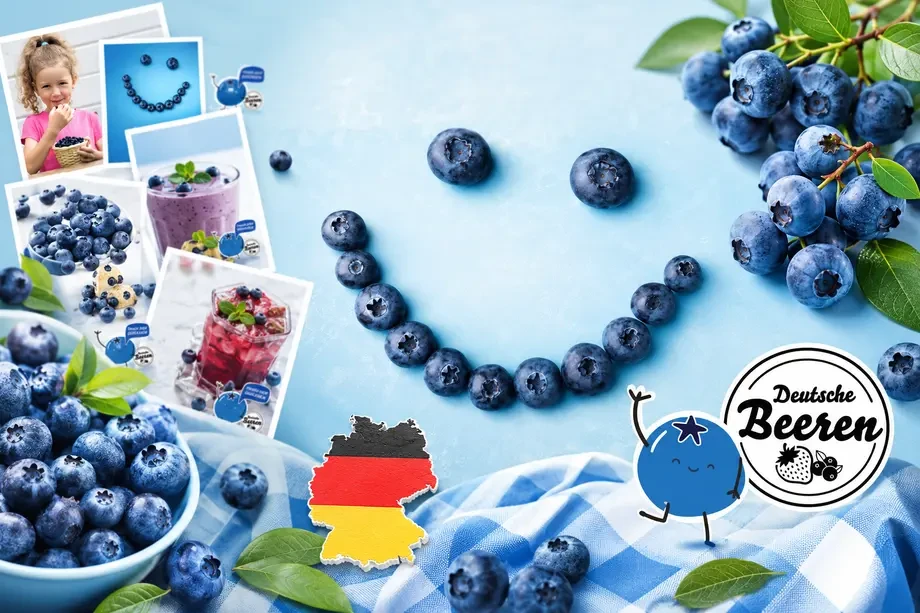
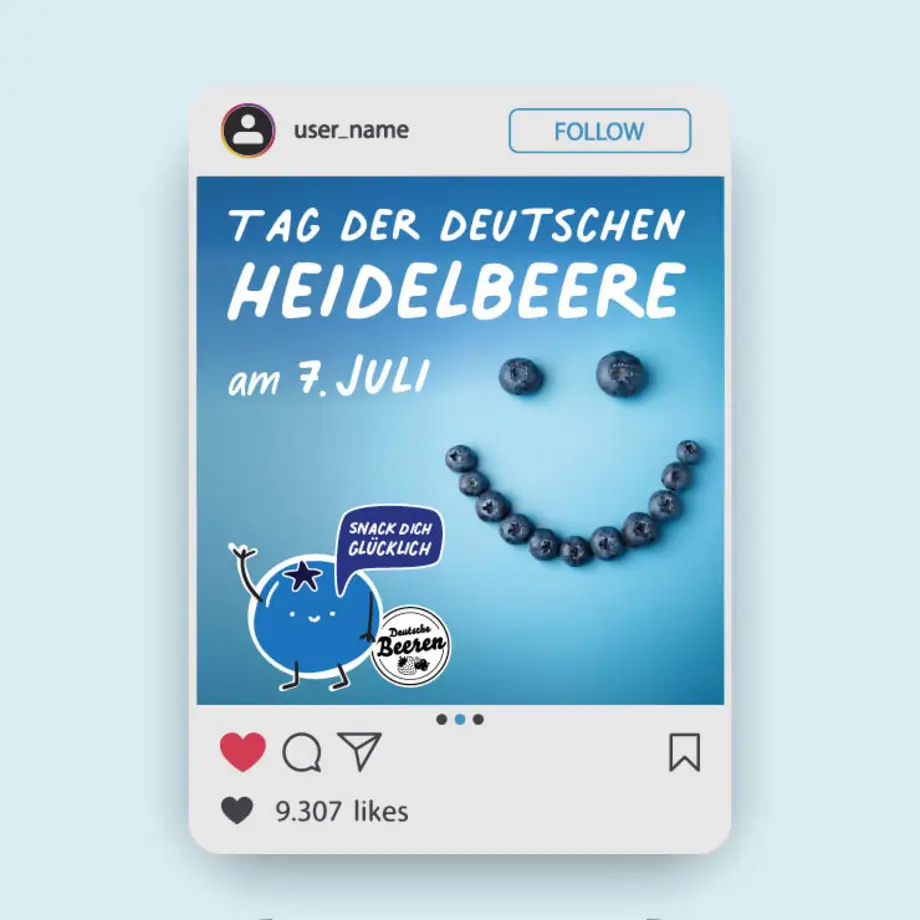
With the “Tag der Deutschen Heidelbeere”, celebrated on July 7, Germany officially opened its national blueberry season. The initiative, which is expected to become an annual event, is not only a symbolic moment marking the start of the campaign, but also the first step in a broader communication strategy through which the German sector aims to strengthen the image of the national product.
The message chosen for the campaign is direct and positive: the German blueberry is presented as a “kleines Blaues Wunder”, a “little blue wonder”, capable of combining taste, health and well-being. Consumers are invited to celebrate July 7 by giving blueberries as a small gesture of happiness: a simple yet symbolic gift, intended as a good-luck charm for body and mind.
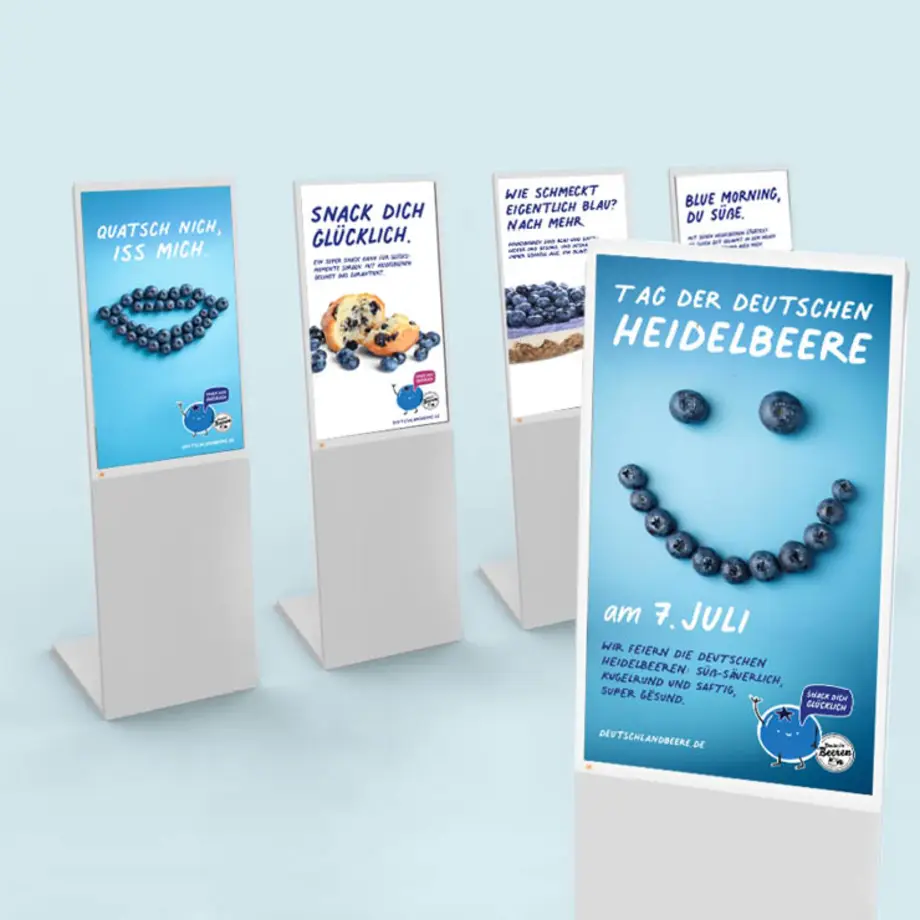
“Berry after berry, a pleasure. So healthy, so tasty, so super”: this is the tone of the promotional communication, which defines German blueberries as a superfood for those who want to feel good. The campaign therefore focuses on an emotional and health-oriented positioning, enhancing the product not only as a seasonal fruit, but as a positive, everyday and accessible experience.
A campaign across farms, gastronomy and retail
Around July 7, promotional activities, surprises and tastings for consumers are planned wherever fresh German blueberries are available: on farms, in gastronomy and in food retail. The aim is to create a recognizable moment for consumers and give greater visibility to the national product at the height of the seasonal start.
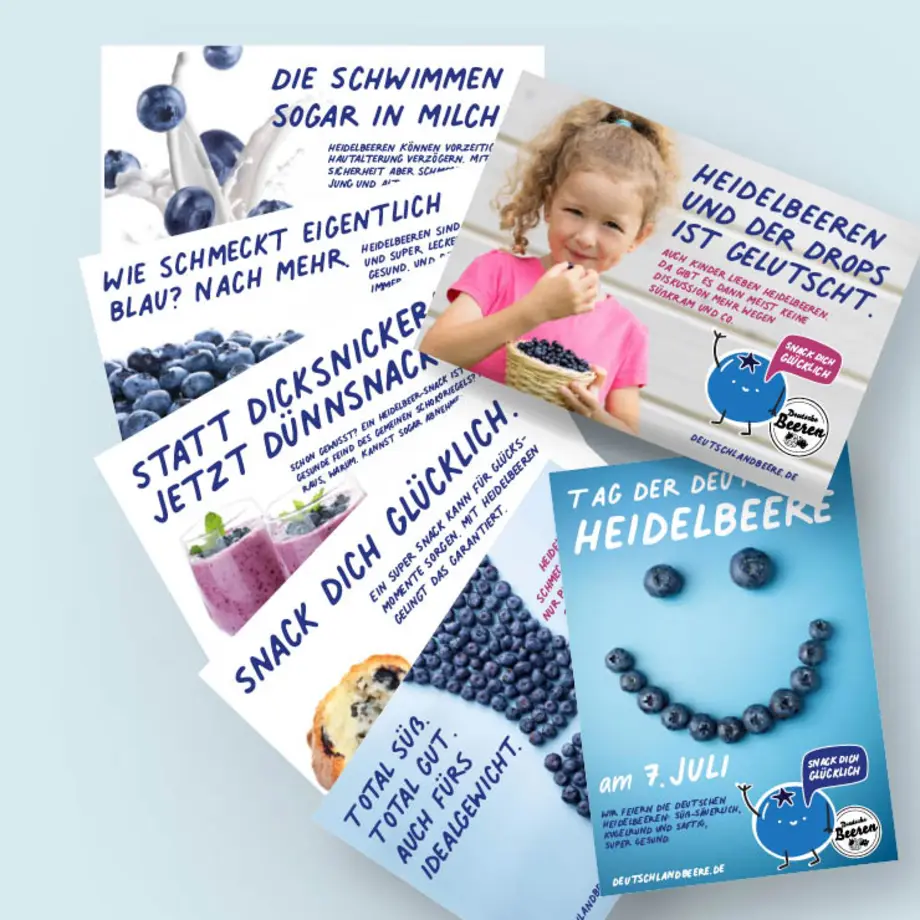
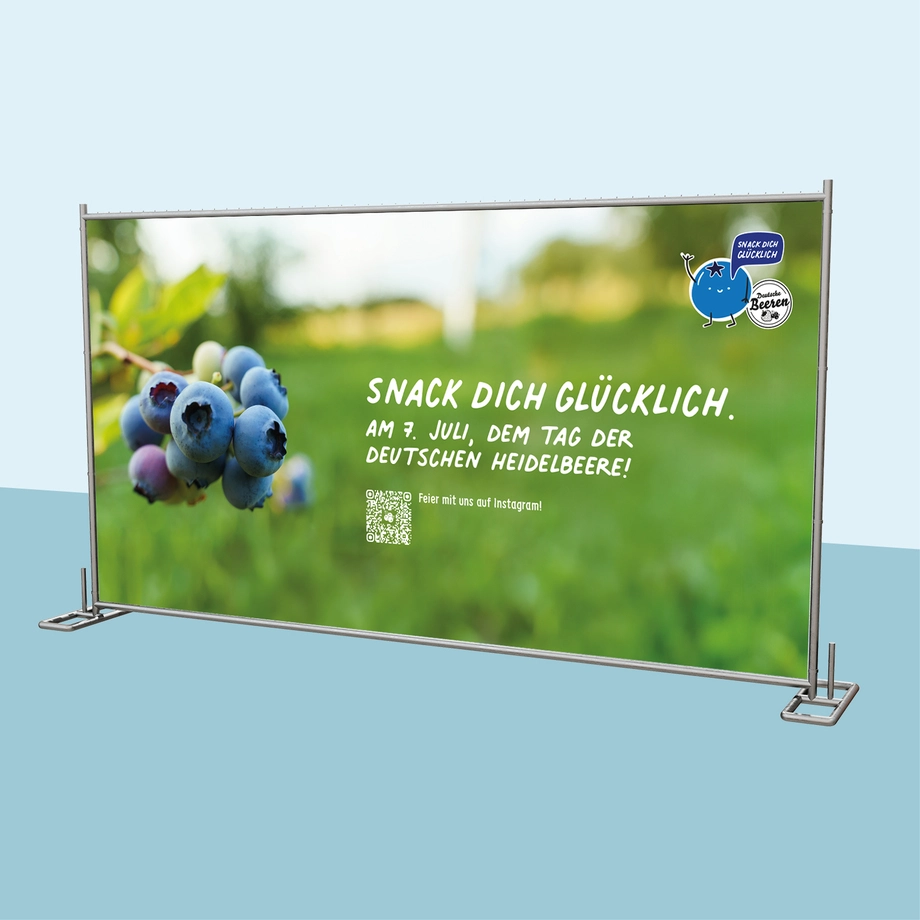
The campaign is also designed as a participatory initiative. Growers and commercial operators can independently use a range of materials made available by the organization: posters, social media content, promotional materials, giveaways and other tools designed to support communication in points of sale and on farms.
All promotional material revolves around the theme of the regional German blueberry, with the aim of building a stronger and more recognizable identity. The idea is to turn the “Tag der Deutschen Heidelbeere” into a shared platform for the supply chain, bringing together production, direct sales, gastronomy and modern retail.
The sector wants to move out of a defensive position
Alongside the promotional dimension, there is also a broader political and economic message. “We want to move out of a defensive position and do more public relations work,” said Fred Eickhorst, spokesperson for the board of the Verband der Spargel- und Beerenanbauer, the German association of asparagus and berry growers.
According to Eickhorst, the campaign should help inform consumers and political decision-makers about how German blueberries are produced and the contribution local farms make to regional supply. The national blueberry is therefore presented not only as a fresh and healthy product, but also as part of a local agricultural system that deserves support.
Stable conditions are needed to invest in German blueberries
In his remarks, Eickhorst underlined the need for reliable framework conditions for the sector. This is particularly relevant for young farm managers, who according to the association need encouraging signals and clearer support from society, commercial partners and politics.
The sector is calling for a long-term agricultural vision, capable of offering concrete prospects to farms and encouraging new investment in national production. Without certainty, there is a risk that local cultivation will lose appeal, just as blueberry consumption continues to represent one of the most dynamic segments in the berry sector.
Good prospects for the 2026 harvest
For the 2026 campaign, the Verband der Spargel- und Beerenanbauer sees favourable starting conditions. “The conditions for a good blueberry harvest in 2026 are in place,” said Eickhorst, now hoping for a positive season and sustained demand for German product.
The key issue remains the balance between supply and demand. According to Eickhorst, the market and product availability must develop consistently, so as to ensure economically sustainable prices for farms. Only in this way, he explained, will it be possible to maintain blueberry cultivation and regional production over time.
The appeal to retail: more space for national product
The clearest message was addressed to food retailers. Eickhorst expressed the hope that German retail would switch quickly to national blueberries and provide stronger support for the marketing of the seasonal regional product.
“I hope that retailers will quickly switch to German blueberries and support us in marketing the seasonal regional product,” he said. The appeal reflects a recurring issue for many European production areas: the difficulty of enhancing the value of local product when imported goods remain on shelves even during the peak of the national season.
Official opening in Lower Saxony
The official season opening took place at the Bickbeernhof run by the Herse family in Landesbergen-Brokeloh, Lower Saxony. During the event, the farm’s work and the current situation of the sector were presented.
Felix Koschnik, from the Lower Saxony Chamber of Agriculture, illustrated data and market information on German blueberry cultivation, providing an updated overview of the sector. The season was then officially opened by Blueberry Queen Selina I, the German “queen of blueberries”.
The “Tag der Deutschen Heidelbeere” therefore marks a double step: on the one hand, the commercial opening of the season; on the other, the sector’s attempt to build a stronger narrative around the national blueberry. It is a communication effort that combines health, regionality, consumer engagement and a call for greater recognition along the entire supply chain.