











In the strawberry market, dominated by production standards increasingly focused on yield, uniformity, shelf life and transportability, there are varieties that follow a completely different logic. The Capron Royale strawberry, also referred to in many sources as Capron Royal, belongs to this second category: it is not a cultivar designed for large-scale retail or mass logistics, but a historic musk strawberry whose value lies in its aromatic personality, rarity and narrative appeal.
For operators in the berries sector, Capron Royale is interesting not so much as an alternative to standard commercial strawberries, but as a high-end complement. Its natural space is not the anonymous refrigerated shelf, but the specialized channel: direct sales, agritourism, small local productions, varietal collections, restaurants, pastry shops and gourmet niches.
A musk strawberry with a historic identity
Capron Royale is described as a European musk strawberry, linked to an ancient varietal heritage and associated with a long cultivation history. Available sources connect it to the 18th century, with references to 1766 and other reconstructions indicating its presence in France between the 18th and 19th centuries.
This historical element is relevant from a commercial point of view. In a market where many varieties are perceived by consumers as interchangeable, a strawberry with a recognizable identity can become a differentiation tool. However, presenting it simply as an “ancient strawberry” is not enough: its real potential emerges when history, taste and sales approach are integrated into a coherent narrative.
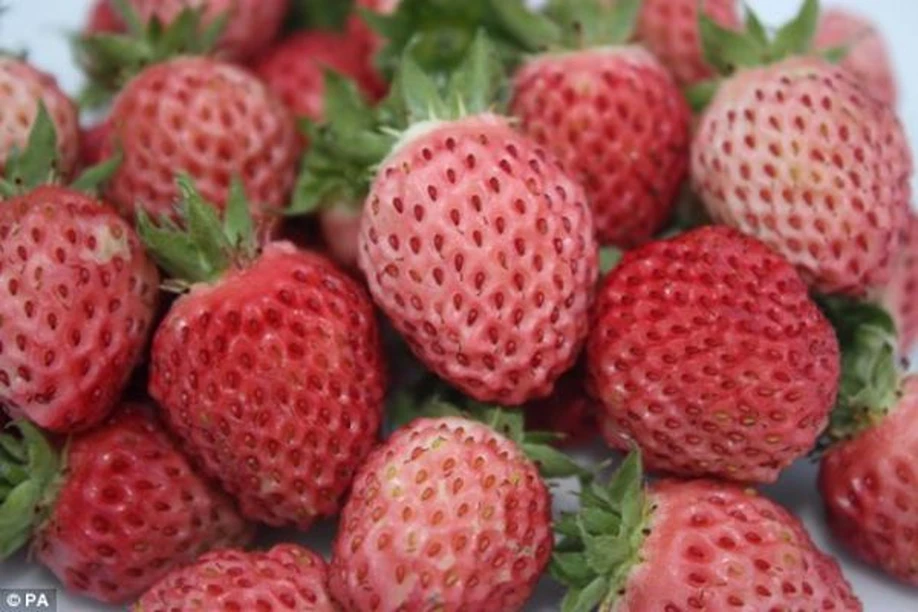 Photo credit: "Fragola Magica"
Aroma is its distinctive trait
The main element of interest in Capron Royale is its organoleptic profile. Available descriptions emphasize a very intense aroma, typical of musk strawberries, and taste notes reminiscent of chewing gum, the so-called “bubblegum” effect.
This type of characterization places it in a very different category from standard strawberries. It is not a strawberry to be chosen only for size, color or price per kilo, but for its sensory experience. For growers and retailers, this means being able to work on a premium-emotional positioning: a strawberry to taste, describe and remember.
From this perspective, Capron Royale can become an ideal product for tastings, mixed trays of unusual varieties, on-farm events, evolved farmers’ markets and offers aimed at curious consumers. Its value increases when customers are guided to understand how it differs from a conventional strawberry.
A variety poorly suited to long supply chains
The same characteristic that makes Capron Royale interesting also limits its commercial use on a large scale. The information available indicates a limited suitability for cold storage and transport. It is therefore a strawberry poorly aligned with distribution models based on long-distance transport, storage, standardization and intensive post-harvest management.
The production window is generally indicated between May and July, with winter vegetative dormancy. This aspect also confirms that this is not a variety designed for continuous production planning or deseasonalized supply, but a product with a clear seasonality, closer to the logic of limited availability than to that of industrial continuity.
For this reason, the interest in Capron Royale should not be assessed using the classic parameters of a commodity. If evaluated only in terms of yield, keeping quality, size and transportability, it can hardly compete with modern cultivars. If, instead, it is interpreted as an identity-driven variety, it can play a specific role in high value-added assortments.
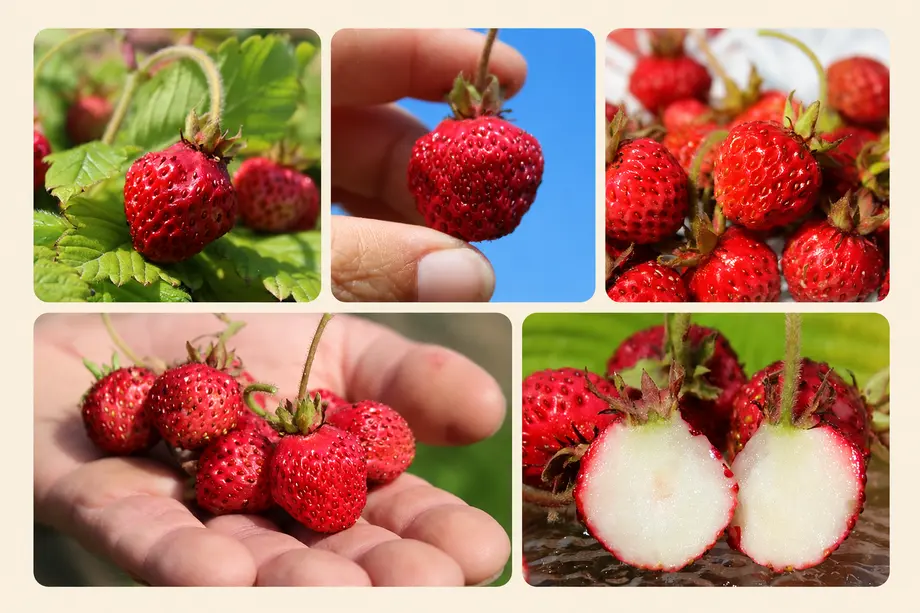 Photo credit: "Deaflora"
Where it can create value
Its most convincing commercial positioning is in channels where consumers can establish a direct relationship with the product. Direct sales are probably the most natural context: they make it possible to explain the variety, offer tastings, enhance its aroma and justify a higher price than a standard strawberry.
A second opportunity lies in agritourism and specialized retail, where the experiential component matters as much as the product itself. A strawberry such as Capron Royale can become part of a broader narrative about the farm, cultivated biodiversity, historic varieties and the rediscovery of taste.
The third channel is that of gourmet and collector niches. Restaurants, pastry shops, artisan gelato makers and small-scale processors can find in this strawberry a distinctive ingredient for desserts, coulis, jams, sorbets, syrups and preparations in which aroma is the real differentiating factor.
Not a strawberry for everyone, but one with a precise function
The Capron Royale case is useful because it highlights an increasingly important dynamic in the berries market: not all varieties have to meet the same objectives. Some must guarantee efficiency, volumes and continuity; others can help build image, distinctiveness and narrative value.
For a grower, introducing a variety of this type means accepting a different logic. It is not a matter of replacing commercial strawberries, but of complementing them with an offer capable of attracting evolved consumers, taste enthusiasts, local customers and operators looking for non-standardized products.
In this sense, the Capron Royale strawberry represents more of a niche commercial project than a simple cultivar. Its success depends less on the quantity produced and more on the ability to build a credible narrative around the fruit: historic variety, intense aroma, limited availability, short supply chain and conscious consumption.
In the strawberry landscape, where the risk of standardization is always present, varieties such as Capron Royale remind us that value can also arise from difference. Not from logistical perfection, but from personality.
Cover photo: Plants Pro