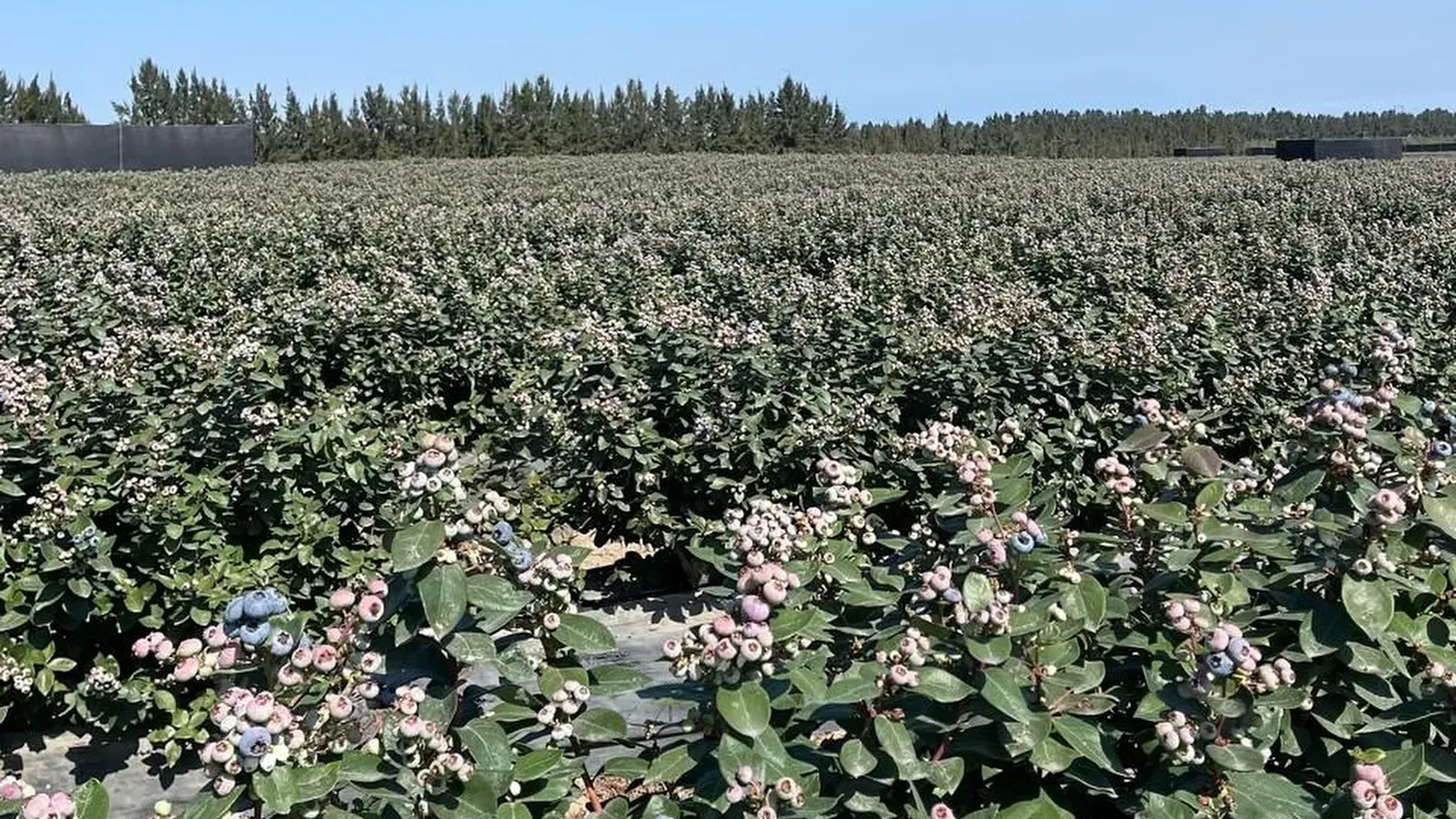






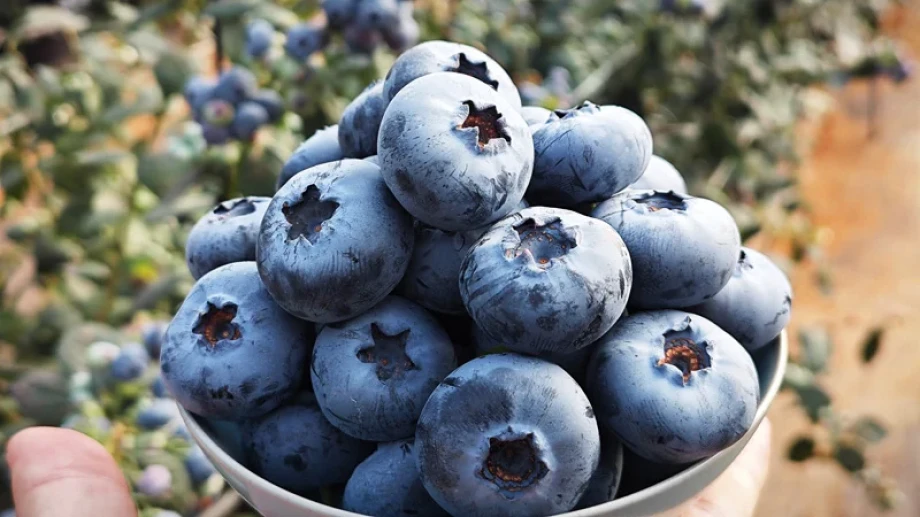
In a context where international markets increasingly demand Premium large-size fruit (with large caliber and excellent flavor) combined with high yields, varietal selection has become a strategic decision for blueberry growers.
In this scenario, the variety Blue Maldiva developed by Planasa continues to gain ground in very different regions around the world.
From Mexico to China, as well as other areas such as Morocco and South Africa, growers operating under very different agronomic conditions agree in highlighting the high productivity, fruit quality and production efficiency of this genetic material.
Blue Maldiva in Mexico
Blue Maldiva in Mexico: production efficiency and profitability in Ahualulco. In Ahualulco, Mexico, the experience with Blue Maldiva has represented a turning point for local growers.
After working with different varieties and facing plant health issues and insufficient quality for export markets, the search for a more efficient alternative led to the introduction of Blue Maldiva as a more efficient alternative.
According to José Urbina, the variety stands out for delivering large-caliber fruit, excellent firmness, sweetness, and flavor—essential qualities for international trade.
Between 60% and 80% of the production consists of jumbo fruit, ensuring that almost the entire harvest can be allocated to export. Another distinctive feature is its plant architecture with more compact growth.
Unlike other varieties that develop very bulky bushes, Blue Maldiva shows more contained growth, allowing the plant to focus its energy on fruit production. “A single cluster of Blue Maldiva can be equivalent, in productive terms, to dozens of branches of previous varieties that produced smaller sizes,” says Urbina.
Efficiency and production sustainability
This efficiency is further reinforced by its earliness: 150 days after pruning, the plants are already in full production. In addition, input requirements are lower, both in terms of nutrition and phytosanitary applications, thanks to its low susceptibility to pests and diseases.
Water consumption differences are also significant: while Blue Maldiva requires about 200 liters per hectare, other varieties can reach up to 600 liters, making this genetic material a more sustainable and profitable option.
Harvesting represents another strength. The large size and uniformity of the fruit facilitate field work, allowing more kilos to be picked per working day and optimizing labor.
Adaptation to local conditions has been supported by continuous technical work with Planasa’s engineers, through periodic visits to fine-tune nutrition programs, identify potential issues, and optimize crop management. For José Urbina, the conclusion is clear: “It is a very productive variety, and we certainly will not fall behind in terms of production.”
Excellent performance in high-altitude areas
Excellent performance in high-altitude areas in China. In China’s Yunnan province, Xiaobao Ge, manager of Yunnan Baoming Agriculture, runs a 30-hectare farm located at nearly 1,900 meters above sea level—an altitude that significantly influences the blueberry’s organoleptic profile.
“At this altitude, the fruit’s flavor is better, more aromatic and sweeter, and the texture is also crunchier. Compared to lower-altitude areas, performance is clearly superior,” he explains.
Before choosing Planasa’s genetics, the team carried out an in-depth evaluation process, comparing different varieties and analyzing their behavior under various production conditions.
In the end, several factors led to the selection of Blue Maldiva for its high productivity:
- high productivity;
- a high percentage of large-caliber fruit;
- good disease resistance, which facilitates crop management.
“But the most important aspect is that the overall economic return is very positive,” he emphasizes.
Fruit size and production results
During field evaluations, fruit size was among the most surprising elements. Even at early ripening stages, fruit reaches sizes 18+ and 20+, with over 80% of production exceeding 22 mm.
Measurements also recorded fruit of 25+ and even 27 mm, confirming the high percentage of large fruit. “Overall, I really like Blue Maldiva and I am very satisfied with its performance,” he concludes, hoping that Planasa growers in other countries will continue to achieve good results.
Text and image source: revistamercados.com