








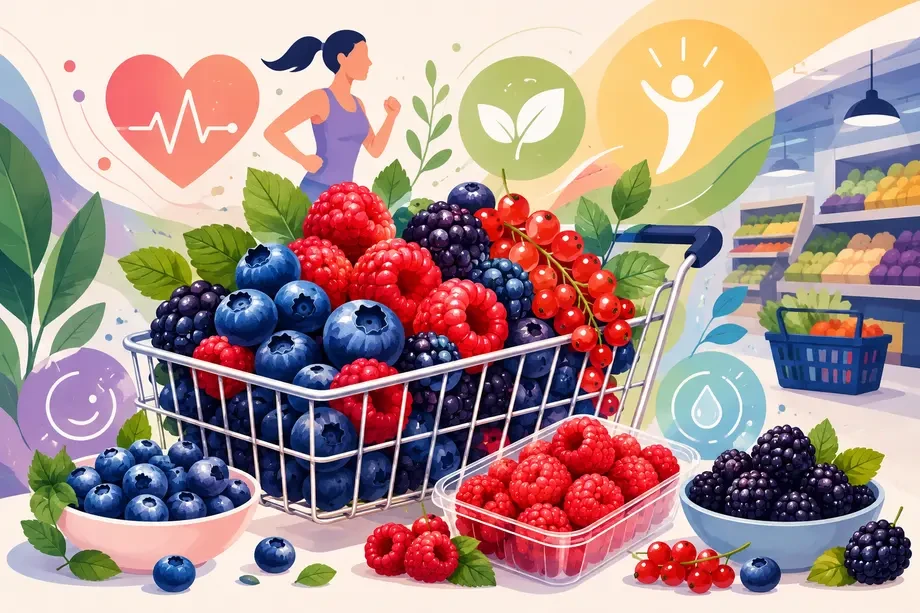
Health, wellness, and convenience are becoming increasingly central criteria in Italians’ purchasing decisions. For the berry sector, this evolution represents much more than a consumer trend: it is an opportunity to reposition the category within a broader idea of everyday wellbeing.
The YouGov study presented by Paola Corbellini, national & classic clients cluster lead, and Julia Omini, insights senior consultant, and analyzed by Antonella Genna on myfruit, highlights what is now a structural change in large-scale retail: consumers no longer choose only on the basis of price, quality, and waste reduction, but increasingly assign importance to the health dimension of products. According to the analysis, for about 60% of Italians, the health aspect plays an important role in choosing a store, while 17% would like to find more healthy options at their usual retailer.
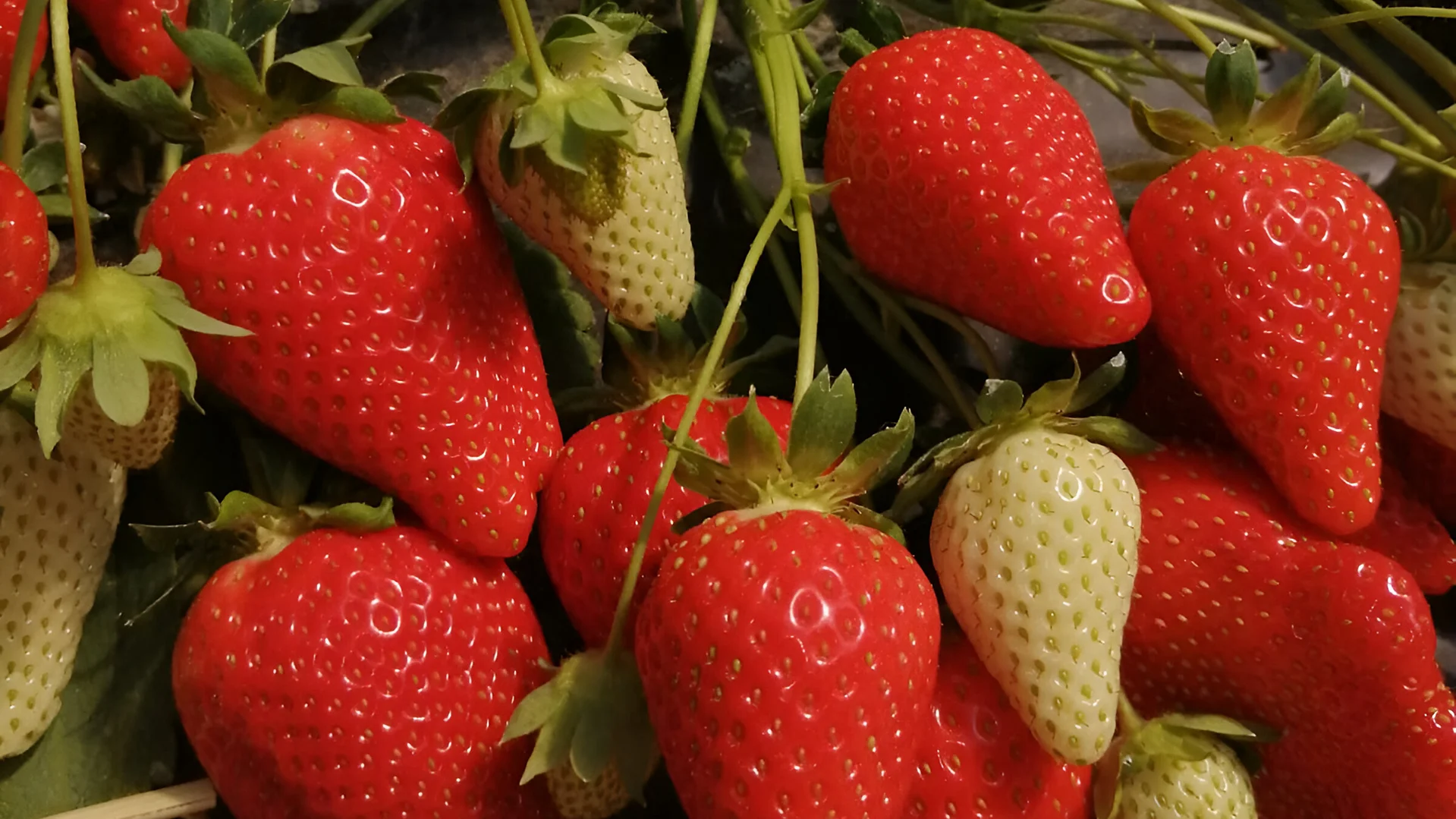
For berries, this figure is particularly relevant. Blueberries, raspberries, blackberries, currants, and strawberries are already perceived by consumers as fresh, natural, light products consistent with an eating style oriented toward wellbeing. However, this spontaneous perception is no longer enough: the challenge for growers, brands, and retailers is to turn this positive association into a clearer, more readable, and more continuous commercial proposition.
From category to need: the shift in perspective
One of the most important aspects emerging from the study concerns the transition from a category-based logic to a need-based logic. Consumers no longer think only in terms of “fruit,” “snack,” “breakfast,” or “fresh product,” but look for solutions capable of meeting several needs at the same time: health, convenience, taste, fitness, beauty, and mental balance.
Berries fit perfectly into this new map of consumption. They are fresh fruit, but also a snack; they are ingredients for breakfast, but also components of smoothies, yogurt, bowls, light desserts, and functional products. They can be associated with freshness, naturalness, antioxidants, fiber, color, pleasure, and gratification. In other words, they no longer compete only with other fruit, but with a much broader set of products that promise wellbeing.
This means that the category’s competitiveness is not played out only in the fruit and vegetable department. Berries ideally enter into dialogue with yogurt, cereals, nuts, bars, functional drinks, high-protein products, gut-friendly foods, and healthy snacking solutions. This is where new space opens up for category management and in-store communication.
Reduction: the natural advantage of berries
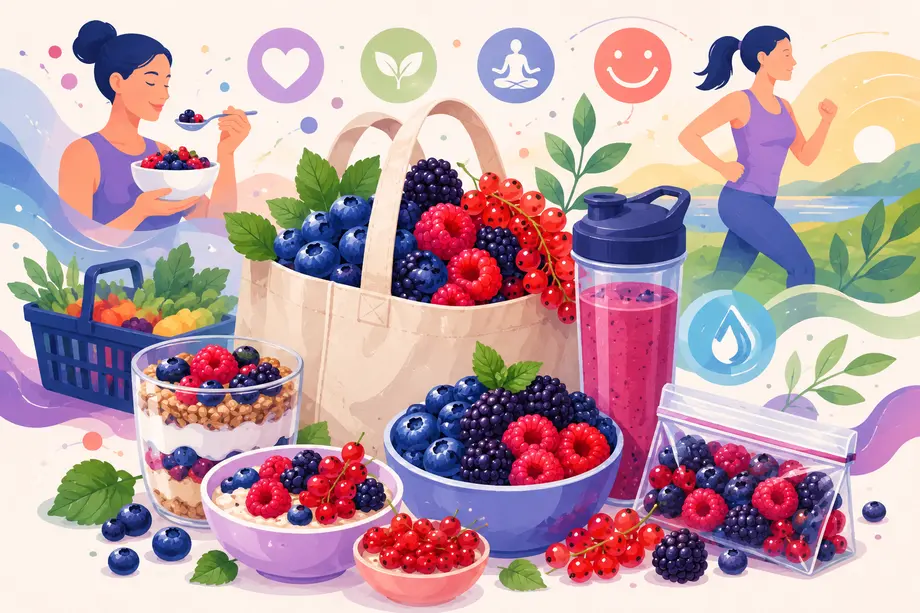
The first macro-trend identified by YouGov is reduction: less sugar, fewer ingredients perceived as negative, less processing, and greater simplicity. The growth of sugar-free and plant-based products confirms that consumers are looking for products perceived as more suitable for a healthy lifestyle, even when there are no specific dietary needs.
In this context, berries have a clear competitive advantage: they are naturally simple products. They do not need to remove ingredients from a recipe, because they already start from a promise of purity, freshness, and naturalness. Their positioning can therefore be built not so much on the concept of “free from,” but on that of being naturally suitable for a balanced diet.
This is also an important point for communication. In a market crowded with claims, certifications, and nutritional formulas, fresh fruit can regain centrality precisely because it offers an intuitive answer: color, taste, freshness, and naturalness. More than other fruit and vegetable references, berries also have a premium and contemporary image that makes them suitable for a modern narrative around wellbeing.
Long-term health: the role of berries in everyday routines
The second trend concerns the building of health over time. Some 51% of Italians say they often think about this in their everyday purchasing decisions, with the figure exceeding 40% even among younger generations. This is a figure that goes beyond the traditional idea that prevention is mainly a concern for older age groups.
For berries, this is a strategic lever. The category can be presented not as an occasional purchase or a premium product to buy now and then, but as part of a daily eating routine. The success of superfoods, high-protein products, and fiber-rich foods shows that consumers are looking for perceived benefits, continuity, and ease of use.
Blueberries, in particular, have already entered consumers’ imagination as a fruit associated with wellbeing. But raspberries, blackberries, and currants can also find growing space if they are enhanced for their sensory, nutritional, and functional profile. The issue is not to turn berries into pharmaceutical or medicalized products, but to strengthen their presence in the consumption occasions where consumers build their own idea of health: breakfast, snacks, after sport, office breaks, and family consumption.
Convenience: format becomes decisive
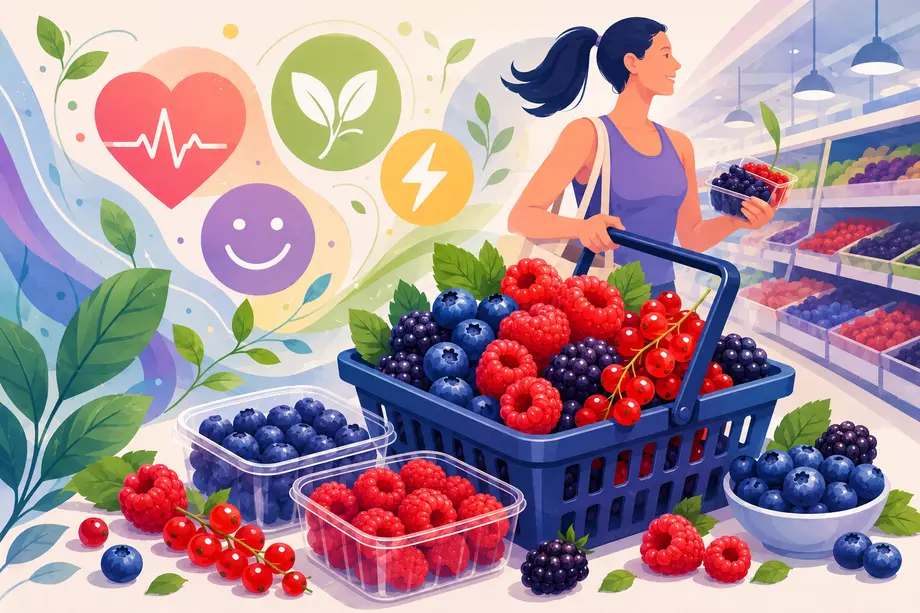
Convenience is the third trend identified by the YouGov study and represents one of the most concrete areas for berry growth. Fast-paced lifestyles reward easy, quick, portioned, and ready-to-use solutions. It is no coincidence that breakfast and snacking are among the consumption occasions where the health aspect integrates best into existing routines.
The figure cited in the study is significant: among the foods growing in this area are also berries, up 5.2% compared with 2024. This confirms the category’s ability to intercept new consumption moments, especially when the product is available in formats consistent with consumers’ daily lives.
Here, packaging becomes a strategic variable. Punnets more suited to immediate consumption, family formats, resealable packs, mixed assortments, ready-to-eat solutions, and combinations with other ingredients can increase purchase frequency. The growth in spending on fruit and vegetables, indicated by the study at +14%, suggests that consumers are willing to invest in fresh produce when they perceive clear value, but remain price-sensitive.
Price, in fact, cannot be ignored. For 53% of consumers, healthy products appear expensive or “never on promotion.” For berries, often perceived as a premium category, this represents both a critical issue and an opportunity: there is a need to work better on the scale of formats, smart promotions, assortment depth, and the relationship between perceived value and price per kilo.
Pleasure and mental wellbeing: the power of taste
The fourth trend concerns pleasure, understood not as an alternative to health, but as one of its components. Contemporary consumers do not want to give up gratification: they are looking for products that are healthy, but also tasty, beautiful, satisfying, and consistent with an idea of psychophysical balance.
This is where berries have one of their strongest cards to play. Color, aroma, sweetness, acidity, freshness, and versatility make them suitable for communication that combines wellbeing and desirability. Unlike many functional products built around technical claims, berries can communicate pleasure in an immediate and visual way.
This dimension is also particularly important on social media. Bowls, smoothies, yogurt with fruit, light desserts, and colorful recipes are highly visual contents, easily shareable and consistent with the languages of nutrition, fitness, lifestyle, and beauty. The link between health and beauty, highlighted by the study also through interest in ingredients such as collagen, opens up further spaces of contamination for berries, both in food and in ingredient-based products.
Implications for growers and retailers
For growers, the message is clear: offering a good product is no longer enough. It is necessary to build a proposition that makes the value of berries readable within consumers’ new priorities. Organoleptic quality, shelf life, continuity of supply, suitable formats, and communication of benefits become integrated elements of the same strategy.
For retailers, on the other hand, the issue of layout and offer organization opens up. If consumers think in terms of needs, stores too can begin to propose more cross-category paths: healthy breakfast, wellness snacks, fiber-rich products, smoothie ingredients, solutions for children, products for sports consumers, and foods for everyday wellbeing.
In this scenario, berries could move beyond the sole logic of the fruit and vegetable counter and become protagonists of broader promotional and communication areas. Pairing them with yogurt, cereals, nuts, plant-based drinks, or functional products can strengthen purchase frequency and increase the perceived value of the category.
A bridge category between fresh produce, health, and lifestyle
The real opportunity for berries is to become a bridge category: between fresh and functional, between health and pleasure, between food and lifestyle. Italian consumers are showing growing interest in wellbeing, but they also ask for affordability, convenience, and gratification. Berries can respond to all these needs, provided they are presented and managed consistently.
The future of the category will not depend only on increased consumption, but on the ability to occupy new territories of meaning. Not just fruit to buy, but an ingredient of everyday health. Not just a premium product, but a practical solution. Not just a punnet in the fruit and vegetable department, but part of a broader ecosystem made up of breakfast, snacks, wellbeing, beauty, and pleasure.
For growers and retailers, the challenge is therefore to turn a natural advantage into an explicit strategy. Berries are already perceived as healthy, modern, and desirable. Now they need to be organized, communicated, and proposed as one of the most effective answers to the new demand for wellbeing in the shopping cart.