





By Jorge Duarte | Hortitool Consulting
Lately I read some articles about water availability after these past year rains. It seems areas like south of Portugal, are having main water reservoirs levels above 70%, on average, claiming that it has water to supply the population at least for the next 3 to 4 years. I wonder, are we considering just water for population and about agriculture that feeds these populations as well?
Climate change, EU water policy and some European initiatives as Fruit CREWS research are rewriting the irrigation rulebook. Berries can either be the problem – or part of the solution.
A new Mediterranean, a new berry question
The Mediterranean basin is becoming the world’s climate-change laboratory. IPCC reports already classify it as a “hotspot” where warming and drying trends are stronger than the global average, with high risks for agriculture, water supply and ecosystems (IPCC, 2022).
Recent drought years in Spain, Italy, Portugal and North Africa have turned this from modelling exercise into political drama: empty reservoirs, water trucks for cities, and hard restrictions for farmers (Claro et al., 2024; European Commission, 2024).
Berries sit right in the crossroads. On the one hand, strawberries, blueberries and raspberries are among the most profitable crops per hectare.
On the other, they have become emblematic in media debates around groundwater depletion – from the Doñana controversy in Huelva, where illegal wells and over-abstraction threatened a UNESCO wetland (WWF, 2023), to water-stressed expansion zones in Morocco’s Souss-Massa region (Italianberry, 2024).
The key question for the coming decade is simple: can berries become a model of water-smart horticulture instead of a symbol of water excess?
Water politics: the new constraints
Three policy pillars are shaping the future of irrigated berries in Mediterranean Europe.
The Water Framework Directive (WFD) – The WFD legally binds Member States to keep rivers and aquifers in “good status”, including quantitative status. In theory this means tough caps on use where groundwater is already overdrawn. In practice, the European Court of Auditors has repeatedly criticised weak enforcement and agricultural exemptions (European Court of Auditors, 2021). The Doñana case – with EU infringement and strong ECJ pressure – shows this tolerance is reaching its limit.
The Common Agricultural Policy (CAP) – CAP now includes “eco-schemes” and conditionality that can be linked to water efficiency and climate objectives. The Commission has signalled that post-2027 packages will explicitly support a transition towards drought-resilient crops, precision irrigation and more sustainable practices, using both subsidies (European Commission, 2024; European Parliament, 2019).
The Water Reuse Regulation – Regulation (EU) 2020/741, in force since 2023, sets EU-wide minimum requirements for using reclaimed urban wastewater in agriculture (European Union, 2020). It is especially relevant for coastal berry regions: treated wastewater, and in some cases desalinated seawater, can substitute part of the pressure on rivers and aquifers – provided health risks are properly managed (Maffettone & Gawlik, 2022; Ofori-Boateng et al., 2025; Pistocchi et al., 2020).
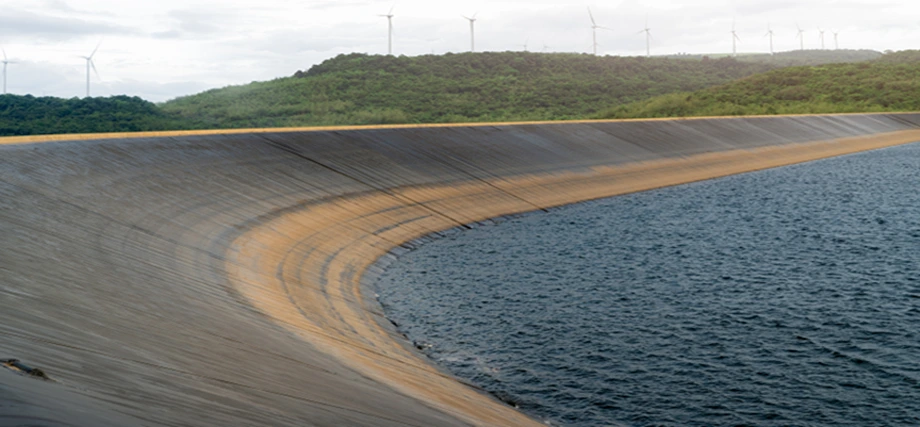 Fig 1: Water basins to build water stock water in farms.
Put together, these three strands mean that “business as usual” is over. Berry projects will increasingly be judged not only on their yields, but on:
- their legal and physical water security,
- their efficiency (kg and € per cubic metre), and
- their compatibility with basin-level ecological objectives.
Fruit CREWS: plant-based irrigation for a drier world
At the same time, research is moving fast. A good example is FruitCREWS, an EU COST Action (CA21142, 2022–2026) focused on Fruit tree Crop Responses to Water deficit and decision support Systems applications (COST, 2025a; FruitCREWS, 2025).
Although FruitCREWS is centred on fruit trees rather than berries, its core messages apply directly to the berry sector:
The plant must be the primary sensor – FruitCREWS brings together physiologists, modellers and technologists to identify practical indicators of plant water status: stem water potential, canopy temperature, turgor and growth dynamics, among others. The main idea is that irrigation should be driven by how the plant feels, not just by soil moisture or calendar rules (COST, 2025a; IRTA, 2023).
Models and DSS (Decision Support Systems) must digest that plant information – The network is reviewing irrigation models, from simple FAO-type soil water balances to more mechanistic crop models and testing how they can be embedded in decision support systems (DSS) that growers can actually use (Leibniz Institute, 2023). It is also benchmarking commercial tools and sensors in terms of robustness, usability and cost.
Deficit strategies need clear physiological thresholds – Climate change makes deficit irrigation unavoidable in many regions. FruitCREWS aims to define “safe” deficit windows and thresholds by phenological stage and crop, linking measurable signals (e.g. a given stem water potential value or pattern of trunk diameter shrinkage) to acceptable levels of stress and yield reduction (COST, 2025a; IRTA, 2023).
Science must talk to policy – Beyond technology, the Action is engaging with water authorities and ministries to translate these findings into guidelines and, ultimately, into incentive schemes and regulations for more precise irrigation (COST, 2025b).
This is exactly the framework berries need.

Fig 2: WET Sensor use for measuring water content (%), EC and temperature
What does this mean for berries?
Berries already have two advantages: almost universal drip irrigation and high compatibility with protected and substrate systems. These are ideal conditions for precision irrigation and fertigation.
The Fruit CREWS approach suggests three concrete shifts for berry regions in the Mediterranean:
From “drip installed” to “plant-driven irrigation” – Installing drip lines is not enough. Berry farms should gradually move towards irrigation regimes where soil or substrate measurements (tensiometers, capacitance probes, drainage) are combined with plant indicators such as canopy temperature or stem water potential; and irrigation scheduling is adjusted based on clearly defined “green/yellow/red” stress bands per phenological stage. Experiences in Spanish strawberry crops show that improved scheduling alone can save around 40% of irrigation water while maintaining yields – a huge gain in water productivity (Gavilán et al., 2021).
From hectares to cubic metres as the main unit of planning – For planners and investors, the key metric is no longer “how many hectares of berries” but “what margin per cubic metre of water”. Berries can score very well on this indicator compared to lower-value crops, especially when irrigation is optimised (Mekonnen & Hoekstra, 2011). But this requires robust on-farm water accounting and transparent reporting at irrigation-district level.
From single farms to basin-level strategies – Even the most efficient farm cannot fix an over-exploited aquifer alone. FruitCREWS reminds us that plant-based sensing and DSS only reach their full potential when they are integrated: vertically, from plant to plot to farm; and horizontally, across farms and up to the irrigation community or basin authority. Mediterranean berry belts – from Huelva and Algarve to Sicily and coastal Morocco – will need basin-level platforms that combine DSS outputs, satellite evapotranspiration, reservoir data and regulated allocations. This is the scale at which WFD objectives and Water Reuse projects are actually decided.
Towards a Mediterranean “Berry Water Protocol”
Pulling these threads together, a Mediterranean Berry Water Protocol could offer a practical roadmap for growers, buyers and regulators:
- Pre-conditions: no new berry projects without secure legal water rights and a written drought contingency plan. Politically it is a low making process, due to private and public institution lobbies.
 Fig 3. Lyfe cycle environmental impact of fruits in UK shows that berries remain well below the values reported for tropical fruits such as mangoes and avocados. For all berries, more than ~90 % of the water use occurs at the farm stage, with only minor contributions from post-harvest, transport and retail. Source: Frankowska, Jeswani, and Azapagic (2019).
- Minimum infrastructure: drip or micro-irrigation everywhere, with flow metering and pressure control, and connection (where feasible) to reclaimed water or desalination schemes. Already done in a medium scale implementation in Algarve region, Portugal.
- Monitoring: a standard toolbox combining water meters, soil/substrate sensors, drainage monitoring and plant indicators. Despite the obligatory rules from certification, growers make the investment, but is not high the percentage, that use, in a proper way. We still need quicker steps to increase users.
- Phenology-based strategies: clear rules for where deficit irrigation is acceptable (e.g. vegetative growth and post-harvest) and where it should be avoided (fruit set and early sizing), backed by experimental data. We need backup research to help growers to have frame work protocol.
- Traffic-light system: simple “green/yellow/red” categories that growers and authorities can use to coordinate responses in dry years. Still in the beginning despite the effort of irrigation water associations.
- KPIs: sector benchmarks in kg/m³ and €/m³, alongside more classic yield per hectare figures.
Fruit | Water volumes (L/kg) | Water footprint (L eq./kg) |
|---|---|---|
Strawberries | 59 | 34 |
Raspberries | 139 | 90 |
Other berries | 181 | 118 |
Fig 4. In Uk, within the berry group, strawberries show the lowest water requirement, with 59 L/kg of water used and a water footprint of 34 L eq./kg. Raspberries (139 L/kg; 90 L eq./kg) and the ‘other berries’ category (181 L/kg; 118 L eq./kg) require progressively more water. Source: Frankowska, Jeswani, and Azapagic (2019).
Conclusions
Crucially, such a protocol would align berry production with the trajectory lined by FruitCREWS and by EU water policy. It would also help inform better and rebuild trust of society by showing that berry supply chains are not just moving plastic recycling and varieties forward but also taking water use risks seriously.
In a Mediterranean that is getting warmer and drier, berries will survive – and deserve their place – but it needs become water-smart by design.
Jorge Duarte
Hortitool Consulting
References
- Claro, A. M., Fonseca, A., Fraga, H., & Santos, J. A. (2024). Future agricultural water availability in Mediterranean countries under climate change: A systematic review. Water, 16(17), 2484. https://doi.org/10.3390/w16172484
- COST Association. (2025a). Action CA21142 – FruitCREWS: Fruit tree Crop Responses to Water deficit and decision support Systems applications. https://www.cost.eu/actions/CA21142/
- COST Association. (2025b). Solutions to ensure the resilience of fruit trees with FruitCREWS (COST Action CA21142). https://www.cost.eu/fruitcrews-resilience-fruit-trees/
- European Commission. (2024). Water scarcity and droughts. Environment – Water.
- European Court of Auditors. (2021). Sustainable water use in EU agriculture: CAP funds must be more effective (Special Report 20/2021).
- European Parliament. (2019). Irrigation in EU agriculture (Briefing 644.216). European Parliamentary Research Service.
- European Union. (2020). Regulation (EU) 2020/741 of the European Parliament and of the Council of 25 May 2020 on minimum requirements for water reuse. Official Journal of the European Union, L177, 32–55.
- Frankowska, A., Jeswani, H. K., & Azapagic, A. (2019). Life cycle environmental impacts of fruits consumption in the UK. Journal of Environmental Management, 248, 109111. https://doi.org/10.1016/j.jenvman.2019.06.
- FruitCREWS. (2025). About the Action – FruitCREWS COST Action CA21142. https://cost-fruitcrews.eu/about/
- Gavilán, P., Ruiz, N., Miranda, L., Martínez-Ferri, E., Contreras, J. I., Baeza, R., & Lozano, D. (2021). Improvement of strawberry irrigation sustainability in southern Spain using FAO methodology. Water, 13(6), 833. https://doi.org/10.3390/w13060833
- IPCC. (2022). Climate Change 2022: Impacts, Adaptation, and Vulnerability (Cross-Chapter Paper 4: Mediterranean Region). In H.-O. Pörtner et al. (Eds.), Sixth Assessment Report of the Intergovernmental Panel on Climate Change.
- Italianberry. (2024). In Morocco, labour and water shortages may slow down the expansion of berries.
- Leibniz Institute for Agricultural Engineering and Bioeconomy. (2023). Fruit tree Crop Responses to Water deficit and decision support Systems applications (FruitCREWS).
- Maffettone, R., & Gawlik, B. M. (2022). Technical guidance – Water reuse risk management for agricultural irrigation schemes in Europe (JRC129596). Publications Office of the European Union.
- Mekonnen, M. M., & Hoekstra, A. Y. (2011). The green, blue and grey water footprint of crops and derived crop products. Hydrology and Earth System Sciences, 15(5), 1577–1600.
- Ofori-Boateng, C., et al. (2025). Treated wastewater reuse for crop irrigation: A comprehensive health risk assessment. Environmental Science: Advances.
- Pistocchi, A., et al. (2020). Reclaimed water to face agricultural water scarcity in the Mediterranean region. Environmental Science & Policy, 114, 41–52.
- WWF. (2023). Spanish plan to legalise water-guzzling strawberry farms threatens Doñana nature reserve.