









Summary of the presentation by Maurizio Cristoni (Fruit and Vegetable Buyer at CONAD Consorzio Nazionale) during the round table organized by Myfruit as part of the Berry Area 2026 event programme at Macfrut.
The evolution of berries in large-scale retail requires a delicate balance between assortment expansion and strict quality standard assurance.
Recent market dynamics show a category in strong acceleration, but still with significant room for development, considering a retail penetration rate of around 40% at national level.
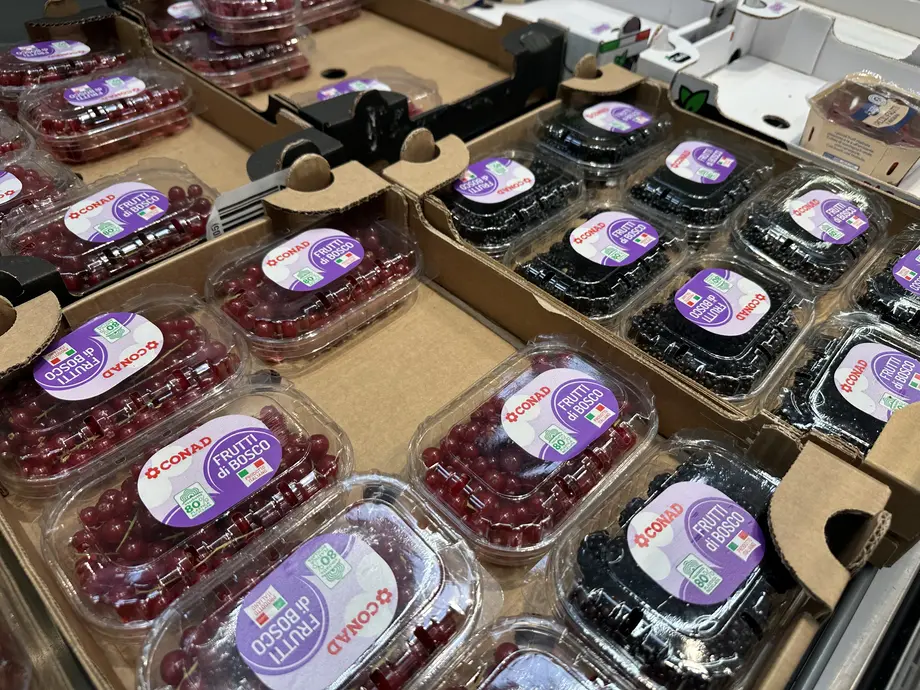
Analysing the strategies of a widespread network such as Conad makes it possible to decode some of the future directions of the sector: from the driving role of the Private Label to the need to rethink assortments, formats and in-store display.
On the agricultural side, sourcing logics reveal the structural challenges facing the Italian supply chain, which is being called upon to carry out a deep varietal renewal and achieve greater aggregation in order to support innovation costs.
Key takeaways
1. Conad sales are growing faster than the market.
Berry sales in Conad are recording growth rates above the market, with a positive gap of 10% in 2025. Growth is driven for more than 80% by the Private Label, following an assortment restyling that has brought 12 references to the shelf.
2. The strategy aims to reduce dependence on blueberries.
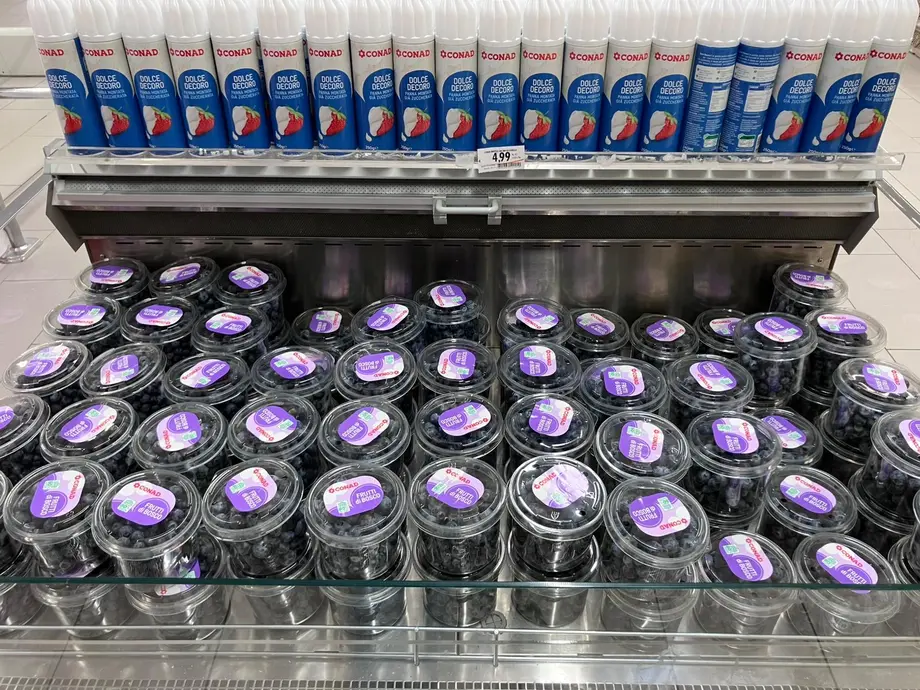
Conad shows a blueberry incidence around 10 points lower than the market. The choice aims to enhance mixed references and reduce exposure to competition based exclusively on price.
3. Purchasing is evolving from impulse to planned choice.
Consumer behaviour is shifting towards a more stable presence on the shopping list. The increase in the average receipt is also linked to demand for larger pack sizes, although in-store display is still often limited to refrigerated counters.
4. Destagionalization complicates standardization.
The overlap of different origins creates challenges for large-scale retail. To keep Private Label quality consistent, retailers tend to limit varieties and suppliers, giving up opportunities from the spot market.
5. Fragmented Italian production slows investment.
New plantings require high capital investment and technical expertise. The fragmentation of Italian production makes it harder to undertake the varietal renewal needed to meet new standards for taste, crunchiness and berry size.
What emerges from Maurizio Cristoni's presentation
The berry sector is going through a phase of strategic transition for retail.
The category is gradually moving from an impulse product to a consolidated presence on the shopping list, with a natural increase in checkout value linked to the purchase of larger pack sizes, especially in households with several consumers.
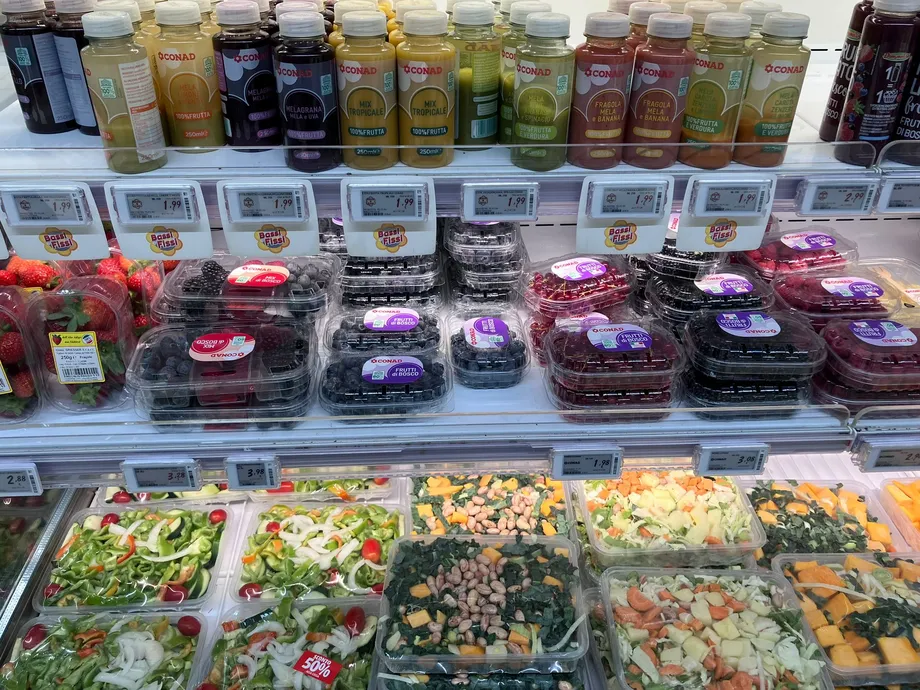
To intercept this evolving demand, large-scale retail is implementing deep structural moves in assortment, brand, supply planning and quality management.
In the case of Conad, the path is particularly significant: after an initial phase affected by the fragmentation of the network, the retailer has accelerated strongly, growing faster than the market and strengthening the role of the Private Label.
Private Label as a category management lever
In berries, the Private Label is not just a pricing tool, but a platform for quality control, recognizability and loyalty-building.
To work effectively, however, it requires planned supplies, constant standards and rigorous selection of varieties, origins and production partners.
Conad accelerates with the Private Label
Conad has progressively closed an initial gap linked to the complex structure of its distribution network, giving a strong acceleration to the development of berries.
Over the last five years, the retailer has grown five points faster than the market, reaching a 10% increase over the last year.
The main engine of this growth is the Private Label, which now drives more than 80% of category sales within the network.
The assortment restyling has brought 12 references to the shelf, allowing a more structured reading of the category and greater ability to intercept different consumption profiles.
Less dependence on blueberries, more assortment depth
Conad's strategy also stands out for a clear choice: reducing dependence on blueberries compared with the market average.
The incidence of blueberries in the Conad assortment is in fact around 10 points lower than the overall market. This approach makes it possible to give greater value to mixed references and product combinations.
The logic is clear: shifting consumer attention away from a single reference, often more exposed to price competition, towards a deeper, more distinctive and less commoditized offer.
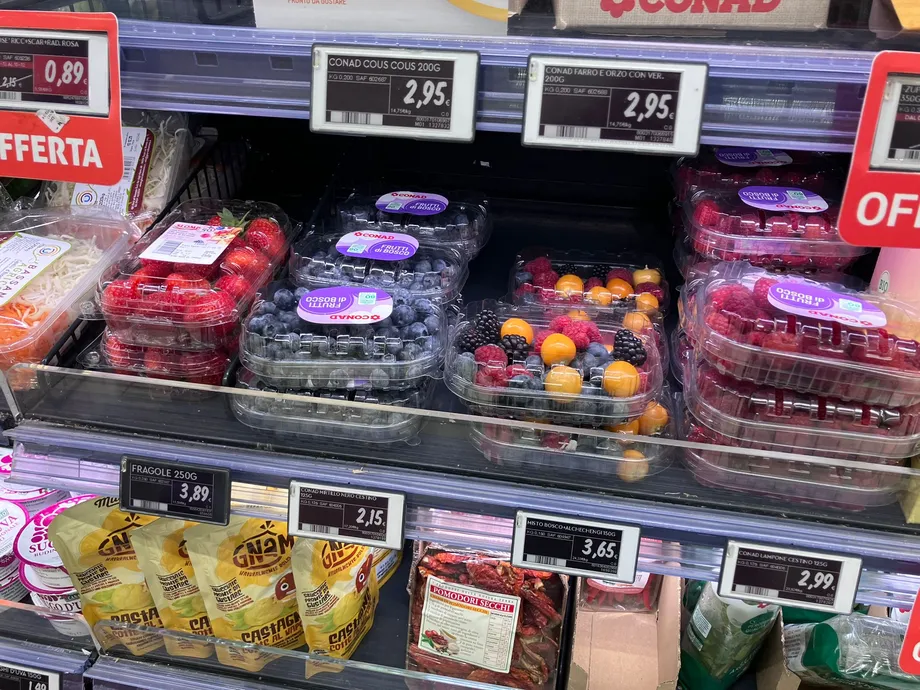
Mixed references also make it possible to work better on the perception of variety, service and consumption occasion, strengthening the role of the category as a high value-added proposition.
| Strategic factor | Effect in retail | Implication for the supply chain |
|---|---|---|
| Private Label | Increases control, recognizability and loyalty-building. | Requires constant quality standards and planned supplies. |
| Deep assortment | Reduces dependence on a single reference and expands consumption occasions. | Stimulates the development of mixes, formats and more advanced segmentations. |
| Larger pack sizes | Increase the average receipt and respond to more planned consumption. | Require greater quality continuity and adequate shelf-life. |
| Destagionalization | Ensures continuous availability but increases management complexity. | Requires rigorous selection of origins, suppliers and varieties. |
| Varietal renewal | Allows new standards of taste, berry size and crunchiness to be met. | Requires investment, aggregation and long-term planning. |
From impulse to planned shopping
Berry purchasing behaviour is evolving.
In the past, the category was often associated with an impulse purchase, linked to product visibility, seasonality or a specific occasion. Today, however, a more planned component is becoming established.
The demand for larger pack sizes signals that a growing share of consumers is including berries in the family food routine, not only as an accessory or occasional product.
This change generates an increase in the average receipt and pushes retailers to rethink formats, rotations and offer segmentation.
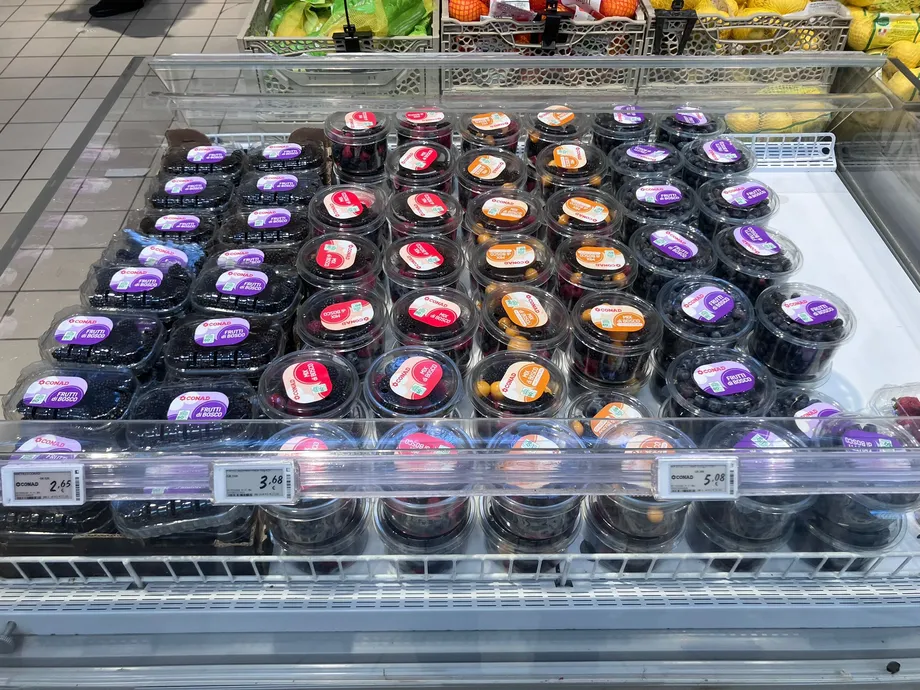
The limit of refrigerated-counter display
The commercial potential of the segment is still partly compressed by display layout.
Placement in refrigerated wall units is unavoidable for highly perishable products such as raspberries, where the cold chain is essential to preserve quality and shelf-life.
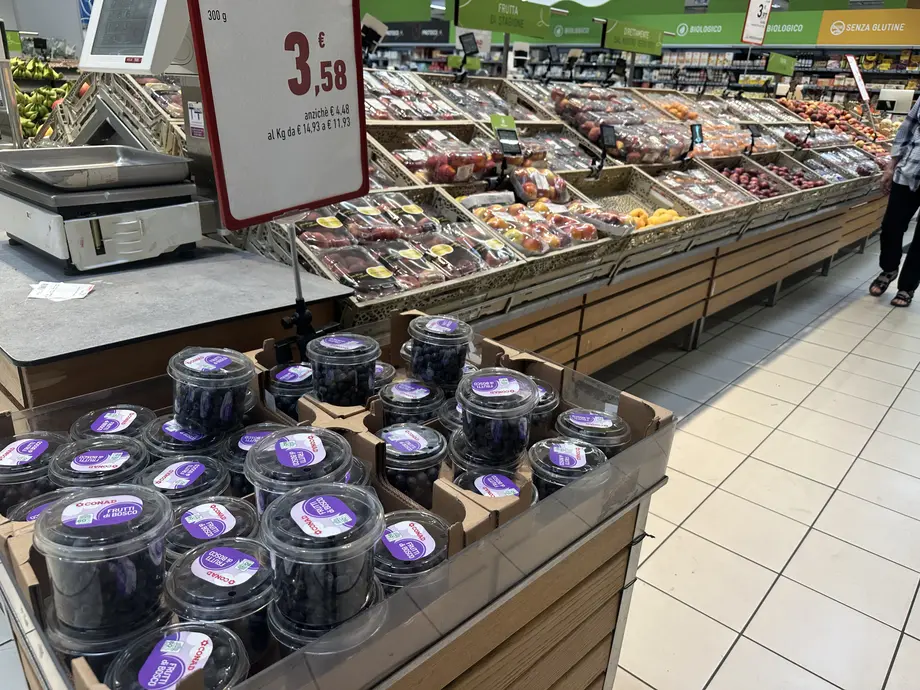
For more robust references, however, exclusive placement in refrigerated counters may be a limitation. Some products could benefit from more strategic positioning along the main traffic flows in the store, increasing visibility and impulse purchase interception.
Despite these constraints, sales indicate that consumers are searching for the product more and more proactively. This confirms the maturation of the category and the need to build display spaces more consistent with its value.
The new display challenge
If berries become a planned category, they cannot remain confined to a purely accessory logic.
Future growth will also depend on the ability to give the category visibility consistent with its economic weight and its role in modern grocery shopping.
Destagionalization and quality standards
Upstream, supply management faces the challenges of a now fully destagionalized market.
The overlap of different geographical origins makes it possible to guarantee continuity of supply, but can generate quality inconsistency, especially when varieties, production areas, agronomic practices and post-harvest conditions change.
For large-scale retail, this variability represents a direct risk, especially when the product is sold under Private Label. The Private Label promises consumers a recognizable and repeatable standard.
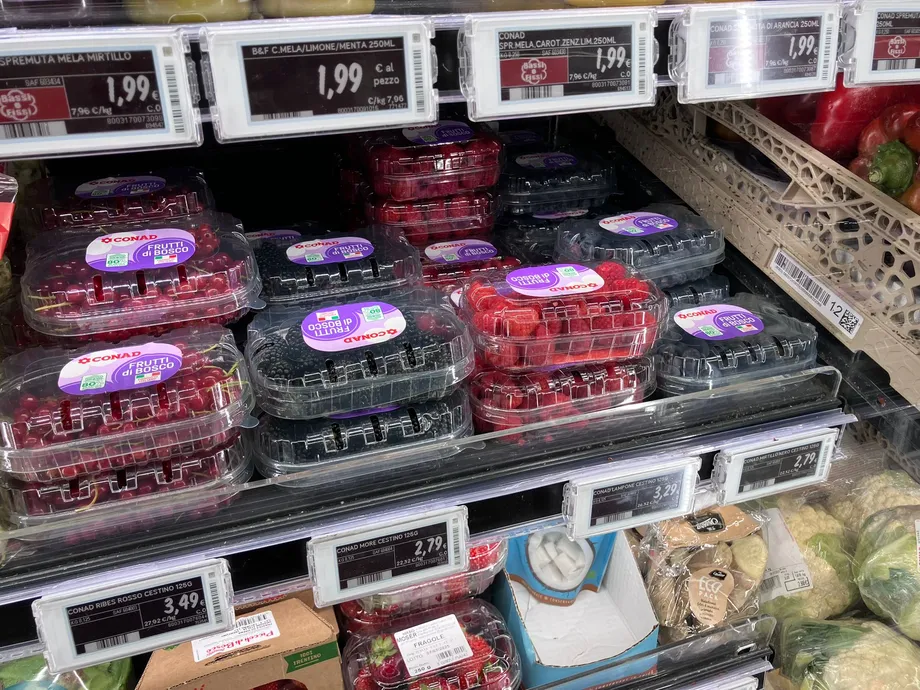
For this reason, retailers tend to narrow the supplier base and limit the number of admitted varieties, preferring a more secured and planned sourcing model over short-term opportunities from the spot market.
This choice may involve higher costs, but it protects brand reputation and consumer trust.
The Italian supply chain and the investment challenge
The quality requirements of large-scale retail flow back onto a historically fragmented Italian production base.
The berry category requires new capital-intensive plantings, investment in more performing varieties, technical infrastructure, cold-management systems and advanced agronomic expertise.
In this context, an individual and fragmented approach appears increasingly unsustainable. Without greater aggregation, it becomes difficult to support innovation costs and respond to the demands of modern distribution.
Historic production areas must therefore undertake urgent varietal renewal, in order to guarantee the standards of taste, crunchiness, size, texture and shelf-life that now determine success at shelf level.
In summary
The Conad case shows how berries are entering a new retail phase: more planned, more controlled and more closely linked to value creation through the Private Label.
Growth no longer depends only on increasing demand, but on the ability to organize deeper assortments, more stable quality standards and formats consistent with new purchasing behaviours.
For the Italian supply chain, the challenge is twofold: on the one hand, responding to the needs of increasingly selective large-scale retail; on the other, overcoming fragmentation and varietal delays in order not to lose competitiveness against better-organized foreign origins.