







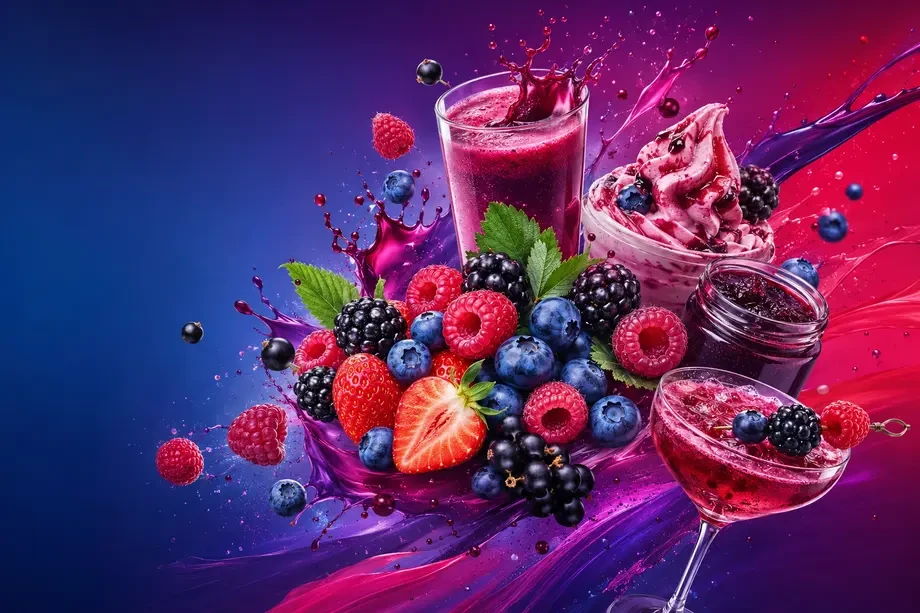
Berries are expanding their presence far beyond the fresh produce department. Plant-based ice creams, non-alcoholic beverages, functional fruit spreads and spirits show how blueberries, raspberries, blackberries and blackcurrants can become drivers of innovation, differentiation and value.
This is the focus of “Berries as ingredients”, the Italian Berry monitor dedicated to the use of berries in food and non-food products. Its aim is to examine how the supply chain can move beyond fresh produce without losing its connection with fresh produce.
In the July 2026 monitor, the undisputed star is the blueberry, while the most dynamic category is ice cream and frozen desserts. The emerging innovation code can be defined as fresh-produce brand extension: extending the authority built in the fresh produce sector into new premium processed products.
SanLucar brings its fresh produce expertise to the freezer aisle
The case most closely connected to the fresh produce supply chain is SanLucar Fruitissimo, a new range of plant-based ice creams initially developed for the German market and subsequently intended for international distribution.
The line includes six flavours, among them blueberry, raspberry and strawberry. According to SanLucar, depending on the variety, Fruitissimo contains up to 48.5% fruit, with the addition of visible fruit pieces. The recipes are plant-based, vegan and lactose-free, while the fruit varieties are also fat-free. No artificial flavours, colours or preservatives are used.
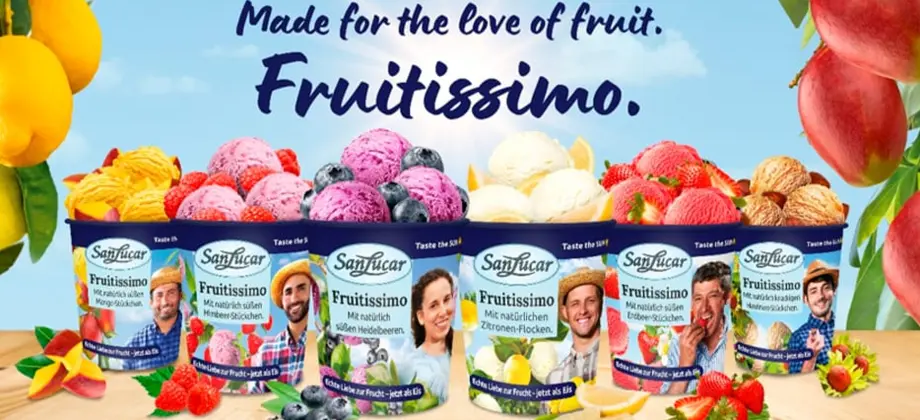
The most interesting aspect is not only the formulation, but also the strategy: a company known primarily for fresh fruit and vegetables is transferring its premium positioning and expertise in raw materials to the frozen category.
The declared 18-month shelf life also makes it possible to extend the product’s commercial cycle, create new consumption occasions and reduce dependence on the seasonality typical of fresh produce.
Berries become a source of natural colour and entertainment
A different approach characterises Twistpop Triple Berry, the frozen dessert launched in the United States by The Magnum Ice Cream Company and distributed by Costco.
The product combines three colourful swirls associated with raspberry, blueberry and blackcurrant, positioning itself as an alternative to the traditional American ice pop. The formula contains real fruit, natural flavours and colours obtained from ingredients including beetroot and spirulina.
The ingredient list, however, provides an important detail. The product is based on apple purée, followed by blackcurrant and raspberry purées, while blueberry purée is among the ingredients present at less than 2%.
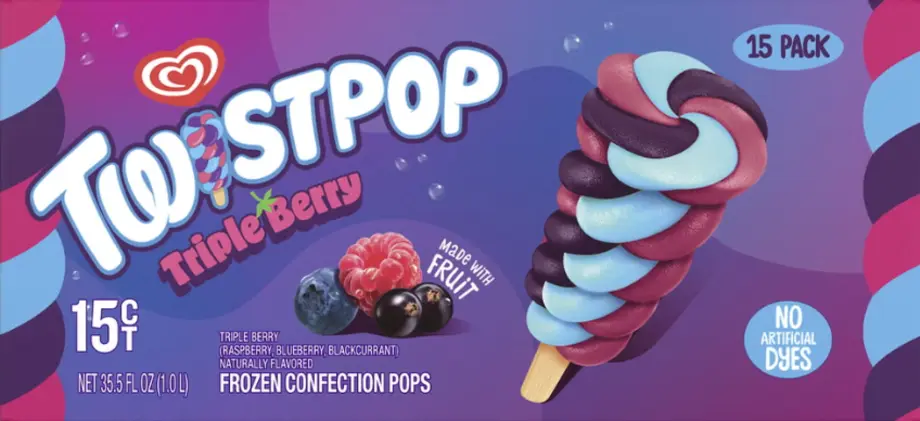
The product therefore shows how berries can shape identity, colour and sensory experience, even when their actual contribution to the formulation differs considerably from what the visual presentation might suggest.
For the supply chain, it represents an interesting outlet for purées and natural ingredients. For consumers, it is also a reminder that the statement “made with real fruit” does not necessarily mean that every fruit pictured is present in a substantial amount.
Blueberries move into celebratory occasions
With Sparkling Blueberry, Welch’s brings blueberries into the segment of sparkling non-alcoholic beverages designed for social and celebratory occasions.
Offered in the United States as a limited edition for summer 2026, the product contains blueberry juice from concentrate, preceded in the ingredient list by grape juice from concentrate. It contains no artificial sweeteners and uses colours from natural sources.
It is positioned as an accessible celebratory product for families, parties and consumers seeking a more sophisticated non-alcoholic alternative to conventional soft drinks.

Welch’s also strengthens its connection with agriculture by highlighting its cooperative structure, which is owned by American grower families. The commemorative packaging includes a QR code linking to their stories.
Blueberries thus become a bridge between naturalness, premiumisation, conviviality and agricultural heritage, creating a new use occasion for concentrated juices and natural colouring ingredients.
When blackberries sell nostalgia
Not every innovation is based on health and functionality. The seasonal return of Blue Bell Southern Blackberry Cobbler demonstrates the power of culinary tradition.
The ice cream recreates blackberry cobbler, a dessert typical of the Southern United States, combining a blackberry-flavoured base, blackberry sauce and pieces of pie crust.

The product is distributed for a limited time and uses blackberries to evoke summer, home cooking and family memories. Its seasonal availability reinforces the urgency to buy and strengthens consumers’ emotional connection with the product.
In this case, the berry generates value through nostalgia, sense of place and indulgence, without relying on health claims.
The dark side: when only the image of the fruit remains
Alongside products in which berries play a genuine role, a growing number of products use fruit names, colours and images without actually containing the fruit.
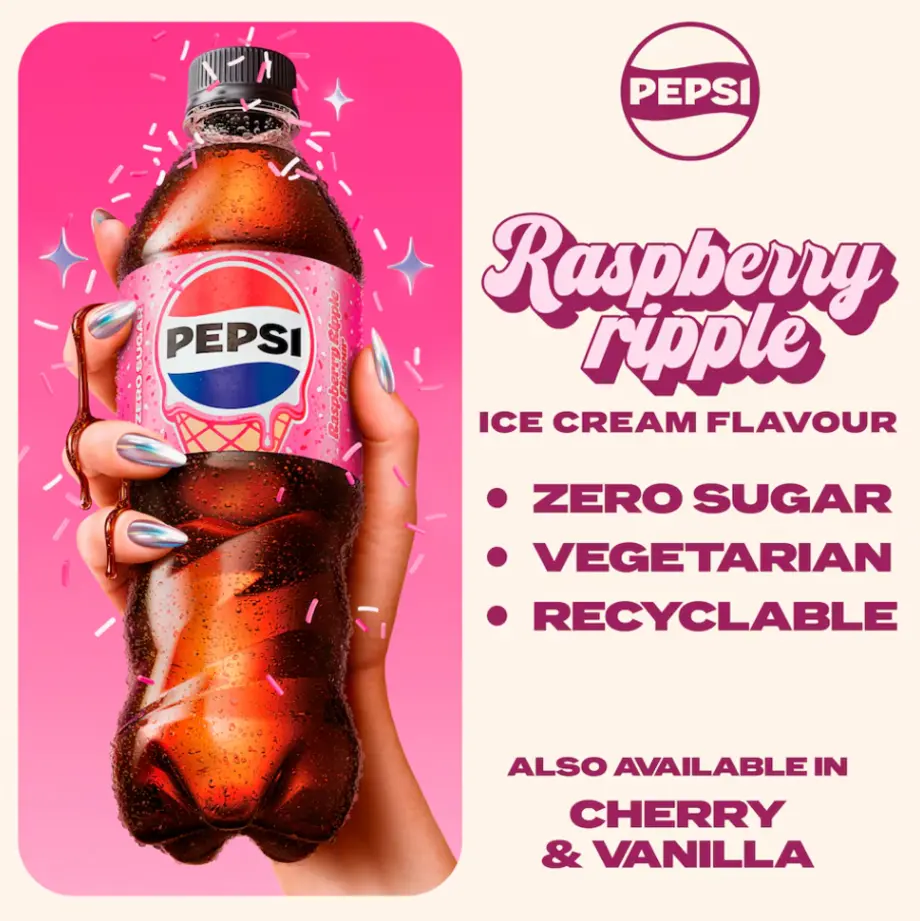
One verifiable example is Pepsi Raspberry Ripple Zero Sugar, launched in the United Kingdom and rolled out nationwide from 14 July 2026.
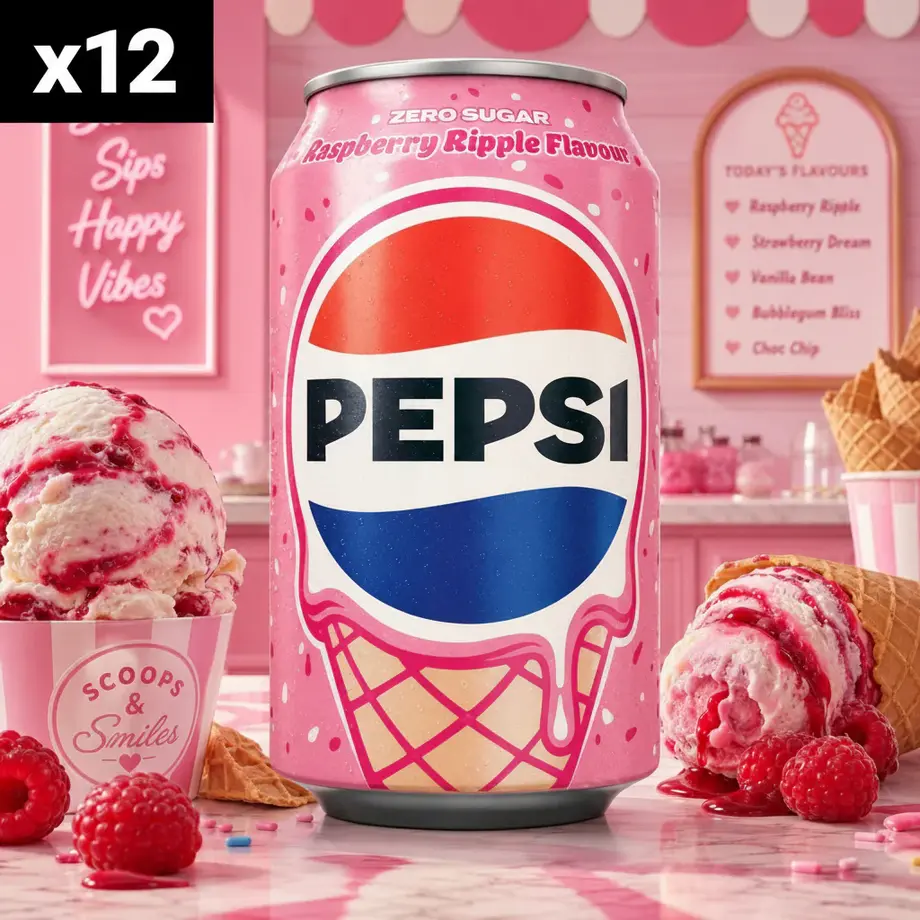
The positioning is built around raspberries: the name refers to traditional raspberry ripple ice cream, the packaging is pink and the promotional images show fresh raspberries alongside the product.
However, the ingredient list published by Tesco includes carbonated water, flavourings, caramel colour, acid, sweeteners, pectin, an acidity regulator and a preservative. It lists no raspberries, raspberry juice, purée or concentrate.
It is therefore a raspberry-flavoured cola, not a beverage containing the fruit. The distinction matters because the imagery transfers some of the positive values associated with berries — naturalness, freshness and quality — to the product, even when the agricultural raw material is absent.
Another product to watch is Mega Smarties Blue Raspberry, which arrived in the United States in July. The formulation normally published for Mega Smarties includes dextrose, citric acid, artificial flavours and colours, but no fruit. However, in the absence of a legible label for the new product, the absence of raspberries remains a probable assessment that has not yet been verified for this specific product.
The main innovation codes
The cases examined show that berries can activate several codes simultaneously:
natural colour, particularly important in beverages and desserts;
sensory value, present across all categories;
health and functionality, through fibre, protein, collagen and micronutrients;
premiumisation, when the fruit is connected to origin, tradition or production expertise;
clean label, through the elimination of artificial colours, flavours and preservatives;
beauty from within, as in foods enriched with collagen;
sense of place and local supply chains, particularly in artisanal products;
nostalgia, which transforms traditional recipes into high-value seasonal propositions.
At least in the cases analysed, the sustainability code is less evident. A plant-based recipe or the use of local raw materials is not, in itself, sufficient to demonstrate a lower environmental impact.
Blueberries as an innovation platform
The overall picture confirms that blueberries are becoming a genuine platform ingredient. They can deliver colour, familiarity, a healthy image, flavour and premium positioning, activating each of these values separately or combining them.
Frozen products currently represent the most direct bridge between fresh and processed produce: they preserve the fruit’s visual and sensory immediacy while extending shelf life, distribution and consumption occasions. At the same time, products such as Jam Packd show how berries can enter functional nutrition without losing their recognisable identity.
The decisive dividing line is between fruit-led products, which are genuinely built around fruit, and products that are simply fruit-flavoured, in which the berry is confined to the name, flavouring or imagery.
The challenge for the supply chain is to occupy the first of these spaces: moving beyond fresh produce by creating new uses and new value, while maintaining a credible connection with the raw material, growers and production regions.