








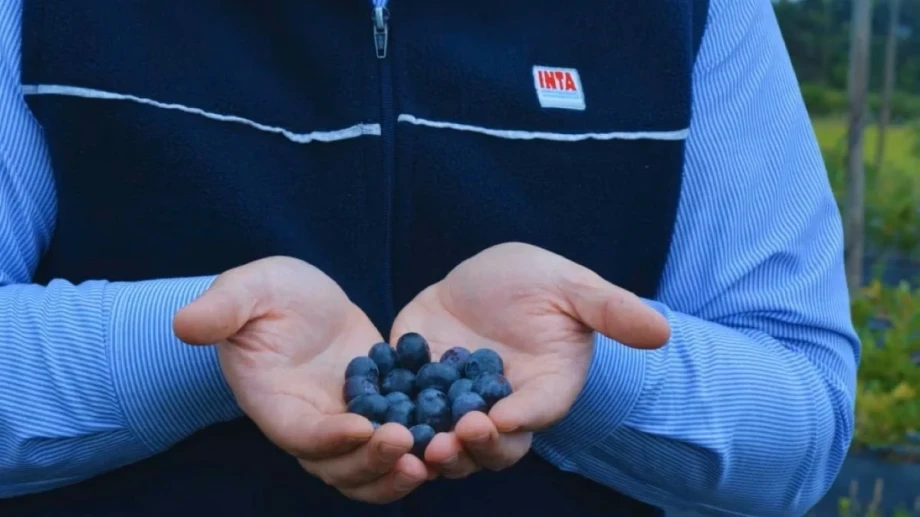
Argentina: in response to the needs expressed by producers in the region, the Instituto Nacional de Tecnología Agropecuaria (INTA) in Concordia is carrying out a strategic blueberry breeding program aimed at developing cultivars adapted to the environmental conditions of Northeastern Argentina (NEA). The initiative seeks to strengthen the sector’s competitiveness through the development of varieties that combine early production, fruit quality, and adequate post-harvest shelf life—key factors for consolidating the presence of regional blueberries in both domestic and international markets.
Blueberry production has become a significant activity for several regional economies, yet it faces challenges related to climate, soils, and the availability of varieties capable of effectively adapting to local conditions. In this context, the work promoted by INTA Concordia aims to provide concrete responses to these challenges by fostering the generation of locally developed knowledge and reducing reliance on genetic materials developed abroad.
“The objective is to generate varietal alternatives that adapt to the conditions of our region and meet the needs of producers and the market,” explained José Recalde, a research fellow at INTA Concordia. As highlighted, having adapted varieties not only improves productivity, but also helps optimize costs, increase profitability, and offer consumers a higher-quality product.
Ongoing research efforts
Breeding activities formally began in 2021, when the INTA Concordia Agricultural Experiment Station launched systematic crossing and selection programs for genetic materials. The primary objective was to expand the range of varieties available to local production systems, taking into account key factors such as yield, environmental adaptation, and response to the management practices adopted by NEA producers.
A significant milestone was reached in 2022 with the activation of a co-funded doctoral fellowship supported by the Consejo Nacional de Investigaciones Científicas y Técnicas (CONICET) and the Comisión Técnica Mixta de Salto Grande. This line of research focuses on the study of blueberry reproductive biology, a central aspect for understanding flowering, pollination, and fruit set processes. The knowledge generated improves crossing strategies and provides essential information for the development of new varieties.
Through joint work between researchers and producers, INTA aims to develop national blueberry varieties.
Genetic selection and field trials
To date, the team has successfully obtained progeny derived from locally planted parents, selected for their productive and commercial potential. These materials have been evaluated across different stages of the crop cycle, enabling progress toward more advanced phases of validation under real production conditions. “Within the framework of institutional projects and agreements with private companies, we have managed to establish approximately 2,800 plants in the field for evaluation,” Recalde specified.
One of the most relevant aspects of the project is its collaborative public–private approach. INTA is responsible for producing the progeny and seedlings, while partner companies provide their land for planting and monitoring. This collaboration model allows materials to be assessed under real production conditions and facilitates the transfer of results to the sector.
“The involvement of the private sector has been decisive, as producers actively participate in the maintenance and monitoring of the plants,” the researcher emphasized. This direct participation strengthens the link between research and production and ensures that developments are aligned with the real needs of the sector.
Toward national and sustainable varieties
At present, the technical team at INTA Concordia has begun the evaluation of the first established populations, with the aim of identifying individuals of particular interest in terms of yield, fruit quality, and adaptation to local conditions. In subsequent phases, efforts will focus on the selection and multiplication of the most promising genotypes, with more in-depth analyses of field performance, production timing, and fruit firmness—a key parameter for post-harvest preservation and commercialization.
“This work represents an important step toward the development of national blueberry varieties that combine quality, adaptation, and competitiveness,” Recalde concluded. The initiative aims not only to enhance regional production, but also to lay the foundations for a more innovative and sustainable fruit-growing sector, grounded in scientific knowledge and collaboration between the State and the productive sector.
Text and image source: masp-lmneuquen-com