







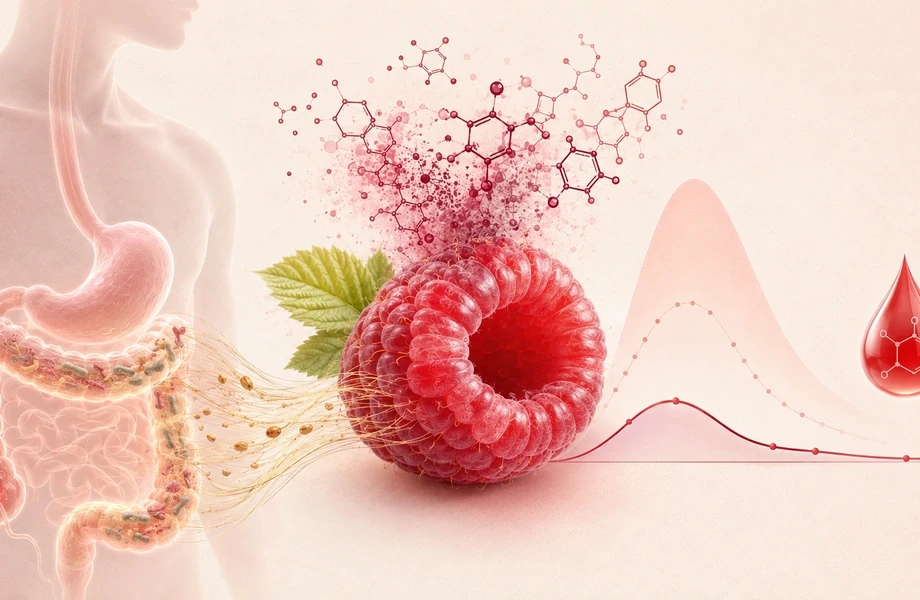
Among berries, the raspberry stands out for its particularly interesting nutritional profile. Its value comes from the combination of fiber, vitamin C, and bioactive compounds naturally present in the fruit.
Research is investigating the possible relationship between raspberry consumption, glycemic response, and metabolic health. The evidence is interesting, but it should be interpreted with balance: raspberries are not a therapeutic food, but rather a useful component of a varied diet.
Raspberries are among the fruits richest in fiber
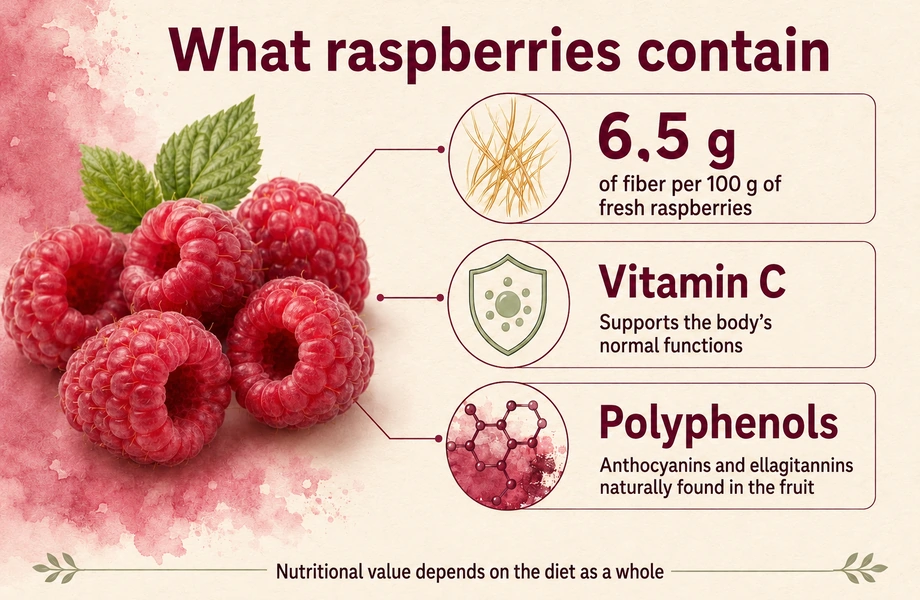
One hundred grams of fresh raspberries provide approximately 6.5 grams of fiber, a high amount compared with many other commonly consumed fruits.
Fiber contributes to bowel regularity, promotes a feeling of satiety, and partly reaches the colon, where it interacts with microorganisms in the gut microbiota.
A varied diet rich in plant-based foods may support the balance of this microbial community, which is increasingly being studied for its relationship with metabolism and general well-being.
A sudden increase in fiber intake may, however, cause bloating in more sensitive individuals. It is therefore preferable to introduce it into the diet gradually.
Vitamin C and polyphenols in berries
Raspberries provide vitamin C and several polyphenols, substances naturally produced by plants. These include anthocyanins, which are partly responsible for the fruit’s color, and ellagitannins.
Anthocyanins, which are characteristic of many berries, are being studied for their possible involvement in processes related to oxidative stress. Ellagitannins, meanwhile, can be converted by the gut microbiota into compounds known as urolithins.
This conversion varies from person to person, partly depending on the composition of the microbiota. The presence of polyphenols therefore makes raspberries nutritionally interesting, but it does not automatically justify attributing preventive or curative properties to them.
Raspberries and blood sugar: what research suggests
Raspberries contain natural sugars, but they also provide a significant amount of fiber. This combination distinguishes them from juices and products in which the fibrous component has been reduced or removed.
Some human studies have examined glucose and insulin responses after meals consumed with raspberries. The findings suggest a possible favorable effect on post-meal blood sugar levels, but the available studies are still limited.
Many observations regarding the potential benefits of anthocyanins and ellagitannins also come from experiments on cells or animals. Larger clinical studies are therefore needed to understand the true extent of these effects in everyday diets.
What emerges from daily raspberry consumption
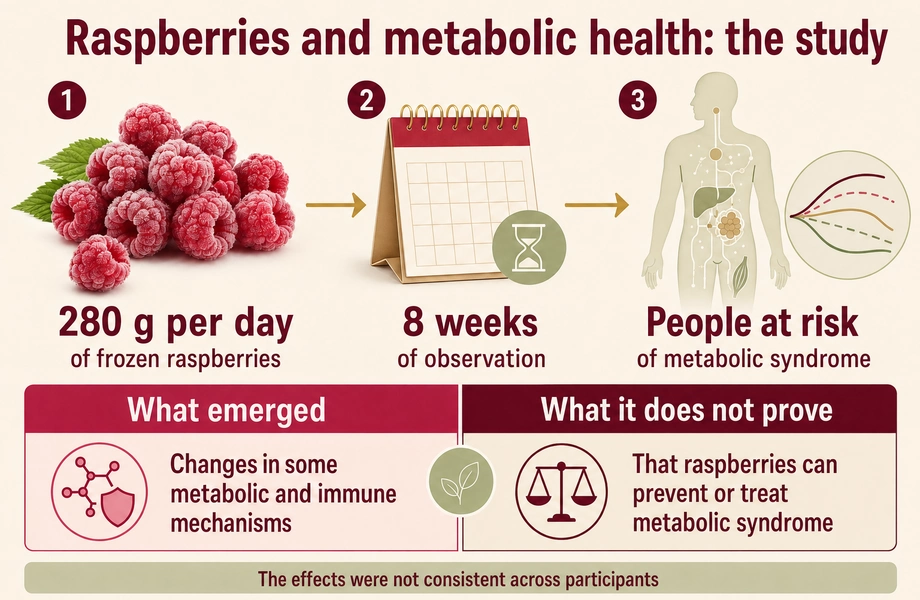
A randomized clinical trial published in 2020 examined the effects of daily raspberry consumption in people at risk of metabolic syndrome.
A group of participants consumed 280 grams of frozen raspberries per day for eight weeks. The researchers observed changes in certain metabolic and immune mechanisms, but the effects on the main clinical indicators were not consistent.
The response varied among participants, confirming that baseline conditions, diet, and microbiota characteristics can influence the effects of the same food.
The study therefore does not demonstrate that raspberries can prevent or treat metabolic syndrome, but it provides findings that deserve further investigation.
Fresh, frozen, and processed products are not equivalent
Fresh fruit and frozen fruit retain the pulp, seeds, and much of their fiber. In juices and filtered products, however, part of the fibrous component may be removed.
Jams and raspberry-based preparations are not automatically equivalent to whole fruit either. The actual amount of fruit and the possible presence of added sugars create important differences in the final composition.
Freezing is a useful option for extending the availability of berries throughout the year while preserving a significant proportion of their nutritional characteristics.
Berries and well-being: the importance of the overall diet
Raspberries can contribute to the intake of fiber, vitamin C, and polyphenols, but their benefits must be considered within the context of the overall diet. No single food can compensate for a diet that lacks variety or is low in plant-based foods.
Clinical evidence is still evolving and does not support claims of therapeutic properties. It does, however, indicate that berries can have a meaningful place in a modern dietary pattern based on variety, nutrient density, and minimally processed plant-based foods, supporting overall health.
Sources: Burton-Freeman B.M., Sandhu A.K., Edirisinghe I., “Red Raspberries and Their Bioactive Polyphenols: Cardiometabolic and Neuronal Health Links”, Advances in Nutrition, 2016. - Franck M. et al., “Effects of Daily Raspberry Consumption on Immune-Metabolic Health in Subjects at Risk of Metabolic Syndrome: A Randomized Controlled Trial”, Nutrients, 2020.
🫐 Well-being & Health with Berries 🍓This article is part of the editorial series Wellness & Health with Berries, which brings scientific research closer to everyday life, promoting berries as allies for well-being. The series offers clear, up-to-date, and evidence-based content designed to inform consumers and support all operators in the berry supply chain. |