







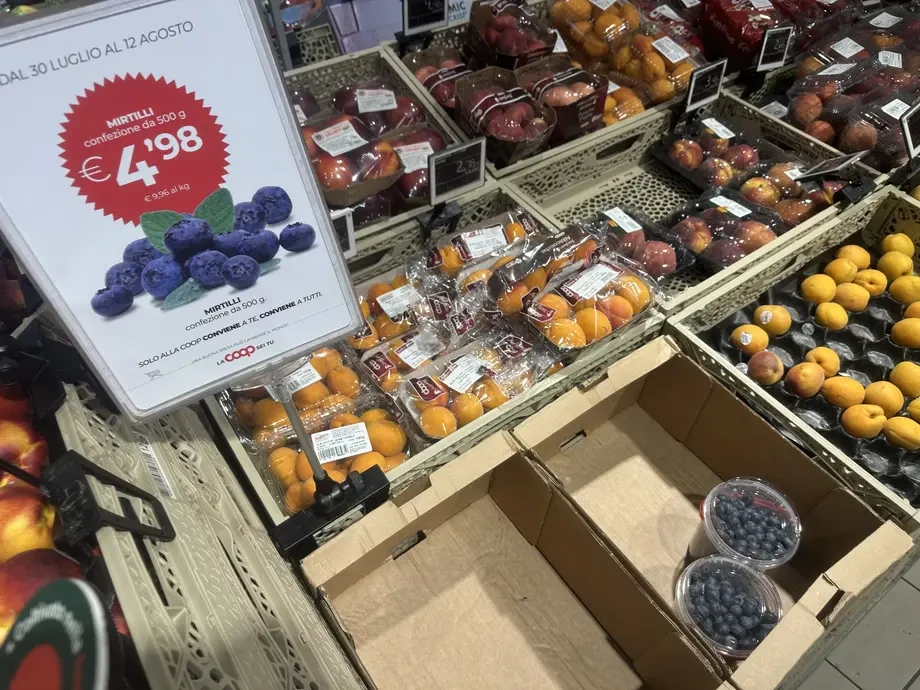
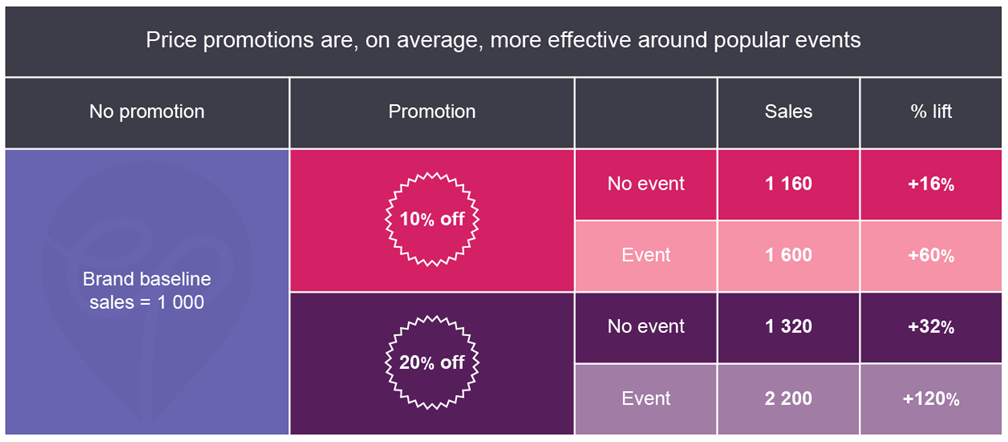
During the most widely followed events, a 10% price reduction can increase brand volumes by 60%. However, frequent and deep promotions risk changing price perceptions and weakening the brand.
Promotions can produce very different results depending on when they are run. In particular, their effectiveness increases significantly during major events that attract widespread attention and temporarily change purchasing and consumption habits.
This emerges from an analysis published by Europanel in August 2026, which brings together the findings of two studies examining, respectively, the effectiveness of promotions during popular events and the consequences of temporarily suspending promotional offers.
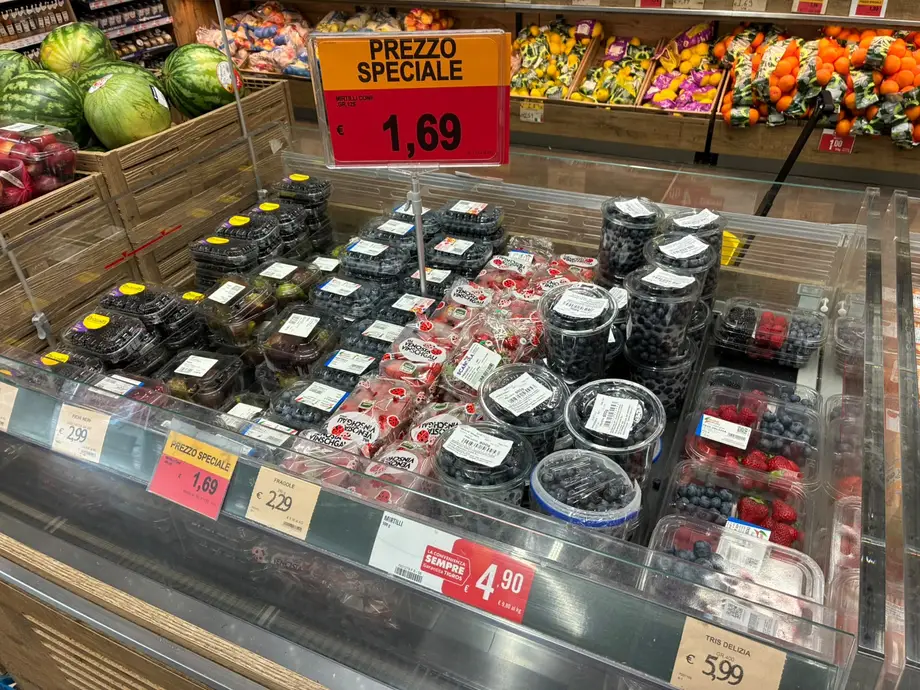
The conclusions also provide interesting insights for the berry sector, where promotions are among the most widely used tools for stimulating purchases, supporting product turnover and targeting specific consumption occasions.
During a major event, the same discount generates more sales
A study conducted in the Dutch market compared consumer responses to promotions during periods marked by widely followed events with those recorded during ordinary weeks.
The difference is significant: a 10% price reduction generates an average 60% increase in brand volumes during events, compared with a 16% increase during periods without events.
The same price reduction can therefore generate a response almost four times greater when offered in a context capable of engaging large sections of the population.
According to the study, around major events brands tend primarily to increase the frequency of their promotions, without necessarily making the discounts deeper. The advantage therefore appears to derive not only from larger discounts, but also from the ability to schedule an offer when consumers are more inclined to make a purchase.
Another finding concerns promotional clutter. The simultaneous presence of numerous offers does not appear to significantly reduce the effectiveness of individual promotions. This distinguishes promotions from traditional advertising, whose ability to attract attention can decline when many advertisers intensify their communication at the same time.
Opportunities for berries
The results do not specifically concern berries and should therefore be applied to the sector with caution. Nevertheless, they indicate a useful direction for growers, distributors and retailers: timing can be just as important as the size of the discount.
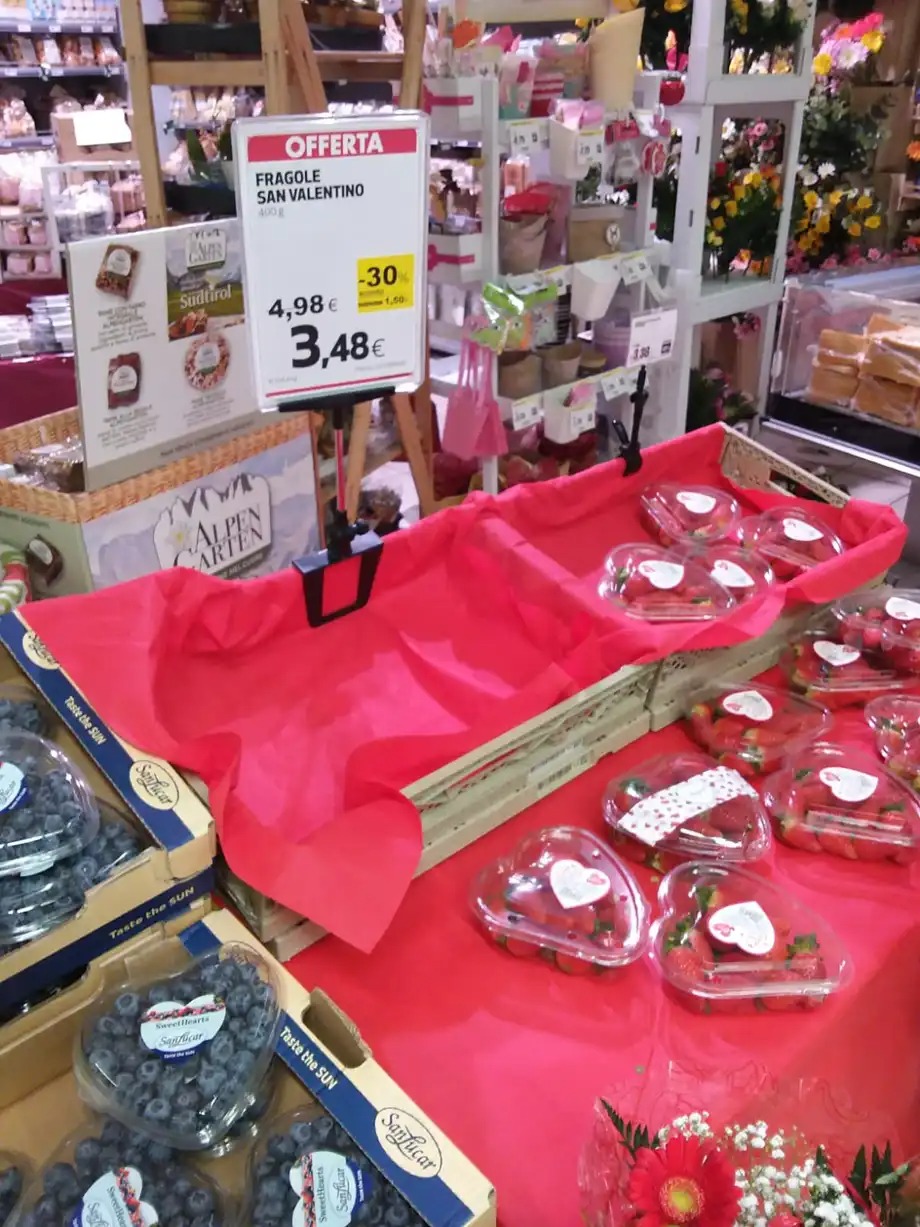
Sporting events, holidays and collective occasions can encourage consumption associated with sharing, snacking and the preparation of desserts, aperitifs or breakfasts. In these contexts, strawberries, blueberries, raspberries and blackberries can be promoted not only through price reductions, but also through:
formats suitable for sharing;
larger packs;
mixed assortments;
secondary displays;
pairings with yoghurt, ice cream, beverages and bakery products;
communication linked to the specific consumption occasion.
The most interesting indication is that particularly deep discounts may not always be necessary. A more moderate promotion, if correctly scheduled and supported by good visibility, could produce better results than a more aggressive offer run during an ordinary period.
What would happen without promotions?
The second analysis cited by Europanel examines an exceptional situation. During the Covid-19 crisis, promotions in Belgium were suspended for several weeks. This measure gave researchers an opportunity to observe a kind of “promotion-free world” and determine which brands were most disadvantaged or benefited the most.
The experiment highlights the dilemma faced by companies. Promotions can reduce the reference price perceived by consumers, weaken brand equity, encourage stockpiling and complicate inventory management. However, an individual company that decided to stop running promotions while all its competitors continued to use them would risk a sharp decline in sales.
Brands accustomed to deep discounts suffer more
During the promotion-free period, brands that had previously offered the deepest discounts experienced the greatest difficulties.
The researchers suggest that some consumers had become accustomed to promotional prices and had started to regard them as the product’s normal value. Consequently, a return to the full price was perceived as excessively expensive.
This is one of the main risks of an overly aggressive promotional strategy: the discount is no longer perceived as an occasional opportunity, but becomes the expected price. Consumers may therefore postpone their purchase until the next offer or choose an alternative product.
For the berry sector, this risk can be particularly significant when the same product is offered very frequently at heavily discounted prices. Promotions can support volumes in the short term, but they can also make it more difficult to justify the regular price on the basis of quality, origin, variety, format or brand characteristics.
Large assortments and private labels among the winners
The absence of promotions benefited brands with a larger assortment. When offers were no longer available as signals to guide consumer choice, a greater physical presence on the shelf provided more visibility and increased the likelihood of purchase.
Private labels also benefited from the suspension. Under normal conditions, promotions offered by national brands allow consumers to purchase branded products at prices closer to those of retailer-owned products. When this saving is removed, part of the demand tends to return to private labels.
In the berry sector, this dynamic may take different forms because the distinction between brands, private labels and unbranded products is not always as clear as it is in manufactured product categories. Nevertheless, visibility continues to play a strategic role: the number of product lines, shelf space, pack recognition and continuity of presence can influence consumer choice even in the absence of a discount.
Promotions should create an occasion, not replace value
The two studies lead to a common conclusion. Promotions remain an effective tool and can become particularly powerful when they coincide with events capable of creating new consumption occasions. However, their systematic and overly aggressive use can progressively weaken both the regular price and the strength of the brand.
For companies in the berry sector, the challenge is therefore to move from predominantly tactical discount management towards more selective planning linked to the calendar, formats, product availability and consumer behaviour.
The objective should not be merely to sell more packs during the promotional week, but to provide reasons for purchasing that remain valid even when the product returns to its full price: recognisable quality, flavour, freshness, origin, service, varietal innovation and brand reliability.
Italian Berry – All rights reserved