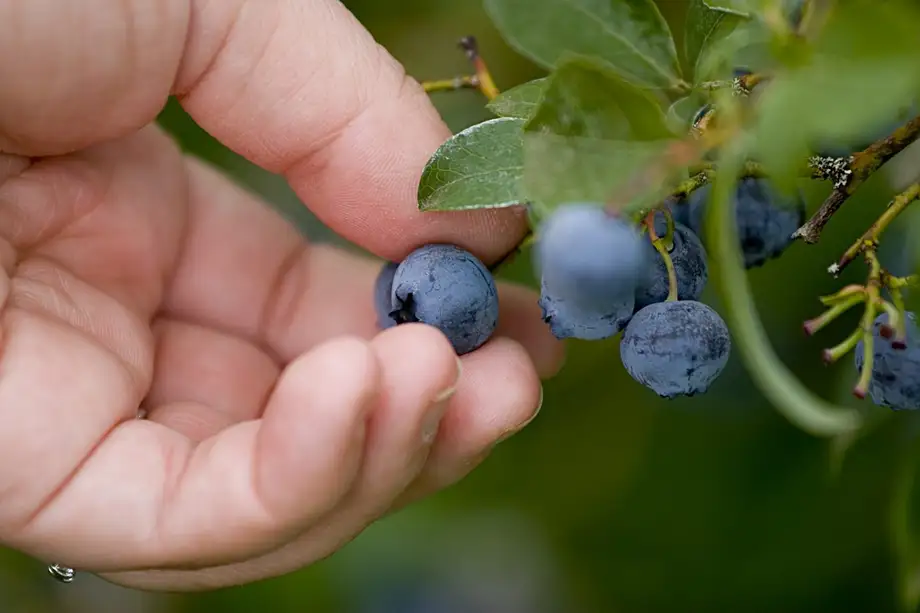









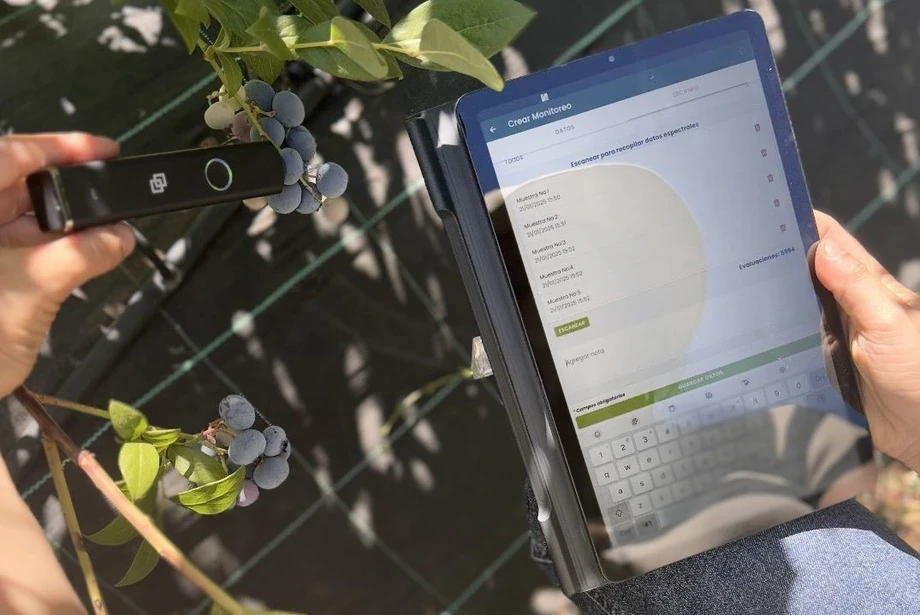
A new digital tool developed by INIA Quilamapu integrates sensors, fruit physiology and data science to support faster decisions on harvesting, storage and commercial destination of blueberries.
The Chilean blueberry sector continues to face an increasingly pressing challenge: guaranteeing fresh, uniform and traceable fruit capable of maintaining quality and condition even after long transport times. In this context, Chile’s Instituto de Investigaciones Agropecuarias, through INIA Quilamapu, has developed an innovative Digital Report designed to optimize the quality management of blueberries intended for export.
The new platform was created in Chillán, within INIA’s Data Science Unit and Digital Agriculture Program, with the aim of transforming complex technical data into operational information for growers, exporters and agronomic teams. The objective is clear: to anticipate fruit quality, maturity and postharvest behavior, improving decision-making capacity throughout the entire supply chain.
From laboratory data to operational decisions
The solution is led by Paula Vargas, an agronomist and holder of a master’s degree in Data Science, member of INIA’s Data Science Unit and Digital Agriculture Program. The system was developed within the digital laboratory OST Lab Agro, a platform designed to integrate sensors, physiological analyses, predictive models and data science applied to fruit growing.
Unlike traditional reports, which are often based on individual parameters that are difficult to interpret in an integrated way, the new Digital Report aggregates multiple physiological and structural variables of the fruit. This allows for a more complete reading of the status of a lot or production block, translating laboratory analyses into clear, visual and immediately usable indicators.
According to Paula Vargas, the goal is to “transform large volumes of technical data into fast and useful decisions,” supporting strategies for harvesting, storage and commercial destination of the fruit.
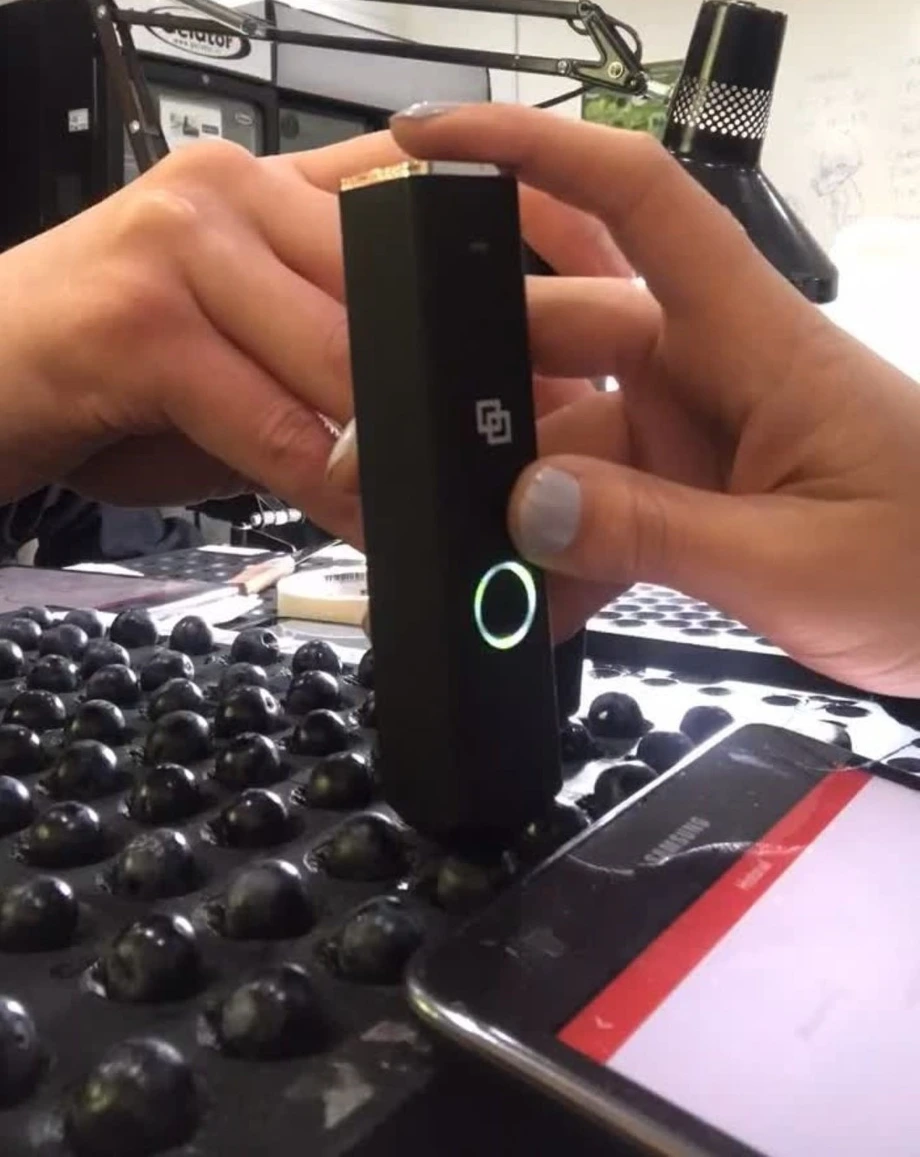
Commercial quality: Brix, acidity, color and postharvest potential
The Digital Report analyzes some of the most relevant variables for the commercial quality of blueberries, including Brix degrees, titratable acidity, anthocyanins, calcium and dry matter. These parameters are directly linked to sweetness, flavor balance, color, firmness and the fruit’s ability to maintain quality after harvest.
One of the most interesting aspects of the tool is the possibility of assessing not only the average values of a lot, but also the uniformity of ripening among fruits. For export markets, this element is crucial, because consistent product quality is one of the most important requirements for international distribution.
The balance between sugars and organic acids makes it possible to better estimate the fruit’s flavor profile, while the analysis of anthocyanins helps assess the degree of ripeness and the development of the blueberry’s characteristic color. Together, these indicators provide a stronger basis for deciding harvest timing, lot management and commercial destination.
Anticipating postharvest behavior
One of the main advances of the system concerns its ability to anticipate the postharvest condition of blueberries. This aspect is particularly important for Chile, where fruit intended for export may be subject to storage and transport periods of more than 40 days.
The Digital Report integrates physiological, structural and risk variables into an assessment model that makes it possible to interpret the real condition of the fruit and estimate its behavior during the postharvest phase. In practical terms, this makes it possible to anticipate quality differences between lots, identify potential critical issues and make more precise decisions on harvesting, storage, segmentation and destination markets.
For a strongly export-oriented supply chain such as Chile’s, the ability to predict product shelf life is a strategic factor. It is not only a matter of measuring quality at harvest, but of estimating how that quality may evolve along the logistics chain.
Visual reports for faster interpretation
Another central element of the project is the simplification of data interpretation. The Digital Report organizes information into tables, charts and integrated indexes, making it easier to identify differences in ripening, stability and postharvest potential within the same lot or production block.
This visual approach responds to a concrete need within the supply chain: making technical data accessible even in operational contexts, where decisions must be made quickly and often under strong commercial pressure.
The transformation of data into readable indicators allows the various players in the supply chain — growers, exporters, field technicians and quality managers — to work from a shared information base, reducing uncertainty and improving planning.
Digital agriculture to strengthen Chilean competitiveness
The Digital Report is part of the broader work of OST Lab Agro, INIA’s technology platform focused on the development of digital agriculture tools based on optical sensors, integrated analyses and predictive models applied to fruit growing.
For Chile, one of the main blueberry exporters in the Southern Hemisphere, tools of this kind may represent an important step toward more precise quality management. Competitiveness no longer depends only on volumes, production calendar or market access, but also on the ability to guarantee consistent product performance throughout the entire supply chain.
In an increasingly selective global market, the integration of physiological analysis, sensor technology and data science can become a decisive ally in strengthening the positioning of Chilean blueberries and supporting faster, more objective and value-oriented decisions.
Source: INIA