









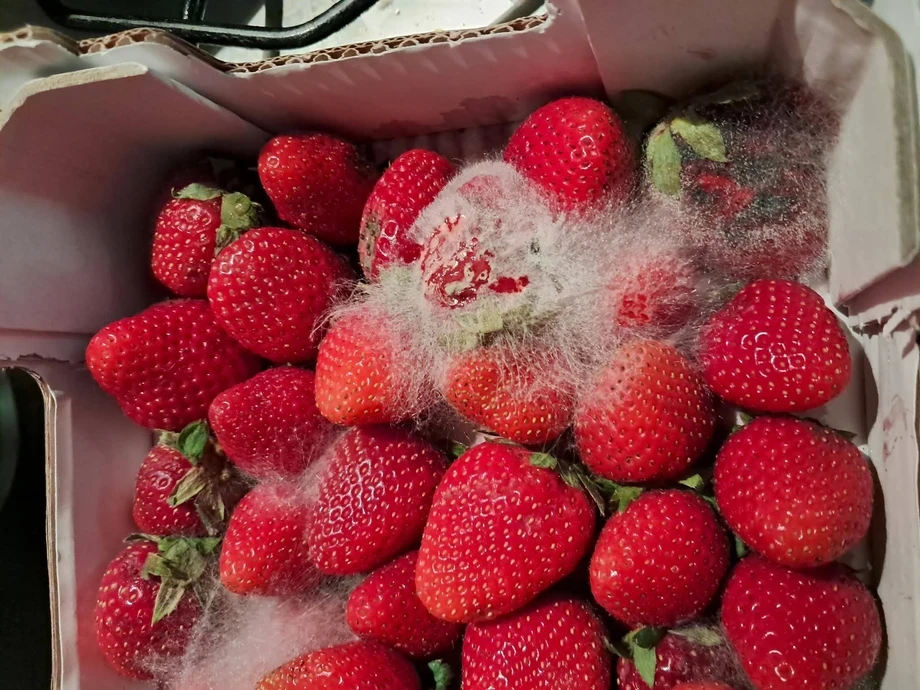
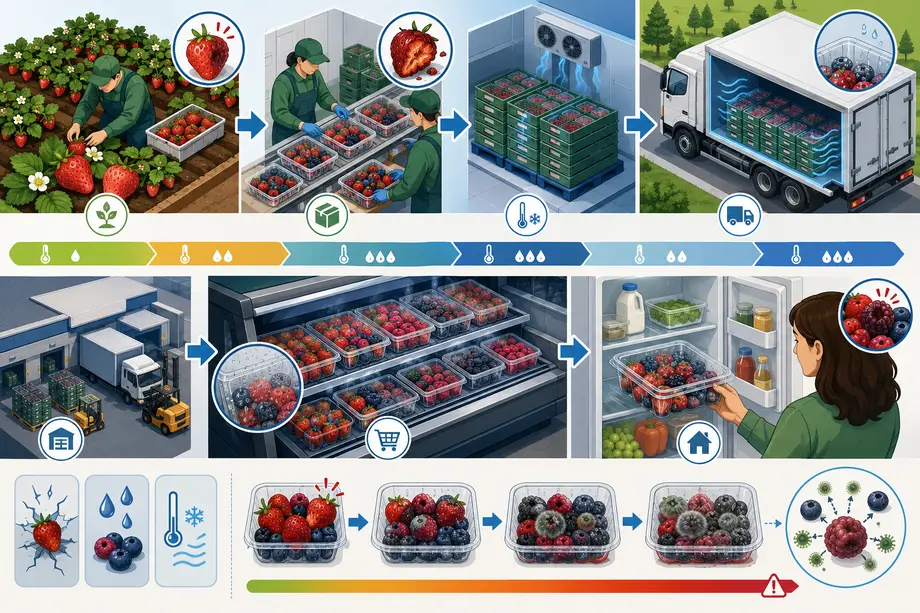
A pack of strawberries bought the day before and found moldy the following day. From a single Facebook post, a broad discussion emerged, highlighting a central issue for the entire berry supply chain: perceived quality does not depend only on the product, but on the entire journey that takes it from the field to the consumer’s refrigerator.
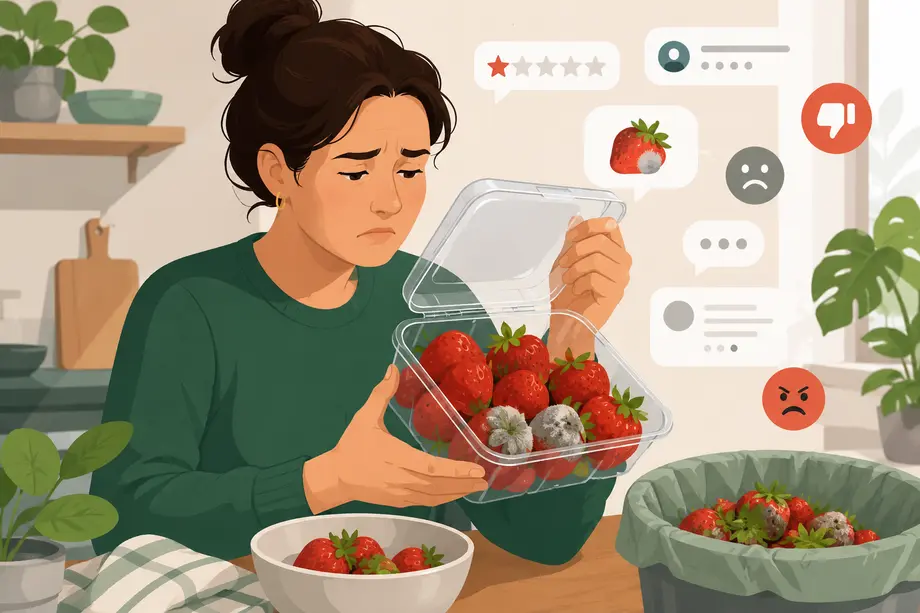
The reviews and comments collected around the case show a recurring reaction: when strawberries, blueberries, raspberries or blackberries deteriorate quickly, consumers do not see the episode as a simple inconvenience, but as an economic loss, a disappointment and, often, as a judgment on the credibility of the point of sale.
The issue is particularly sensitive because it concerns high-value products, often purchased as healthy, fresh and gratifying foods. Precisely for this reason, when quality does not meet expectations, frustration is higher than with other fruit and vegetable categories.
Strawberries as a “sentinel” product
The case starts with strawberries, but many consumer observations are also extended to berries. The comments mention blueberries, blackberries and raspberries, often described as delicate, expensive products that are highly perishable.
Strawberries therefore become a “sentinel” product: when something goes wrong in freshness management, the problem becomes visible very quickly. One bruised fruit, excess moisture in the pack, condensation caused by temperature changes or a few extra days in the distribution chain are enough to generate mold and rot.
Many users clearly recognize this: strawberries are delicate, they must be checked immediately, stored in the refrigerator and consumed quickly. But this does not soften the negative perception when the product purchased already appears compromised the day after purchase.
The critical point: the supermarket’s implicit promise
Large-scale retail sells convenience, assortment, service and safety. But for very fresh products, especially berries, consumers also attribute an implicit promise to the supermarket: what is displayed on the shelf should still be in suitable condition to be consumed at least in the hours following purchase.
Three very clear expectations emerge from the comments:
- product checks on the shelf, with timely removal of packs that are no longer suitable;
- clarity on the packing date or lot number, because consumers want to understand how much time has already passed;
- refund or replacement, when deterioration is evident and documented.
The issue is not only technical, but relational. Some commenters suggest returning the product with the receipt, others criticize the fact that deteriorated fruit remains available for sale, while others say they have stopped buying fruit and vegetables through that channel.
For retail, this means that the shelf-life problem does not end in the fruit and vegetable department: it becomes a matter of trust.
Heat, humidity and the cold chain: the factors mentioned by consumers
A significant part of the reactions does not automatically blame the point of sale. Many users mention real technical factors: heat, time spent outside the refrigerator, temperature fluctuations, condensation in the pack, the fragility of the fruit and the possibility that a single bruised strawberry can quickly contaminate the others.
This is an interesting element for the supply chain: consumers are not always uninformed. On the contrary, they often know some rules for product handling. They know that strawberries should not be left wet, that they should not be washed too early, that it is useful to check them one by one, remove damaged fruits, use absorbent paper and consume them quickly.
However, this awareness does not eliminate the demand for quality. Consumers may understand that a product is delicate, but they do not easily accept paying full price for a pack they perceive as already at the end of its commercial life.
The packing date as a lever of trust
One of the most recurring topics in the comments concerns the packing date or the lot reference. Several users recommend reading the label before purchase and choosing the most recent packs.
This aspect is very relevant for berries. When the date is legible and understandable, it becomes a tool for transparency. But it can also become a boomerang if consumers discover that the product was purchased several days after packing and already shows signs of deterioration.
For the supply chain, the issue is clear: the more perishable the product, the more freshness communication must be simple, legible and consistent with the real experience. Indicating a lot number is not enough. Consumers need to be able to interpret it easily, and the point of sale must manage rotation rigorously.
Supermarket, greengrocer or direct producer?
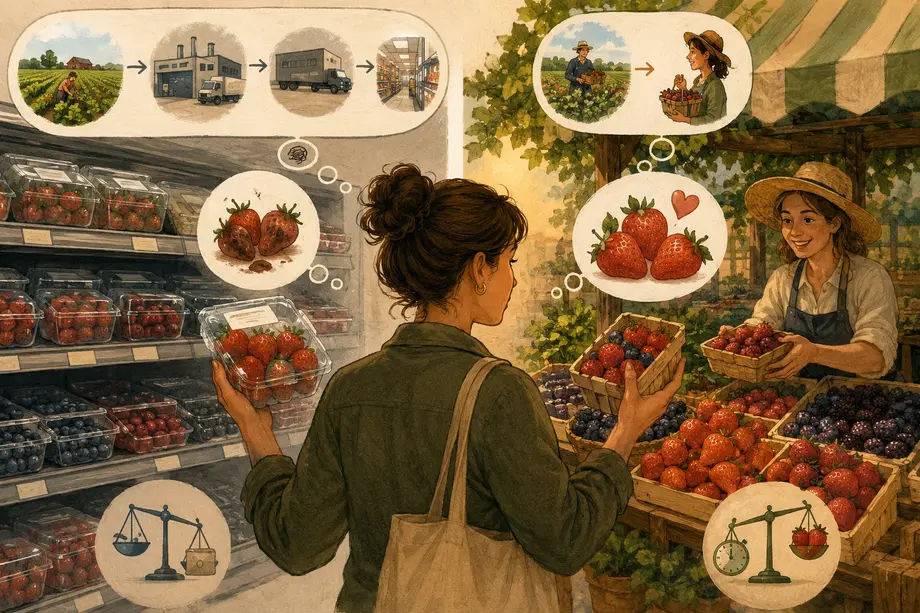
Another strong theme emerging from the discussion is the comparison between large-scale retail, specialized stores, markets and direct purchases from producers. Some consumers say they prefer the greengrocer because they believe the product is selected and checked more frequently. Others mention buying from the producer as a guarantee of freshness, durability and taste.
This perception does not always correspond to an absolute rule: even directly purchased products can deteriorate quickly if they are very ripe or badly handled. However, the important point is the narrative. The short supply chain is perceived as closer, more controllable and more authentic. Large-scale retail, by contrast, is often associated with many steps, longer times and less control over the individual pack.
For producers and retailers, this is a strategic point. Freshness is not only a physical characteristic: it is also a story. And if the dominant story becomes “supermarket fruit does not last long,” rebuilding trust requires visible actions.
When quality becomes communication
Facebook reviews show that consumers do not only evaluate taste, price and appearance at the time of purchase. They also evaluate what happens afterwards: how long the product lasts, how much of it is thrown away, whether the pack keeps its promise, and whether the point of sale responds to the problem.
In the case of berries, this is particularly important because the category has built part of its growth on positive values: health, convenience, naturalness, pleasure and premiumization. But a punnet with mold can damage the entire value promise in a matter of seconds.
Post-purchase quality therefore becomes a form of silent communication. If the product arrives home in good condition, is stored properly and is consumed with satisfaction, it strengthens trust. If, on the other hand, it disappoints, it generates negative comments, unfavorable word of mouth and migration to other channels.
What the supply chain can do
The reviews point to some practical indications for producers, packers and retailers.
The first concerns rotation management. In highly perishable products, daily control is not enough if it is not carried out with attention to each individual pack. The presence of condensation, crushed fruit or already soft berries must be intercepted before the product reaches the customer.
The second concerns packaging. Moisture in the punnet is one of the elements most frequently mentioned by consumers. Materials, ventilation, condensation absorption and product arrangement therefore become concrete levers of perceived quality.
The third concerns consumer communication. Simple indications on storage, rapid consumption, product checking and handling after purchase can reduce waste and improve the experience. But they must be realistic: a fragile product cannot be sold as if it had the shelf life of an apple.
The fourth concerns after-sales service. Refund or replacement, if handled simply, is not just a cost: it is an investment in the relationship. In the comments, many consumers consider returning the product to the point of sale a natural step. This behavior can become an opportunity to rebuild trust, provided the customer is not made to feel responsible by default.
A message for berry producers
For producers, these conversations are valuable because they show what happens to the product once it leaves the field and meets the reality of everyday consumption. Agronomic work, varietal choice, degree of ripeness at harvest, cold-chain management and packaging have direct consequences on the final reputation of the category.
Consumers do not always distinguish between the responsibility of the producer, carrier, distribution center, point of sale or domestic handling. They see a punnet, read a brand or retailer name, pay a price and form a judgment.
For this reason, shelf life is not just a technical parameter. It is a component of commercial value. In berries, a good consumption experience is worth as much as a good promotion: it increases the likelihood of repeat purchase and strengthens the category in the long term.
Conclusion: freshness must be designed all the way to the home
The case of moldy strawberries, amplified by Facebook comments, should not be read as an isolated episode or a simple social-media complaint. It is the sign of a broader tension between the biological delicacy of the product and consumers’ rising expectations.
Strawberries, blueberries, raspberries and blackberries are high-potential products, but they require an extremely disciplined supply chain. Quality is not played out only in the field and does not end at the refrigerated shelf. It is measured when the consumer opens the pack at home.
That is where the promise of berries is confirmed or disproved.