








China has transformed blueberries from a niche product into a strategic crop. However, the rapid expansion of production has caused prices to fall sharply and multiplied disputes over the unauthorised use of protected varieties.
In approximately 15 years, China has moved from being a relatively undeveloped blueberry market to becoming the world’s largest producer. This growth has been driven by investments in genetics, soilless cultivation, greenhouses and precision irrigation, but it has also brought intense competition and numerous cases of alleged or confirmed infringement of intellectual property rights.
The developments are examined in an extensive Wall Street Journal investigation by journalist Jon Emont. According to figures reported by the US newspaper, Chinese blueberry production has increased 25-fold since 2010. China reportedly overtook the United States in 2021 and produced twice as many blueberries as the US in 2025.
Driscoll’s investments in Yunnan
Driscoll’s began assessing an entry into China around 2012, identifying the south-western province of Yunnan as a suitable area for developing the crop. The company introduced proprietary or licensed varieties and advanced production systems, working with local growers.
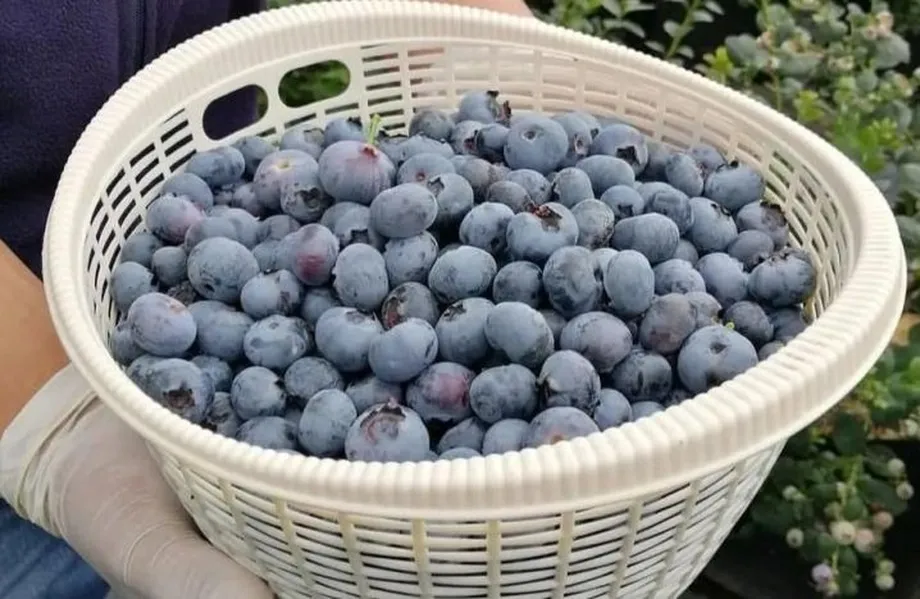
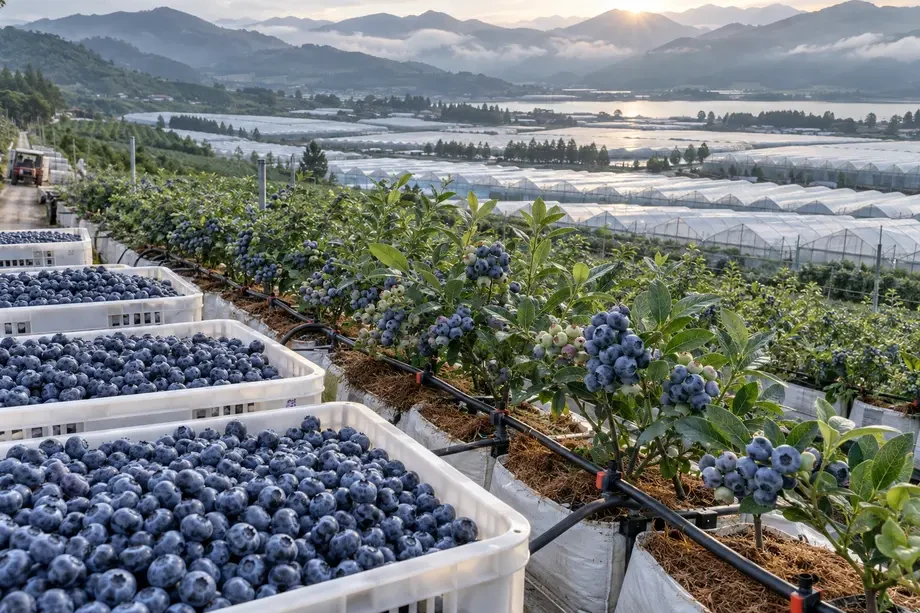
Soil conditions and the risk of water contamination from neighbouring farms led the company to change its original plan. The plants were therefore grown in containers filled with coconut-fibre substrate, under greenhouses and with drip fertigation supplied by filtered water.
According to a statement given to the Wall Street Journal by Soren Bjorn, Driscoll’s former chief executive, the Chinese operation uses the company’s most expensive cultivation system anywhere in the world.
Driscoll’s eventually worked with more than 150 growers and produced approximately 30,000 tonnes of fresh blueberries a year in Yunnan. The cultivars used include Eureka Sunrise, a large, sweet berry developed by Australian company Mountain Blue and licensed exclusively to Driscoll’s for the Chinese market for a multi-year period beginning around 2014.
From rising consumption to an investment rush
The increase in supply was accompanied by growth in domestic consumption. Initially regarded as an exotic and expensive fruit, blueberries gradually entered supermarkets, foodservice and the beverage market. The health benefits attributed to the fruit contributed to its popularity among Chinese families.
The high prices achieved during the initial phase attracted farming companies, industrial groups and investors. Noposion, a Shenzhen-based crop-protection company, invested in extensive blueberry-growing areas. Operators from other sectors also established technologically advanced farms, often financed through bank loans.
One of the cases cited by the newspaper is Lanxing Agriculture. The company leased approximately 101 hectares in Yunnan and also invested in refrigerated logistics to deliver the fruit to retail outlets within two days of harvest.
The expansion of greenhouses and the adoption of substrate cultivation with drip irrigation contributed to rapid increases in productivity and availability. According to a University of Copenhagen academic study published in Nature Food and cited by the Wall Street Journal, approximately 60% of the world’s greenhouses were located in China in 2019.
Disputes over protected varieties
The sector’s growth has been accompanied by the unauthorised propagation of genetic material. The International Blueberry Organization has warned that the scale of illegal nurseries and plantings makes it particularly difficult to enforce breeders’ rights.
According to the Wall Street Journal, Driscoll’s has filed more than 20 lawsuits in China against companies accused of obtaining its proprietary plants, propagating them and selling them to other growers. The company says it has so far secured two favourable rulings.
Planasa has also conducted investigations into the alleged unlicensed reproduction of the Blue Maldiva variety. Investigators hired by the company reportedly posed as farmers or traders to purchase samples for genetic testing.
In one of the cited proceedings, a Chinese court found, on the basis of DNA tests and admissions collected during the investigation, that most of the plants in a nursery were being grown illegally. They included Eureka Sunrise. The court ordered the plants to be destroyed and approximately $23,000 to be paid in damages and costs.
In another dispute, several Noposion subsidiaries were accused by a Planasa group company of illegally cultivating protected varieties. Noposion informed its shareholders that an initial court ruling had ordered a payment of approximately $1.3 million. Noposion subsidiaries have, in turn, brought legal action against Planasa, disputing the quality of the plants supplied.
Rising production and prices cut in half
The strong increase in supply has placed significant pressure on prices. According to the investigation, blueberry prices in China have fallen by at least half compared with the early stages of the boom.
Jack Zhu, an investor and founder of Lanxing Agriculture, told the newspaper that selling prices for Yunnan blueberries had fallen from approximately $45/kg in 2021 to $15/kg in 2026. These figures were provided by the entrepreneur and do not constitute an independent statistical series.
At retail level, some packs weighing approximately 255 grams were reportedly sold for $3 or less. Chinese state media described this greater affordability as “blueberry freedom”, indicating the transition from an exclusive product to a fruit accessible to a much broader group of consumers.
For growers, however, lower prices have reduced margins and discouraged further investment. Some operators quoted by the newspaper believe the market has already reached saturation, while Driscoll’s has not disclosed the financial results of its Chinese operations.
Licensing and genetic protection: the market seeks a new balance
In response to the spread of unauthorised plantings, some Western companies are expanding the licensing of varieties to Chinese operators. Mountain Blue, the owner of Eureka Sunrise, has begun granting access to the variety to companies other than Driscoll’s. In February 2026, Noposion announced that one of its subsidiaries had obtained a licence from Mountain Blue.
This strategy could allow breeders to recover at least part of the royalties in a market where the variety is already widely planted. At the same time, companies are stepping up legal action and genetic testing, while also hoping for stronger Chinese regulations.
Driscoll’s has said that it intends to maintain its presence in the country by increasing Chinese off-season production and exports from Yunnan to other Asian markets. The company believes that per-capita consumption, which remains lower than in the United States and Europe, leaves room for further growth.
The Chinese case nevertheless shows that higher production does not automatically translate into greater profitability. When investment, supply and varietal diffusion grow faster than demand, competition shifts towards prices and the ability to protect genetic innovation.