








Higher volumes, good quality and larger pack sizes: according to Nicola Slomp, the Italian blueberry market is evolving towards more frequent consumption and a more segmented offering.
The 2026 Italian season, the growing role of the premium segment and the outlook for the berry category are the focus of this exclusive interview with Nicola Slomp, third generation and Procurement and Planning Manager of the Trentino-based company Slomp Srl, headquartered in Lavis.
Other topics include the integration of domestic production and imports, varietal innovation and cooperation with Italian retailers.
What is your assessment of the 2026 Italian blueberry season in terms of volumes, quality, production calendar and commercial performance?
Our overall assessment of the 2026 Italian season is very positive. We recorded higher volumes than in 2025 and generally good quality, although performance was not consistent throughout the season or across the different production areas.
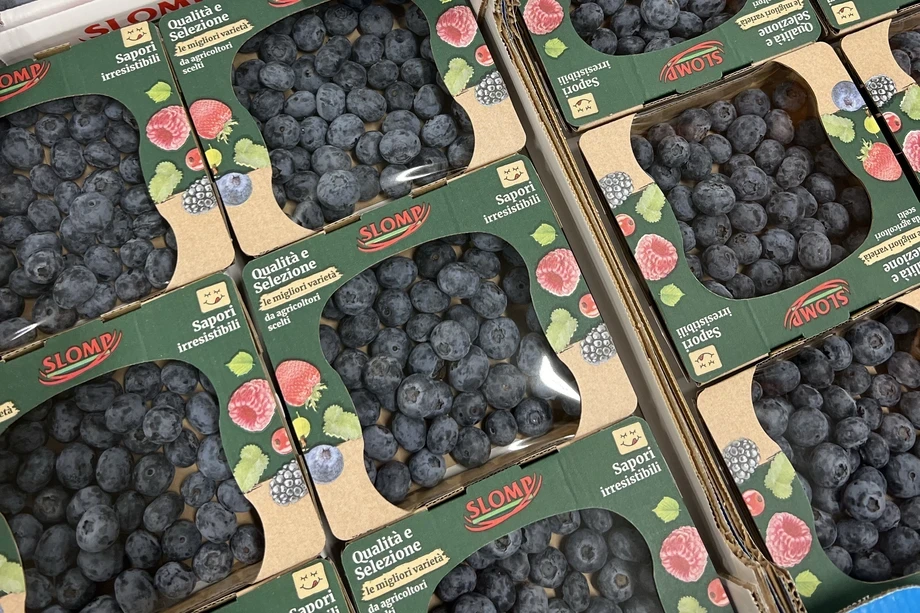
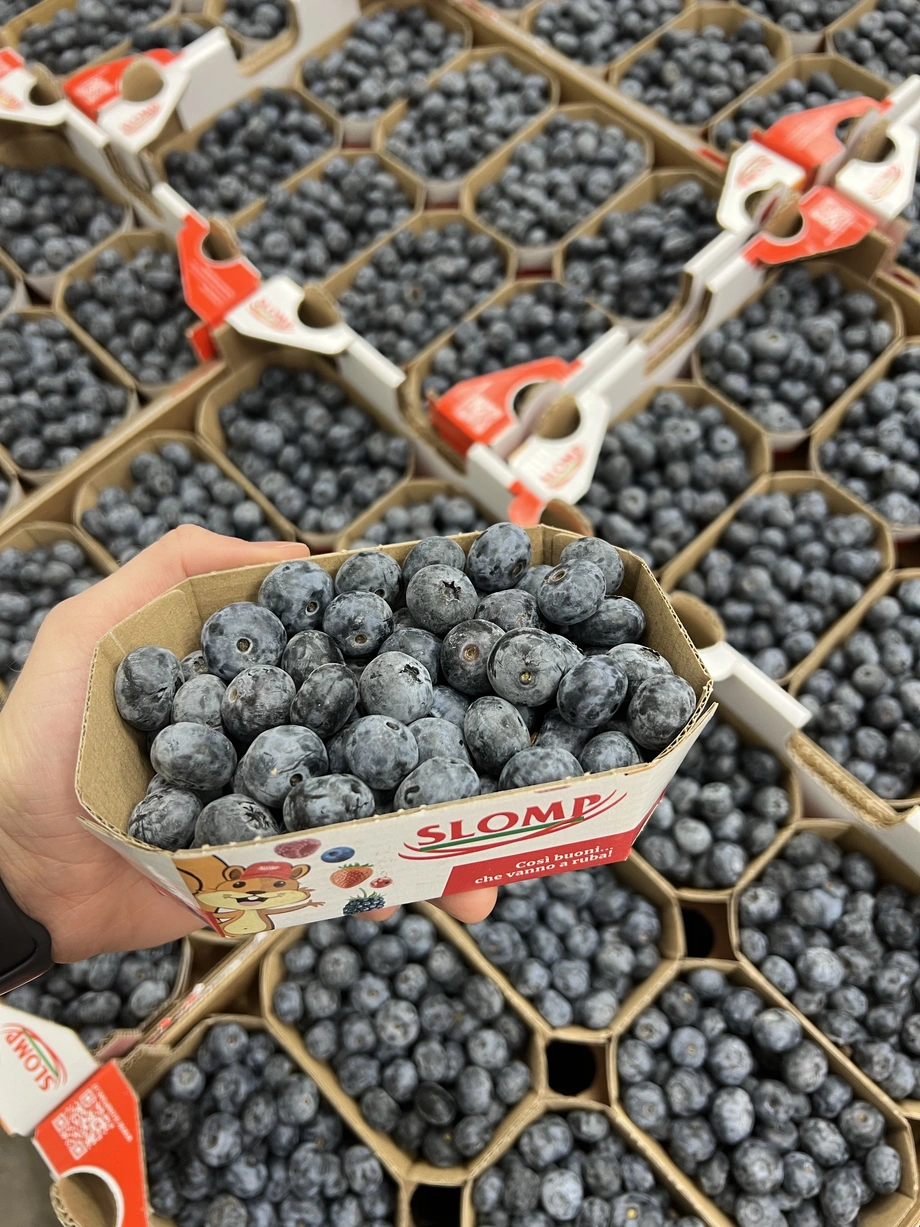
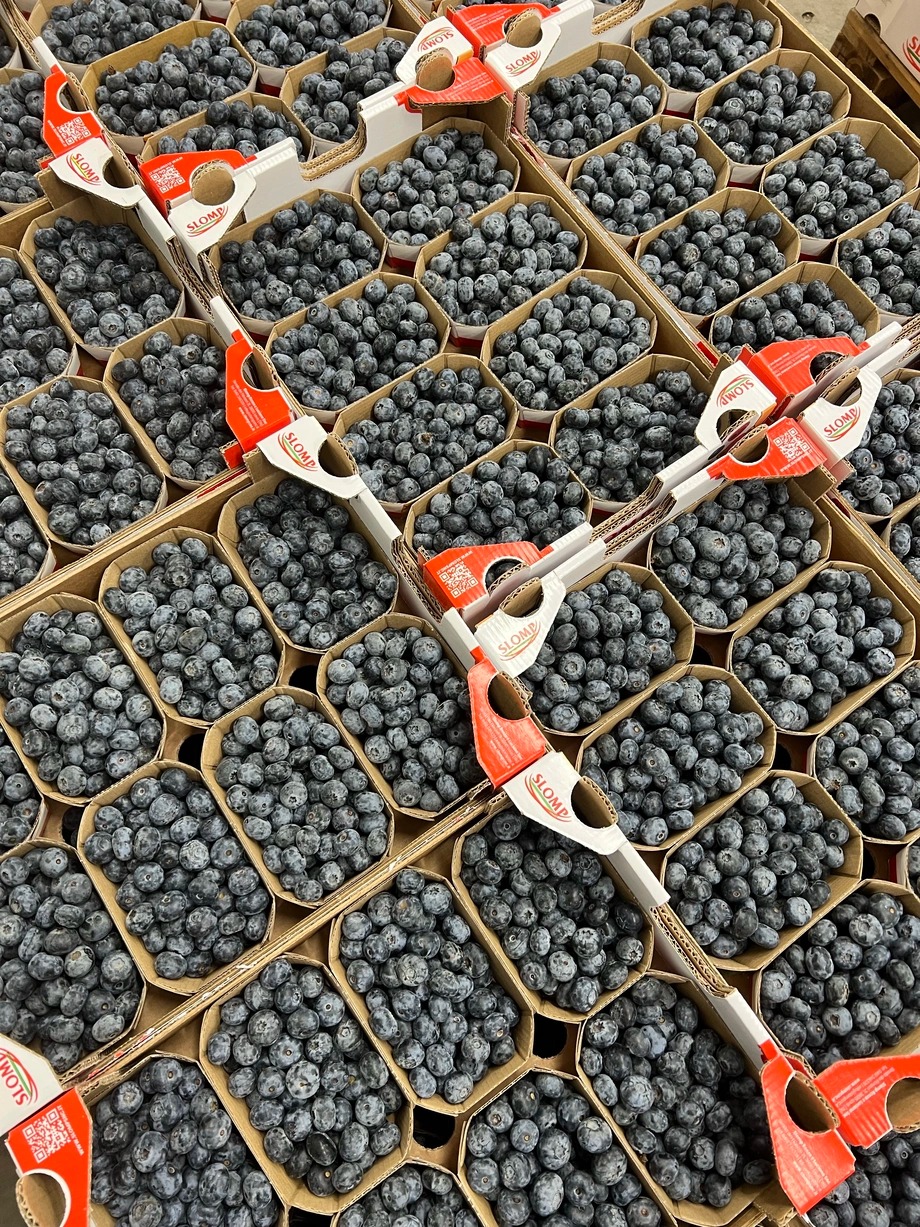
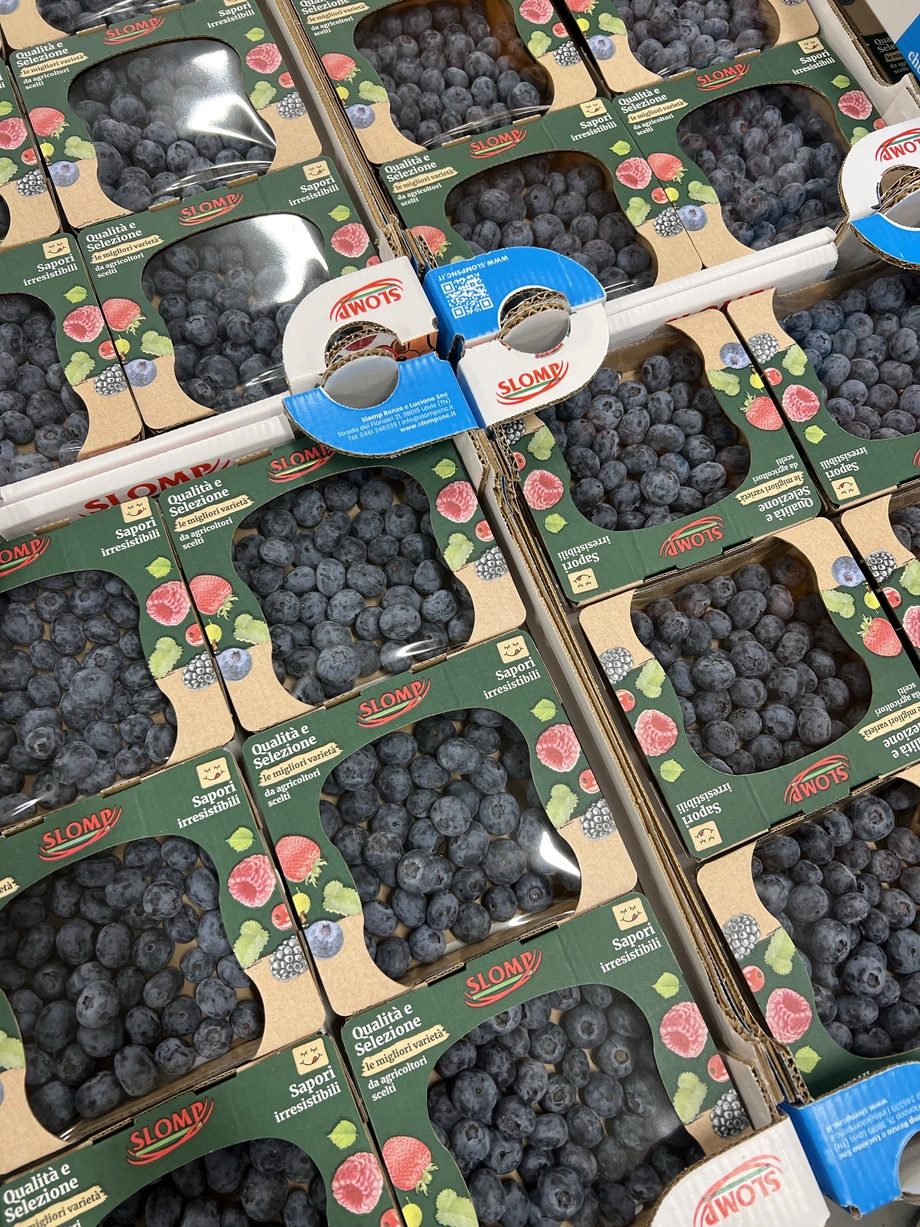
One aspect we are monitoring particularly closely is the evolution of pack sizes: the traditional 125 g pack is gradually giving way to larger formats. This is an interesting development because it indicates greater consumer familiarity with the product, which is increasingly being purchased as an everyday item rather than an occasional one.
What differences have you observed between the various Italian production areas, and which climatic or agronomic factors had the greatest impact on the season?
Italy benefits from highly diverse production areas, which make it possible to build a relatively broad calendar, beginning in the southern regions and gradually moving northwards.
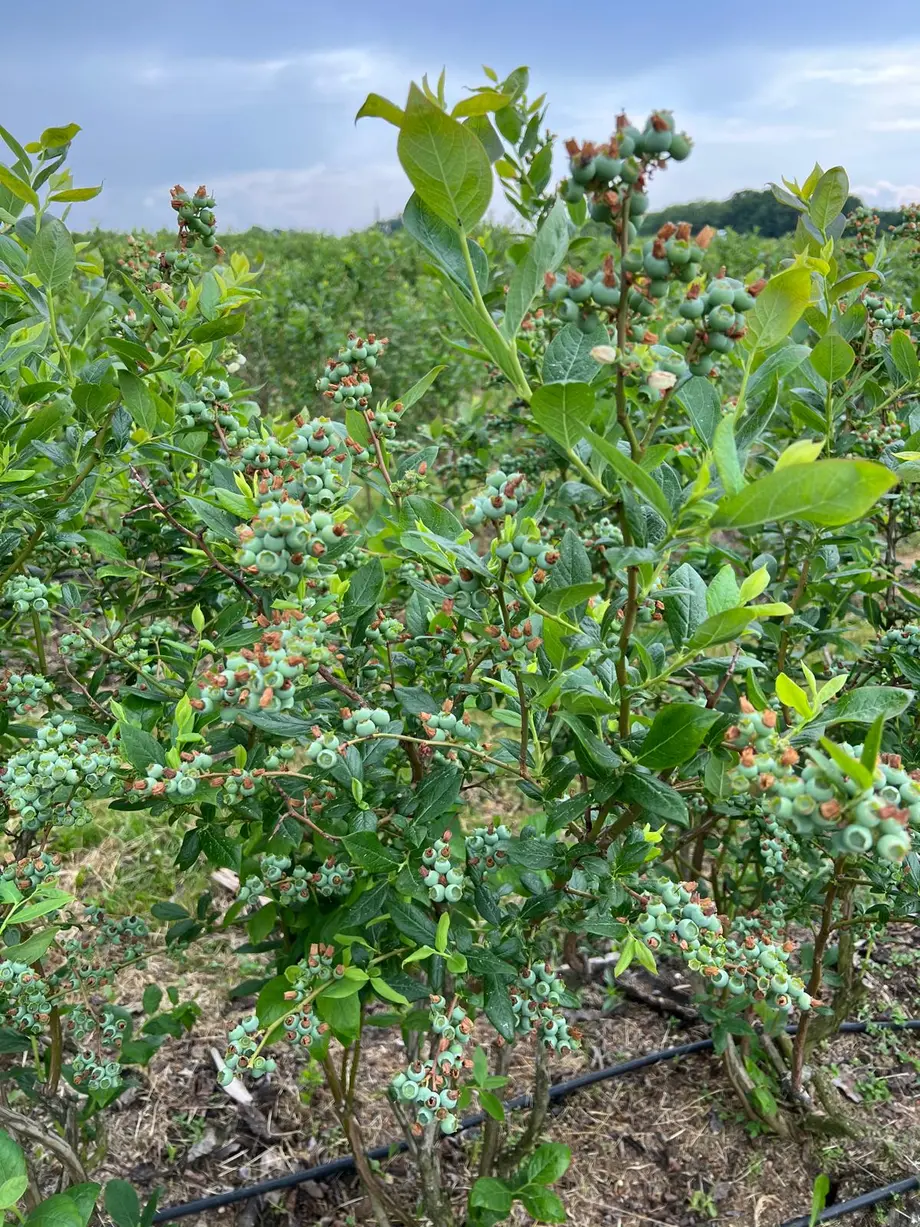
The differences concern not only harvest timing but also varieties, quality characteristics and product performance. Quality was generally good this year, but climate is a decisive factor: high temperatures and concentrated rainfall can quickly affect firmness, shelf life and storability.
For companies such as ours, which need to ensure continuity of supply, it is essential to look beyond origin alone and understand each individual production area, the growers we work with and, above all, the actual timing of the harvest. This is particularly important in seasons such as this one, when harvesting in some areas began much earlier than in previous years.
What role do berries, and blueberries in particular, currently play in your strategy for the Italian market?
Berries are at the heart of our specialisation, and blueberries have become increasingly important to us in recent years.
Our strategy is not simply to increase the quantities we market, but to broaden and improve our offering throughout the year by identifying the origins and production programmes best suited to each period.
The Italian market has grown considerably, but we believe it still has significant potential. Consumers are more familiar with blueberries than they were a few years ago, allowing us to work not only on availability but also on segmenting the offering by quality, pack size and consumption occasion.
How do you define the premium blueberry segment, and which product characteristics — flavour, firmness, size, shelf life, origin or variety — justify its positioning and price premium?
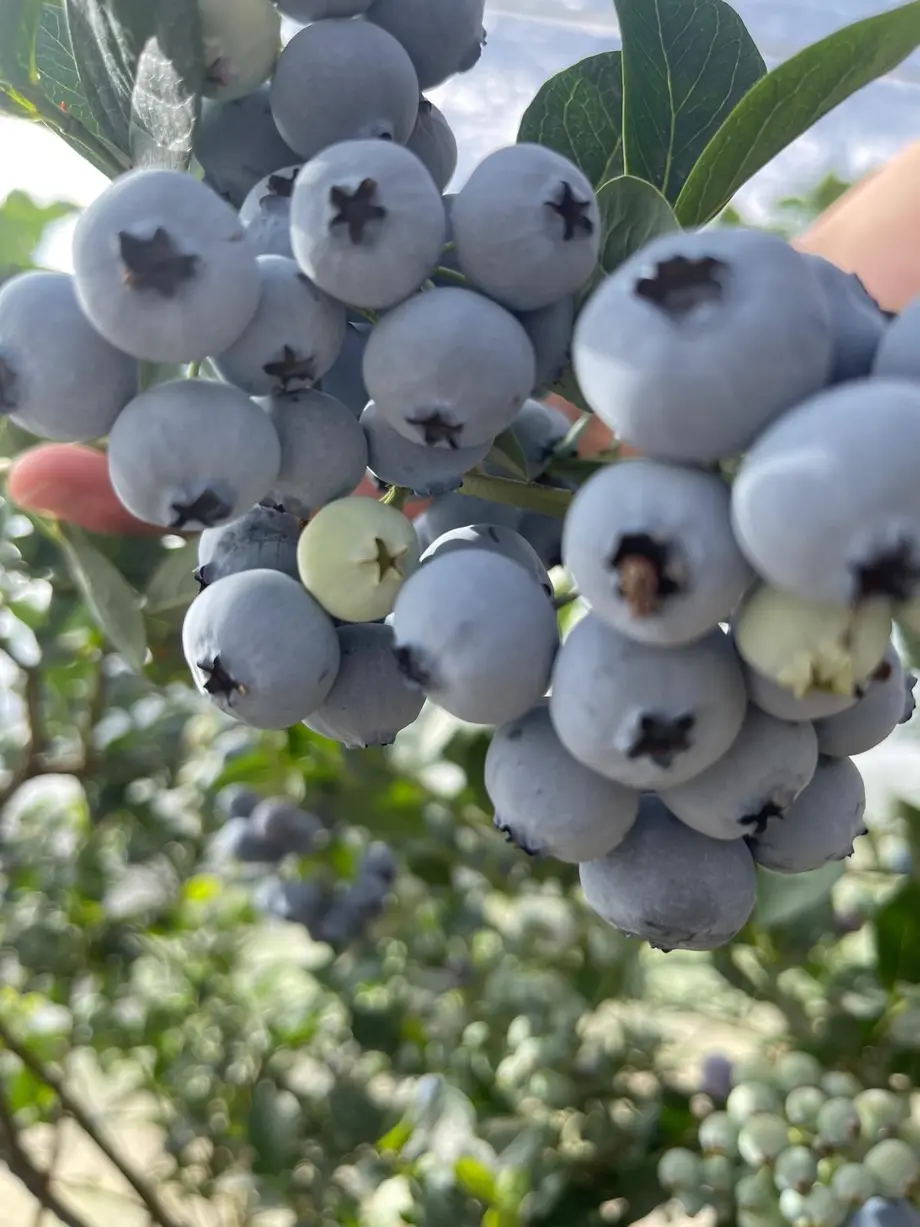
A premium blueberry cannot be defined simply by its size or more sophisticated packaging. Consumers must perceive a tangible difference when they taste the product.
The first element is flavour, which drives repeat purchases, together with firmness, crunchiness, uniformity and good storability. Size can contribute to the positioning, but it is not sufficient on its own.
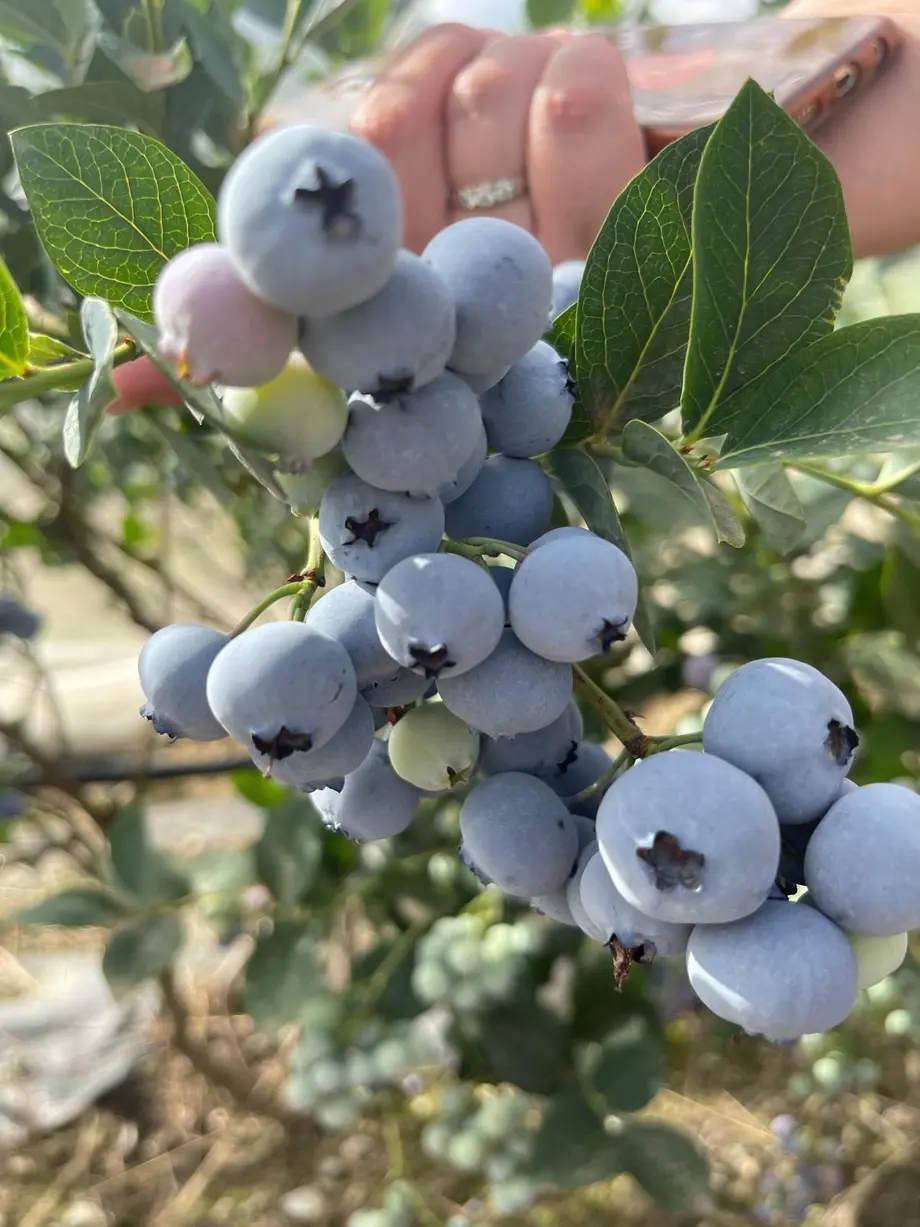
At the same time, size and the presence of bloom remain the blueberry’s calling card on the shelf: together with origin, these are the characteristics consumers notice immediately, and they make an important contribution to the product’s appeal and perceived quality. However, genuine premium value must ultimately be confirmed by the eating experience.
Origin and variety are also important, but they must contribute to the final result. We believe consumers are willing to accept a price premium when they find a blueberry offering a genuinely superior quality experience that is, above all, consistent over time.
How does your strategy extend across the supply chain, from varietal selection and production planning to packing, distribution and cooperation with retailers?
Our work increasingly begins upstream. Planning and dialogue with growers are essential because retailers’ requirements must be translated into specific product characteristics.
Variety, production period, size, firmness and shelf life must be assessed according to the target market. Further down the supply chain, packaging must adapt to retailers’ requirements and evolving consumption patterns. From this perspective, we are closely monitoring the growth of larger pack sizes.
Having in-house selection, quality-control and packing capabilities allows us to adapt the product to our customers’ different requirements.
Our objective is to build a supply chain in which growers and distributors share more information and planning, reducing reliance on a purely spot-market approach.
How important is domestic production compared with imported fruit in ensuring quality, volumes and continuity of supply to Italian retailers throughout the year?
Italian production plays a fundamental role for us and, whenever the calendar, quality and availability allow, it represents a very important component of our offering.
At the same time, blueberries are now a year-round category, while no single origin can guarantee continuity on its own. Domestic production and imports should therefore not necessarily be viewed as competing alternatives.
Our role is precisely to build an integrated supply calendar in which different origins complement one another, selecting the most suitable product at each stage of the year. During the Italian season, we seek to promote domestic fruit; at other times, we work with overseas production to ensure continuity, volumes and consistent quality standards.
What opportunities and challenges do you see for the future of the berry category in Italy? Which areas — varietal innovation, assortment expansion, pack sizes, communication or new consumption occasions — will require investment?
We believe berries still have significant growth potential in the Italian market, but future growth will increasingly need to be qualitative rather than merely quantitative.
Varietal innovation will be one of the main drivers: varieties must deliver flavour, firmness and shelf life while also adapting to changing climatic conditions and production requirements.
A second factor will be the evolution of pack sizes. The shift towards larger packs demonstrates that consumption habits are changing and opens up new possibilities for the category.
One challenge is the risk of turning blueberries into a commodity, with competition focused exclusively on price. We believe the future instead depends on the ability to communicate quality differences to consumers, create distinct segments and increase consumption occasions.
This is precisely our objective: to help berries move from being a category still partly associated with occasional purchases to a regular presence in consumers’ shopping baskets.
Italian Berry – All rights reserved