











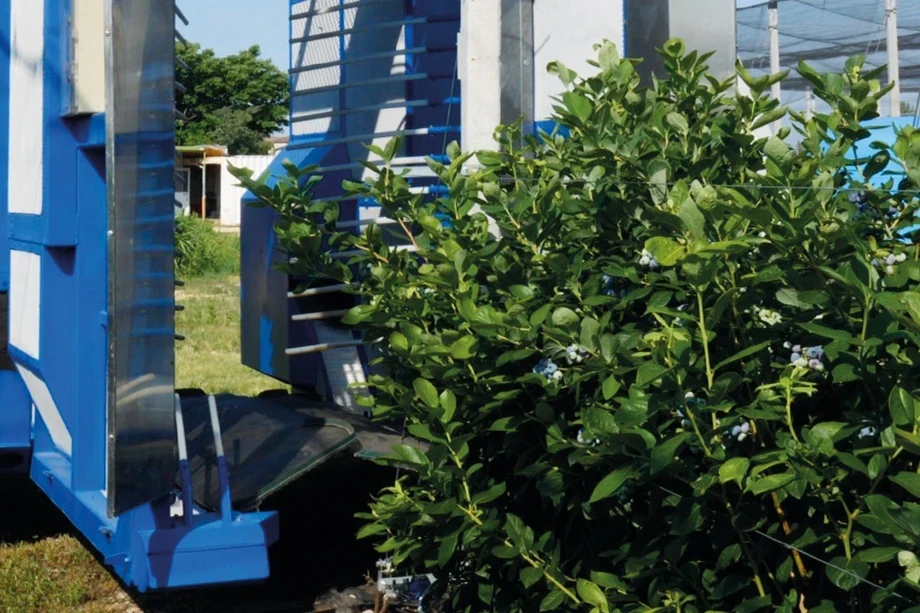
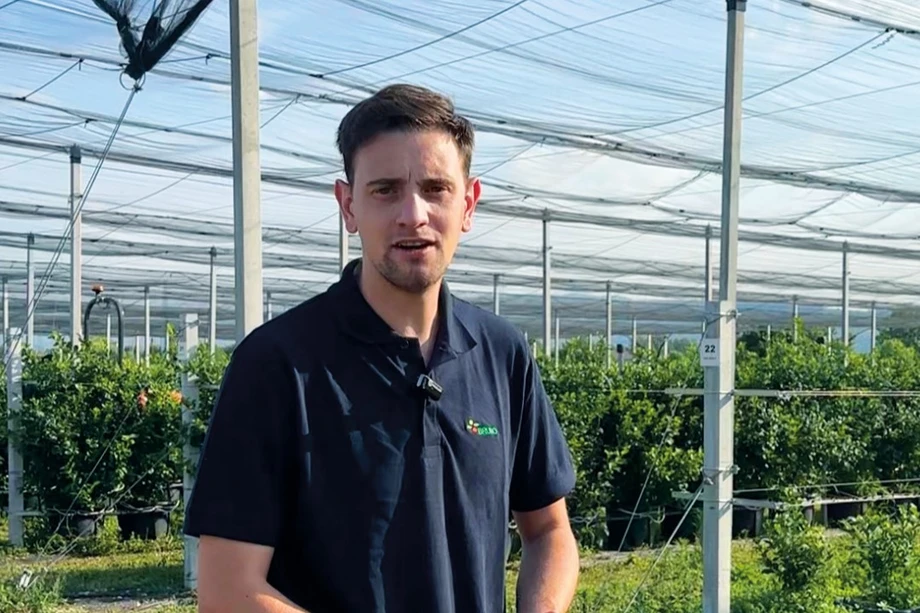
In this exclusive interview, Marco Antolini, a berry grower since 2012, tells Italian Berry about the project he developed with his brother Riccardo to introduce mechanical blueberry harvesting, a practice that is still uncommon in Italy but is already used for around half of production in the United States.
In the first part we examined the criteria and requirements that guide the decision to adopt mechanical harvesting, as well as its organisational and agronomic implications.
In this second part, Marco Antolini takes a closer look at the more operational aspects related to quality, waste, agronomic practices and varietal choices.
Fresh market or processing
Can mechanically harvested fruit be marketed as fresh, or does it still carry a high risk of being downgraded for processing?
Mechanical harvesting can also be used successfully for fruit intended for the fresh market, provided that strict technical and operational parameters are observed. The aim is to preserve the integrity of the fruit, preventing impact damage, loss of bloom and, in the most critical cases, berry breakage.
Harvesting time is a decisive factor. Operations must be carried out exclusively during the coolest hours of the day. On our farm, mechanical harvesting begins at first light and generally ends between 8:30 and 9:00 a.m.
After this time, rising ambient temperatures cause the fruit's internal temperature to increase progressively, reaching around 20–22°C.
Higher temperatures reduce fruit firmness, making the berries more susceptible to mechanical damage. Our experience shows that when fruit firmness falls below readings of 45–55 measured with a BAXLO penetrometer, the product is no longer suitable for mechanical harvesting for the fresh market.
Although the fruit may appear intact externally, impacts while passing through the machine can cause internal microlesions that develop into necrosis, compromising product shelf life and increasing the risk of commercial claims from customers.
When the correct parameters for ripeness, firmness and fruit temperature are observed, however, mechanical harvesting is fully compatible with the fresh market.
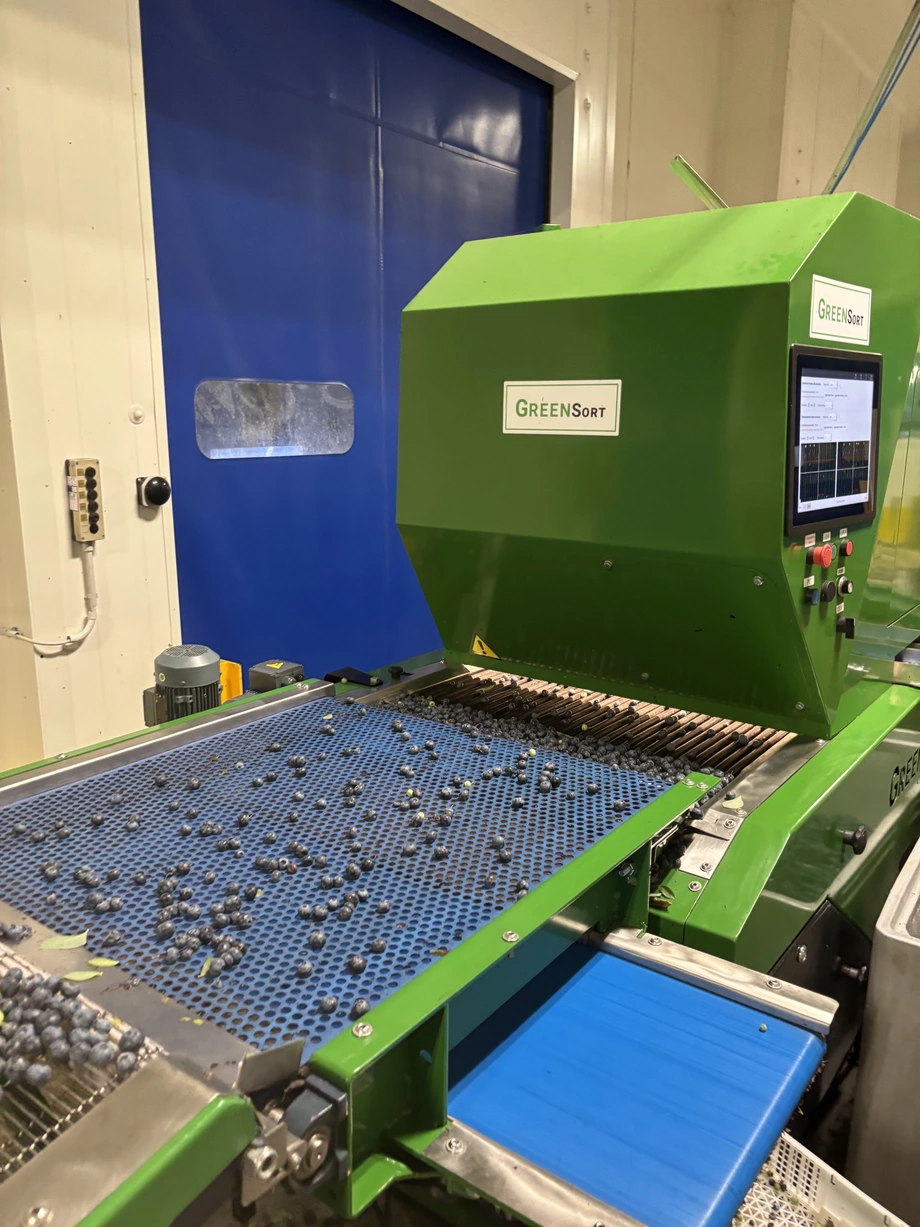
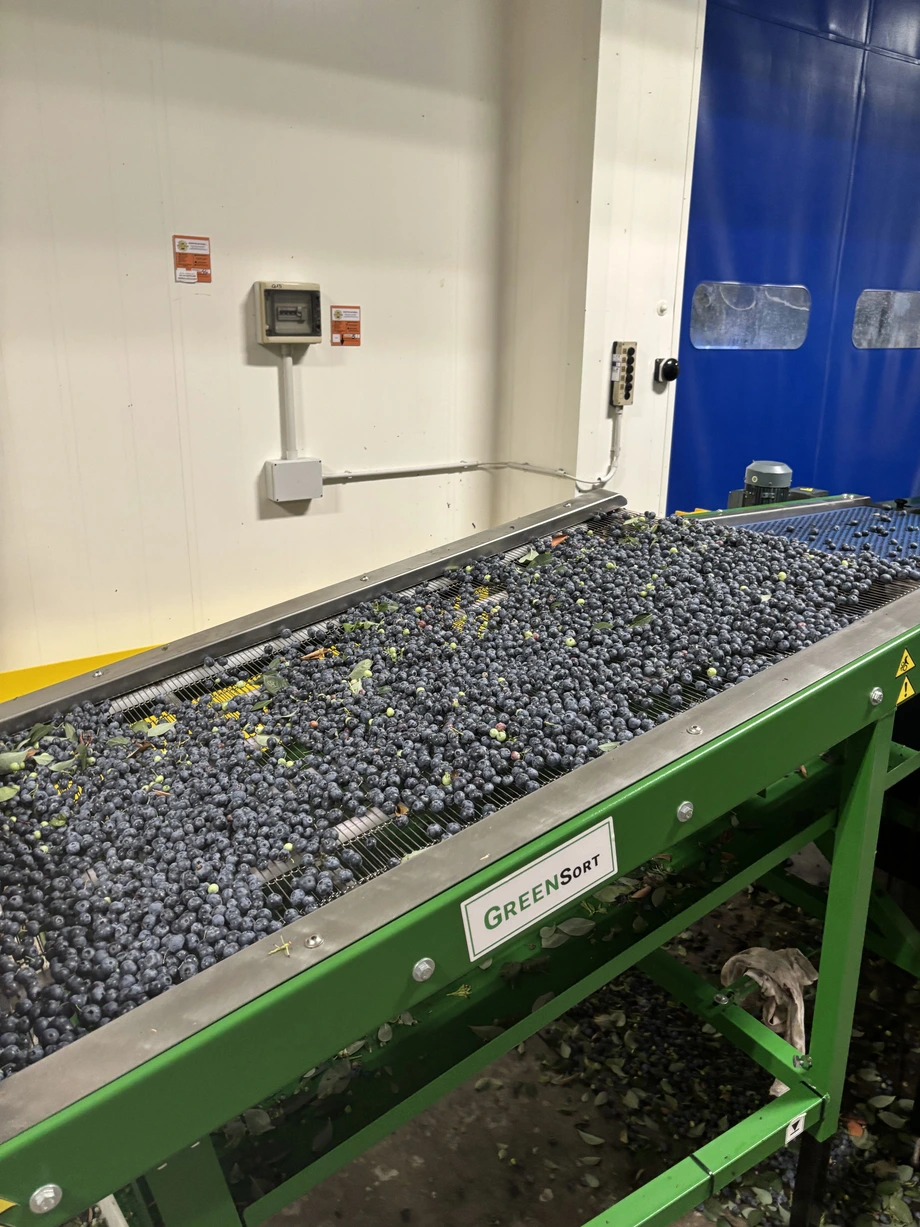
In our experience, it is possible to keep the overall waste rate below 7%, including broken fruit, fruit that is not fully ripe and fruit showing a significant loss of bloom.
This demonstrates how careful technical management can combine the efficiency of mechanical harvesting with the high quality standards required by the market.
The quality of machine-harvested blueberries
What differences do you observe compared with hand harvesting in terms of fruit quality: firmness, bloom, bruising, shelf life and the presence of unripe fruit?
As highlighted previously, compliance with specific operating parameters makes it possible to harvest mechanically without compromising product shelf life.
If the fruit is harvested under the correct conditions of ripeness, temperature and firmness, the risk of damage severe enough to affect storability is extremely low.
Another key aspect is harvest scheduling.
To avoid quality losses caused by overripening, it is essential not to extend the interval between one pick and the next merely to increase the machine's hourly output.
Mechanical harvesting should not be regarded solely as a means of maximising productivity, but as a technique that, when managed correctly, must pursue the same quality objectives as hand harvesting.
For this reason, it is essential to maintain regular harvesting intervals, generally between five and six days from one pick to the next, depending on weather conditions and the fruit's ripening rate.
Performance by variety
Of Valor, Cargo, Top Shelf and Blue Ribbon, which varieties have proved best suited to mechanical harvesting, and why?
In my view, the varieties best suited to mechanical harvesting are undoubtedly Valor and Cargo. Both have morphological and vegetative characteristics that make them particularly suitable for this type of management.
The decision to grow Top Shelf and Blue Ribbon as well was driven by the need to spread production over a longer period, ensuring a harvest window of around two months and enabling better organisation of farm operations.
From an agronomic perspective, Cargo and Valor are physiologically better suited to mechanical harvesting. They have a more upright growth habit, with less vegetation at the base of the plant and fewer new shoots and replacement canes.
Precisely because of this natural tendency, targeted pruning techniques are often needed to stimulate vegetative renewal and maintain high productivity over time.
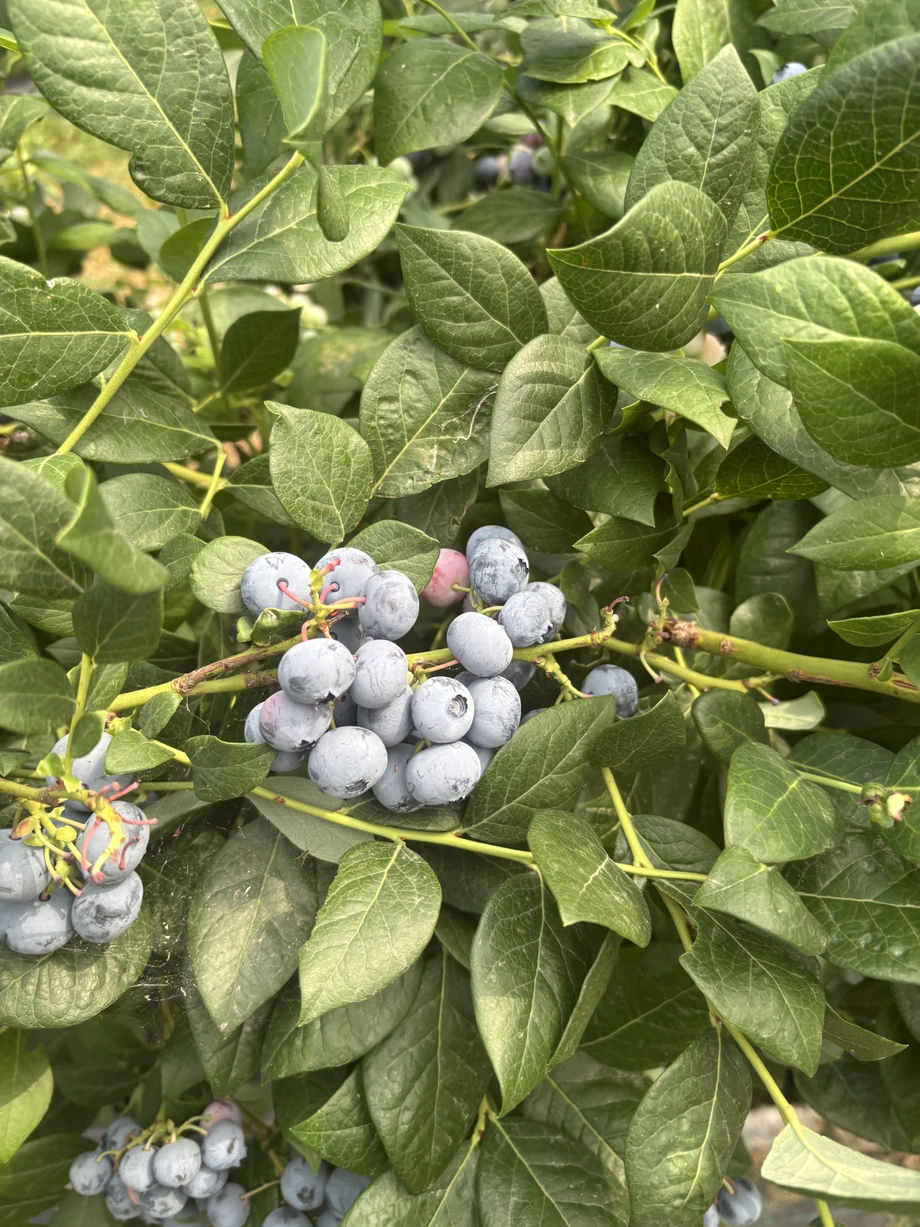
Top Shelf and Blue Ribbon, by contrast, have a bushier growth habit and a marked ability to produce new shoots every year.
This characteristic does not make them unsuitable for mechanical harvesting, but it does require different agronomic management. In particular, more severe and selective pruning is needed to contain excessive vegetation, promote a more orderly plant structure and ensure the harvester can pass through correctly.
Ultimately, all four varieties can be managed successfully with mechanical harvesting, provided that cultivar-specific pruning strategies and canopy-management practices are adopted to make the most of their physiological and productive characteristics.
Choosing the most suitable variety
Which varietal characteristics do you consider essential for effective mechanical harvesting: plant habit, ease of detachment, berry firmness or concentrated ripening?
When choosing varieties for mechanical harvesting, I believe it is essential to assess a range of agronomic and morphological characteristics that directly affect harvesting efficiency and final product quality.
In particular, the aspects I consider priorities are the following:
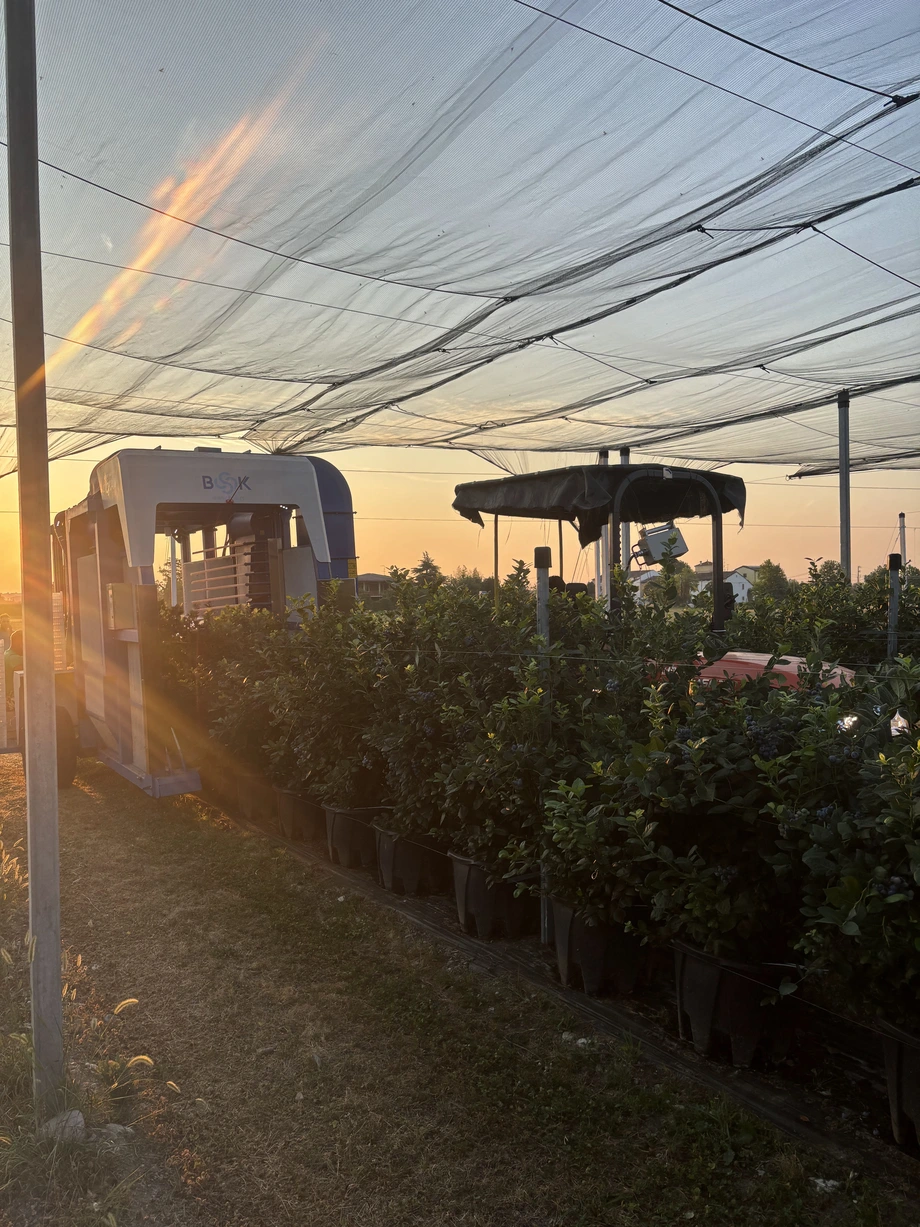
- Plant growth habit: the plant must have upright, strong and relatively rigid branches. A well-supported plant structure allows the machine to operate more effectively, reducing fruit losses and the risk of branch damage.
- Capacity for vegetative renewal: varieties with balanced, easily managed vegetative renewal are preferable. Overly bushy plants require more intensive pruning and make it more difficult for the harvester to pass through.
- Fruit size: berry size is also a decisive factor. Excessively large fruit generally tends to be less firm and therefore more susceptible to mechanical damage. From an operational standpoint, 14–16 mm and 16–18 mm sizes offer the best compromise between quality, firmness and suitability for mechanical harvesting.
- Ease of fruit detachment: detachment force is another parameter to consider. Not all varieties have the same propensity for fruit detachment; those that detach more readily at the correct stage of ripeness enable more efficient harvesting while reducing damage to both fruit and plant.
The challenge of crop-management practices
Do pruning and the training system differ from those used in a planting intended for hand harvesting?
Pruning management is completely different from that of a planting designed exclusively for hand harvesting.
During the first two years after planting, it is essential to establish the training system correctly and adequately contain plant growth, with the aim of keeping the plants particularly narrow in the basal zone, within the first 35–40 cm.
The lower part of the plant must be kept consistently clear, retaining only the most suitable branches, which will provide the basis for the plant's future productive renewal.
Subsequently, precisely because growth in the lower section is contained, the upper canopy must be encouraged to open out more, ensuring better light penetration and proper air circulation.
It is also important to direct the canes outwards, placing them as far as possible in a position favourable for harvesting. These agronomic practices are essential for maintaining good plant health and producing higher-quality fruit.
A planting intended for hand harvesting, by contrast, is managed according to different criteria. In this case, more space is created within the plant structure from the lower part of the bush upwards in order to improve canopy ventilation, reduce the risk of plant-health problems and ensure better product quality.
How much do plant spacing, row width, management of low branches and the uniformity of the fruiting wall affect machine efficiency?
The adopted planting layout was designed to optimise crop management, ensuring an appropriate balance between vegetative growth, productivity and ease of field operations.
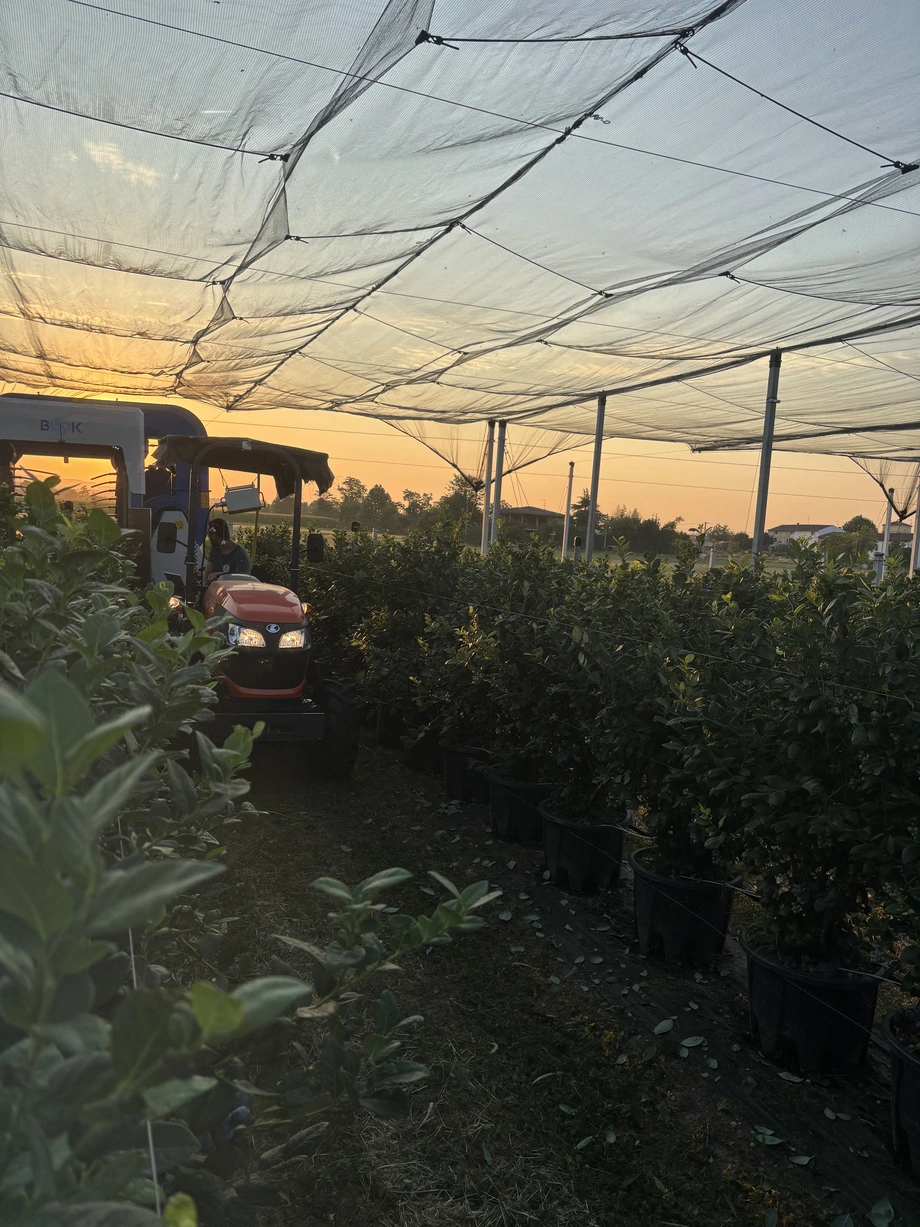
The supporting structure has posts spaced 3 metres apart along the row, while the inter-row spacing was set at 10 metres. The crop is covered with a traditional hail net, providing effective protection against adverse weather events.
As regards plant spacing, three rows of posts were installed, with 10 metres between posts along the row and 3 metres between rows. The plants were set 80 cm apart within the row in order to obtain an orderly and contained production structure.
The training system uses two wires on each side and one basal wire on each side to keep the plants adequately contained and guide their vegetative development, promoting a uniform canopy distribution and making cultivation and harvesting operations easier to manage.
Advantages and challenges of mechanical harvesting
What are the main operational advantages: shorter harvesting times, less reliance on labour, timely intervention and management of production peaks?
The main advantages of this crop-management approach are, first and foremost, a reduction in labour requirements and, consequently, less dependence on staff availability.
This approach also delivers a significant reduction in harvesting costs, thanks to greater operational efficiency and the ability to organise farm activities more rationally.
Another benefit is improved management of production peaks, making it possible to handle periods of highly concentrated harvesting with greater operational flexibility and better planning capacity.
What, on the other hand, are the most significant challenges: fruit losses on the ground, damage to the fruit, damage to the plant, the need for skilled operators or field limitations?
The main challenges encountered concern several aspects of planting management and the use of mechanical harvesting.
The first factor to consider is the space needed for the machine to operate correctly, including enough room to exit the rows and re-enter them easily, thereby ensuring greater operational efficiency and proper manoeuvrability.
Another challenge is the detachment of some green or partially coloured fruit that would have needed a few more days to reach the correct stage of ripeness and be harvested under optimal conditions.
Another issue is that a certain percentage of fruit may fall to the ground during harvesting. From a technical perspective, however, this problem can be addressed and progressively reduced by fine-tuning agronomic management and the machine's operating parameters.
Finally, it is important to underline that establishing a planting intended for mechanical harvesting requires significant initial investment in the construction of the structure, as well as specific planning.
Furthermore, since this is still a relatively recent technique, well-established experience in the sector remains limited, and further observation and adaptation are needed to optimise the production system.
Italy's delay
Why, in your opinion, is mechanical blueberry harvesting still uncommon in Italy compared with other producing countries?
The main limitation of the Italian berry sector, affecting both established farms and those entering this supply chain, is the generally small average size of agricultural businesses and their high degree of fragmentation.
This is compounded by the issue of generational renewal. In recent years, young people have shown growing interest in agriculture, but the number of new entrants is still not sufficient to ensure the sector's proper development and consolidation.
From my perspective—first as a grower and later as a technician, having had the opportunity to learn about and engage with numerous farms—I believe that one of the main obstacles to adopting new production systems and technologies is the perception of financial risk.
Although many farms recognise the potential benefits of these investments, they find it difficult to embark on innovation projects because of the high initial costs and uncertainty surrounding the return on investment.
This attitude is understandable, especially among small businesses, where every strategic decision must be carefully assessed in order to maintain the farm's financial sustainability.
Looking to the future
Can mechanical harvesting become a structural component of high-quality Italian blueberry production, or will it remain a solution for only a few specialised growers?
From a technical perspective, the experience gained and the care taken in designing the planting were essential to developing a functional solution, although there is still a long way to go in terms of improvement.
The road ahead is still full of challenges. Certain aspects of agronomic management and mechanisation will need to be refined further to create an increasingly efficient planting capable of fully expressing the potential of mechanical blueberry harvesting.
 Marco Antolini
Looking ahead, I believe the mechanical blueberry harvesting sector is set to experience increasing growth, driven by the need to make production more efficient, sustainable and less dependent on labour availability.
Nevertheless, I believe there is still a great deal of work to be done and considerable experience to be gained, both by growers and by harvesting-machine manufacturers.
The sector's development will require continuous dialogue between growers and technology providers, with the aim of improving the solutions currently available and adapting them more closely to the agronomic requirements of different farms.
Only through experimentation, data collection and the refinement of techniques will it be possible to achieve ever higher levels of efficiency and consolidate this production system over time.