










With the start of the full harvest period, blueberries once again become a central focus for growers and supply chain operators. This may seem like a simple phase, but it is actually decisive: the way the fruit is picked, handled and moved into cooling has a direct impact on commercial quality, storage performance and, ultimately, the value of the product on the market.
Blueberries are delicate fruit, highly sensitive both to heat and to harvesting carried out at the wrong time. Proper management of the harvest operation does not only help avoid quantitative losses, but above all preserves firmness, flavor, skin integrity and shelf life. In an increasingly fresh-market-oriented sector, these variables often make the difference between a product that reaches its destination in good condition and one that quickly loses commercial appeal.
Harvesting during the coolest hours
One of the first aspects to consider is the time of harvest. When farm conditions allow, work should preferably be concentrated during the coolest hours of the day, ideally from early morning until early afternoon, avoiding the hottest periods. The reason is simple: as temperature rises, the fruit loses turgor more quickly, becomes more sensitive to mechanical stress and tends to dehydrate more easily.
This means that harvesting during the hottest hours can lead to lower berry resistance during handling, an increased risk of softening and greater weight loss. All these elements have a direct impact on shelf life. In the case of blueberries, a berry that enters the supply chain already stressed by heat inevitably starts with a lower competitive advantage than a product harvested under more favorable conditions.
Whenever possible, harvesting fruit wet from rain or persistent dew should also be avoided. Surface moisture complicates lot management and can favor post-harvest deterioration. For this reason too, harvest operations must be organized not only according to labor availability, but also according to the day’s microclimate and the expected weather conditions.
Ripeness: harvesting at the right time
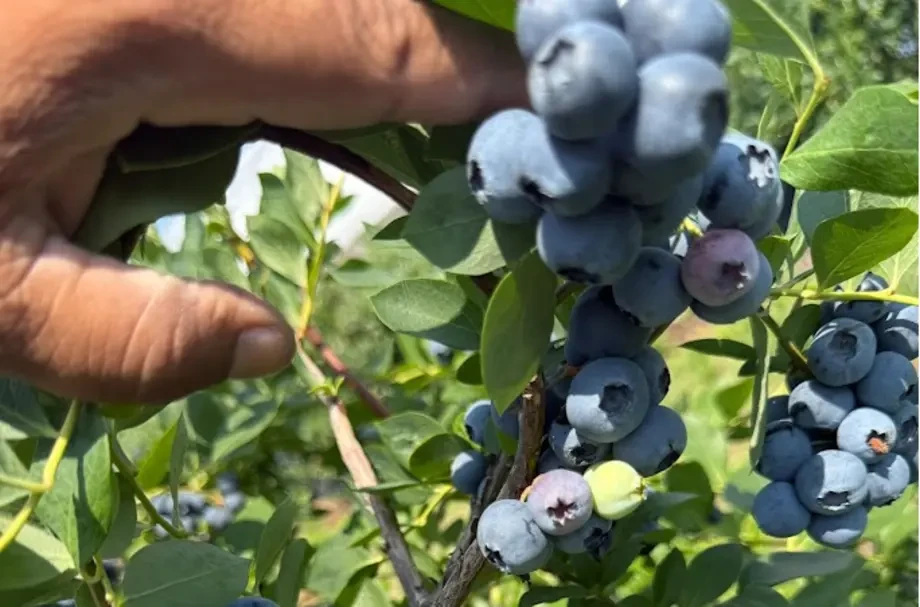
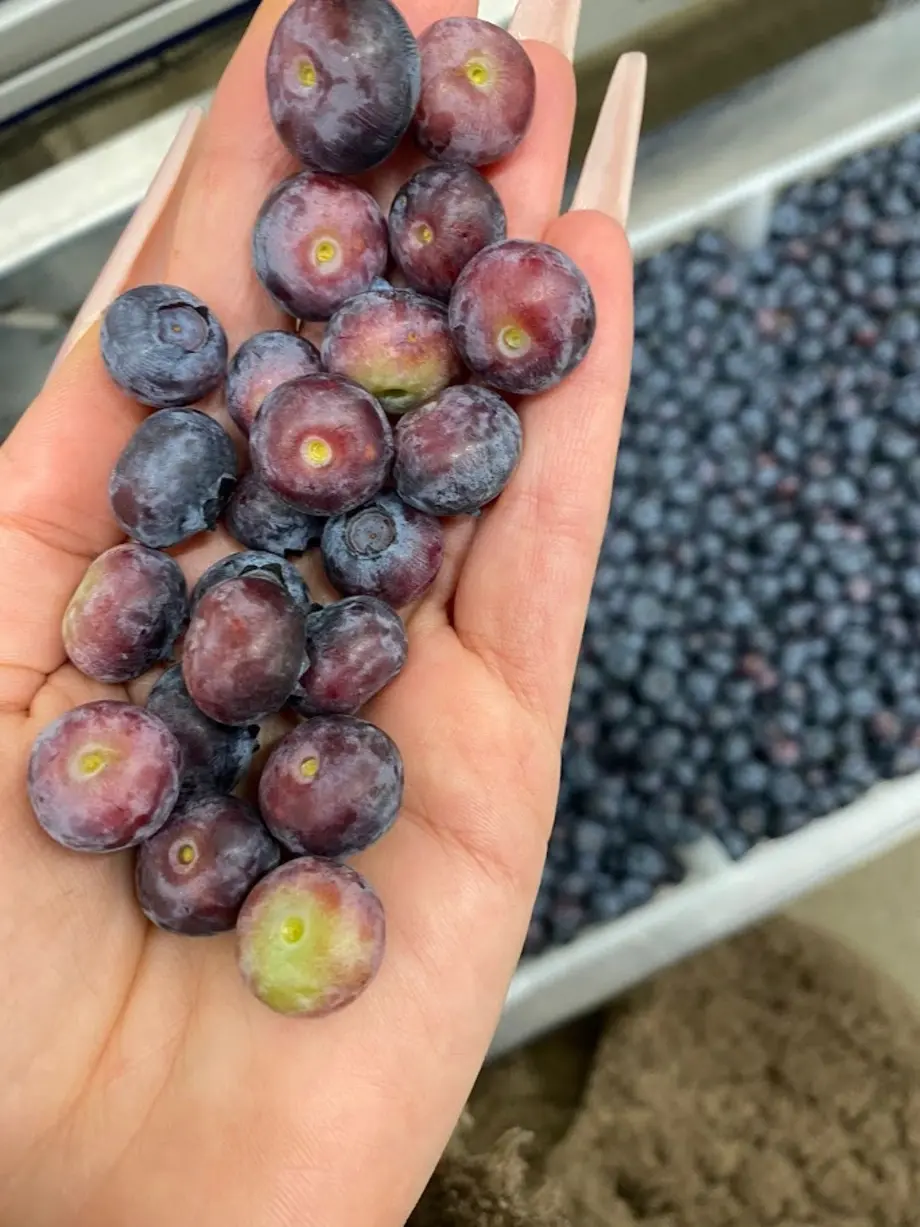
Blueberry quality is built first and foremost at the moment of picking. The fruit is ready when it shows a completely blue, uniform color, with no pinkish shades or still-unripe areas near the stem. This is a fundamental indicator, because early harvesting brings a series of negative consequences both in terms of taste and commercial performance.
Blueberries do not continue to improve in quality after harvest. For this reason, picking berries that are not yet fully ripe means bringing into the packing facility a product that is less sweet, less balanced and generally less suitable for fresh consumption. In addition, fruit harvested too early tends to lose water more easily and shows a lower ability to maintain firmness and freshness over time.
The point of detachment from the stem also deserves attention. When the picking scar is not properly healed, or when the fruit is picked before the correct ripening stage, sensitivity to dehydration increases, as does susceptibility to mold during the post-harvest phase. The right picking moment is therefore not a secondary technical detail, but one of the central factors determining final quality.
Staggered harvesting and planning harvest passes
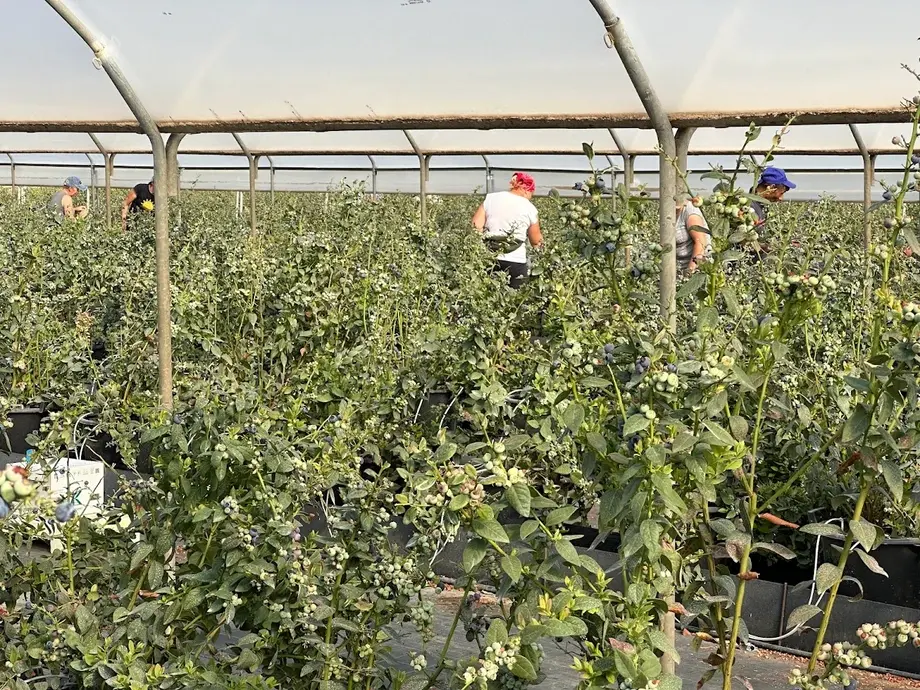
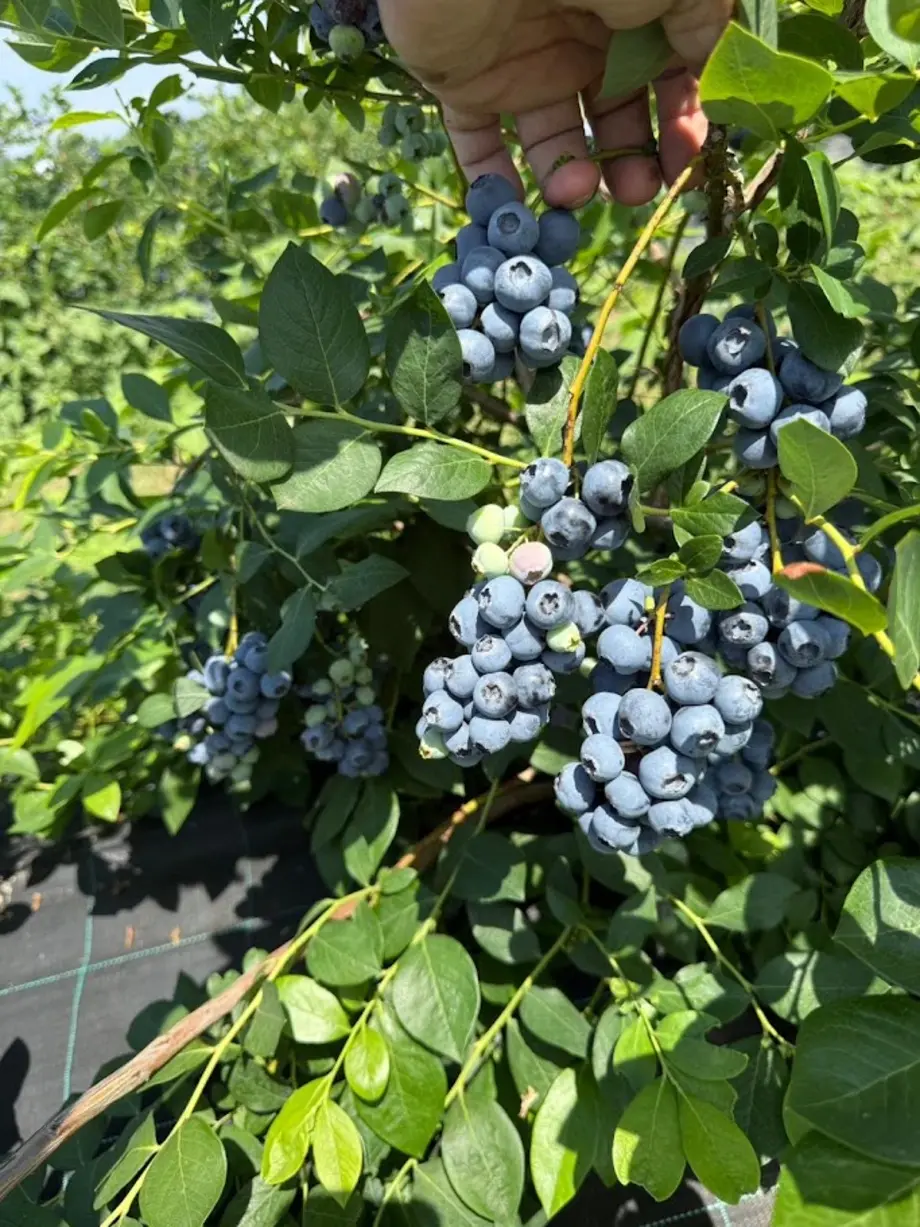
Another key element is the staggered nature of ripening. Blueberries do not reach full ripeness uniformly across the entire plant, nor even within the same plot. This requires multiple harvest passes, calibrated according to variety, temperatures, exposure, labor pressure and weather conditions.
During the hottest weeks, ripening accelerates and the frequency of harvest passes tends to increase. Conversely, with milder temperatures or variable weather conditions, it may be necessary to slightly extend the intervals. Planning must therefore be dynamic, not rigid, because too long an interval between harvests can lead to overripe fruit in part of the crop.
This aspect is particularly important not only for visual and organoleptic quality, but also for fruit health. Berries left too long on the plant become more vulnerable to mechanical damage, loss of firmness and insect attacks, including Drosophila suzukii, which is one of the main risk factors for berries at an advanced ripening stage. A well-distributed harvest over time therefore helps keep the lot more uniform and reduce waste.
Managing the product in the field
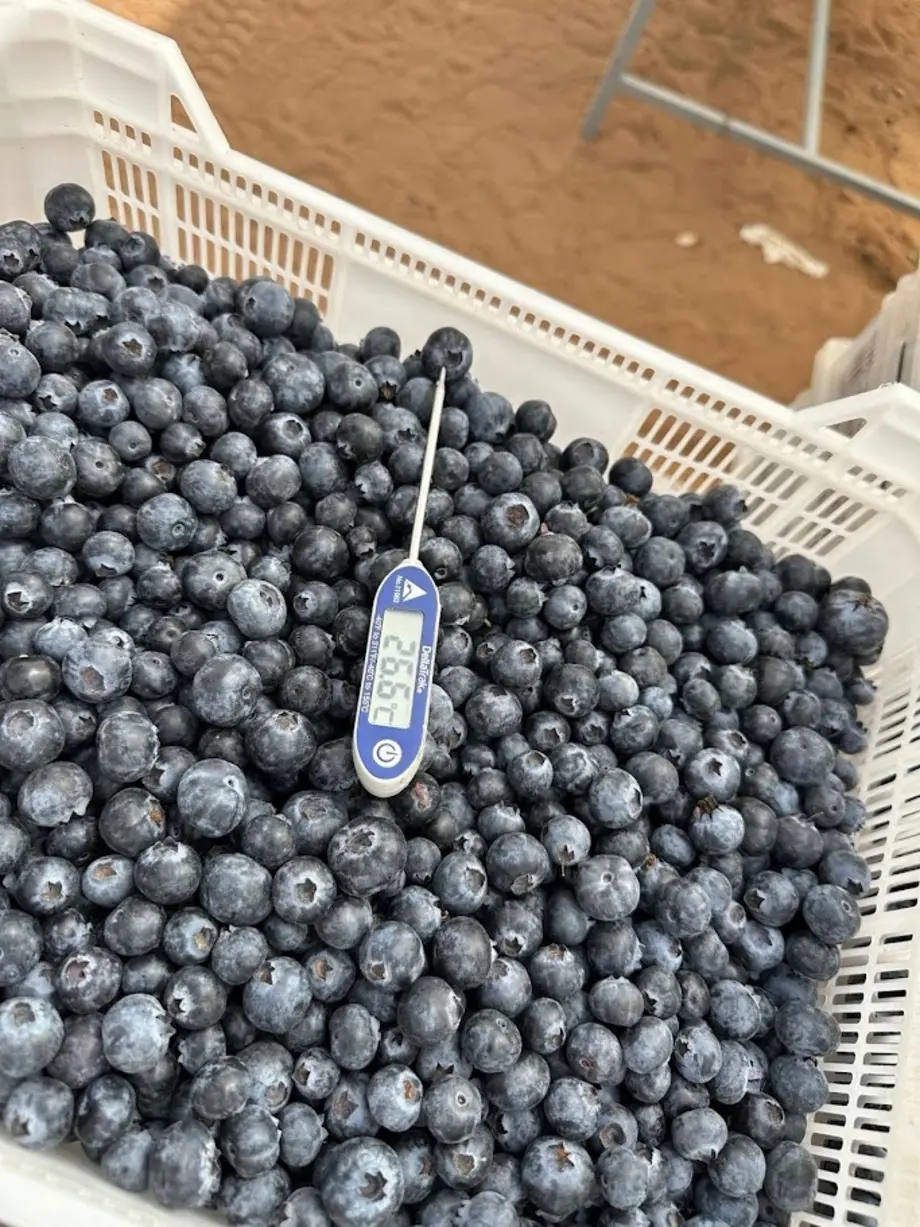
After picking, the speed with which the product is handled becomes essential. Blueberries should not remain in the field for long, especially under the sun or in containers exposed to heat. The longer the fruit remains in unfavorable environmental conditions, the higher the risk of weight loss, texture deterioration and reduced commercial life.
For this reason, it is good practice to remove the harvest from the field as quickly as possible, placing it temporarily in shaded, cool and ventilated areas while waiting for delivery. Although this intermediate phase may seem secondary, it actually has a significant impact on final quality. So-called “field heat” is one of the main enemies of berries, because it accelerates the physiological processes that lead to loss of freshness and deterioration.
The principle is simple: once harvested, blueberries must enter an efficient cold chain as quickly as possible. Early cooling reduces the fruit’s respiration rate, slows degradation processes and improves the chance of reaching the market with a product that is still firm, bright and commercially attractive. In fresh-market supply chains, post-harvest timeliness is not optional: it is a competitive requirement.
Commercial quality and storage life
All the measures described have one common objective: preserving the commercial quality of blueberries. Shelf life does not depend only on variety and storage technology, but also on the way the fruit is harvested and handled in the first hours after picking. A berry harvested at the right ripening stage, during the coolest hours and with rapid removal from the field better preserves firmness, appearance and storage performance over time.
This is particularly true for markets that require high standards of uniformity and presentation. The final consumer immediately perceives the difference between fruit that maintains brightness and firmness and fruit that shows signs of shriveling or softening. For operators, therefore, taking care of harvest management means protecting the value of production along the entire supply chain.
A supply chain approach
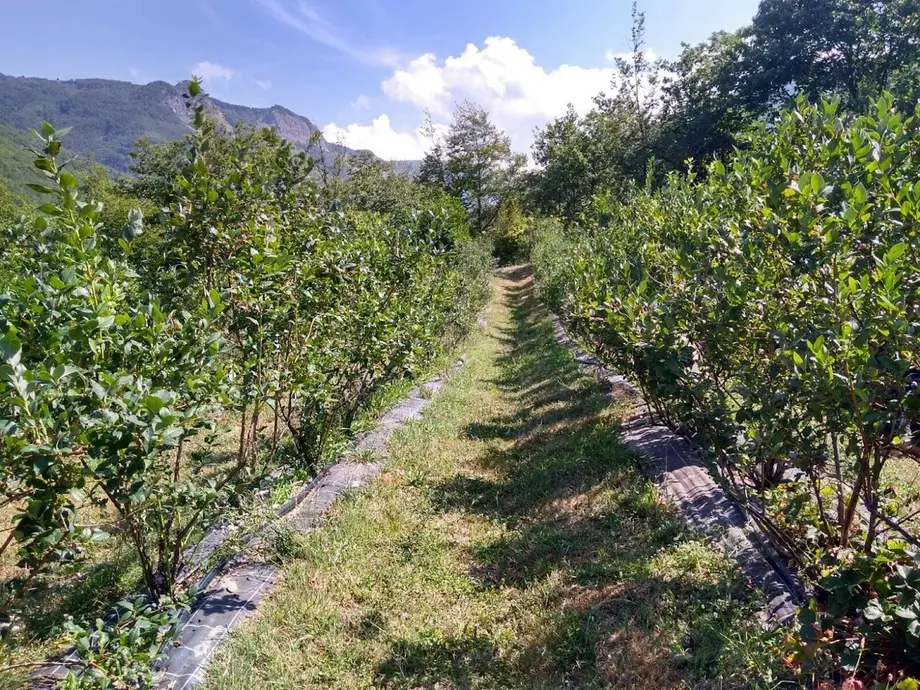
Blueberry harvesting should be seen as a supply chain process, not simply as a manual operation. Scheduling harvest times, choosing the correct picking moment, increasing the frequency of passes during periods of rapid ripening and minimizing the time fruit remains in the field are all interconnected actions that contribute to the final result.
In a sector where quality demand is high and competition is growing, the difference is often played out in apparently small details: a few hours of delay, a temperature that is too high, a postponed harvest pass. For this reason, harvest operations must be organized methodically, anticipating critical points and working in a coordinated way between field, logistics and post-harvest.
When everything works well, the result is a more intact, more stable blueberry, better suited to meet the needs of the fresh market. And it is precisely in this phase, between the field and the first cooling stage, that an important part of its commercial destiny is decided.