








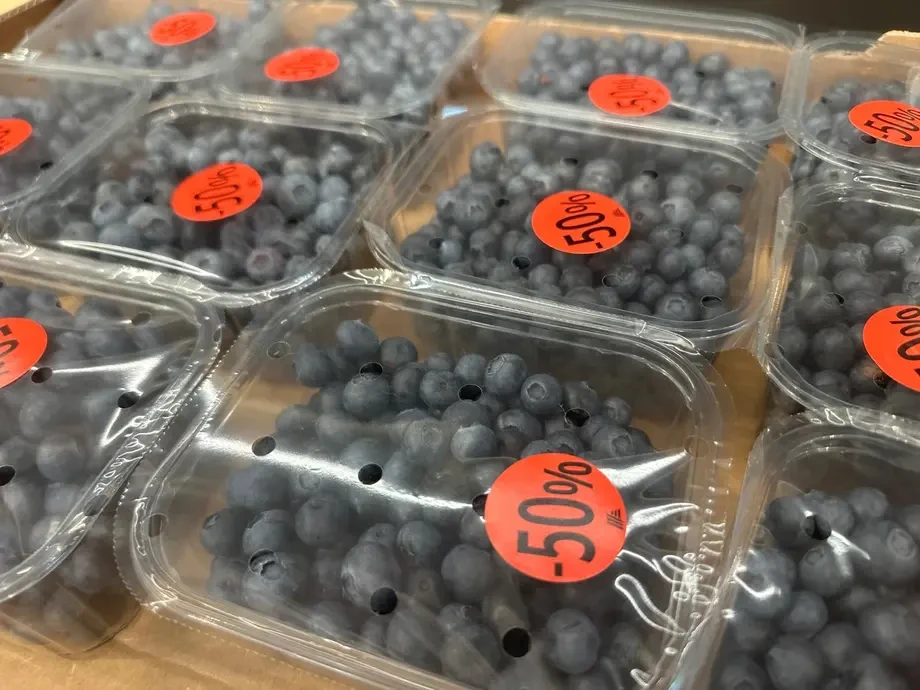
Wholesale prices fell to around UAH 100/kg (approximately €1.93/kg), making blueberries more accessible to consumers. However, frost damage and weak yields have severely affected mid- and late-season varieties.
Ukraine’s 2026 blueberry season is marked by contrasting trends. Domestic prices have fallen to some of their lowest levels in recent years, while growers across many production areas are reporting poor yields and significant crop losses.
According to Taras Bashtannyk, President of the Ukrainian Horticultural Association (UHA), harvesting is expected to continue until approximately the end of August.
During periods of peak supply, wholesale prices directly from farms have fallen to around UAH 100/kg (€1.93/kg), while retail prices have generally remained close to UAH 200/kg (€3.87/kg). This is helping blueberries move from a relatively expensive niche into the Ukrainian mass market.
“Blueberries have become a mass-market berry because supply is increasing and consumers like the product. Both demand and supply are growing, and I expect consumption to continue expanding,” Bashtannyk told EastFruit.
Mid- and late-season varieties suffer the greatest losses
Despite the wide availability of blueberries in supermarkets, physical yields have been weak in many regions. The extent of the losses varies according to location, microclimate, variety and production technology.
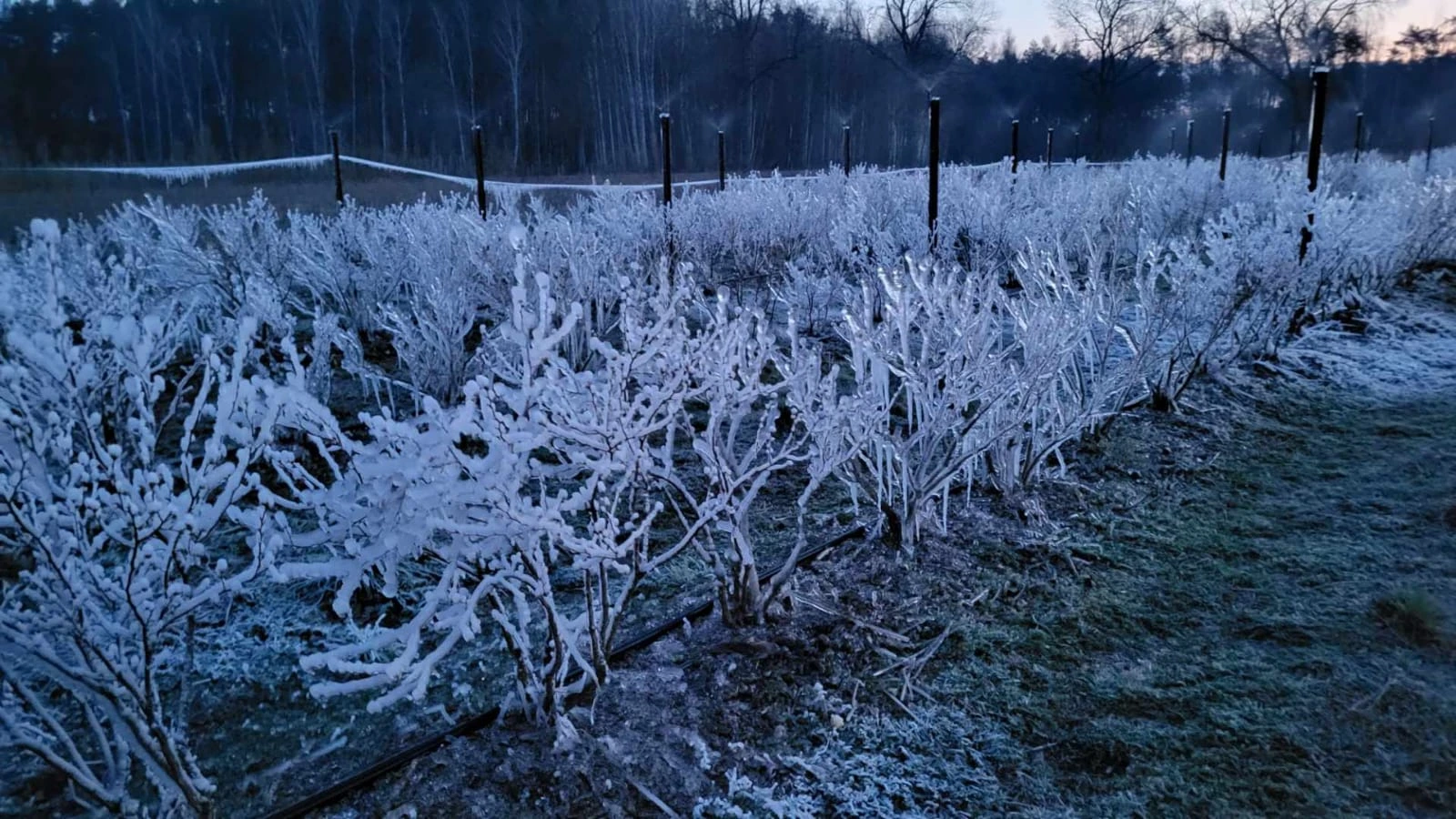
Mid- and late-season varieties have been affected most severely. In some areas, yields of mid-season cultivars are reportedly close to zero. Spring frosts were among the main causes of the losses, underlining the need for better variety selection, diversified harvest windows and frost-protection systems.
Growers face high costs and labour shortages
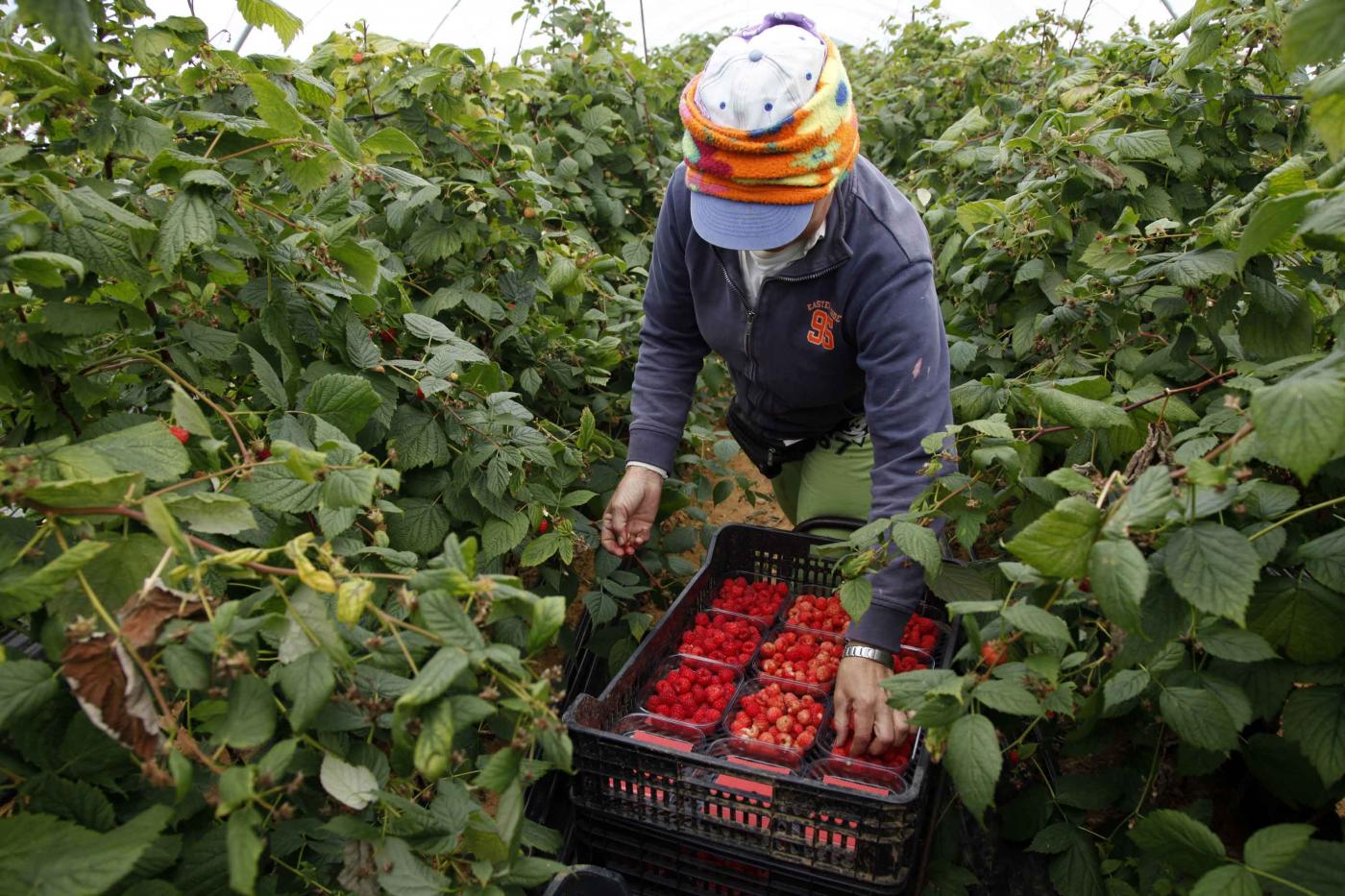
Low consumer prices do not necessarily correspond to low production costs. Ukrainian growers are dealing with reduced yields, high operating expenses and a continuing shortage of seasonal labour. Harvesting, sorting and packing remain heavily dependent on manual work.
Profitability therefore increasingly depends on marketable yield, fruit quality, production efficiency and access to higher-value retail and export markets.
Some producers are also experimenting with blueberries grown in containers, substrates and tunnels. These systems offer greater control over irrigation, nutrition and substrate acidity, but require higher investment and more sophisticated management. Bashtannyk expects them to remain a niche production model in Ukraine.
A more mature blueberry market
The 2026 season suggests that Ukraine’s blueberry sector is entering a more mature phase. Rising domestic supply and lower prices are expanding consumption, but climate volatility, labour shortages and increasing competition are placing additional pressure on growers.
Future competitiveness is therefore likely to depend less on expanding planted area and more on yield stability, production costs, variety selection, post-harvest management, fruit quality and access to export markets.
Currency conversions are based on the official exchange rate on 17 August 2026: EUR 1 = UAH 51.708.
Adapted by the Italian Berry Editorial Team
Adaptation of the article Ukraine’s blueberry prices hit new lows despite poor yields and frost losses published by EastFruit on August 11, 2026.
Italian Berry - All rights reserved