









In Korea, growth in the strawberry market is not only about volume, but also about extending the consumption season. Desserts, beverages and snacks are supporting off-season demand, while vertical farms seek to serve a market where summer and autumn supply remains limited.
Growth in the strawberry market can be measured not only through increasing volumes, but also by considering the number of months during which the product is purchased and consumed. South Korea offers an interesting example: domestic production, concentrated mainly in winter and spring, is accompanied by demand for fresh strawberries that appears to be gradually extending into summer and autumn.
This evolution is being supported by the growing popularity of strawberry-based desserts, baked goods, beverages and snacks. Pastry shops, bakeries, cafés and specialist businesses may need strawberries even when domestic availability is more limited.
However, not all applications generate the same demand for fresh fruit. In some recipes, strawberries can be replaced with frozen fruit or purée; in others, their texture, colour, shape and internal appearance make the use of fresh fruit essential.
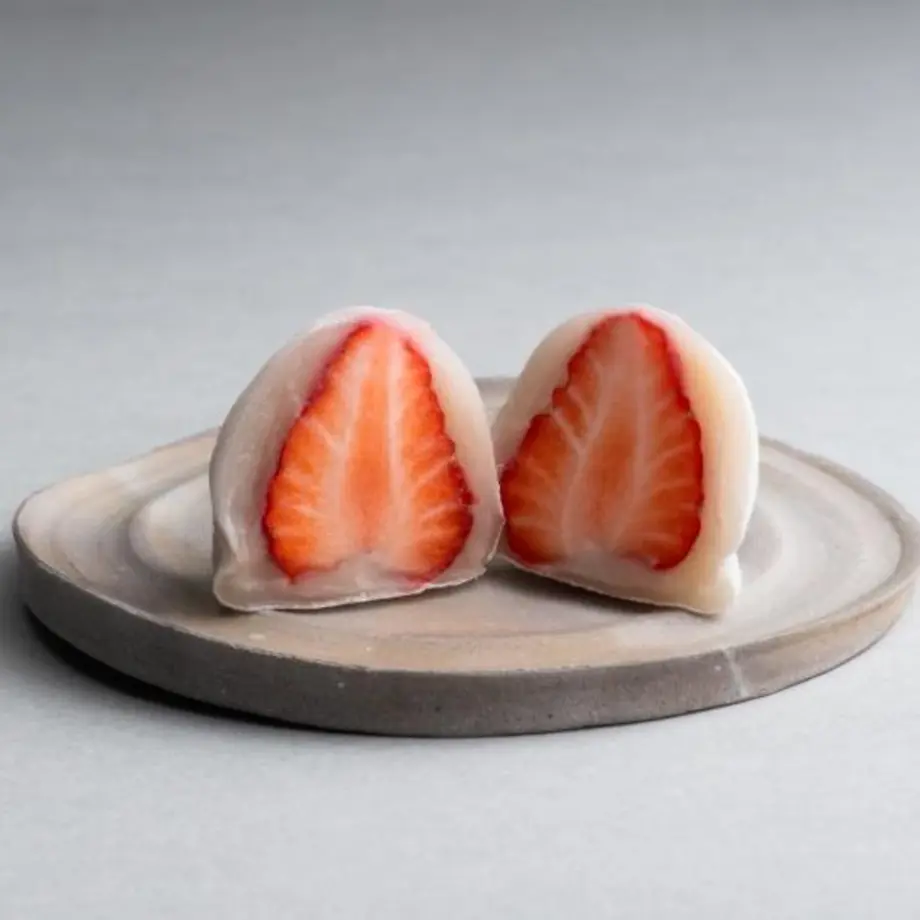 Strawberry daifuku, a popular sweet in Korea
From cakes to tanghulu
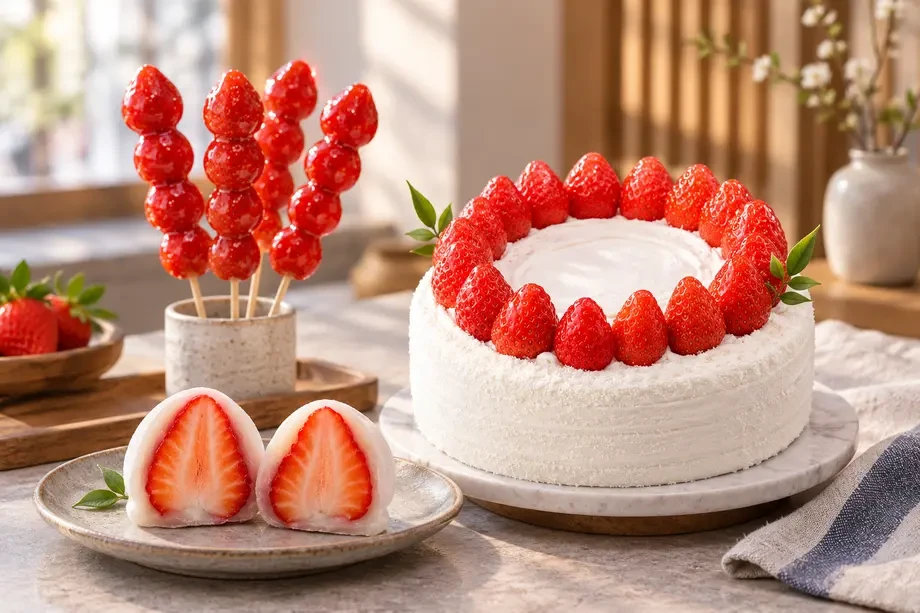
Some of the most representative applications in the Korean market include:
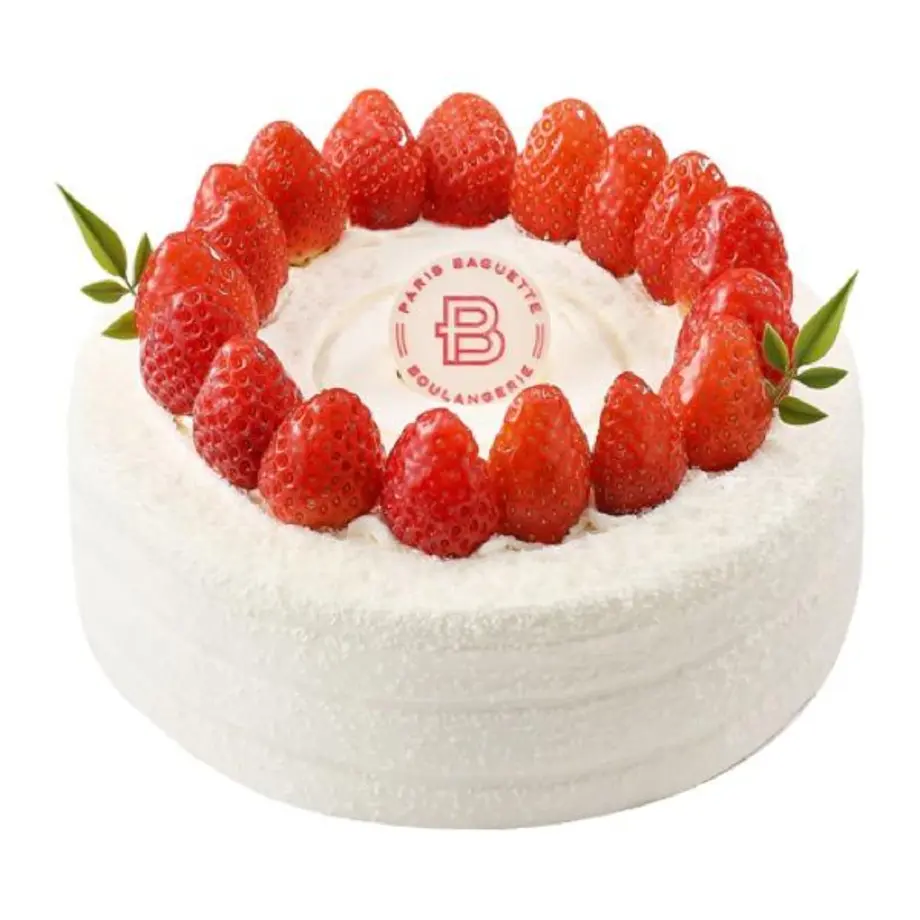
- Strawberry cakes and tarts: fresh fruit provides flavour, colour and visual appeal. Replacing it can significantly alter the finished product.
- Strawberry mochi, or daifuku: a whole strawberry is wrapped in soft rice dough, often combined with sweet bean paste or cream. The fruit’s texture and the appearance of its cross-section are integral parts of the consumption experience.
- Strawberry tanghulu: the fruit is placed on skewers and covered with a thin, crisp sugar coating, turning it into a ready-to-eat snack.
- Strawberry beverages: strawberry milk, lattes, juices and other drinks broaden consumption occasions. Demand for fresh fruit, however, depends on the recipe and whether frozen strawberries or purée can be used.
The PARUS vertical farm case
An indication of the value achieved by off-season strawberries comes from Dongho Park, founder and CEO of PARUS, a company that supplies and operates vertical farming systems and grow-lighting technologies.
Commenting on sales results from the company’s Korean farm, Park stated that around 75% of the strawberries produced fall into medium or higher grades, while the remaining 25% belong to lower grades. According to the entrepreneur, even the lower-grade fruit sells for $17/kg.
Park also reports that, at the Korean vertical farm operated by the company, the energy cost required to produce one kilogram of strawberries is less than one dollar. This figure refers exclusively to energy and therefore does not represent the total production cost, which also includes investment, labour, materials, depreciation, management and distribution.
These figures were provided by the entrepreneur based on his company’s operations and are not statistics representative of the entire Korean market. No further details were provided regarding marketed volumes, the reporting period, sales channels or quality-grading criteria.
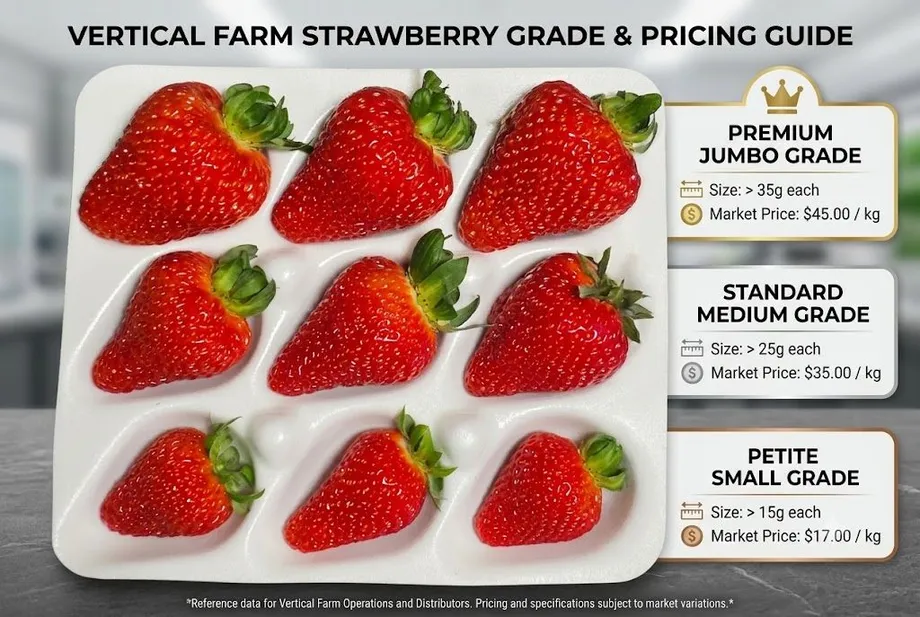 Prices of vertically farmed strawberries in Korea (source: PARUS)
Supply remains insufficient, according to Park
According to Park’s interpretation, the prices observed reflect a change in the Korean market. Consumption, traditionally concentrated in the winter and spring months, appears to be extending into summer and autumn. During these periods, some consumers continue to seek high-quality strawberries, while supply is not yet sufficient to fully meet demand.
This imbalance may be supporting high prices even for lower-quality grades. The observation is consistent with the hypothesis of an attractive off-season market for production systems capable of scheduling harvests, but it must be assessed by considering every cost component and the specific characteristics of the target market.
Park himself emphasises that conditions cannot be transferred automatically from one country to another. Consumption habits, production calendars, competition from imports, local availability and willingness to spend vary significantly between markets.
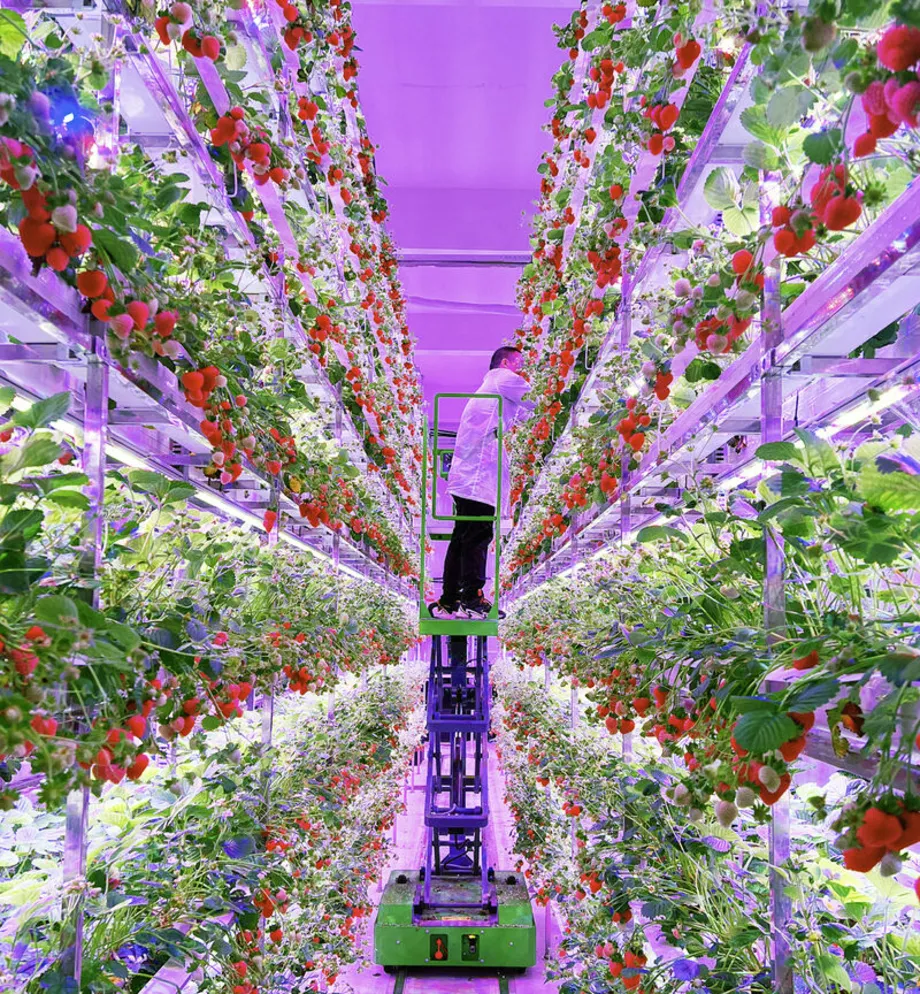 A vertical strawberry farm developed by PARUS
CJ Foodville uses summer strawberries from Muju
On the demand side, a concrete example is provided by CJ Foodville, the company that operates the Tous les Jours bakery chain. In 2025, the company signed an agreement with Muju County in the South Korean province of North Jeolla, with the stated aim of promoting the consumption of local agricultural products and establishing a more stable distribution base.
According to CJ Foodville’s official overview, Muju strawberries are grown in high-altitude areas and are characterised by their firmness, sugar content and aromatic profile. The company used some of these summer strawberries in Strawberry Queen, a fresh cream cake presented as a signature Tous les Jours product.
In this case too, the information was published by the company itself. The source does not specify the volumes purchased, the prices paid to growers or the share of Muju strawberries used in the cake’s total production. Nevertheless, the project demonstrates the existence of a commercial link between local summer production and a bakery product based on the use of fresh strawberries.
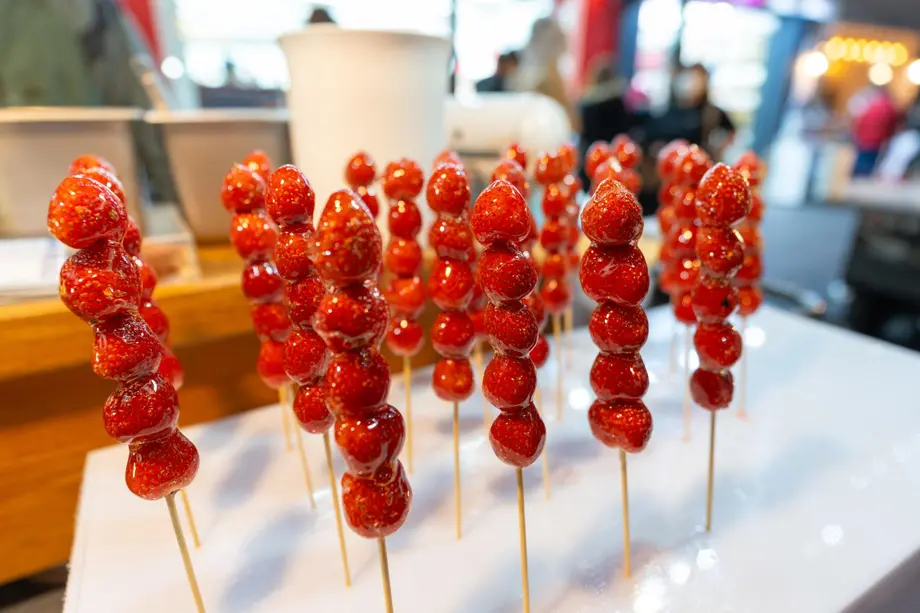 Strawberry tanghulu, a popular Korean dessert
The key question: when is the product unavailable?
The PARUS and CJ Foodville cases describe two sides of the same potential market: on the one hand, scheduled production in a controlled environment; on the other, pastry and foodservice businesses interested in keeping products made with fresh strawberries in their ranges.
To assess the opportunity in practical terms, the question proposed by Park is particularly relevant: during which periods of the year are fresh strawberries difficult to source in a given market, and are consumers willing to buy them during those months?
The answer requires a separate analysis for each country. A high off-season price alone does not guarantee the economic sustainability of a vertical farm, just as the availability of strawberry desserts does not automatically provide an estimate of demand for fresh fruit. Volumes, the duration of the commercial window, quality standards, prices, total costs and competition from imports must all be examined.
Questions for the Italian supply chain
For Italy, the Korean case suggests that closer attention should be paid to professional demand from pastry shops, bakeries, cafés, gelaterias and dessert producers. The starting point is to identify the products that necessarily require fresh strawberries during summer and autumn, distinguishing them from those that can use frozen or processed fruit.
It is then necessary to establish which volumes and price levels these operators can support and which characteristics the product must offer in terms of size, firmness, flavour, appearance and shelf life.
Market growth may therefore depend not only on how many strawberries are sold, but also on the supply chain’s ability to turn consumption that is still seasonal into demand distributed over a longer period. Korea points to a possible direction; for the Italian market, the true scale of the opportunity remains to be measured.
Italian Berry – All rights reserved