









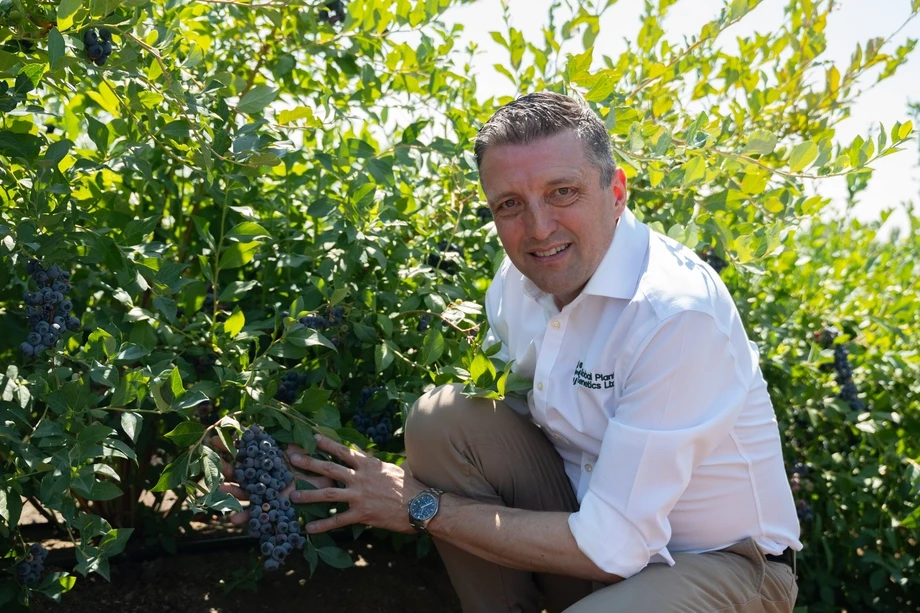
In an exclusive interview with Italian Berry, Jamie Petchell, Co-Owner and Director at Global Plant Genetics, discusses the positioning of OBG-Astoria, OBG-Belair™, OBG-Sirocco™ and OBG-Raptor™, from early trial results to licensing strategies.
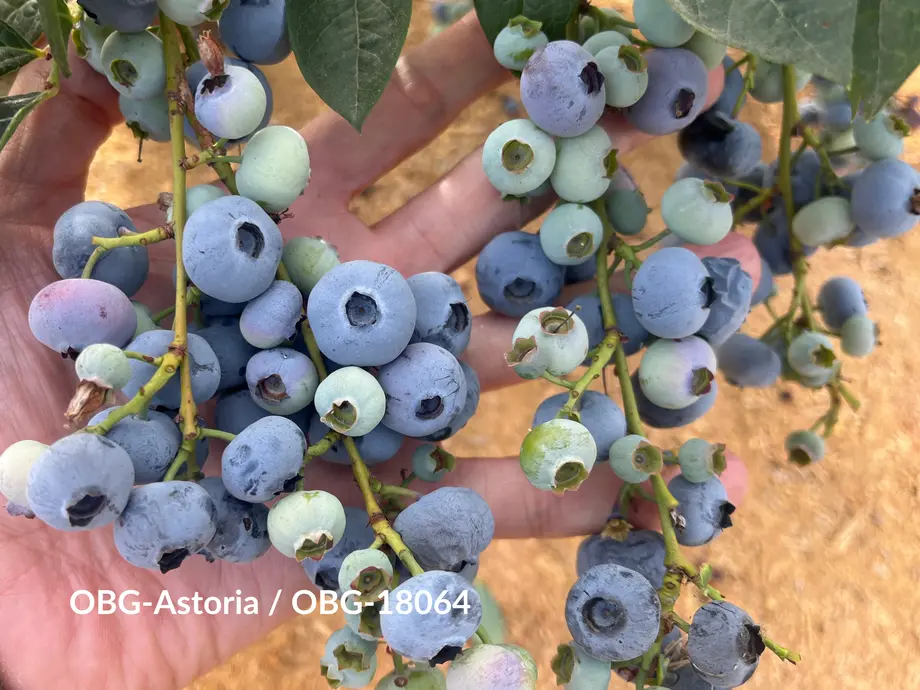
Global Plant Genetics (GPG) and Oregon Blueberry have presented four new blueberry cultivars to an international audience of licensed nurseries, growers, consultants, marketers and industry specialists: OBG-Astoria, OBG-Belair™, OBG-Sirocco™ and OBG-Raptor™.
The cultivars made their international debut at the Oregon Blueberry Open Day, providing an opportunity to experience the latest advances from a breeding programme spanning both high chill and low chill production systems.
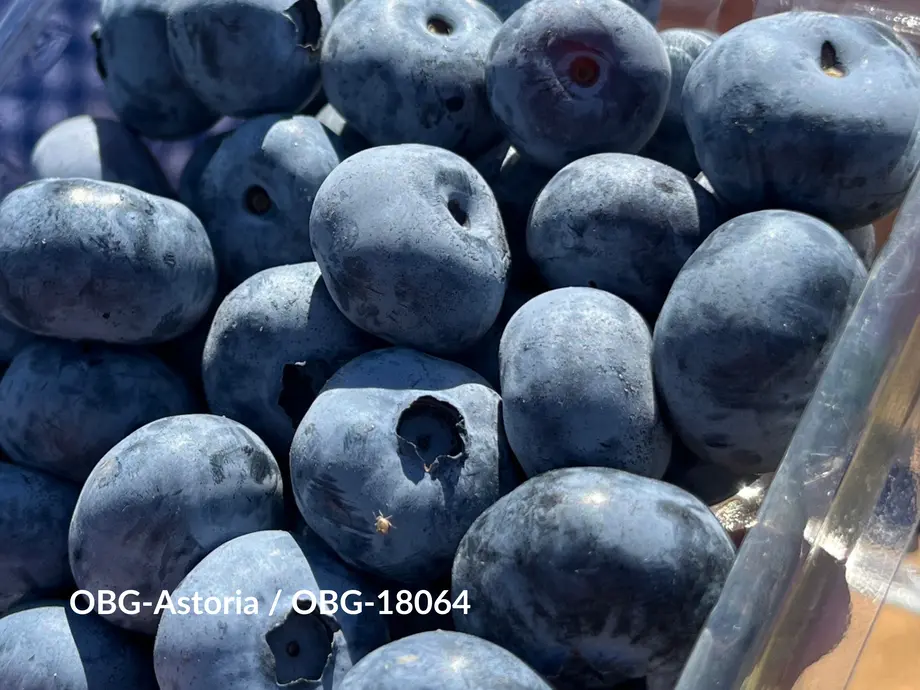
Together, the new introductions demonstrate the programme’s focus on improving fruit quality, grower economics, commercial performance and consumer satisfaction, while addressing the evolving needs of blueberry producers worldwide.
Global Plant Genetics manages the international commercial development of the Oregon Blueberry programme outside the USA and Canada. Italian Berry interviewed Jamie Petchell, Co-Owner and Director at Global Plant Genetics, to explore the current status of international trials, the first quantitative results and the prospects for introducing the four cultivars in Europe and the Mediterranean region.
Are the four cultivars already being trialled outside the USA and Canada? What are their prospects in Italy and the Mediterranean region?
“OBG-Astoria, OBG-Belair™, OBG-Sirocco™ and OBG-Raptor™ are now entering a broader phase of international evaluation across the territories managed by GPG outside the USA and Canada.
“Trials and early-stage introductions are being developed across Europe, the Mediterranean region, Latin America, Asia and selected warmer-climate production areas. In Europe, GPG works with Kusibab-Wyka in Poland as its principal licensed plant-producing nursery for the programme.
“The varieties are at different stages of commercial development, with planting scales currently ranging from small replicated evaluation plots to larger pre-commercial trials. For this reason, we would prefer not to publish definitive country-by-country hectare figures until the current plantings and import programmes have been fully verified.
“For Italy and the wider Mediterranean region, the anticipated positioning is broadly as follows.
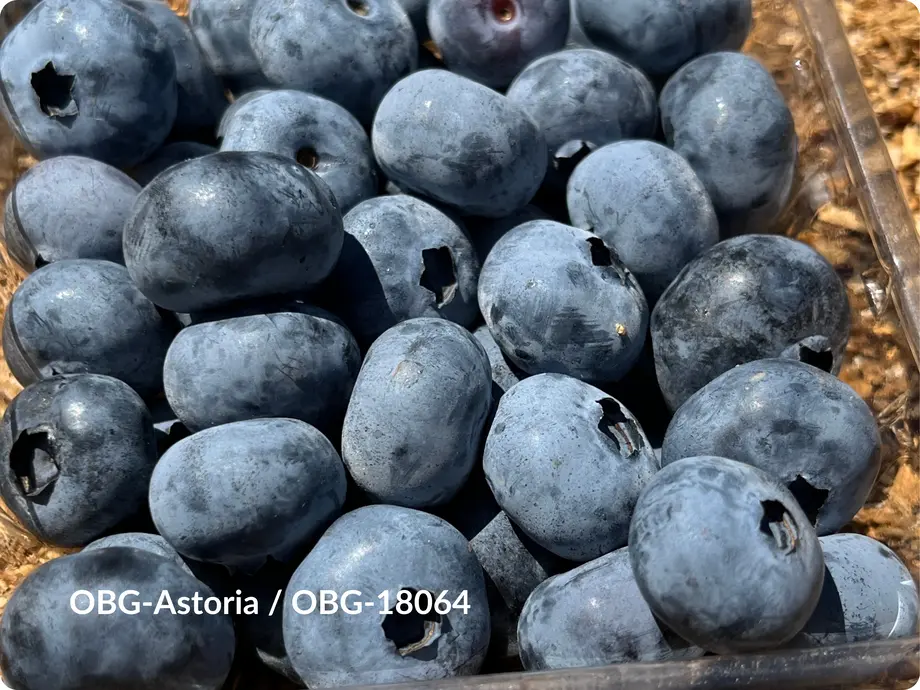
“OBG-Astoria is intended for high chill production, with potential relevance to northern Italian and continental European growing regions.
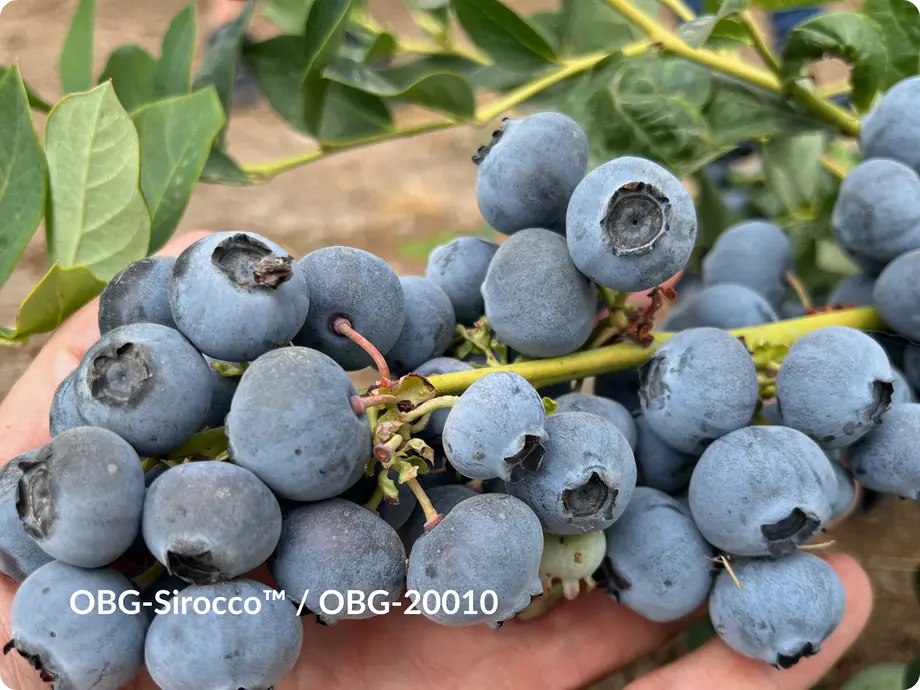
“OBG-Belair™ and OBG-Sirocco™ are low chill cultivars with potential for Mediterranean, protected, substrate-based and intensive production systems.

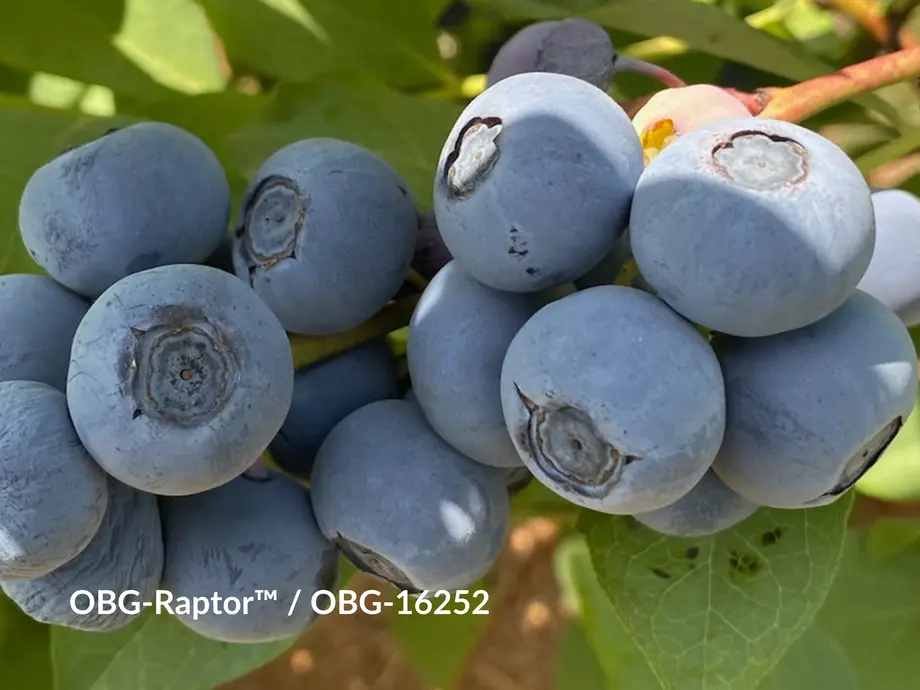
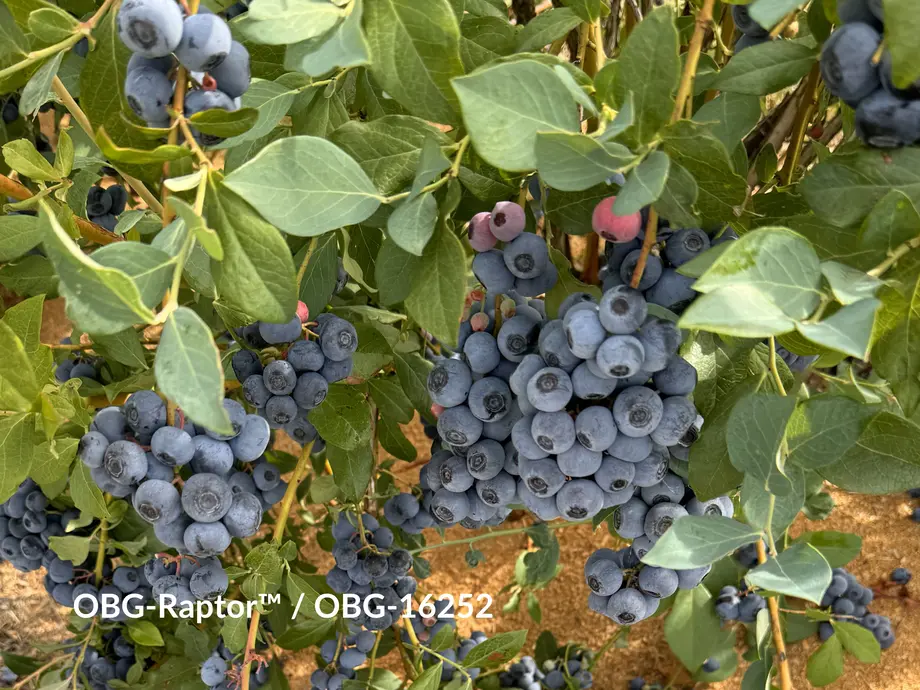
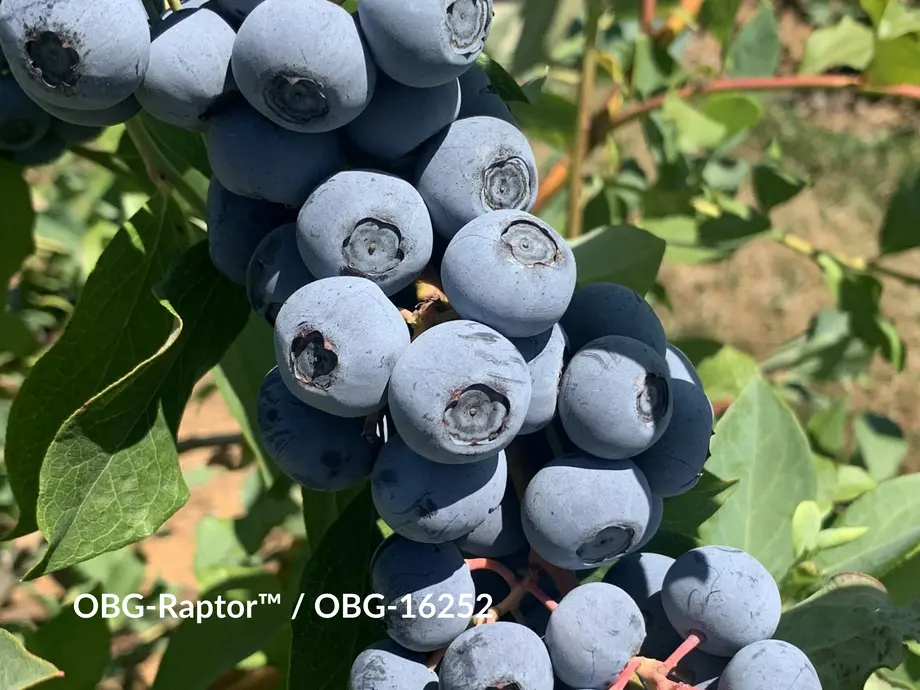
“OBG-Raptor™ is a rabbiteye-type cultivar intended for environments where plant resilience, productivity and climatic adaptability are especially important.
“Commercial plant volumes can be fulfilled within standard pre-ordering timelines for plant material. Initial European plant supply will be through licensed nursery channels, with no anticipated restrictions on fruit production.”
What quantitative results are already available for yield, berry size, firmness and fruit quality?
“The cultivars have only recently been introduced internationally, and complete replicated datasets covering all traits and production environments are not yet available for publication.
“In addition to the data collected in Oregon and presented in the variety brochures, the most advanced quantitative information currently available relates to OBG-Belair™.
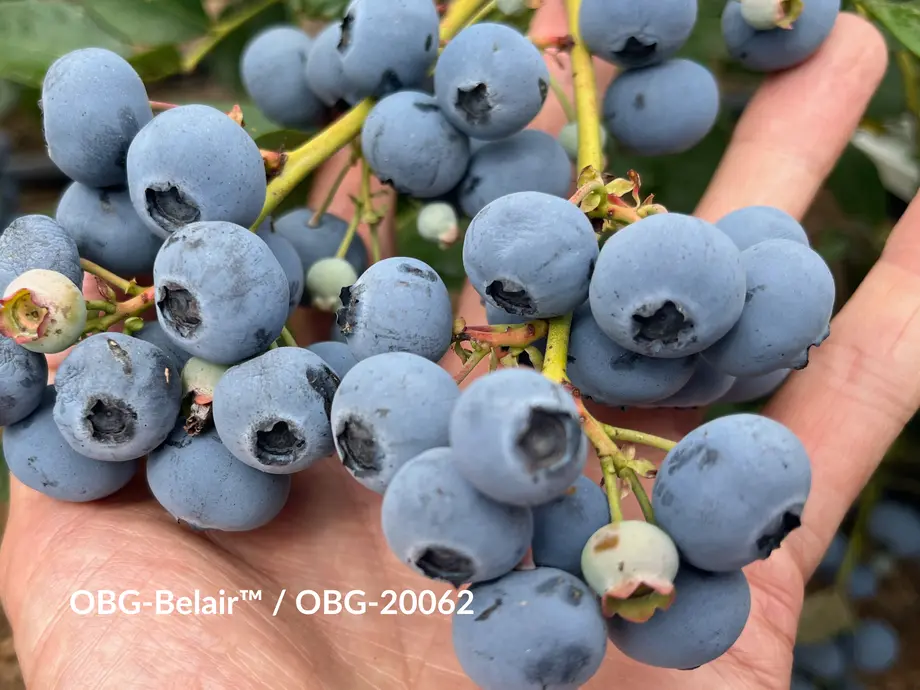
“In California’s Central Valley, under approximately 300 chill hours, trial results have recorded:
an average berry size of approximately 22–24 mm;
firmness readings of approximately 307–430 g/mm³;
yields of around 8 kg per plant under the reported trial conditions.
“In Oregon’s Willamette Valley, first-pick fruit has exceeded 21 mm, with the variety positioned on the early side of the mid-season window under approximately 400 chill hours.
“For OBG-Astoria, OBG-Sirocco™ and OBG-Raptor™, evaluations are continuing for yield, berry size, firmness, Brix, post-harvest performance, splitting tolerance and harvest efficiency. Other than the information already shared, we would not currently wish to publish precise figures until the datasets have been repeated across multiple locations and seasons.”
Could the cultivars be suitable for mechanical harvesting?
“Suitability for mechanical harvesting also remains under assessment, although concentrated ripening patterns have shown significant early promise.
“Plant architecture, berry-detachment characteristics and firmness are also being evaluated, but it would be premature to make a definitive commercial recommendation at this stage.
“Commercial benchmarks vary by trial location and production system. The programme evaluates selections against recognised cultivars used within each region, but there is not yet a single universal benchmark dataset applied across every international trial.”
OBG-Sirocco™ is presented as suitable for intensive and substrate-based production. What characteristics have emerged so far?
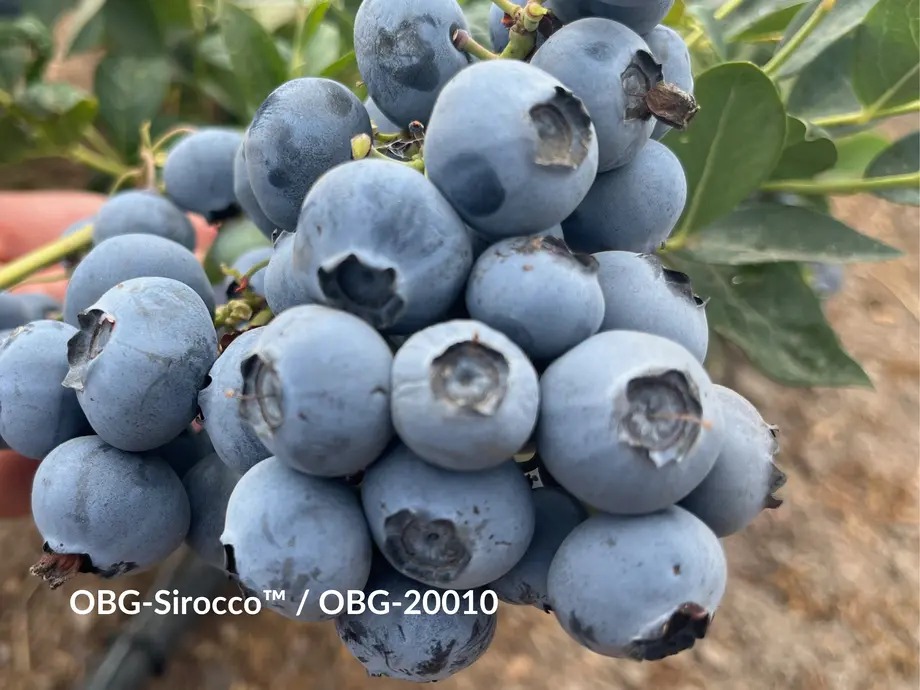
“OBG-Sirocco™ has been selected with intensive, substrate-based and low chill production systems in mind. Early observations indicate strong potential where growers require controlled nutrition, efficient canopy management and high-quality fruit production under warmer conditions.
“However, performance under these conditions must be validated within the different target regions. The results obtained in one production environment cannot automatically be transferred to another without local trials.”
What makes OBG-Raptor™ potentially suitable for challenging climatic conditions?
“OBG-Raptor™ incorporates rabbiteye genetics, which are generally associated with stronger plant vigour, climatic adaptability and resilience across a broader range of soil and environmental conditions.
“The cultivar is also being evaluated for its pollination characteristics and performance under reduced winter chilling.
“However, heat tolerance, water-stress response and reduced-chill performance must ultimately be validated under commercial conditions within each target region. We are therefore developing a network of international trials rather than relying solely on results from the breeding location.
“The intention is to generate reliable regional guidance on chill response, heat exposure, water management, substrate performance and crop timing before recommending large-scale commercial planting.”
How will the licensing and commercial development of the new cultivars be structured in Europe?
“GPG manages the international commercial development of the Oregon Blueberry programme outside the USA and Canada. In Europe, the programme will be developed through licensed partners.
“Kusibab-Wyka in Poland is already working with GPG to propagate and supply licensed Oregon Blueberry plant material for the European market.
“The precise structure may vary by country and cultivar, but it is expected to include:
licensed plant production through approved nurseries;
controlled supply of authentic, traceable plant material;
commercial grower licensing where required;
technical evaluation before major expansion;
production and royalty reporting to protect the breeding programme and its licensed partners.
“Discussions are taking place with growers and commercial groups across a number of European territories. At present, we would prefer not to announce any specific Italian agreement until it has been formally concluded.”
Will this be a closed production programme, or will the cultivars be freely available?
“Our objective is neither to establish a closed production club in every territory nor to offer completely unrestricted access.
“Instead, we aim to build a carefully managed network of capable growers that can evaluate, produce and commercialise the varieties responsibly. The aim is to combine commercial accessibility with plant-material traceability and protection for the breeding programme.
“The four cultivars represent the first international releases from a much deeper Oregon Blueberry pipeline. GPG’s priority is to establish them on the basis of verified performance, strong technical support and long-term commercial sustainability.”
From yield to fruit quality: breeding priorities are changing
The introduction of the four cultivars reflects a wider transformation of the global blueberry industry. As highlighted during the Oregon Blueberry Open Day, the commercial potential of a new variety can no longer be evaluated on yield alone.
“The blueberry industry has evolved significantly over the past decade,” Petchell concludes. “Today’s most successful varieties must do much more than produce high yields. They must balance fruit quality, grower economics, resilience and consumer satisfaction.
“What impressed me most during the open day was the depth of the Oregon Blueberry breeding programme and its clear commitment to developing genetics that can help growers remain competitive in an increasingly quality-driven global market.”
By the Italian Berry Editorial Team
Original content produced and verified by the editorial team.
Italian Berry - All rights reserved