




The Australian retailer rewards its blueberry supplier for turning seasonal production into a year-round premium programme. Behind this achievement lies more than a single variety: it reflects the integration of breeding, growing regions, protected cultivation and commercial partnerships.
Coles has named Mountain Blue Fresh Produce Supplier of the Year 2026, recognising the company for extending the availability of premium Eureka blueberries from just eight weeks to nine months of the year.
The award was presented on 22 October in Melbourne as part of the Supplier Partner Awards, through which the Australian supermarket chain recognises suppliers for quality, innovation and their ability to build reliable commercial programmes.
In Mountain Blue’s case, Coles highlighted two factors: the quality of the Eureka blueberries, sold exclusively by the retailer, and the transformation of their supply window. Extending availability from two months to three quarters of the year shows how continuity is becoming an integral part of premium positioning, alongside berry size, flavour and texture.
Eureka is a varietal brand, no longer a single cultivar
To understand this achievement, it is important to distinguish the original Eureka variety from the range currently sold under the brand.
The first Eureka was developed in 2008 by Mountain Blue breeder and founder Ridley Bell, through the conventional crossing of two blueberry varieties. The selection stood out for its large, sweet, crisp and juicy fruit.
Over time, however, Eureka has evolved into a true varietal and commercial platform. Mountain Blue now describes the brand as a selection of several varieties developed through its own breeding programme and related to the original Eureka.
The cultivars may be suited to different climates and harvest periods, but to be included in the programme they must meet a shared sensory standard. Shoppers therefore see the Eureka brand on the shelf, while different genetics may be used behind the pack to maintain the eating experience over a much longer period.
This is similar to the model used by variety clubs: the brand promises a recognisable quality, while breeding and production planning work to make that promise available for much of the year.
From Northern New South Wales to Far North Queensland
Mountain Blue’s historic heartland is in Tabulam, in Northern New South Wales, an area with a moderately cool winter, a warm spring, available water and favourable conditions for blueberry production.
Its historic production base alone, however, would not be enough to support a nine-month calendar. Mountain Blue has therefore spread production across different growing environments.
The company says it operates three farms in Northern New South Wales and a site in Atherton, in Far North Queensland. Its own production is supplemented by a network of Australian growers authorised to use its proprietary genetics. In total, Mountain Blue reports more than 200 hectares of commercial plantings across New South Wales and Queensland.
Of particular importance is the Berry North project, a joint venture between Mountain Blue and Kureen Farming on the Atherton Tablelands. The growing area reports a harvest season running from March to October, covering a substantial part of the Australian calendar.
Production in the north is complemented by plantings and programmes in Victoria, which help extend the harvest further by taking advantage of different climatic conditions. Mountain Blue’s stated goal remains to reach twelve months, but the company says it does not want to keep the product on shelves when it fails to meet the required quality standard.
The role of Northern Highbush and Southern Highbush varieties
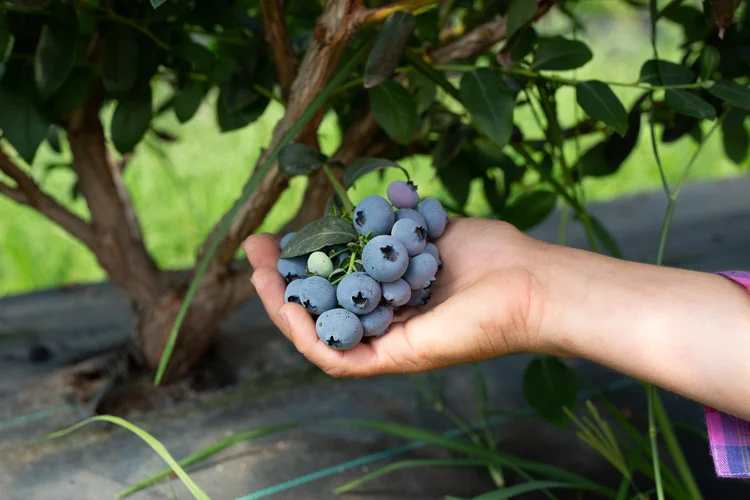
The extended calendar is also supported by the structure of the breeding programme. Mountain Blue develops both Northern Highbush and Southern Highbush varieties, aiming to adapt ripening times and agronomic performance to Australia’s different growing environments.
Southern Highbush varieties can contribute to production in warmer areas with lower chill accumulation, while Northern Highbush varieties make it possible to use the cooler southern regions. Combining the two groups increases the scope for scheduling successive harvests without relying on a single cultivar.
However, the names of all the varieties currently included in the Eureka programme supplied to Coles have not been disclosed, nor has the contribution each growing area makes to the overall nine-month supply window. These are key points to investigate before attributing the result to any specific genetic selection.
Tunnels, hand harvesting and post-harvest management
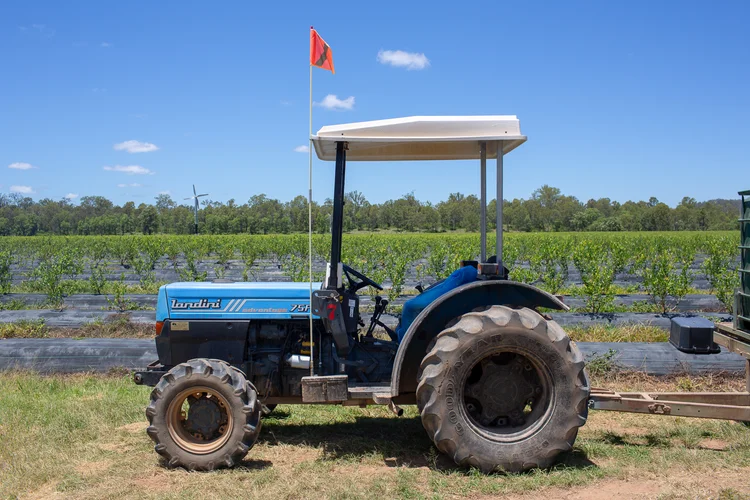
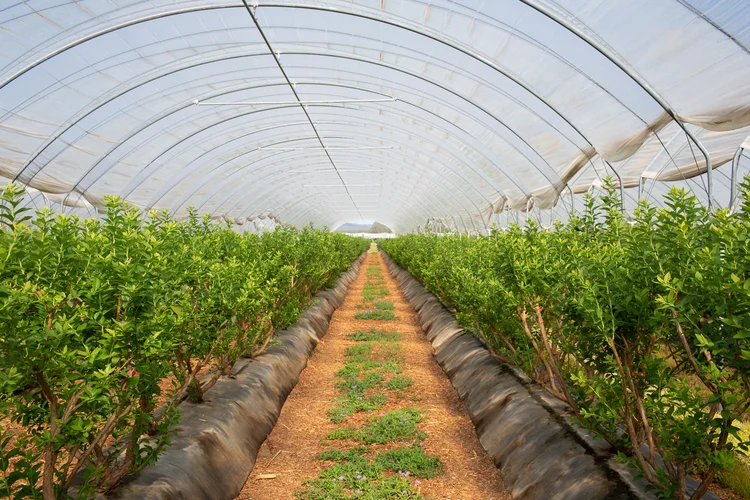
Geographic diversification is complemented by the use of protected cultivation. Mountain Blue uses tunnels to limit damage from rain and frost and to make yields and quality more consistent.
The benefits are particularly clear in parts of Northern New South Wales, where rainfall can coincide with harvest. The protection makes it possible to continue harvesting and reduces the risk of wet fruit, splitting and post-harvest deterioration.
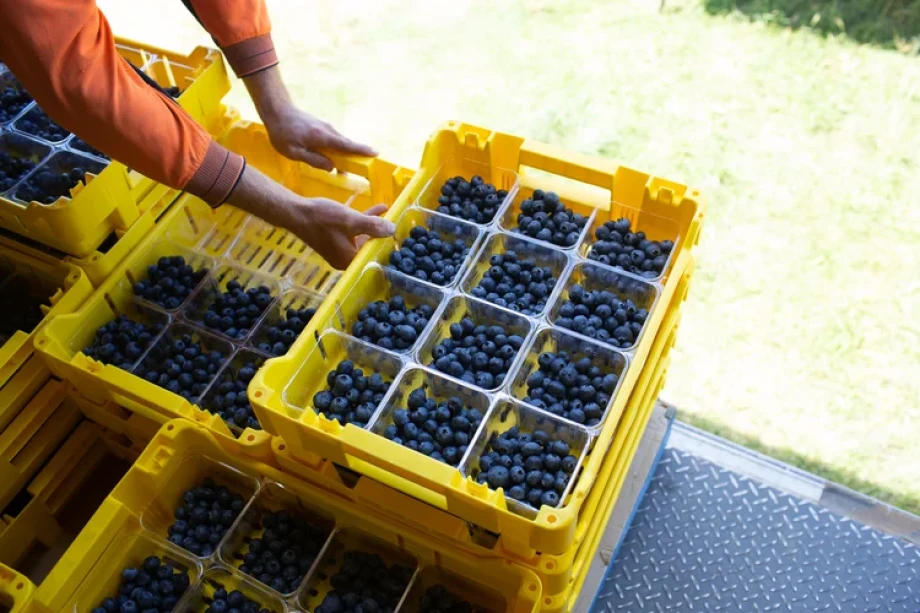
Eureka blueberries are also hand-harvested. For a product line positioned around large berry size, crispness and eating quality, harvest practices and cold-chain management are just as essential as the variety’s potential.
In Victoria, White Cloud Farms is also working to extend the Eureka season. In 2024, Coles awarded the company AUD 400,000 to trial a system combining water recirculation, microclimate management and modified-atmosphere storage. The project confirms that the supply calendar is being extended not only through breeding, but also through changes to cultivation and post-harvest practices.
The exclusive deal with Coles creates a distinct shelf position
Eureka is marketed exclusively by Coles. The premium product listed on the retailer’s website comes in a 200-gram pack, with an observed online price of AUD 6.90 to AUD 7, equivalent to approximately AUD 34.50–35 per kg. Prices and availability may vary depending on the store and the area selected.
The retailer’s product description focuses on three attributes that are easy to communicate: large size, sweet flavour, and a crisp, juicy texture. No Brix, acidity or instrumental texture measurements are provided, so the promise to consumers remains primarily sensory.
The exclusive deal allows Coles to differentiate its range from competitors and gives Mountain Blue a recognisable outlet for production that meets the premium standard. A nine-month supply window also makes marketing more effective: the retailer can build brand familiarity and repeat purchases, instead of seeing the brand disappear after a few weeks.
Continuity becomes a product attribute
The Eureka case illustrates an important development in the premium blueberry market. An excellent variety available for only a few weeks can generate interest, but it is unlikely to build a stable brand on its own.
Mountain Blue has addressed the challenge on several fronts:
- different varieties grouped under a common standard;
- Northern Highbush and Southern Highbush genetics;
- farms located in complementary climatic zones;
- a network of authorised growers;
- tunnels and microclimate management;
- post-harvest technologies;
- an exclusive agreement with a major retailer.
The value created therefore lies not only in the fruit, but in the ability to deliver a sufficiently consistent experience for nine months.
However, the key figures needed for an independent assessment are still unknown: sales volumes, the percentage of packs meeting the Eureka standard, the price premium over conventional blueberries, repeat-purchase rates and the proportion of losses at different stages of the season.
The recognition from Coles does not provide these answers. It does, however, make clear what the retailer considers strategic: not simply having a new variety, but turning it into a long-running, reliable and recognisable premium programme.
Images source: www.mountainblue.com.au
Sources: Coles – Supplier Partner Awards 2026 · Coles – history of its partnership with Mountain Blue · Mountain Blue – Eureka Blueberries · Mountain Blue – farming operations · Berry North – production calendar
Italian Berry – All rights reserved