







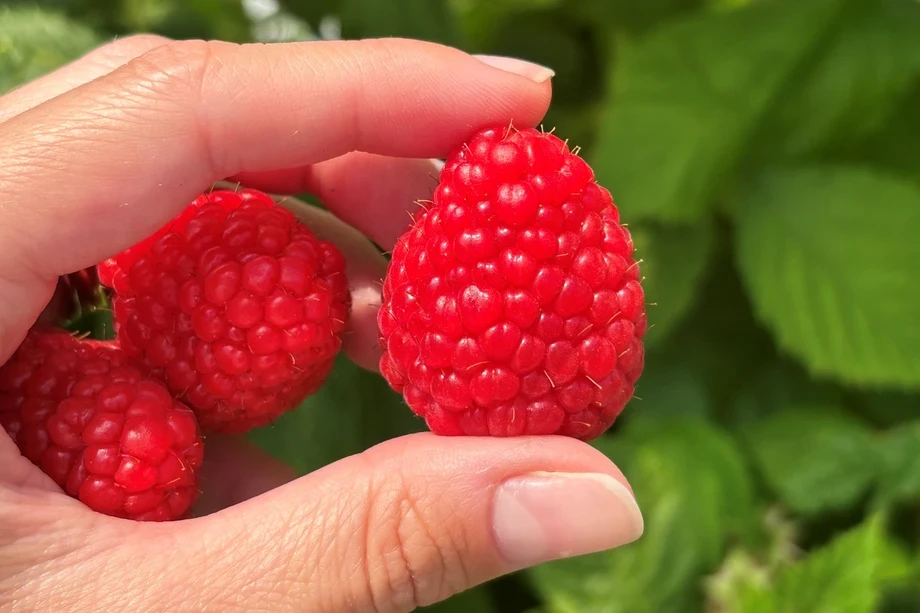
Italian breeder G-Berries will present its first raspberry variety on 2 September, characterised by large fruit size, long shelf life and rapid entry into production. It will be grown in southern Italy, Spain, Portugal and Morocco, while assessments are underway for Poland, the United Kingdom and Mexico.
Italian Berry exclusively reveals the name of the new variety: it will be called G‑Viva and will be the first raspberry developed by the Italian G‑Berries breeding programme.

Alessandro Gualandi (Variety Development Manager, G-Berries) and Alessandro Gasparrini (R&D Specialist, G-Berries) provide Italian Berry with an in-depth analysis of G-Viva’s characteristics.
Which agronomic parameters did you use to select the new variety, and how much weight did you assign to yield, earliness, remontancy, fruit quality, ease of harvesting and post-harvest performance?
Here we observe around 8,000 raspberry seedlings each year, and our selection work follows a clearly defined scientific protocol with very specific objectives. For the launch of our first variety, our goal was to focus on genetics capable of delivering so-called winter production in suitable climates, with fruit quality that could help set a new standard.
The traits we focused on were therefore earliness, remontancy with evergreen characteristics, average fruit quality and shelf life.
In which environments, growing systems and periods of the year was it trialled? Can you describe the duration of the trials, the number of cycles, the areas involved, the presence of comparison varieties and the results obtained in the different countries?
GBR148 G-Viva® was selected three years ago and, as soon as it had passed the internal testing stages, we decided to extend the trials to southern Italy to test its winter-production potential and its adaptability to soil cultivation. At every stage, of course, the results are compared with our internal benchmarks.
We then continued testing by taking advantage of the climates of southern Spain and Portugal. Since this year, the variety has also been tested in Morocco, in the Agadir area, and we decided to conduct a final trial in more continental climates, such as the UK and Poland, to assess its adaptability.
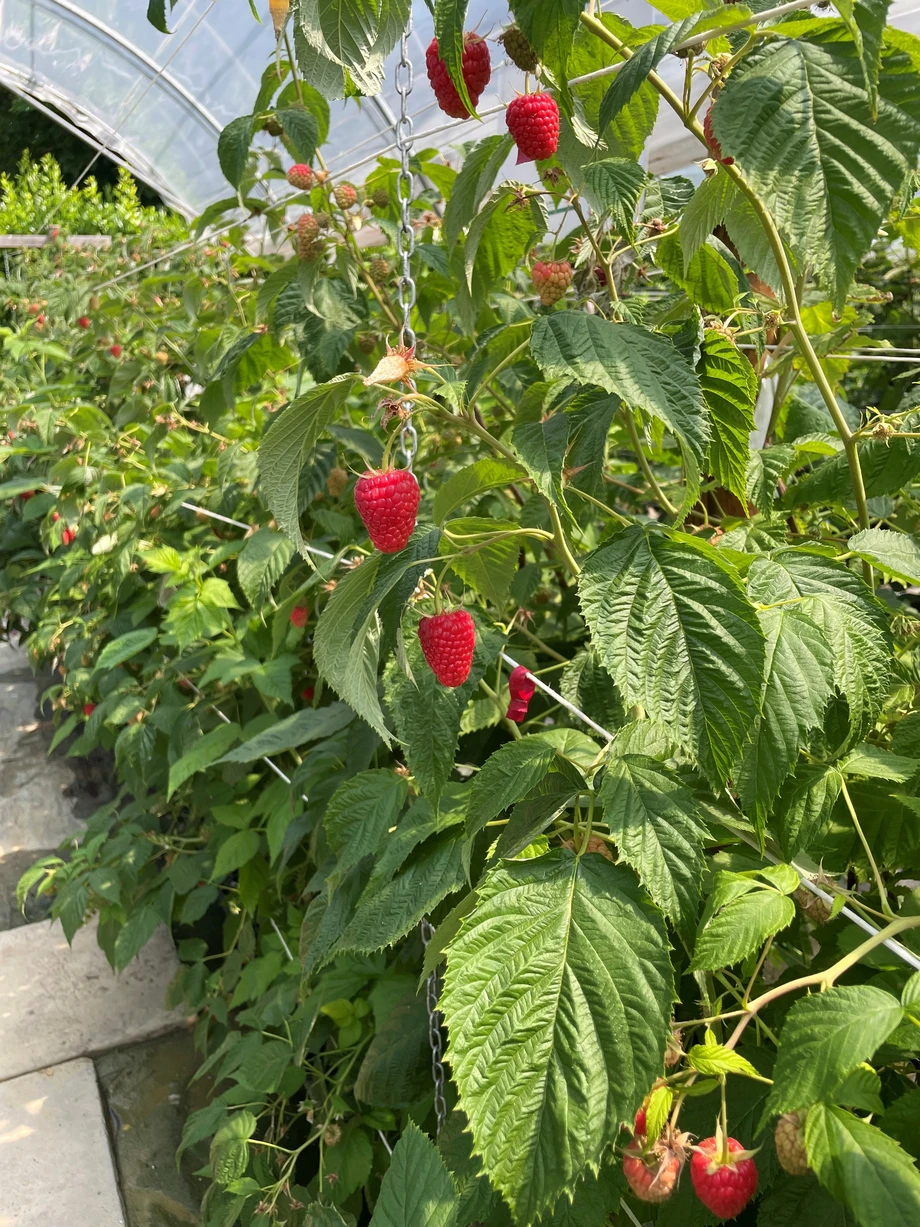
Under what conditions was the indicative yield of 28 t/ha over two cropping cycles achieved? How is production divided between the two cycles, what percentage of the fruit is marketable, and how stable is the yield across farms, seasons and climatic areas?
This is an average figure repeated over several years of trials and confirmed in both soil and soilless cultivation. Production can be divided into approximately 18 t/ha from the primocane crop and 10 t/ha from the floricane crop.
What plant architecture does the variety have, and how should it be managed? What guidance can you already provide on planting density, substrate, chilling requirements, lateral management, pruning, trellising, nutrition and irrigation strategy?
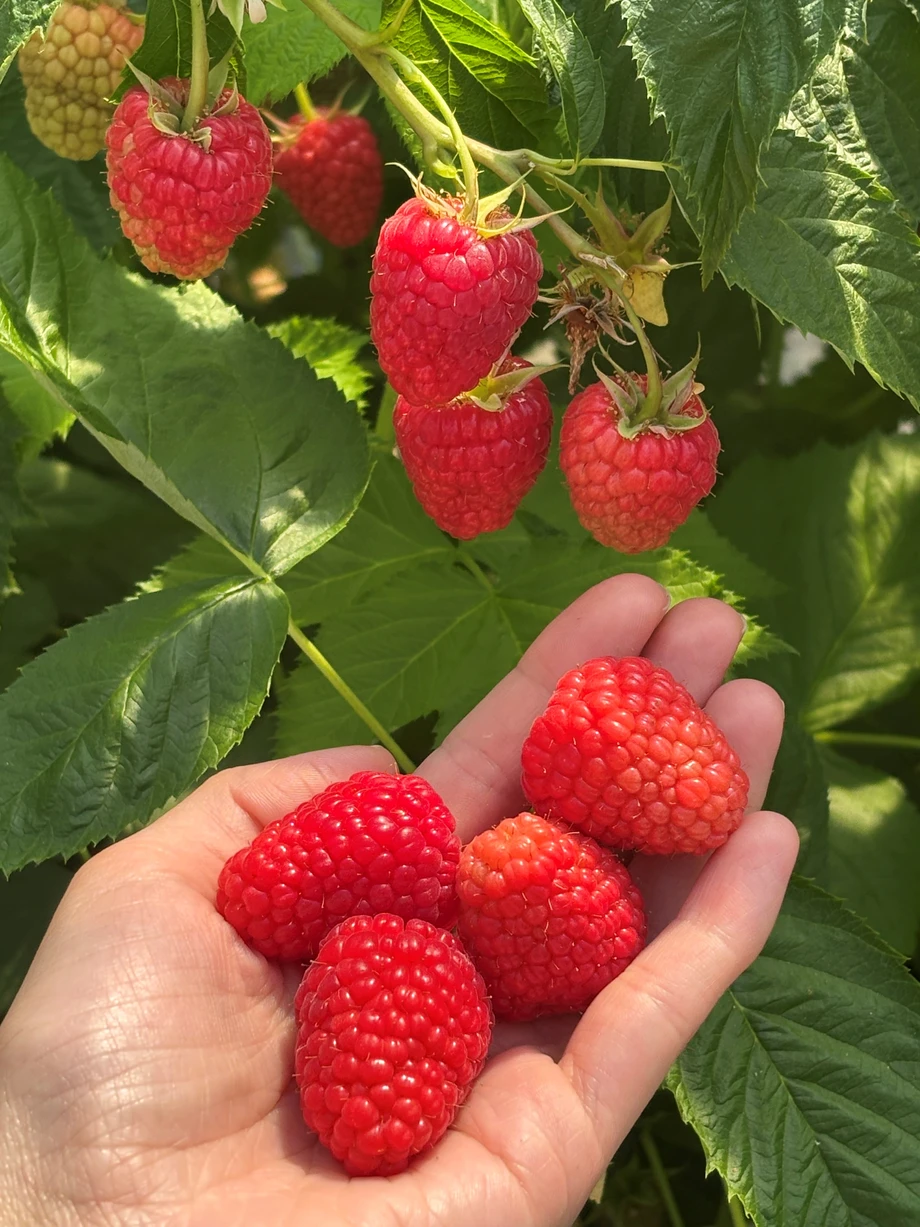
The variety is characterised by an open growth habit, which significantly facilitates harvesting, a high level of remontancy and a natural tendency to develop new laterals. It is vigorous and highly resilient plant material that is suitable for different cultivation techniques.
In our view, its “plasticity” is one of the fundamental traits that makes it effective under current market conditions.
We have also developed a cultivation manual that will be available to everyone who gains access to G-Viva®. It contains all the information on specially developed fertigation recipes, pruning techniques—we have a manual for green-cut management—and planting periods. As regards irrigation requirements, we have also developed a system in the applied-research area of our breeding site that allows us to monitor the requirements of each genotype in comparison with our benchmarks.
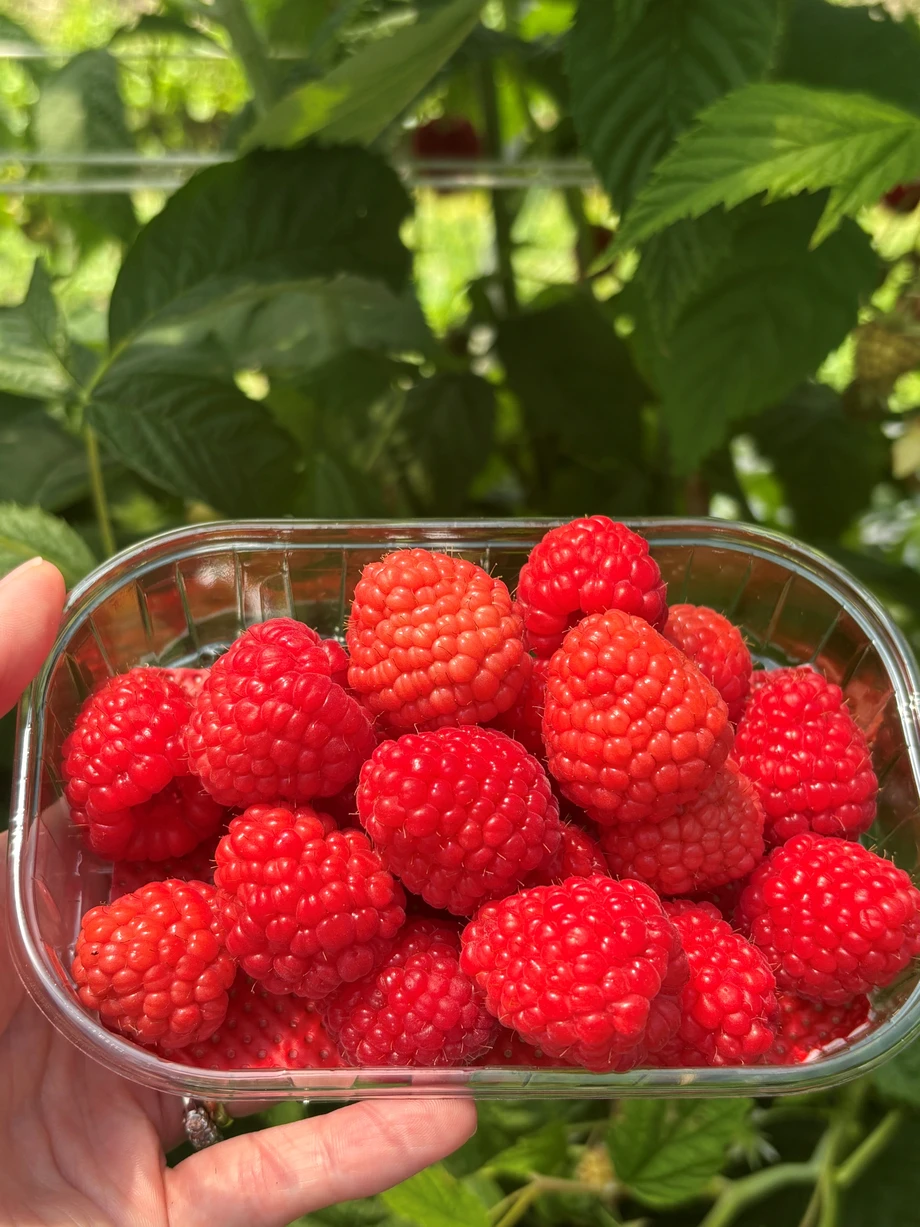
Under which climatic conditions and with what nursery material was harvesting 90 days after planting observed? How do earliness, production continuity and fruit quality change according to the planting date?
G-Viva® was selected specifically for its earliness. This characteristic was measured starting with a standard plug plant and has been confirmed, with a difference of only a few days, in the various production areas in which we tested the variety.
We also observed an excellent response to green pruning (green cut), with the rapid emergence of new laterals following cutting, suggesting excellent potential for evergreen production environments.
What data have you collected on susceptibility or tolerance to the main raspberry pests and diseases, including Phytophthora, Botrytis, powdery mildew, mites and insect vectors? Are specific trials also planned under conditions of heat, high humidity, salinity or limited water availability?
The stress tests conducted so far have not revealed any particular susceptibility. In hot, dry environments, we observed no susceptibility to two-spotted spider mite, with the variety maintaining good performance even under high pest pressure. In humid, waterlogged environments with soil cultivation, we observed neither Phytophthora nor Botrytis, while in cool and humid environments we found no rust.
To complete the different types of assessment, we are also carrying out a trial with a coarser-textured substrate. In terms of vegetative development, the variety is responding very well, and we will see the first fruit in a few weeks.
How were the stated ten days of shelf life measured? What protocols did you apply for temperature, humidity, simulated transport, packaging and the assessment of weight loss, firmness, colour, leakage, mould and marketability?
At G-Berries, we measure the shelf life of our genetic material from phase 2 onwards, which is the first selection stage. In this case, the assessment is carried out through static storage with scheduled checks for up to 14 days. In the case of G-Viva®, since last year we have also used our network to conduct commercial shelf-life trials: production in southern Italy, transport to Verona, storage and commercial distribution.
This was not a scientific figure, but a practical commercial-handling trial. The results were remarkable. For us, shelf life is a central factor in delivering value throughout the supply chain: all too often, we still see commercial varieties that look beautiful on the plant being promoted even though their post-harvest performance is not equally strong.
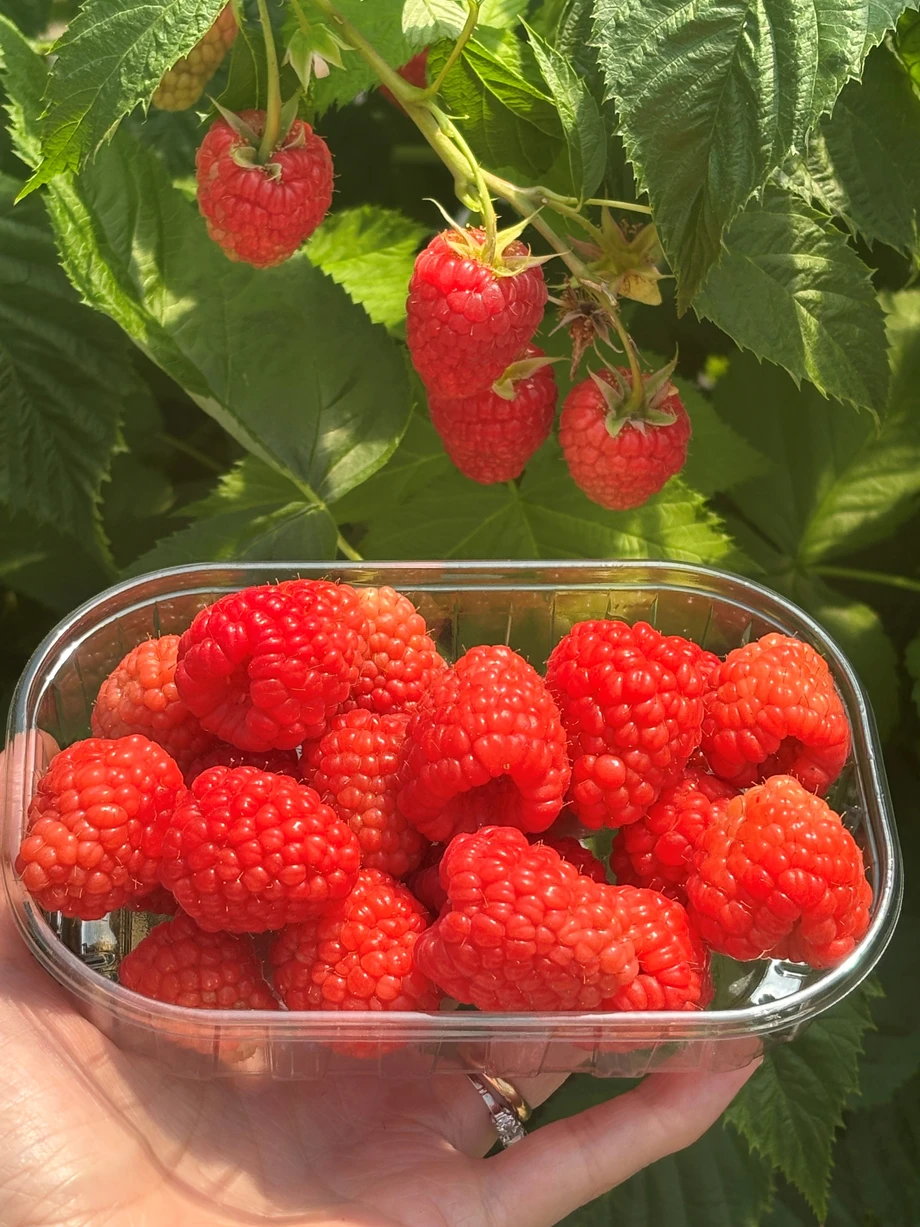
Which characteristics specifically determine the variety’s premium positioning? Can you provide data on average fruit size, uniformity, firmness, Brix, acidity, aroma, harvest efficiency and the percentage of fruit meeting specifications after transport?
The aim is to position G-Viva® in the winter-production segment and build on its uniformity and ease of post-harvest management to establish a new premium standard. The variety maintains excellent fruit size, averaging more than 6 grams in primocane production and even more in floricane production. Above all, however, the fruit is consistently bright, dry and firm.
What licensing model will G-Berries adopt in the different markets? Will the variety be available to all qualified growers or reserved for selected partners, and what conditions are envisaged in terms of royalties, minimum planted areas, territorial exclusivity and fruit marketing?
This is a very important issue for us. In Europe, our plant material is available to companies belonging to our development club, Gil Program®. This programme is one of our company’s flagships. It was launched several years ago and currently includes eight companies across Europe and the UK. A dedicated strategy very similar to the European model has been established for Morocco.
All commercial terms are therefore clearly known to members from the moment they join the club: there is no negotiation based on current market trends, and this can help marketing companies prepare more robust and clearly defined plans for varietal growth.
We can also announce that G-Viva® will be available for its first trials in Mexico from 2027. Strategies are also being finalised for a 2027 launch in two other countries that are strategically important to the development of this genotype and, more broadly, to our raspberry-breeding programme.
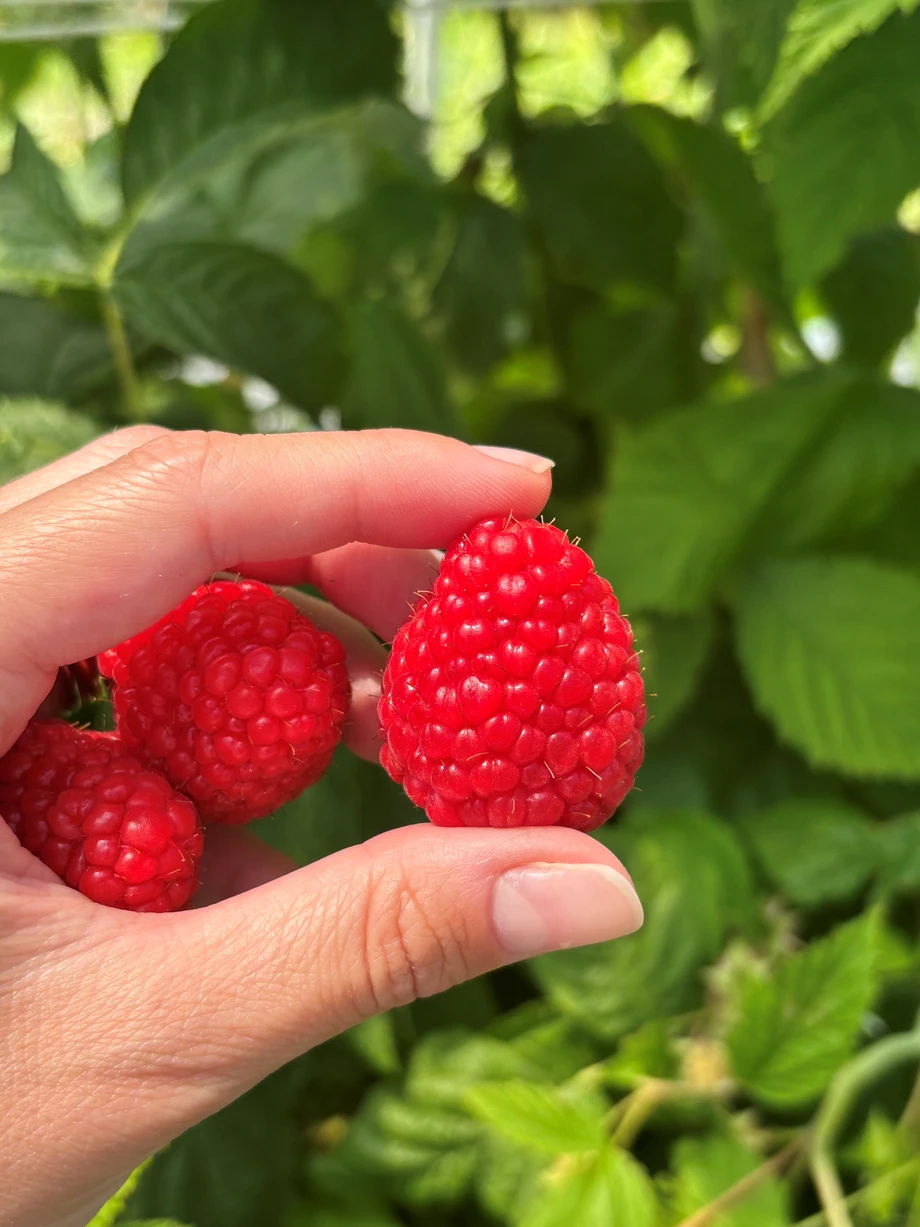
How will the new variety’s commercial identity be developed and protected? Will the name apply only to the plants, or will it also become a consumer-recognisable brand? What marketing activities, quality standards, supply-chain controls and collaborations with growers, marketers and retailers will accompany the international launch?
In addition to plant variety protection, we have worked on the registration of the commercial trademark. The brand will be used to market the plants and, above all, the fruit. Naturally, we hope that countries where the variety is not yet a differentiating factor within the raspberry category, such as Italy, will make progress in this respect.
In this regard, we can say that some of the leading retailers in the UK market have already taken part in field visits and panel tests during June, while the event to be held in Cesena on 2 September will be attended by a number of international retailers. G-Berries aims to serve as a meeting platform for marketing companies, growers and retailers in the raspberry category.
You mentioned that G-Viva will not be the only variety featured at the event on 2 September. What else will you present?
Indeed, during the same event, two other genotypes will also be presented—each intended for a different production segment—which will complete our offering for the coming years. We are also working on the presentation of a fourth genotype intended for a specific market niche. For now, however, the stage belongs entirely to G-Viva®!
Italian Berry – All rights reserved