





Egypt’s labour force, new freight links and access to Gulf markets have strengthened the case for raspberry and blackberry production. The opportunity depends on choosing the right site, securing suitable water and managing the crop well.
Carlos Correia is an independent agronomist and raspberry and blackberry consultant. Growers and investors increasingly ask whether Egypt makes sense for berry production. It does more than it did three years ago, but success depends on where and how a project is managed.
Labour and logistics are changing the equation
Labour availability is becoming a constraint in many berry origins. Morocco, for example, has faced picker shortages, while Egypt still has a large rural workforce. But low labour costs alone do not guarantee good results: raspberry quality depends on picking, timing, handling, training and supervision.
Egypt’s blueberry sector has expanded rapidly, supported by growing production and exports, particularly to the Netherlands. Raspberries have faced a bigger obstacle: their short shelf life makes slow sea freight unsuitable, while airfreight is expensive.
A new freight connection has improved the outlook. Since November 2024, DFDS has operated a ferry between Damietta and Trieste, with refrigerated trailers travelling onward by train from Trieste to Rotterdam. Since October 2026, the ferry service has run twice a week in each direction. The route gives raspberries and blackberries a faster surface connection to northern Europe.
The Gulf offers another potential market. Produce already travels by truck and ferry across the Red Sea, with routes linking Egypt to Saudi Arabia and Jordan. Egypt’s domestic market, with its large population, modern retail and tourism sector, can also absorb fruit that is unsuitable for a long export journey.
Site selection and production systems matter
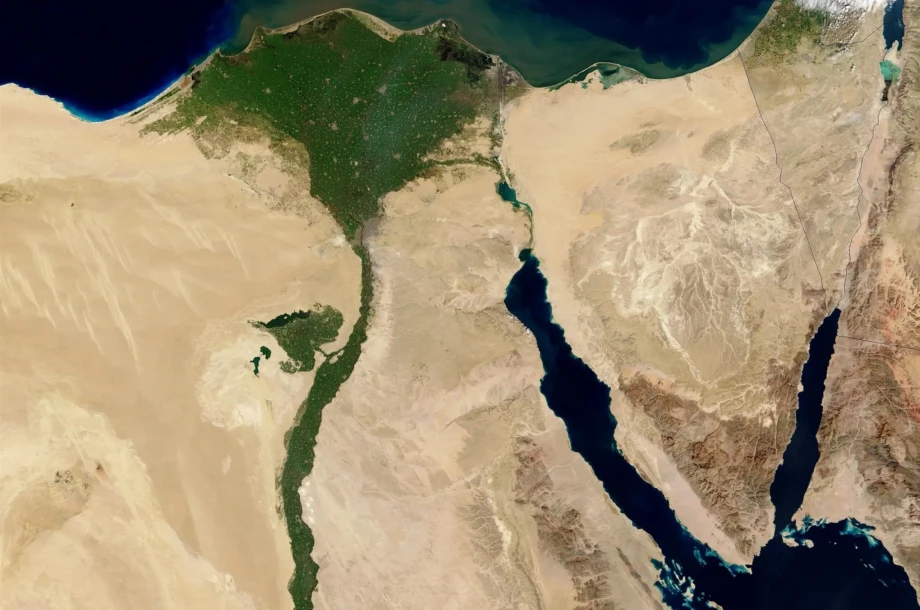
Egypt is not climatically uniform, and it is not Agadir. Mediterranean areas tend to have milder summers but higher humidity, while inland reclaimed desert areas can face more intense summer heat and colder winter nights. Heat during flowering or harvest can affect fruit set and shelf life, and cold snaps can slow production.
The useful production window is shorter than in Agadir in many locations, but it may still be profitable if production is timed for the right market weeks. Substrate systems using cold-stored long-cane plants can give growers more control over planting and harvest timing, while reducing the constraints imposed by desert soils.
That flexibility requires precise management. Irrigation, drainage, root-zone temperature, tunnel climate and plant arrival all need to be planned well ahead. Substrate can amplify good management, but it also exposes mistakes quickly.
Water quality is a key constraint
Egypt’s water availability per person is below 500 cubic metres a year. Government investments in treated agricultural drainage water and seawater desalination may increase supply, but berry projects must also consider water quality. Treated drainage water can contain salts, and raspberries are highly salt-sensitive.
Many farms may therefore need reverse osmosis, which adds energy costs and requires brine management. These expenses need to be included in project budgets from the outset.
Questions to answer before planting
- Which market weeks and destinations will the farm target?
- How reliable is the cold chain between the site and the relevant ports?
- What is the water quality, and is reverse osmosis budgeted?
- When will the plants arrive, and who will manage production and train pickers?
- Can the operation meet European residue limits from its first shipment?
The opportunity is real
Egypt combines an available workforce, faster access to northern Europe and proximity to Gulf markets. Climate, water quality and management will determine which locations can support profitable raspberry and blackberry production.