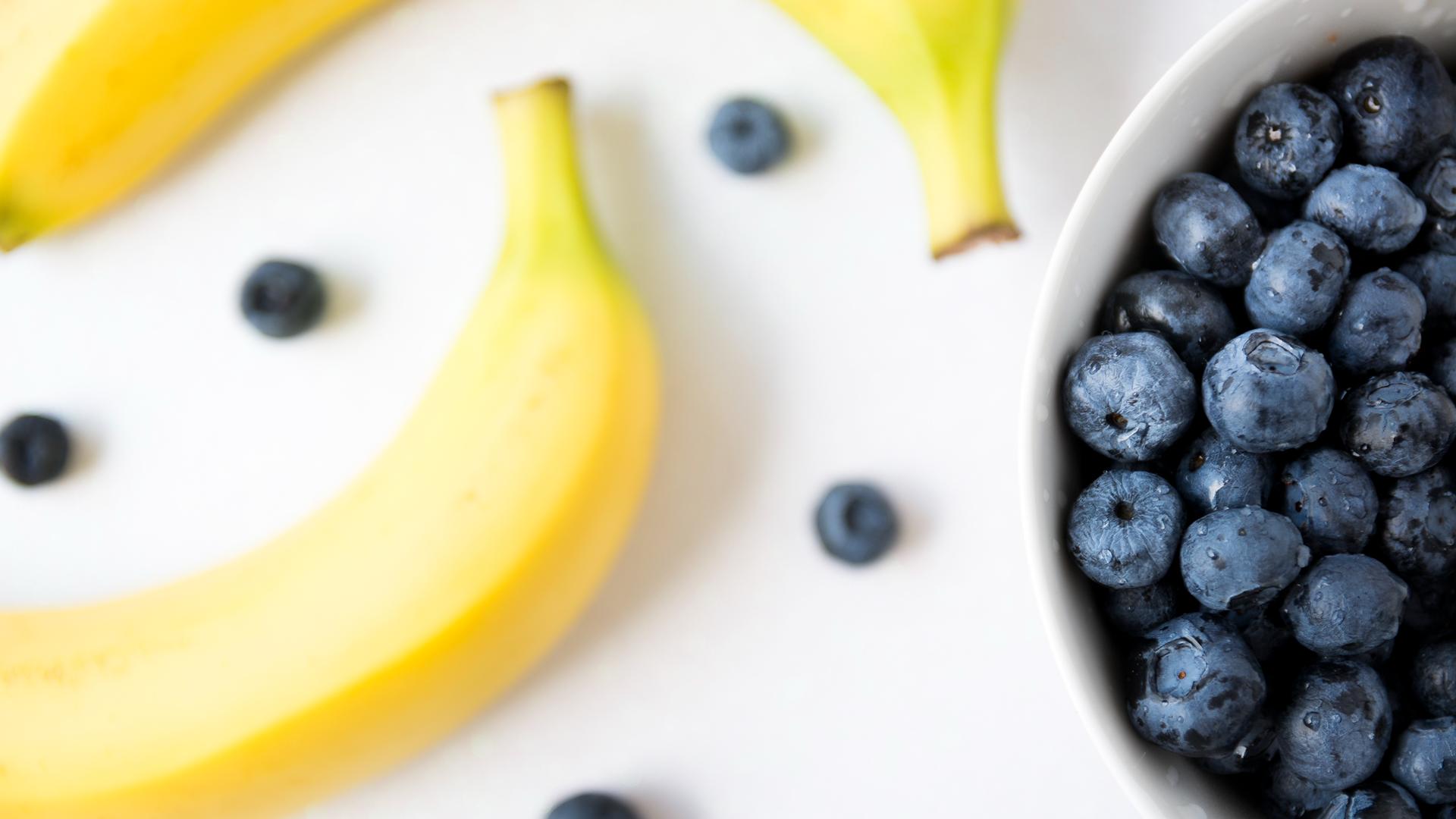







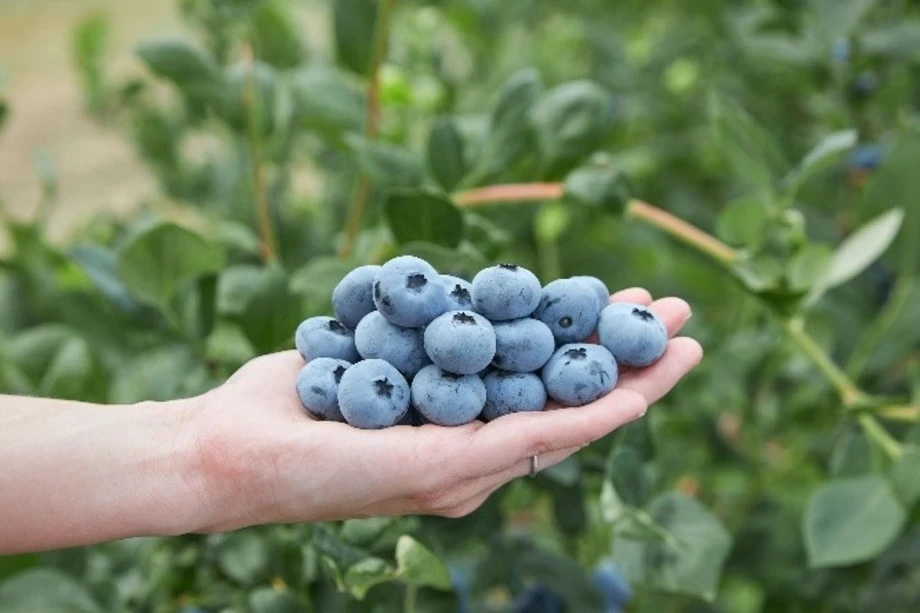
The hazy coating on the surface of blueberries is bloom, a natural wax covering. Its role in protecting the fruit is relevant to postharvest research and gives the industry a concrete topic to explain to consumers.
The distinctive coating on blueberries has returned to the spotlight through an article in The Economic Times. Known as bloom, this covering is naturally produced by the fruit.
A barrier against dehydration
In the interview Breeding Better Blueberries, researchers Jim Polashock and Jeannie Rowland of the USDA’s Agricultural Research Service explain that the wax coating can help protect blueberries against disease and dehydration. They also identify stem scar size, the opening left when the stem detaches, as an important trait for breeding.
Wax composition matters
The study by Yifan Yan and Simone D. Castellarin, published in 2022 in Postharvest Biology and Technology, examined four cultivars. Under the experimental conditions, 55–69% of water loss occurred through the cuticle. The amount and proportion of oleanolic acid were associated with lower water loss; stem scar size was correlated with water loss within the same cultivar, but not across cultivars.
These findings encourage the joint assessment of wax composition and fruit characteristics, while avoiding the use of bloom appearance as a universal measure of storability.
Its role in the blue colour
A 2024 study in Science Advances showed that microscopic wax structures scatter light and produce the blue appearance. The colour we see therefore does not depend solely on pigments in the skin.
How to explain it to consumers
For growers and retailers, explaining bloom can help consumers interpret the product’s appearance correctly. The storage message should be equally clear: the U.S. Highbush Blueberry Council recommends keeping fresh blueberries in the refrigerator and rinsing them just before eating, avoiding the introduction of moisture during storage.
Photo: Fall Creek
Italian Berry - All rights reserved